
Something quiet has happened to the way Americans park their spare cash. For decades, the neighborhood bank savings account was the default choice, the place your parents told you to stash birthday money and emergency funds. That habit is fading fast, and the numbers behind the shift are hard to ignore once you look at them.
Trillions of dollars have migrated toward accounts and instruments that simply pay more, and the gap between old and new options has grown too wide for most savers to shrug off. What replaced the traditional savings account isn’t one single product but a handful of alternatives, each solving the same basic complaint in a slightly different way.
The math finally became too obvious to ignore

The math finally became too obvious to ignore (Image Credits: Pexels)
The starting point for this whole shift is embarrassingly simple. As of August 2026, the best high-yield savings accounts are paying up to 4.00% or more in annual percentage yield, compared to the national average of just 0.38%. That is not a rounding error. It is the difference between an account that barely keeps pace with a vending machine price hike and one that actually builds wealth.
Put dollar figures on it and the gap gets even harder to justify. Someone keeping $20,000 in a standard savings account at a big brick-and-mortar bank is earning roughly $92 a year in interest, while that same balance in a competitive high-yield account could generate $900 to $1,100 annually. Multiply that difference across millions of households and it explains a great deal of the money movement happening right now.
High-yield savings accounts became the obvious first step
High-yield savings accounts became the obvious first step (Image Credits: Unsplash)
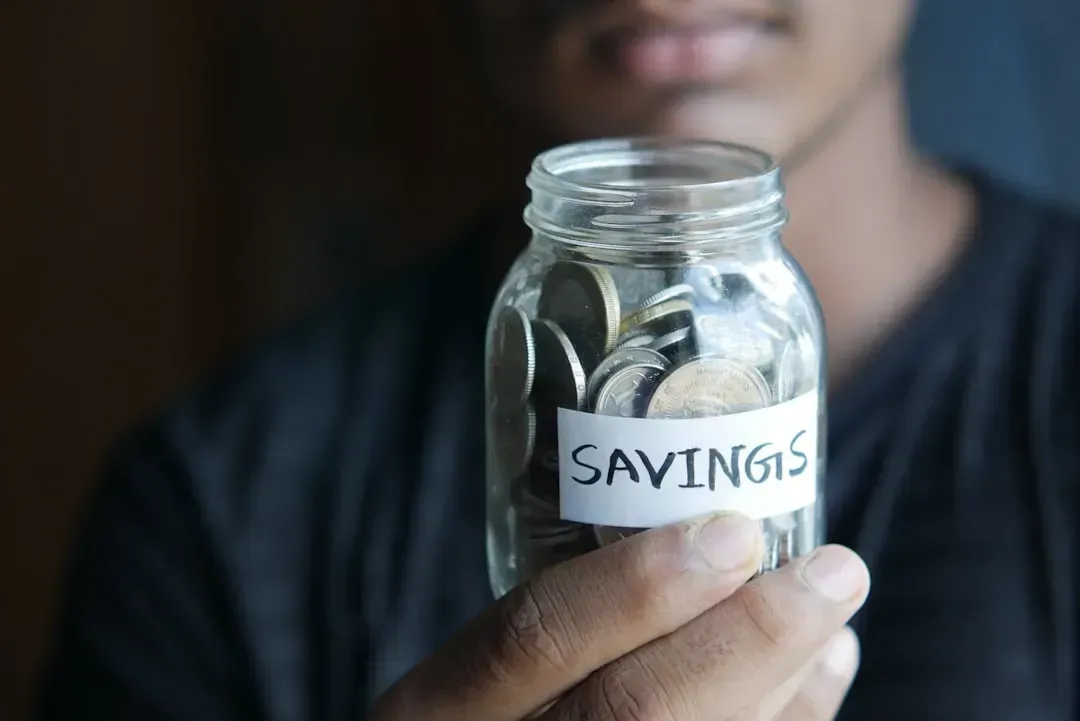
The most direct replacement for a traditional savings account is, unsurprisingly, a savings account that just pays more. The best high-yield savings accounts have annual percentage yields that are much higher than what most banks offer, and the higher the APY, the faster your savings will grow. These accounts function almost identically to the ones offered at a legacy bank, just with a far better rate attached.
The reason banks can afford to pay more comes down to overhead. These accounts are most commonly offered by online banks, credit unions, and fintech companies, and because they operate without expensive physical branch networks, they pass the cost savings on to customers in the form of higher interest rates. Crucially, savers are not trading safety for that yield. High-yield savings accounts are insured by the FDIC or NCUA up to $250,000 per depositor, per institution, meaning the money is just as protected as it would be in any traditional bank account.
Money market funds are absorbing record sums of cash
Money market funds are absorbing record sums of cash (Image Credits: Unsplash)
While retail savers were quietly switching banks, institutions and everyday investors alike were pouring unprecedented amounts into money market funds. The start of 2026 outpaced every previous year’s opening on record for money market fund inflows, with US money market fund assets increasing by $954 billion since the beginning of 2025 to reach a record $7.8 trillion. That is not a niche corner of the financial system anymore. It is one of the largest parking spots for cash in the entire country.
The yield advantage explains much of the appeal. Despite the Federal Reserve’s rate cuts in 2025, money market funds remained appealing to investors compared with bank deposits, as the yield on taxable money market funds averaged 3.9% at year end 2025 compared with 0.6% for money market deposit accounts. Government money market funds have led the way. Demand was positive for all categories of money market funds in 2025, with government money market funds experiencing the bulk of inflows at $558 billion.
Certificates of deposit are back in fashion for locked-in rates

Certificates of deposit are back in fashion for locked-in rates (Image Credits: Unsplash)
For savers willing to give up some flexibility, CDs have re-emerged as a legitimate competitor to the savings account. In the current rate environment, CD rates might range from 3% to 5% depending on the term length and institution. That range covers everything from a short three-month commitment to a multi-year lock-in, giving savers a menu of options depending on how soon they might need the cash.
What makes CDs attractive right now is timing. With the Fed widely expected to keep trimming rates through the rest of 2026, locking a decent yield in today protects against future declines in a way a variable-rate savings account cannot. That single feature, a fixed rate that does not move once the account is opened, is exactly what pulls conservative savers away from accounts whose rates can be cut at any moment.
Treasury bills turned into a favorite for tax-conscious savers
Treasury bills turned into a favorite for tax-conscious savers (Image Credits: Pexels)
Buying government debt directly used to feel like something only institutional investors bothered with. That has changed. Thirteen-week T-bills have become the most popular option among individual investors, offering a good balance between earning potential and accessibility, and they work well for emergency funds or short-term savings. Investors can buy them directly through TreasuryDirect or through a regular brokerage account, which has removed much of the old friction.
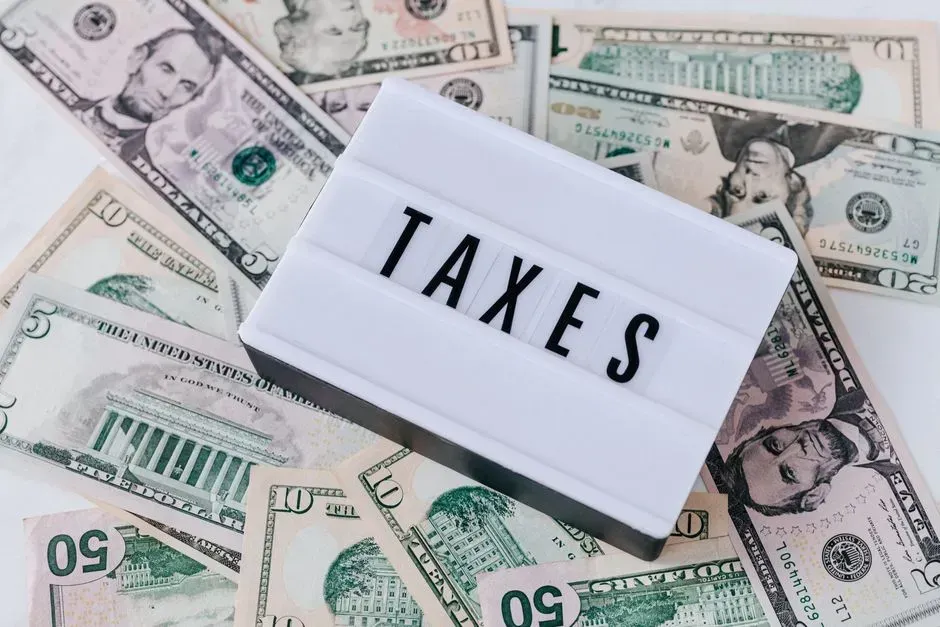
The tax treatment is part of the draw. T-bills are exempt from state and local income taxes, though they remain subject to federal income taxes. For anyone living in a high-tax state, that exemption alone can close a meaningful chunk of the gap between a T-bill and a savings account paying a similar headline rate. Add in that Treasury bills are low-risk short-term investments guaranteed by the federal government, are highly liquid, and carry low minimum investment requirements that make them accessible to many individual investors, and it becomes easy to see why they have found a following well beyond Wall Street.
Cash management accounts blur the line between saving and investing
Cash management accounts blur the line between saving and investing (Image Credits: Pexels)
Brokerages have leaned hard into this shift by building cash management accounts that sweep uninvested money into interest-bearing positions automatically. Rather than leaving idle cash sitting at a low rate, these accounts often route funds into government money market funds behind the scenes. Higher short-term yields have renewed interest in cash-like options, with government money market funds holding very short-term, high-quality debt such as Treasury bills, agency securities, and repurchase agreements, and many investors pairing a brokerage cash position with such a fund to earn near-policy yields while keeping money accessible.
The appeal here is convenience layered on top of yield. A saver does not need to open a separate T-bill ladder or shop around for the best online bank rate. The brokerage account does the shifting automatically, which is part of why this hybrid category has quietly become a default home for cash among people who already have investment accounts anyway.
Online-only banks reshaped who savers trust with their money

Online-only banks reshaped who savers trust with their money (Image Credits: Pexels)
Part of this story is not just about rates but about where people are willing to keep their money at all. Savers often find higher APYs from online-only financial institutions, though some banks and credit unions with physical branches also offer accounts with high yields. A decade ago, an online-only bank might have felt unfamiliar or slightly risky to the average saver. That hesitation has largely disappeared as FDIC insurance rules apply the same way regardless of whether a bank has a lobby.
Competition among these digital banks has become fierce, and it shows in the fine print. Axos Bank has offered up to a 4.21% annual percentage yield when a customer maintains a linked checking account and certain deposit requirements, while banks like Climate First Bank offer competitive rates with fewer strings attached. The variety of requirements means savers now shop around the way they once compared credit card rewards, chasing the best combination of yield and convenience rather than settling for whatever their local branch offered.
Bond funds are quietly pulling in savers who want a bit more yield

Bond funds are quietly pulling in savers who want a bit more yield (Image Credits: Unsplash)
Beyond pure cash alternatives, a wave of money has also moved into taxable bond funds, a step up in risk from a savings account but still far more conservative than stocks. Taxable-bond funds dominated 2025’s fund inflows, bringing in a record $540 billion, much of which was concentrated in more conservative categories. That is a telling detail. Investors were not necessarily chasing high returns; they were looking for something modestly better than cash while still sleeping easily at night.
This matters for the savings account conversation because it shows the competition is not limited to other deposit-style products. Retail savers with even a slightly longer time horizon, say, money they will not need for a year or two, have increasingly decided a short-duration bond fund makes more sense than letting cash sit dormant. The line between “saving” and “conservative investing” has gotten noticeably blurrier over the past couple of years.
Rate cuts are reshaping the calculus in real time
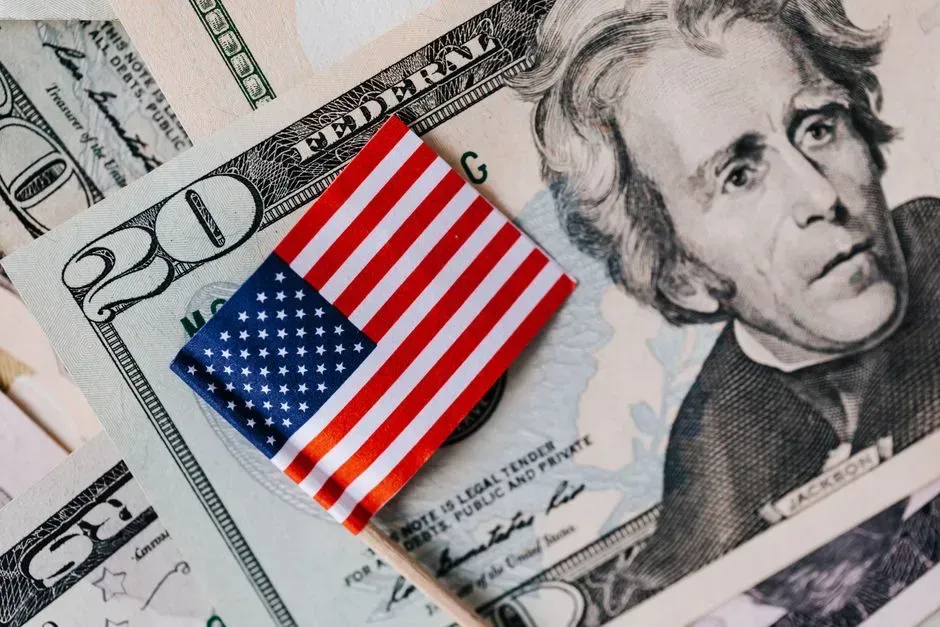
Rate cuts are reshaping the calculus in real time (Image Credits: Pexels)
None of this is static, and anyone treating today’s rates as permanent is missing the bigger picture. The Federal Reserve raised interest rates aggressively in 2022 and 2023, then began cutting rates in 2024 and 2025, and that cutting cycle is still influencing where savers put new money. The Fed is expected to cut rates two to three more times in 2026 as inflation stabilizes, which is likely to drive high-yield savings account yields down from their recent 4.25% to 4.75% levels.
That forecast has pushed some savers to act sooner rather than later, locking in CD rates or buying T-bills before yields compress further. Others are betting the gap between high-yield accounts and traditional savings accounts will stay wide enough to matter even as absolute rates fall. Even as rates ease, mid-4% yields still beat traditional savings accounts by 75 to 90 basis points, which suggests the incentive to leave old-style accounts behind is not going away just because the Fed starts trimming.
Safety concerns never really left, they just got answered differently
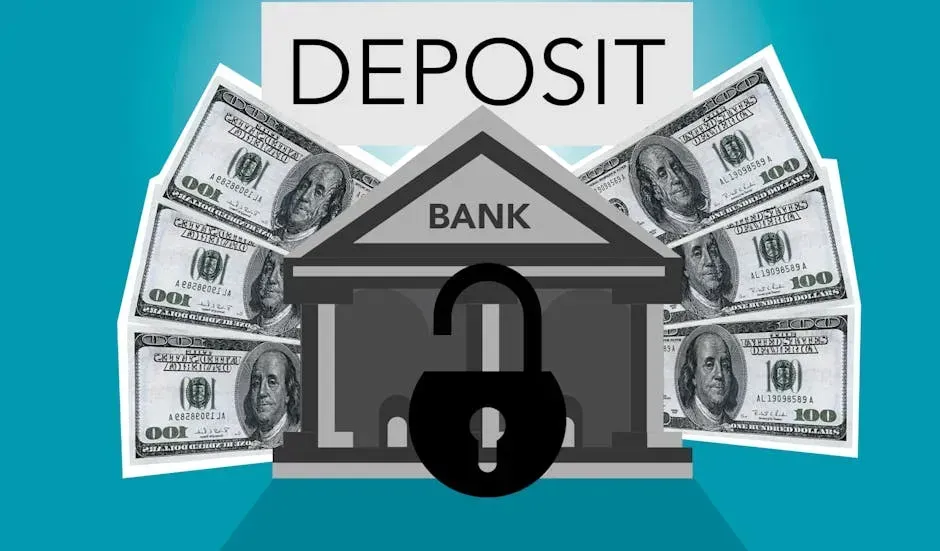
Safety concerns never really left, they just got answered differently (Image Credits: Pexels)
A fair question sits underneath all of this: are these newer options actually as safe as the plain old savings account everyone grew up with? For bank-based high-yield accounts, the answer is straightforward, since FDIC and NCUA coverage applies the same way it always has. Money market funds and Treasury bills work a bit differently, but the safety profile still holds up well under scrutiny.
History backs this up more than headlines might suggest. Interest rates have mattered little to money market fund balances over time, and across the fifty-plus year history of these funds, assets have only materially declined during periods of severe economic downturns that led to protracted ultralow interest rates. Treasury bills carry the backing of the federal government itself, which is about as close to risk-free as a dollar-denominated asset gets. That combination of safety and better yield is really the whole story behind why so much money has moved.
The takeaway for anyone still parking cash the old way

The takeaway for anyone still parking cash the old way (Image Credits: Pexels)
The traditional savings account has not disappeared, and it likely never will completely, since convenience and simplicity still count for something. Still, the sheer size of the rate gap has made it hard to justify leaving large sums in an account paying a fraction of a percent when safer, equally liquid alternatives pay ten times more or better. Whether someone chooses a high-yield savings account, a money market fund, a CD ladder, or a T-bill purchased directly through a brokerage, the underlying lesson is the same: cash that sits idle is cash that is quietly losing ground, and savers in 2026 have finally caught on.