
Ozempic and Wegovy became household names for shrinking waistlines, but that reputation only tells part of the story. Underneath the appetite suppression, these drugs are quietly rewiring signals in the heart, kidneys, liver, joints, and even the brain's reward circuits. The deeper researchers look, the more it seems like weight loss might be the most visible effect, not necessarily the most important one.
A hormone your gut already makes

A hormone your gut already makes (By kkacbd, <a href="https://commons.wikimedia.org/w/index.php?curid=114992897" target="_blank" rel="noopener">CC BY-SA 4.0</a>)
GLP-1 is not some synthetic invention dreamed up in a lab. GLP-1 is a natural hormone released from the gut after eating, and it plays a key role in regulating blood sugar, appetite, and digestion. Drugs like semaglutide and liraglutide were engineered to mimic this hormone but stick around in the bloodstream far longer than the version your intestines produce.
GLP-1RA stimulates the receptor for glucagon-like peptide-1, an incretin-like hormone released in the large intestine that reduces serum glucose concentrations by stimulating the glucose-dependent release of insulin, inhibiting the hypersecretion of glucagon, and promoting satiety. That single receptor interaction cascades into effects across dozens of organ systems, because GLP-1 receptors are not confined to the pancreas.
Where the receptors actually live

Where the receptors actually live (Image Credits: Unsplash)
One reason GLP-1 drugs touch so many organs is simple anatomy. GLP-1 receptors are found in the terminal ileum, colon, both alpha and beta cells in the pancreas, heart, lungs, and kidneys, and in several brain regions responsible for food intake and satiety. That is a wide map for a single hormone class to cover.
Researchers have even used specialized antibody tracking to pin down exact locations. Using a specific anti-GLP-1R antibody in humans and monkeys, GLP-1R was predominantly localized in beta cells with weaker expression in acinar cells and the kidney, lung, heart, and gastrointestinal tract, with the highest expression in the Brunner’s gland in the duodenum and myenteric plexus neurons throughout the gut. Interestingly, direct liver receptor expression remains a genuinely unsettled question among scientists.
Calming the brain's hunger and reward signals

Calming the brain's hunger and reward signals (Image Credits: Pixabay)
The appetite effect gets most of the attention, and for good reason. GLP-1R and GIPR activation in the brain reduces appetite and promotes satiety, supporting the development of liraglutide, semaglutide, and tirzepatide for weight loss. But the brain story doesn’t stop at hunger.
There’s growing evidence these drugs interact with dopamine-driven reward pathways too. GLP-1RA drugs act on receptors expressed in brain areas involved in impulse control, reward, and addiction, potentially explaining their effectiveness in curbing appetite and addiction disorders. That overlap between hunger and craving circuitry helps explain some surprising side observations from patients on these medications.
A measurable dampening of the addiction pathway

A measurable dampening of the addiction pathway (Image Credits: Pixabay)
Patients and clinicians have noticed something unexpected: people on GLP-1 drugs sometimes report less interest in alcohol, nicotine, or compulsive shopping. The biology behind that isn’t hand-waving. GLP-1 is implicated in the shared neurobiological mechanisms of addiction via the mesolimbic reward system, and endogenous GLP-1 is produced in the nucleus tractus solitarius of the brainstem, acting as a neurotransmitter released in regions involved in reward processing.
This has prompted formal trials rather than just anecdotal chatter. Researchers are now directly testing whether GLP-1 receptor stimulation can modulate addiction-related behaviours by attenuating neural responses in reward-related brain regions, with active studies looking specifically at smoking cessation in people with type 2 diabetes.
Protecting the heart independent of the scale

Protecting the heart independent of the scale (Image Credits: Pixabay)
Cardiovascular benefits may be the most clinically consequential finding outside of weight loss. Large outcome trials including LEADER, SUSTAIN-6, and REWIND demonstrated favorable cardiovascular safety, and more recent data has strengthened that picture further. GLP-1 use expanded beyond diabetes into cardiovascular risk reduction in obesity, demonstrating cardioprotection even in lower-risk diabetes populations.
The mechanisms go beyond simply losing weight. GLP-1 receptor agonists present significant cardiovascular benefits, including improved myocardial function, reduced atherosclerosis progression, enhanced endothelial health, and decreased major adverse cardiovascular events. Some of this appears tied directly to receptors sitting on heart muscle cells and blood vessel walls rather than just the downstream effect of shedding pounds.
Slowing the decline of failing kidneys
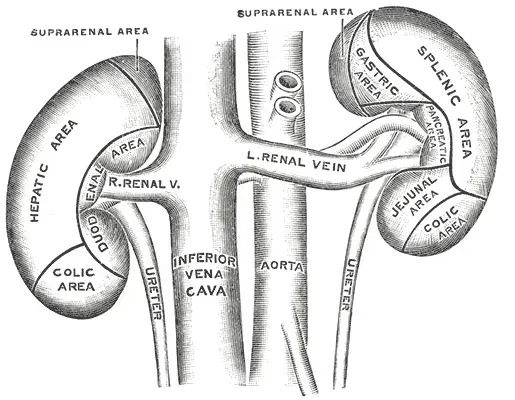
Slowing the decline of failing kidneys (Henry Gray (1918) Anatomy of the Human Body (See "Book" section below)
Bartleby.com: Gray's Anatomy, Plate 1122, <a href="https://commons.wikimedia.org/w/index.php?curid=567087" target="_blank" rel="noopener">Public domain</a>)
Kidney disease is one of the most consequential complications of diabetes and obesity, and GLP-1 drugs have shown a genuine capacity to slow it. In the randomized placebo-controlled FLOW trial, semaglutide significantly decreased the incidence of major kidney events, also reducing the progression of kidney dysfunction and the risk of death. That trial result was significant enough to shift how nephrologists think about the drug class entirely.
The protective effect isn’t purely about blood sugar control either. In diabetic kidney disease, GLP-1 receptor agonists exhibit renoprotective properties by mitigating inflammation, oxidative stress, and glomerular hypertension, while also promoting natriuresis and stabilizing renal function. Natriuresis, essentially helping the kidneys excrete excess sodium, appears to ease pressure on already stressed filtering units.
Rewiring how the liver handles fat

Rewiring how the liver handles fat (Image Credits: Unsplash)
Fatty liver disease affects a significant share of adults with obesity, and it’s one of the fastest-growing areas of GLP-1 research. During a 2024 American Association for the Study of Liver Disease conference, investigators of the ongoing ESSENCE trial presented interim results showing semaglutide’s superiority over placebo in achieving resolution of steatohepatitis without worsening fibrosis, and improvement in liver fibrosis without exacerbation of steatohepatitis. That’s a meaningful development for a condition with very few approved drug treatments.
The mechanism seems to involve more than fat simply melting away with weight loss. In the liver, GLP-1 receptor agonists contribute to improvement of metabolic dysfunction-associated steatotic liver disease by reducing hepatic fat accumulation, inflammation, and oxidative stress, while also enhancing insulin sensitivity and lipid metabolism. Whether hepatocytes carry functional GLP-1 receptors directly is still debated among researchers, so some of this benefit may be indirect, routed through the brain or other tissues.
Quieting inflammation across the whole body

Quieting inflammation across the whole body (PracticalCures, Flickr, <a href="https://creativecommons.org/licenses/by/2.0/" target="_blank" rel="noopener">CC BY 2.0</a>)
Chronic low-grade inflammation sits at the root of many of the conditions GLP-1 drugs seem to improve, from arthritis to heart disease. Acute and chronic activation of GLP-1 receptor signaling reduces systemic and tissue inflammation in mice and humans, through weight loss-dependent and independent mechanisms. That last part matters because it suggests the drugs aren’t just quieting inflammation as a side effect of losing fat tissue.
The anti-inflammatory reach is genuinely broad. GLP-1 receptor agonists exert broad anti-inflammatory effects in multiple peripheral organs, including the central nervous system, lungs, cardiovascular system, liver, intestine, kidneys, and joints. Some of this happens through direct receptor activation in those tissues, while some appears to be relayed through the brain via nerve signaling between organs.
Easing joint pain tied to osteoarthritis

Easing joint pain tied to osteoarthritis (Image Credits: Pexels)
Osteoarthritis has traditionally been treated as a mechanical wear-and-tear problem, but excess weight and inflammation both worsen it substantially. At the 2026 American Diabetes Association Scientific Sessions, experts specifically highlighted joint disease as an emerging area where GLP-1 drugs are making a measurable difference. Experts explored how GLP-1 receptor agonists are reshaping treatment for obesity, osteoarthritis, nutrition, and muscle preservation.
Real-world clinical experience backs this up outside of conference presentations too. Physicians treating obesity have observed benefits reaching well past the scale, including relief from joint pain, sleep apnea symptoms, and acid reflux, conditions where excess weight places direct mechanical and inflammatory strain on the body.
Reducing sleep apnea and nighttime breathing problems

Reducing sleep apnea and nighttime breathing problems (Image Credits: Unsplash)
Obstructive sleep apnea is closely linked to excess weight around the neck and airway, and GLP-1 drugs have shown real promise in this area as well. Clinicians at UC Davis Health specifically pointed to sleep apnea alongside cardiovascular events and fatty liver disease as conditions improved by these medications. GLP-1 agonists are reshaping modern health care, delivering benefits that reach far beyond glycemic control and weight loss, including the ability to reduce major cardiovascular events, combat fatty liver disease, and alleviate obesity-related complications such as knee pain, sleep apnea, and acid reflux.
The connection here is partly mechanical, since less tissue around the airway means fewer nighttime obstructions. It may also be partly inflammatory, given the anti-inflammatory reach these drugs have across the respiratory system and surrounding tissue.
The tradeoffs that come with a widening reach

The tradeoffs that come with a widening reach (Image Credits: Pixabay)
None of this comes without caveats, and the expanding list of benefits has been matched by closer scrutiny of risks. Post-marketing surveillance identified rare but serious events such as acute pancreatitis, intestinal obstruction, thyroid C-cell hyperplasia, acute kidney injury, and transient worsening of diabetic retinopathy. More recent reports have flagged additional concerns worth watching.
A large 2025 study using veteran health records looked at outcomes across 175 different health conditions and found a mixed picture. GLP-1 drugs may improve brain and heart health but could cause problems for the kidneys and pancreas, and researchers also found they may lead to gastrointestinal, kidney, and pancreas issues. The cardiovascular and dementia risk reductions observed were real but modest, generally a somewhat modest 10% to 20% reduction in most risks, which is a useful reminder that these drugs are powerful tools, not cure-alls.