
Most people don’t spend a lot of time thinking about the exact moment they write in a tip. The check arrives, you glance at the total, do a rough mental calculation, and land on a number. For a surprisingly large number of diners, that number isn’t the precise result of multiplying by 0.18 or 0.20. It’s $20. Or $15. Or $10. Something clean, something that ends in a zero and feels settled.
That small, seemingly trivial choice carries more information than most people realize. Servers observe cues from initial body language all the way to payment habits, adjusting their service accordingly. By mastering the art of reading guests, servers can anticipate needs and manage diverse situations effectively. The way you fill in that gratuity line is one of the last signals you send, and experienced servers have been reading those signals for years.
The Round Number Bias Is a Real Psychological Phenomenon
The Round Number Bias Is a Real Psychological Phenomenon (Image Credits: Unsplash)
Round number bias is the human tendency to pay special attention to numbers that are "round" in some way. It shows up everywhere from gas station pumps to stock market targets, and the restaurant check is no exception. Research published in the Journal of Economic Psychology found clear evidence of round number preference in restaurant tipping patterns, alongside other consumer contexts. People don't just happen to land on round numbers more often. They actively seek them out.
The impulse is largely about cognitive ease. Calculating a precise percentage on a bill like $67.40 requires actual mental effort, and the brain naturally gravitates toward a simpler endpoint. At a gas station where customers pump their own fuel, more than half of all sales ended in exactly .00, and researchers also found clear evidence of round number bias in patterns of restaurant tipping and other contexts. The rounding instinct is consistent and widespread, not a quirk limited to a few distracted diners.
Servers Notice the Tip Amount Long Before You've Left the Table

Servers Notice the Tip Amount Long Before You've Left the Table (Image Credits: Unsplash)
Seasoned servers are already building a mental picture of you, your table, and what the next hour or two might look like, all before they've said a single word. According to a 2024 study published in the Cornell Hospitality Quarterly, experienced servers can predict customer behavior and potential tip percentages with roughly seventy percent accuracy within the first minute of interaction. That's a striking figure, and it speaks to pattern recognition built over thousands of shifts, not some form of intuition.
As service providers, it is likely that waitstaff form impressions of various consumer groups, much in the same manner that department store staff, cab drivers, and other types of service providers might. A key part of that impression is an assessment of the kind of tipper that the individual might be. When your bill gets picked up and a flat round number is sitting on that line, it fits into a pattern they've seen many times before.
What a Round Tip Signals About Your Relationship With Math
What a Round Tip Signals About Your Relationship With Math (Image Credits: Unsplash)
Rounding up is often a sign of math discomfort rather than carelessness. When asked to solve mathematical problems, some people experience anxiety and threat, which can lead to impaired mathematical performance. Calculating a percentage at the end of a meal, in front of other people, after a couple of drinks, is exactly the kind of low-stakes pressure that can trigger that response. Landing on a round number is how many people quietly sidestep the calculation altogether.
This isn't a character flaw. It's a well-documented cognitive shortcut. The brain prefers fluency, and a number like $25 is far more fluent than $23.47. The physical act of someone watching you make a selection creates what psychologists call "social facilitation stress." You're not just choosing a tip amount, you're making a public statement about your values while someone watches. The round number, in that context, is a kind of exit ramp from an uncomfortable moment.
It Can Read as Generous, Indifferent, or Somewhere In Between

It Can Read as Generous, Indifferent, or Somewhere In Between (Image Credits: Pexels)
Whether a round tip reads as generous depends almost entirely on what the original check total was. Round up from $48 to $55 and your server likely reads that as fair, maybe even decent. Round up from $93 to $95 and the message is very different. Context is everything, and servers understand this intuitively. They do the math too, usually faster than you do.
Research has revealed five categories where servers focus their time and effort to earn tips: service quality, connection, personal factors, expertise, and food quality. When the resulting tip is a flat round number, a server may wonder whether those efforts were actually registered, or whether the diner simply picked a number that felt easy. It isn't about ingratitude so much as a reading of engagement. A precise tip, even a slightly lower one, often suggests someone who actually did the calculation and thought it through.
Personality Research Backs Up What Servers Already Suspect

Personality Research Backs Up What Servers Already Suspect (Image Credits: Pexels)
Knowledge about personality predictors of tipping attitudes, motives, and behaviors could shed light on the psychological processes underlying tipping and might allow service workers to better predict and manage their tip incomes. Analyses of online survey data revealed numerous direct and indirect effects of Big Five personality traits on tipping attitudes and behavior. Agreeableness, conscientiousness, and openness affected tipping likelihood and tip sizes through enhancement of intrinsic tipping motives.
People who score higher in conscientiousness, the personality trait associated with organization, attention to detail, and follow-through, tend to be more precise in their tipping calculations. A round number tip, by contrast, can subtly suggest someone who either didn't engage closely with the experience or simply defaulted to a convenient endpoint. Tipping is influenced by different things: the person tipping, the service quality, and the situation. A round number might reflect any one of those factors, and servers are often left to guess which.
The Guilt Factor and Declining Tip Averages
The Guilt Factor and Declining Tip Averages (Image Credits: Pexels)
A survey of 2,000 people found that the average respondent spends close to $300 a year tipping more than they'd like due to social pressure. The average person reluctantly tips roughly $24 per month more than they feel is fair due to the pressure or awkwardness of not doing so. When someone rounds up under that kind of pressure, the tip can feel involuntary rather than appreciative, and that emotional texture sometimes shows up in other parts of the interaction.
The average tip on Square's digital food and beverage transactions fell to 14.9 percent in Q2 2025 from 15.5 percent in 2023. The overall tipping average for restaurants came in at 18.8 percent in Q3 2024, down from 19 percent in Q3 2022. Against that backdrop, a round number tip that lands well above the percentage average still registers positively, regardless of how it was calculated. The math matters more than the method.
How the Check Total Shapes What "Rounding Up" Even Means
How the Check Total Shapes What "Rounding Up" Even Means (Image Credits: Unsplash)
There's a meaningful difference between rounding up a $22 bill to $30 and rounding up a $96 bill to $100. In the first case, the diner has added more than a third on top of the meal. In the second, they've left something closer to four percent. The same behavior, literally the same habit of reaching for a clean number, produces wildly different outcomes depending on the check. Servers know this and track it automatically.
The service-tipping relationship is robust across meal type, day of week, sex and race of server as well as customers' alcohol consumption, education, income, race, worship frequency, and hospitality work experience, but it is stronger for parties with large bills than for parties with smaller bills. That detail is worth sitting with. On large bills, the precision of the calculation matters more, and a round number on a high check can signal a deliberate choice to tip conservatively rather than a simple preference for cognitive ease.
Servers' Expectations Shape the Entire Dining Experience
Servers' Expectations Shape the Entire Dining Experience (Image Credits: Pexels)
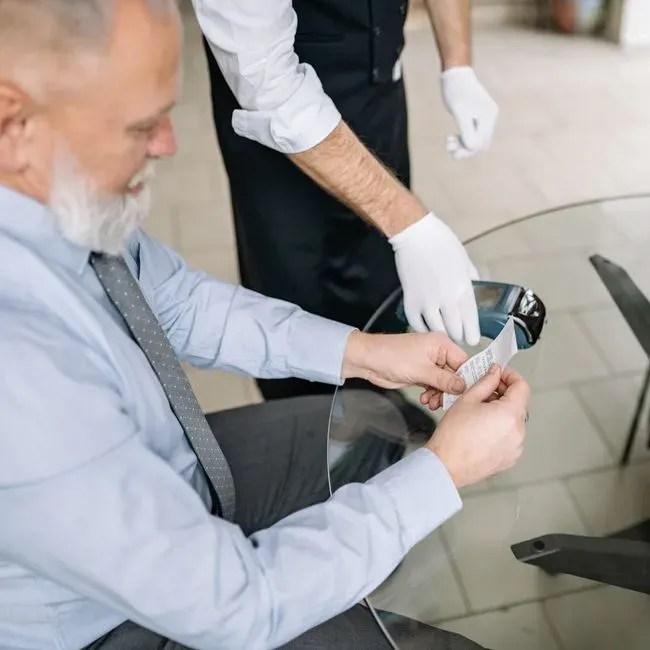
Social psychologists have provided substantial evidence that perceptions of others tend to be circular and self-fulfilling. When servers have expectations regarding the tipping habits of their customers, these expectations are likely to influence server behavior and do so in a manner that leads customers to tip accordingly. This creates a quiet feedback loop that most diners never think about.
If a server reads your table as unlikely to tip well, they may unconsciously invest slightly less energy in the experience. You may then feel the service was ordinary, and tip accordingly. The round number on your receipt at the end of the night isn't just a reflection of the meal. It can be the final note in a cycle that began when you walked through the door. Despite the uncertainty, servers constantly recalibrate their approach based on subtle cues, hoping to maximize both customer satisfaction and their own income. Still, many seasoned servers will tell you the biggest tippers often come from the most unexpected places.
What a Round Tip Doesn't Tell Your Server
What a Round Tip Doesn't Tell Your Server (Image Credits: Pexels)
It's worth being fair here. A round tip is not a reliable indicator of much beyond a preference for simplicity. The sizes of personality trait effects on tipping behavior were small, so there is little to be gained from using customers' personalities to predict their tipping behavior. Servers who try to draw firm conclusions from a $20 tip on a $17 check are working with limited data and plenty of noise.
Whether customers are in a full suit or wearing a grungy T-shirt and shorts, servers will tell you that you can never really tell how they'll treat the waitstaff, how much they'll spend, or how much they'll tip just based on looks. The same principle extends to how the tip is calculated. Rounding up might mean a diner is distracted, uncomfortable with math, generous by habit, or simply tired after a long meal. Often, it means all of those things at once.
The Quiet Signal You're Actually Sending
The Quiet Signal You're Actually Sending (Image Credits: Pexels)
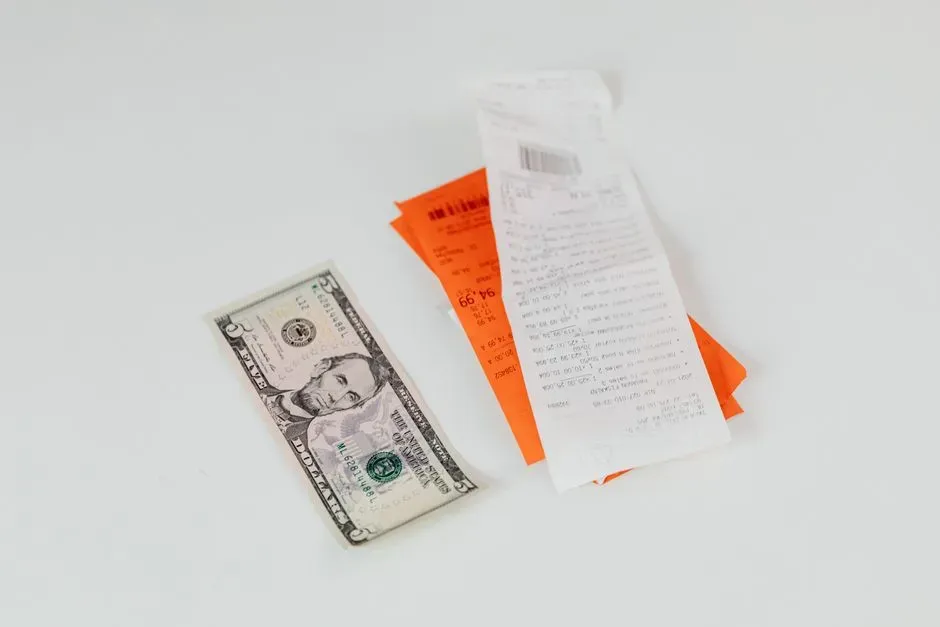
Tipping reflects a complex interplay of cultural norms, economic incentives, and operational challenges, especially within the U.S. foodservice industry. Within that complexity, the round number tip occupies a specific, recognizable niche. It tells your server that you completed the transaction in a way that felt comfortable to you, which is, honestly, what most people are doing when they fill in that line.
What it tends not to communicate is active thought about the experience. The servers who remember customers fondly, who go slightly further for tables they recognize, are often responding to a sense that the guest was paying attention. A precise tip, even an imperfect one, suggests calculation and presence. A round number is efficient and often perfectly fair, but it rarely reads as deliberate. In the small, unspoken economy of a restaurant shift, that distinction matters more than most diners ever realize.