
There’s a particular kind of tiredness that doesn’t show up on a resume or in a performance review. It lives in the space between a 9 a.m. meeting and a forgotten permission slip, between a work deadline and a fever that started at 2 a.m. Working parents carry a version of honesty they rarely get to voice, because the workplace still rewards a certain performance of effortlessness.
What follows isn’t a list of complaints. It’s an attempt to put words to the things so many parents quietly think but rarely say, backed by the data that shows these feelings aren’t isolated at all.
I'm not lazy, I'm running on empty

I'm not lazy, I'm running on empty (Image Credits: Unsplash)
Fatigue among working parents has stopped being a fringe complaint and become something closer to the norm. A study of working parents found that sixty-five percent reported burnout, and that burnout stems from enduring stress and relentless parenting demands, resulting in physical, emotional, and mental exhaustion that can lead to feelings of hopelessness and helplessness. This isn't about weak willpower or poor time management.
Separate research backs this up with striking consistency. In a 2025 survey of three thousand working parents and carers, roughly a third of female parents and about a quarter of male parents said they feel very stressed as they balance care work and paid labor. When exhaustion is this widespread, it stops being a personal failing and starts looking like a structural problem nobody has quite fixed yet.
The guilt follows me everywhere, even when I'm doing everything right

The guilt follows me everywhere, even when I'm doing everything right (Image Credits: Unsplash)
Guilt shows up in strange places for working parents. It's there during a work call when a child is sick at home, and it's there again at the school pickup line when a laptop is still open in the back seat. In KPMG's 2025 survey, forty-three percent of working parents identified guilt as their second biggest challenge, just behind time management.
What makes this particular emotion so exhausting is that it rarely responds to logic. Beyond the practical burden is something harder to quantify but no less real, guilt for not being present enough at home, guilt for not being focused enough at work, guilt for needing flexibility, and guilt for the moments that get missed. Parents can check every box and still feel like they're falling short somewhere.
Childcare costs more than some mortgages, and nobody seems shocked by that anymore
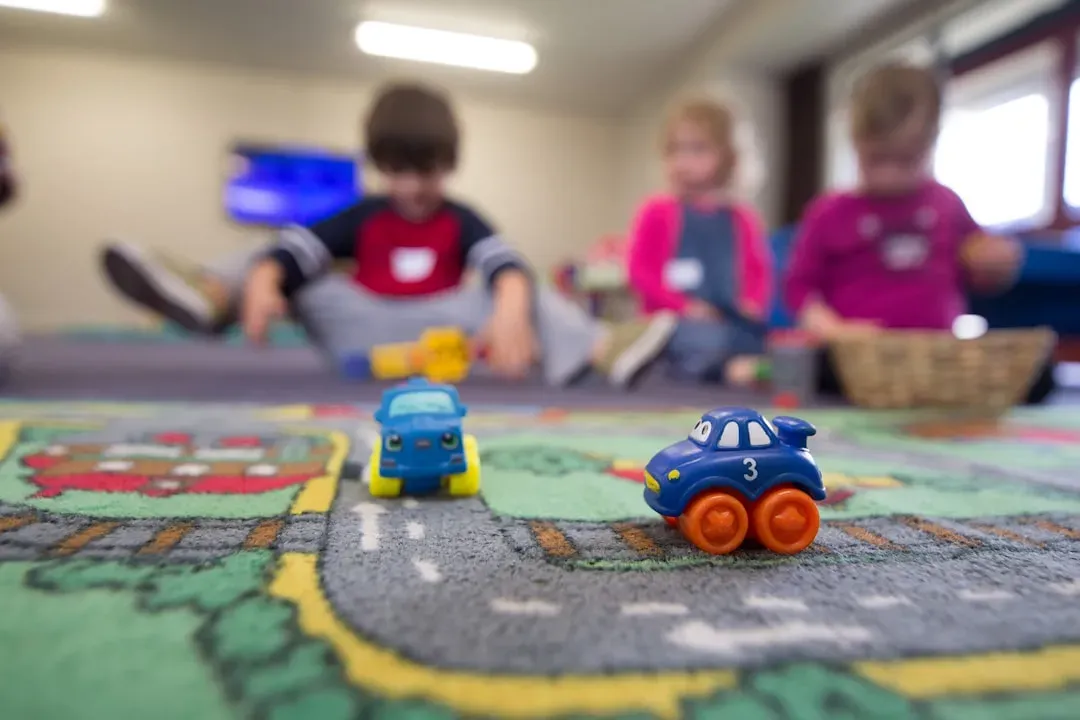
Childcare costs more than some mortgages, and nobody seems shocked by that anymore (Image Credits: Unsplash)
The financial math of raising young children while working has become genuinely strange. The average American family now spends $1,230 per month on infant center-based care, making childcare one of the single largest household expenses after housing in the United States. In several states that monthly bill actually rivals or exceeds rent.
The comparisons keep getting starker. In forty-five states plus Washington, D.C., the average annual cost of care for two children in a center exceeded annual mortgage payments, and an Economic Policy Institute analysis found the annual cost of infant childcare now exceeds in-state public college tuition in thirty-eight states and Washington, D.C. Parents aren't imagining this. The numbers back up what their bank accounts already told them.
I want flexibility, not a pizza party disguised as support

I want flexibility, not a pizza party disguised as support (Image Credits: Unsplash)
There's a gap between what employers think helps and what parents actually need. Half of working parents are seeking more flexible work schedules, and forty-six percent want employer-led programs to help reduce burnout and improve well-being. That's a specific, actionable request, not a vague call for more appreciation.
Yet the follow-through often lags behind the ask. Eighty-one percent of working parents say they want their employer to do more to tackle parental burnout, while eighty percent report their organization has nothing in place to support them. That disconnect is where a lot of quiet frustration lives.
My career has already paid a price for this, even if nobody wrote it down anywhere

My career has already paid a price for this, even if nobody wrote it down anywhere (Image Credits: Pexels)
Career sacrifice rarely gets announced. It happens through declined promotions, skipped conferences, and quiet decisions to stay in a role a little longer than planned. Thirty-one percent of working mothers say they have put their career on the back burner to manage home and caregiving responsibilities.
The disruption is measurable at a national scale too. According to KPMG's Parental Work Disruption Index, in December 2024, 1.3 million workers, who were eighty-nine percent women, either worked part-time or missed work entirely due to childcare problems, twenty-two percent more than the pre-pandemic baseline. That's not a small dip. It's a sustained pattern that keeps reshaping careers years after it started.
Sometimes I resent how normal this all feels to everyone else

Sometimes I resent how normal this all feels to everyone else (Image Credits: Pexels)
There's a strange loneliness in watching a genuinely difficult situation get treated as unremarkable. A 2025 American Family Survey found that seventy percent of Americans now say raising children is too expensive, a thirteen-point jump from 2024, and for the first time in over a decade of that survey, finances became the top reason families are limiting their size.
That shift in public sentiment suggests parents aren't overreacting to their own situation. They're responding to a landscape that has actually gotten harder in a fairly short window of time, even as the surrounding culture still expects the same smile at pickup and the same enthusiasm on a work call.
I'm afraid asking for help will make me look like I can't handle this

I'm afraid asking for help will make me look like I can't handle this (Image Credits: Pexels)
Many parents quietly calculate the professional cost of transparency before they ever raise their hand. Admitting a struggle at work can feel riskier than just absorbing it, especially in workplaces where support programs remain more theoretical than real. Eighty percent of employees report their organization has nothing in place to support them, which leaves a lot of parents solving problems privately rather than risking the conversation.
That silence has consequences that compound over time. When burnout goes unspoken, it tends to surface later as disengagement, turnover, or a slow erosion of the enthusiasm someone once brought to their job. The parents who look the most composed at work are frequently the ones managing the most beneath the surface.
I'm juggling more than just my kids, and it's exhausting to explain that every time

I'm juggling more than just my kids, and it's exhausting to explain that every time (Image Credits: Pexels)
Modern caregiving rarely stops at children. The average parent today is responsible for four separate care arrangements, covering children, aging loved ones, pets, and housekeeping, and those juggling these added responsibilities spend roughly seventeen percent more of their annual income on average. That's a lot of logistics running quietly in the background of a normal workday.
This layered responsibility rarely gets acknowledged in workplace policy, which tends to treat "parent" and "caregiver" as separate categories. In reality, many employees are managing both at once, stretching a single income and a single calendar across obligations that used to be spread across an extended family or a slower pace of life.
I want real solutions, not another wellness webinar

I want real solutions, not another wellness webinar (Image Credits: Pexels)
Parents have been remarkably clear about what would actually help, and it isn't abstract. Ninety-five percent of parents value expanded tax credits for care expenses, ninety-three percent believe employers should offer subsidized caregiving benefits, and ninety-one percent support universal child care. These aren't fringe demands. They're close to consensus.
The gap between that consensus and actual policy remains wide. Seventy-seven percent of working parents consider family-friendliness and childcare benefits their top priority when evaluating employers, which suggests companies slow to act on this are increasingly out of step with what the workforce actually values.
I love this life, even on the days it feels like too much

I love this life, even on the days it feels like too much (Image Credits: Pexels)
It would be misleading to end on exhaustion alone, because most working parents also describe real motivation and pride in what they're building. Seventy-six percent of working parents believe that becoming a parent has boosted their motivation at work, driving them to achieve greater success in their careers while also managing family responsibilities. The two truths coexist more often than people assume.
That duality is probably the most honest thing working parents wish they could say without qualification: this is hard, and it's also meaningful, and neither fact cancels the other out. The frustration isn't with parenthood itself. It's with a system that still hasn't caught up to how common, and how demanding, this reality has become for millions of families.
Where this leaves working parents now

Where this leaves working parents now (Image Credits: Pexels)
The numbers make one thing plain. What used to feel like a private struggle is, in fact, a shared and well-documented experience playing out across millions of households at the same time. Naming it clearly, without softening it for the sake of appearances, is often the first real step toward workplaces and policies that actually match the weight parents are carrying.