
Somewhere between a school pickup and a phone call about a parent's blood pressure, an entire generation quietly became the glue holding their families upright. Nobody handed Gen X a title for this. They just noticed one day that everyone in their orbit, from teenagers to octogenarians, seemed to need something from them at the same time.
The middle seat nobody signed up for

The middle seat nobody signed up for (MTAPhotos, Flickr, <a href="https://creativecommons.org/licenses/by/2.0/" target="_blank" rel="noopener">CC BY 2.0</a>)
The people born roughly between 1965 and 1980 are now squarely in their 40s and 50s, which happens to be the exact window when caregiving pressure from both directions peaks. Pew Research Center estimates that nearly a quarter of U.S. adults are part of the so-called Sandwich Generation, with Gen Xers currently in their 40s the most likely to find themselves sandwiched between their school-age or young adult children and an aging parent age 65 or older. That is not a small statistical footnote. It describes millions of dinner tables where one adult is quietly managing two entire life stages at once.
More than half of those in their 40s have a living parent who is age 65 or older in addition to having a child under the age of 18 and or a young adult child who they are still helping financially. Compare that to older or younger cohorts and the gap is striking. Only a third of those in their 50s are in this same situation, and only a quarter of those in their 30s are. Gen X isn't just present in this squeeze. It sits at the very center of it.
Why the timing lines up so badly
Why the timing lines up so badly (Image Credits: Pexels)
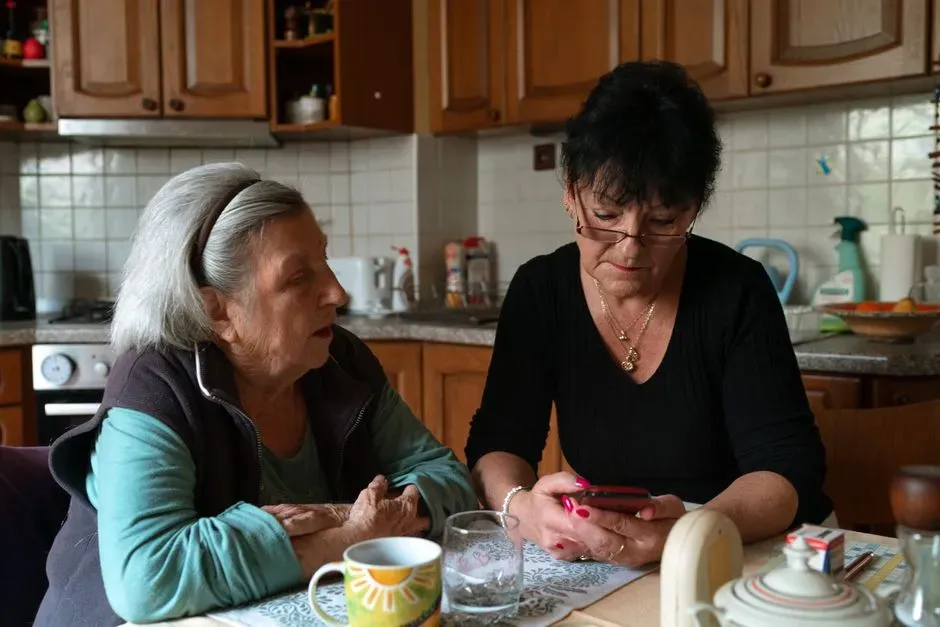
Part of this is simple biology colliding with delayed decisions. As adults, Gen X often prioritized education and or career over marriage, homeownership, and starting a family, and as a result, many people in this cohort had children later in life than their parents did. That choice made sense at the time. It just happened to shrink the gap between raising a child and caring for an aging parent to almost nothing.
Globally, increased life expectancy means parents are living longer, often into their 80s and 90s, while many individuals, particularly millennials and Gen X, are delaying parenthood, resulting in a narrower age gap between their children and their elderly parents. The result is a compressed timeline where a Gen Xer might be helping a fifteen year old with algebra homework and a parent's medication schedule in the same afternoon. There is no real precedent for this particular overlap in past generations.
Education and geography made it more likely, not less

Education and geography made it more likely, not less (Image Credits: Unsplash)
It might seem like more education and career success would buy some breathing room. The data suggests the opposite. About one in three people with at least a Bachelor's degree are raising children on top of having aging parents, which may be attributable in part to Gen X's prioritizing education over starting a family at a younger age, compared with only one in five of those adults with some college or less education.
There is a geographic wrinkle too. Many in this cohort frequently moved away from their hometown to pursue education or find work, leaving behind their native support system, and since many Gen Xers relocated for school or work, they oftentimes do not live close to their aging parents who are beginning to need such help. That means a lot of this caregiving happens over the phone, on video calls, and during exhausting weekend flights rather than down the street.
The financial squeeze from both directions

The financial squeeze from both directions (Image Credits: Unsplash)
Money is where the pressure becomes concrete. Raising a child has gotten dramatically more expensive, and elder care has followed the same trajectory. Based on Genworth's Cost of Care Survey, families can expect to pay around $6,000 a month for 44 hours per week of in-home care for an aging loved one, and for those who need more care, an assisted living community averages around $5,500 each month, while a 24-hour skilled nursing care facility costs $9,000 to $10,000 each month on average.
Layer that on top of raising kids and the numbers stop being abstract. The average family income for sandwich-generation caregivers sits around $73,454, with more than a quarter reporting financial difficulties, which is part of why setting up a dedicated caregiving budget and exploring tax deductions for dependents or medical expenses has become common advice. Many Gen Xers are also directly supporting both generations financially, not just managing schedules. Half of Gen Xers who care for their parents also have a child under the age of 18, and 56% financially support either their parents or their kids, or both.
Emotional exhaustion is climbing, not leveling off

Emotional exhaustion is climbing, not leveling off (Image Credits: Pixabay)
The strain isn't just financial, and recent survey data suggests it's getting worse year over year rather than settling into a manageable rhythm. The share of Americans identifying as part of the sandwich generation who say they are financially exhausted by parental caregiving has increased over the past three years, with 69% reporting financial pressure, trailing the 86% who reported emotional exhaustion and 80% who reported physical exhaustion.
Those emotional exhaustion numbers have risen steadily since the pandemic era. Among self-identified sandwich caregivers, 86% are emotionally exhausted caring for parents, up from 79% in 2022, while 80% are physically exhausted, up from 71% in 2022. That is not a temporary dip in morale. It looks like a slow, cumulative wearing down.
Careers and milestones are being quietly rearranged

Careers and milestones are being quietly rearranged (Image Credits: Pixabay)
Something has to give when a person is stretched between two generations, and often it's the career or the personal milestone that gets pushed back. More than half of sandwich caregivers said they have had to choose between their career and caring for their parents, more than double the share reported among adults overall. That is a striking gap between the general population and the people actually living inside this arrangement.
Life events get postponed too, sometimes indefinitely. About 21% of Americans ages 40 to 60 said they delayed major life events such as marriage or homeownership because of parental caregiving, rising to 45% among those who identify as sandwiched. Homeownership and marriage tend to top that list, which says something about how much bandwidth caregiving actually consumes.
The hours add up faster than people expect
The hours add up faster than people expect (Image Credits: Pexels)
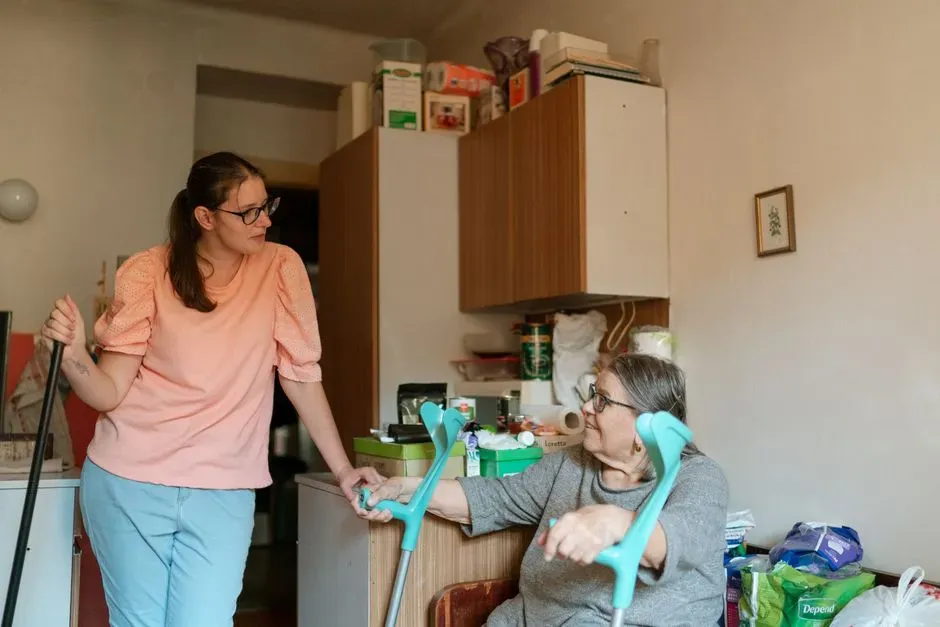
Caregiving is often described as invisible work, and one reason is that the hours rarely show up on a calendar the way a job does. The average sandwich generation caregiver spends 22 hours per week providing care, often while juggling their regular employment. That is more than half of a full-time job layered on top of an actual full-time job.
There's a mental health threshold buried in that number too. At around 20 hours of caregiving per week, sandwich caregivers begin to report serious symptoms of depression or anxiety. Given that the average sits just above that line, a large share of this generation is living right at the edge of clinical strain, week after week, without much acknowledgment that it's happening.
Gender still shapes who carries what

Gender still shapes who carries what (Image Credits: Unsplash)
The load isn't distributed evenly within Gen X households, even as some of the older assumptions have started to shift. The burden differs by gender, with men reporting greater financial pressure while women are more likely to bear the emotional and physical toll of caregiving. That split shows up consistently across multiple surveys, not just one.
Broader caregiving statistics back this up at scale. About 61% of sandwich generation caregivers are women, often taking on more of the caregiving responsibilities than men. It is worth noting the balance has shifted somewhat compared to a few years ago, but women still carry a disproportionate share of the day to day emotional and physical labor even as men report more of the financial anxiety.
Boundaries look different than they did for Boomers

Boundaries look different than they did for Boomers (Image Credits: Unsplash)
One quieter shift is how Gen X approaches the decisions their own parents once agonized over, particularly around moving a parent into a facility. Where that choice once carried heavy guilt, the calculus for many Gen Xers has become more practical. For Boomers, placing a parent in a facility often carried a weight of guilt, a sense that it reflected something about them and their family, while for their children it's being treated more like a practical question about care quality.
That doesn't mean the decisions are easy, just that they're being made with a different kind of clarity. Many Gen Xers are drawing firmer lines about what they can realistically absorb into their own households, weighing their own family's stability against the instinct to do everything themselves. It's a subtle generational shift, but it changes how these conversations unfold at kitchen tables across the country.
Retirement planning gets squeezed into the margins

Retirement planning gets squeezed into the margins (Image Credits: Pexels)
Perhaps the most overlooked cost of this squeeze is what it does to Gen X's own retirement trajectory. Every hour and every dollar spent on caregiving is, in a very literal sense, borrowed from a future that Gen Xers are supposed to be actively building for themselves right now. The average retirement balance of people in their 40s is $530,031, while those in their 50s have an average of $965,107 saved for retirement.
Those numbers sound reasonable in isolation, but they assume steady, uninterrupted contributions, which caregiving routinely disrupts. The average age of a sandwich generation caregiver to a Medicare beneficiary is 44, making most of these members of Gen X and older millennials, and this mid-career stage often coincides with peak earning years, making it especially important to work with a financial advisor who understands how caregiving impacts retirement planning. Peak earning years and peak caregiving years turning out to be the exact same years is not a coincidence anyone chose. It's simply how the math of delayed parenthood and longer life expectancy has landed on one particular generation.
The takeaway

The takeaway (Image Credits: Unsplash)
Gen X did not ask to become the connective tissue of the American family, but the numbers make clear that is roughly where they've landed. They are raising children later, watching parents live longer, and absorbing the financial and emotional cost of both in the same stretch of years their own parents got to spend building retirement savings in relative peace. Whatever comes next for this generation, it will likely be shaped as much by the people they're holding up as by anything they manage to build for themselves.