
Parenting in the 1970s operated on a completely different set of assumptions. There were no apps to monitor sleep cycles, no pediatric guidelines plastered across social media, and no online communities debating the safest crib setup. Parents largely relied on what their own mothers and grandmothers had done, along with occasional advice from a family doctor who may or may not have been working with solid evidence.
New parents today are living in an entirely different era from those who were raising families in that decade, and there was a more apparent laid-back approach to parenting back then. Some of those old habits turned out to be harmless quirks of the era. Others, it turned out, carried genuine risks that took decades of research to fully understand. Here are ten bedtime parenting habits from the 1970s that have quietly, and sometimes dramatically, faded from modern practice.
Putting Babies to Sleep on Their Stomachs

Putting Babies to Sleep on Their Stomachs (Image Credits: Pexels)
The prone sleeping position for babies had been strongly recommended in the sixties and seventies, despite earlier publications that had pointed to the associated risk. Parents were told that stomach sleeping prevented babies from choking on spit-up, and the logic seemed reasonable enough at the time. There had been an increase in the prevalence of prone sleeping among healthy infants in many Western countries from the late 1960s and 1970s into the 1980s, due to the provision of non-scientifically tested advice to parents.
Advice to put infants to sleep on their fronts for nearly half a century was contrary to evidence available from 1970 that this was likely to be harmful. A systematic review suggested this earlier recognition might have prevented over 10,000 infant deaths in the UK and at least 50,000 in Europe, the USA, and Australasia. Today, back sleeping is the universal standard recommendation from pediatric health organizations worldwide, and it's one of the clearest examples of how a widely accepted habit can quietly cause harm for generations.
Filling the Crib With Blankets, Pillows, and Bumper Pads

Filling the Crib With Blankets, Pillows, and Bumper Pads (Image Credits: Pexels)
Babies slept on their stomachs surrounded by blankets, stuffed animals, and crib bumpers. A fully dressed crib was seen as cozy and comforting, a sign that a parent had set up a proper, loving sleep space. Bumper pads in particular were marketed as protective, designed to keep a baby's limbs from slipping between the slats.
A soft pad does not allow for proper airflow to the child, and a child can suffocate if their airway is blocked. Children can also get their faces or limbs wedged between the bumper and the mattress, causing injury or suffocation. The pads are typically secured to the rails with ties that can pose a strangulation or choking hazard. Modern guidance includes not using padded bumpers around cribs, having the baby sleep on its back, and not using covers such as quilts or blankets for babies, all for the same purpose of avoiding the danger of suffocation.
Putting Cereal in the Bedtime Bottle
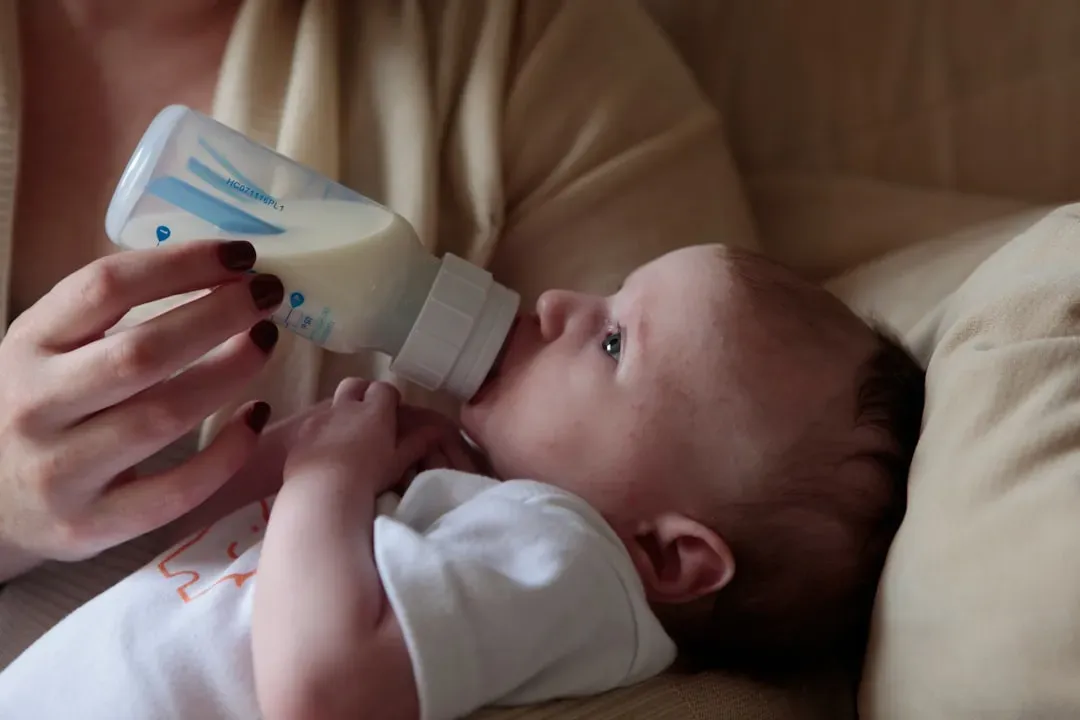
Putting Cereal in the Bedtime Bottle (Image Credits: Unsplash)
Moms were often told that adding a scoop of rice cereal to a newborn's evening bottle would help the baby sleep through the night. Parents proudly started spoon-feeding mushy solids to infants who were barely a few weeks old. It was considered a great trick for keeping fussy babies full and giving exhausted mothers a break. The idea that a heavier stomach meant a longer sleep stretch felt logical, and it spread widely through word of mouth.
Modern pediatric guidelines clearly state that introducing solid foods too early can choke a baby and disrupt their delicate digestive system. Doctors now recommend exclusively breastfeeding or formula feeding until an infant is at least six months old. Rushing the transition to solid meals is recognized as a major choking hazard rather than a clever hack. The cereal-in-the-bottle trick persisted for years in parenting folklore long after the medical consensus had moved on.
Using Alcohol to Soothe a Teething Baby at Night

Using Alcohol to Soothe a Teething Baby at Night (Image Credits: Unsplash)
When a baby started fussing over painful new teeth, grandma's favorite remedy was rubbing a little bourbon straight on the gums. A quick dab of strong liquor was widely praised as the best way to numb the pain and put a crying infant to sleep. It was a folk remedy passed down through generations without a single worry about the alcohol content. In the 1970s, this was simply what you did, passed along at kitchen tables and over backyard fences.
Handing any amount of hard liquor to an infant is currently considered dangerous and highly abusive. Pediatricians strongly warn that even tiny drops of alcohol can cause serious toxicity and dangerous drops in a baby's blood sugar. Today, safe teething rings and approved pediatric pain relievers are used to soothe crying babies. It's one of those habits that sounds almost unbelievable today, yet it was genuinely commonplace for decades.
Leaving Young Siblings in Charge at Bedtime

Leaving Young Siblings in Charge at Bedtime (Image Credits: Pexels)
It was totally standard practice to leave a second grader in charge of the toddlers while parents went out for a dinner date. A seven-year-old was basically considered a fully capable adult who could easily heat frozen dinners and manage bedtime routines. People simply trusted that older siblings would step up and handle any minor emergencies that popped up. In households with several children, this kind of arrangement was just practical reality.
Leaving a small child to supervise even smaller children is now universally viewed as a recipe for disaster. Child welfare experts agree that kids under twelve lack the cognitive maturity to handle a real crisis like a fire or severe injury. The shift here isn't just about safety rules. It reflects a broader change in how society thinks about childhood and the cognitive and emotional limits of young children, particularly under stress.
Smoking Indoors While Kids Were Getting Ready for Bed

Smoking Indoors While Kids Were Getting Ready for Bed (Image Credits: Pexels)
It was common for adults to smoke cigarettes indoors and around children during the seventies. The living room, where children wound down before bedtime, was also where parents and guests regularly lit up. Smoking indoors was legal in nearly every setting, including classrooms, hospitals, and airplanes. Kids saw it as routine.
The science of secondhand smoke and its effects on children's respiratory health was not yet part of mainstream public awareness. Over subsequent decades, research established clear links between childhood secondhand smoke exposure and a range of health problems, including increased rates of asthma, respiratory infections, and even elevated SIDS risk. Risk factors that parents can do something about include sleeping posture, feeding practices, and passive smoking. The image of a smoke-filled living room as children headed upstairs to bed is now thoroughly a thing of the past.
No Consistent Bedtime or Sleep Routine

No Consistent Bedtime or Sleep Routine (Image Credits: Pexels)
While Dr. Spock recognized a regular daily routine as useful, he didn't think it necessary to have a strictly adhered-to feeding or sleeping schedule. That permissive attitude toward timing trickled into many households during the 1970s, where children often drifted to bed whenever the evening naturally wound down, rather than at a set hour with a consistent routine. There was a more apparent laid-back approach to parenting overall.
Bedtime routines are considered the perfect package for not only sleep, but for promoting positive child development. Children who have consistent bedtime routines not only sleep better, but it also promotes things like literacy, attachment, language, bonding, and self-care. Research in the years since has made a compelling case for routine as a genuine developmental tool, not just a matter of convenience for tired parents. The casual, unstructured approach to bedtime that felt natural in the 1970s is now understood as a missed opportunity.
Letting Children Fall Asleep in Front of the Television

Letting Children Fall Asleep in Front of the Television (oddharmonic, Flickr, <a href="https://creativecommons.org/licenses/by-sa/2.0/" target="_blank" rel="noopener">CC BY-SA 2.0</a>)
Childhood in the 1970s didn't come with screen time limits or digital assistants. The television was the family's shared evening companion, and children frequently dozed off on the couch or in front of the set before being carried to bed. Nobody considered it particularly harmful. It was simply what happened after dinner in millions of homes across the country.
Sleep research conducted in the decades that followed has shown that exposure to television before bed suppresses the natural onset of sleep and reduces overall sleep quality in children. The blue-light and stimulation problem associated with screens today is actually rooted in a much older habit. Bedtime routines that wind the body and mind down gradually are considered the ideal preparation for healthy sleep. Falling asleep to the flickering light of a TV set, it turns out, was quietly working against that process all along.
Sending Children to Bed as a Form of Punishment

Sending Children to Bed as a Form of Punishment (Image Credits: Pexels)
In the 1970s, sending a child to bed early was a standard disciplinary tool. It was quick, it required no negotiation, and it carried a clear social message: bedtime is something you earn, and misbehavior costs you the rest of the evening. Disciplinary practices in the past often involved stricter and harsher measures. Parents believed these approaches would teach respect and obedience.
Many modern parenting philosophies lean towards more understanding and communicative strategies. Child psychologists have since pointed out that using sleep as punishment creates negative associations with bedtime, which can contribute to bedtime resistance and anxiety in children. When a child learns that sleep is a consequence rather than a natural and comforting part of the day, the whole process of going to bed becomes emotionally loaded. Consistent and positive bedtime routines are now understood to support not just sleep quality, but also attachment and emotional development.
Expecting Complete Silence and Rigidity During Bedtime

Expecting Complete Silence and Rigidity During Bedtime (Image Credits: Pexels)
Looking back at the casual freedoms of seventies childhood reveals how dramatically our understanding of risk, safety, and responsibility toward children has changed. Back in the days of disco and bell-bottoms, parents had a completely different rulebook for raising their kids. Bedtime in many homes ran on parental authority rather than attunement. Children were expected to go to their rooms, be quiet, and sleep without much acknowledgment of how they were feeling or what they needed.
Attachment theory shifted parenting attitudes in the 1970s and 80s. Warm, sensitive care and physical contact was no longer seen as a threat to a baby's development of autonomy – parents could hold their baby again without worrying about "spoiling" them. The shift toward responsive, emotionally aware bedtime practices happened gradually, but it fundamentally changed what a good bedtime looks like. Today, reading together, talking through the day, and acknowledging a child's feelings before lights-out are considered meaningful rather than indulgent.
What stands out most, looking back at these habits, is how confidently they were practiced. Nobody thought they were doing anything wrong. Some of these routines were simply cultural norms, while others were genuinely promoted by doctors and experts of the time. The lesson isn't really about judgment. It's a reminder that parenting knowledge keeps moving, and what feels obvious today might look quite different to the parents of fifty years from now.