
There’s a certain quality some people carry without ever announcing it. They show up on time, keep their space tidy, follow through on small promises, and manage their reactions in moments when most people unravel. It’s not a personality type. It’s a set of habits, formed early and reinforced quietly over years of structured upbringing.
Discipline in childhood isn’t just about strict rules or early bedtimes. Instilling healthy behaviors in early childhood is crucial, as they can have lifelong impacts. The habits that follow someone into adulthood often trace back to that foundation, and many of them are subtle enough that you might not notice them right away. Here are ten that tend to give it away.
1. They Keep a Consistent Daily Routine Without Being Told To

1. They Keep a Consistent Daily Routine Without Being Told To (Image Credits: Unsplash)
People raised with discipline tend to build structure for themselves almost automatically. A consistent daily routine is often the key to a disciplined life, and whether it's a morning jog or an evening reading session, disciplined people usually have certain habits they stick to every day. This doesn't come from rigidity. It comes from years of living in an environment where structure was the default.
Research indicates that people who lead unpredictable, inconsistent lives are more prone to stress and anxiety. Someone raised with discipline has, in effect, internalized a solution to that problem. Their routine isn't a cage. It's a compass they set for themselves each morning without giving it a second thought.
2. They Don't Need External Pressure to Get Things Done

2. They Don't Need External Pressure to Get Things Done (Image Credits: Pexels)
One of the clearest signs of a disciplined upbringing is the ability to initiate. People who grew up in structured households learned early that waiting to be told what to do wasn't the norm. Tasks got done because it was time to do them, not because someone was watching. That internal drive quietly persists into adulthood.
Unlike self-efficacy, a sense of self-discipline is not solely dependent on completing specific tasks in a particular field, but can also be cultivated by exercising self-discipline in areas of proficiency, and this feeling satisfies people's basic psychological needs for autonomy and competence. People with this habit move through their obligations with a quiet self-sufficiency that tends to make them reliable in professional and personal settings alike.
3. They Can Sit With Discomfort Without Immediately Seeking Relief

3. They Can Sit With Discomfort Without Immediately Seeking Relief (Image Credits: Unsplash)
Discipline in childhood often meant learning to tolerate frustration rather than escape it. The ability to delay gratification, to wait, to endure, is one of the most telling traces of a structured upbringing. Research has shown that the ability to delay gratification during childhood is associated with a lower tendency toward frustration and aggression later in life, better school and test score performance, and greater social responsibility and social competence in adolescence.
The ability of preschool children to delay gratification is predictive of a range of life outcomes that extend well beyond the preschool years, and children who are better able to cope with a delay also cope better in stressful and frustrating situations during adolescence. In adults, this shows up as a kind of steadiness. They don't panic under pressure. They don't reach for distraction the moment something feels hard.
4. They Respect Other People's Time

4. They Respect Other People's Time (Image Credits: Pexels)
Punctuality is one of those habits that seems minor until you notice who consistently has it and who doesn't. People raised with discipline tend to treat time, both their own and others', as something worth protecting. Showing up late repeatedly is often a signal that time management was never modeled or reinforced during childhood. Showing up consistently on time signals the opposite.
This goes beyond simply watching the clock. It's about internalizing that keeping someone waiting is a small form of disrespect. Disciplined upbringings tend to teach this lesson early, often through consequences attached to tardiness rather than lectures about it. The habit sticks because the understanding behind it is genuine.
5. They Follow Through on Small Commitments

5. They Follow Through on Small Commitments (Image Credits: Pexels)
It's easy to keep big promises when there's public accountability and real stakes. The real tell is what someone does with the small ones: returning a borrowed item, sending a message they said they would, finishing a task nobody would notice them skipping. People raised with discipline tend to close those loops almost reflexively. The habit of honoring a commitment doesn't scale with importance. It just applies.
Positive discipline, a non-punitive and non-indulgent approach, can help enhance parenting self-efficacy and promote healthy lifestyle behaviors in children. One of those healthy behaviors is accountability on a small scale. When children grow up in homes where adults model follow-through, they absorb the expectation that a word given is a word kept, regardless of how inconvenient that turns out to be.
6. They Maintain Order in Their Personal Space

6. They Maintain Order in Their Personal Space (Image Credits: Unsplash)
Not everyone raised with discipline keeps a spotless home, but there's usually a baseline of organization that feels habitual rather than effortful. Papers go somewhere. Dishes don't pile for days. Bags get unpacked. It doesn't stem from perfectionism so much as a deeply ingrained sense that your environment reflects your standards, and that standards matter.
This particular habit is easy to underestimate. It seems aesthetic on the surface, but it's functional at its core. People who grew up in structured households were often taught, explicitly or not, that maintaining a space is part of respecting it. The habit travels with them into apartments, offices, and shared spaces where no one is enforcing any rules at all.
7. They Manage Emotional Reactions in High-Pressure Situations

7. They Manage Emotional Reactions in High-Pressure Situations (Image Credits: Unsplash)
This one is subtle enough that people often mistake it for coldness. Someone raised with discipline doesn't necessarily show less emotion. They tend to show it more proportionally. They can pause before responding in an argument. They can disagree without escalating. That capacity for emotional regulation didn't arrive naturally. It was practiced.
Helping a child learn how to handle difficult emotions teaches them to regulate, and self-regulation is built through relationships of safety and trust. When a structured upbringing provides both safety and clear expectations, children learn to sit with emotional discomfort and respond thoughtfully rather than reactively. The adult version of that child tends to be the calmest person in a difficult room.
8. They Finish What They Start
8. They Finish What They Start (Image Credits: Pexels)
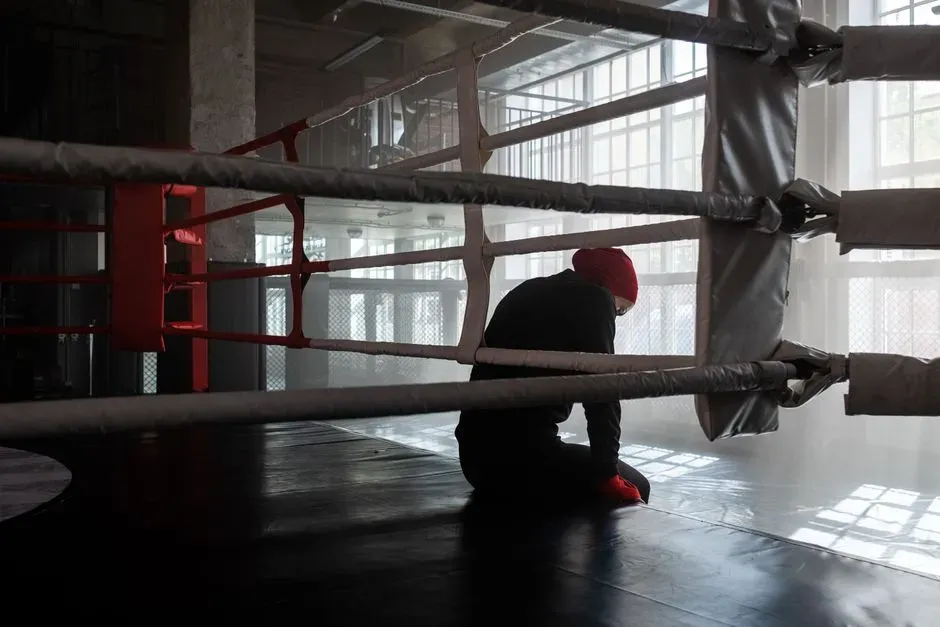
There's a real gap between people who begin things enthusiastically and people who actually complete them. People raised with discipline tend to fall into the second group more often, not because they're more talented or motivated, but because they were taught that finishing is non-negotiable. Quitting when something gets hard was simply not modeled as an option.
Psychologists note that consistently falling short of one's own goals can be a sign of low discipline. The reverse is also true. People who reliably complete projects, courses, and commitments have usually had finishing reinforced from an early age. It shows up across contexts, in career, creative work, physical fitness, and personal relationships, as a steady quality of dependability.
9. They Take Responsibility Without Deflecting

9. They Take Responsibility Without Deflecting (Image Credits: Unsplash)
When something goes wrong, the instinct to assign blame elsewhere is common. People raised with accountability-focused discipline tend to move differently in those moments. They name their own role clearly. They don't catastrophize, but they also don't excuse themselves. That particular habit makes them easier to work with, easier to trust, and more effective at problem-solving because they're not wasting energy on deflection.
This behavior is closely tied to how discipline was framed during childhood. Positive discipline, as a non-punitive and non-indulgent approach, promotes healthy lifestyle behaviors in children, including the understanding that owning a mistake is not the same as being a failure. Children who internalize that message grow into adults who find accountability manageable rather than threatening.
10. They Respect Rules Even When Nobody Is Watching

10. They Respect Rules Even When Nobody Is Watching (Image Credits: Flickr)
Perhaps the quietest signal of all. Someone who follows a rule only when enforcement is present hasn't really internalized it. Someone who follows it when the room is empty, when the cameras aren't rolling, when it would be easy and harmless to ignore it, has. That's the hallmark of a discipline that became genuine rather than performative.
Children who display more capabilities in delay choice show higher rates of self-reliance, self-efficacy, and self-confidence. Those qualities translate, in adulthood, to a person who governs themselves by internal standards rather than external enforcement. They stop at the light when no one is coming. They cite their sources when no one would check. They do the right thing not because they're being watched, but because by now, that's simply who they are.
None of these habits are dramatic. They don't announce themselves in conversations or get listed on resumes. They show up in small moments, repeated over time, in ways that quietly shape how someone moves through the world. Discipline in childhood, when it comes from consistency rather than fear, tends to leave exactly these kinds of traces: practical, steady, and almost invisible to anyone who isn't paying attention.