
Gen X spent its teenage years answering landlines because there was no other choice and its twenties learning to fax, then email, then instant message. That gives this generation a strange vantage point: old enough to remember life before smartphones, young enough to still be neck deep in the same digital workplace as Millennials and Gen Z. It also means Gen X has developed some very specific, very human opinions about the habits younger coworkers, neighbors, and relatives have picked up along the way.
None of this is really about nostalgia for rotary phones or a longing to go back to fax machines. It is more about a handful of everyday behaviors that keep showing up in offices, group chats, and family gatherings, and that Gen X quietly wishes would just fade out already.
They screen every phone call instead of just picking it up

They screen every phone call instead of just picking it up (Image Credits: Pexels)
For Gen X, a ringing phone used to mean someone needed you right now, and you answered it, full stop. That instinct clashes with newer habits, since a survey of thousands of Gen Z adults found that 69% keep their phones on silent most days, and 74% regularly ignore calls from unfamiliar contacts. Texting has simply become the default, with roughly 64% of Gen Z respondents saying they prefer texts over phone calls in that same research.
Gen X does not necessarily see this as laziness so much as a strange kind of distance. Researchers have even noted that Gen Z has opted out of one specific format, the real-time, unscripted voice call, as a preference shaped by growing up digital-native. Fair enough in theory, but when a text goes unanswered for six hours and a follow up call goes straight to voicemail, it starts to feel less like a preference and more like avoidance.
They quietly quit jobs without any notice

They quietly quit jobs without any notice (Image Credits: Pexels)
Gen X grew up believing you gave two weeks’ notice even if you hated the job, because your name and your word mattered on the way out the door. That norm has clearly eroded, since one recent workplace survey found that nearly a third of Gen Z employees, about 30%, have “ghosted” an employer by quitting without any notice or explanation. To a generation raised on burning as few bridges as possible, that lands as baffling.
It is not just the abrupt exits either, it is how normal the whole pattern has become. Whereas Gen Z’s average tenure in the first five years of a career sits at just 1.1 years, compared with 2.8 years for Gen X and 2.9 for Baby Boomers, Gen X built entire careers on the assumption that sticking around counted for something. The reasoning behind the shorter stints may be more complicated than simple disloyalty, but the optics still sting for a generation that measured commitment in years, not months.
They talk in emoji and slang that needs a translator
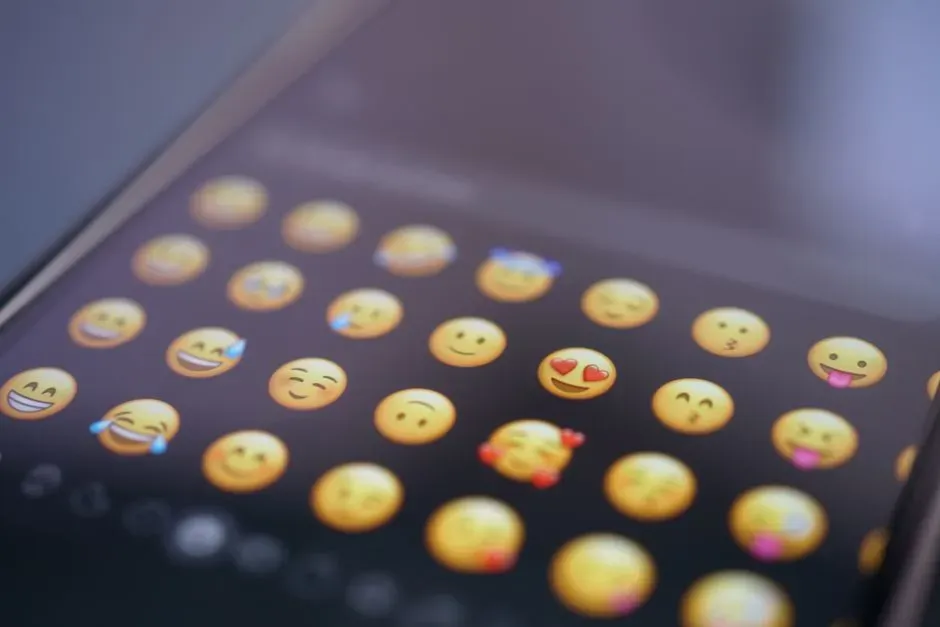
They talk in emoji and slang that needs a translator (Image Credits: Pexels)
Gen X managers have started keeping informal glossaries just to survive their own inboxes. One 2024 workplace study found that office jargon from older generations sends 68% of Gen Z workers scrambling online to decode buzzwords weekly, while they simultaneously inject their own slang into the mix. It is a two way street of confusion, but Gen X tends to notice the traffic coming from the other direction more.
The mix ups can be genuinely funny in hindsight, even if they cause a moment of panic first. A widely reported example involved a 24-year-old employee whose coworkers assumed a message about being “out of pocket” meant something crazy or inappropriate, rather than simply unavailable. Multiply that kind of mismatch across a full day of Slack messages and it is easy to see why Gen X sometimes just asks someone to call them instead, which, admittedly, creates its own problem.
They treat job-hopping like a badge of honor

They treat job-hopping like a badge of honor (By bpsusf, <a href="https://commons.wikimedia.org/w/index.php?curid=21177917" target="_blank" rel="noopener">CC BY 2.0</a>)
There is a difference between quitting abruptly and simply never staying anywhere long enough to build depth, and Gen X notices both. Industry researchers have framed the shorter tenures as “growth-hunting” rather than disloyalty, but the numbers still show millennials stayed in their first jobs for 1.8 years, while Gen Xers and Boomers held onto early career jobs for around three years before moving on. That gap represents a fundamentally different idea of what a résumé is supposed to prove.
Younger workers argue the moves are strategic, chasing skills and mentorship rather than a bigger paycheck, and there is some truth to that defense. The salary difference between people who stay in a job and those who switch has actually narrowed to about 0.2 percentage points, one of the smallest gaps in a decade. Still, Gen X, having watched entire careers get built through patience and repetition, finds it hard not to wince at a résumé with five jobs in five years.
They scroll through their phones during meetings and dinner

They scroll through their phones during meetings and dinner (Image Credits: Pexels)
Nothing rattles a Gen X manager quite like a lowered head and a glowing screen during a conversation that is supposedly important. It reads as disrespect, even when it isn’t. One widely shared account described a manager who assumed a younger employee typing away during a meeting was being rude, only to later learn she was simply taking notes on her phone rather than a notepad.
That mix up is instructive, because it shows the behavior often gets misread on both sides. Gen X was trained to signal attention by putting devices away entirely, while younger colleagues frequently use their phones as their primary notebook, calendar, and reference tool all at once. The habit still grates, though, especially at a dinner table where a notepad clearly is not the excuse.
They film everything instead of just experiencing it

They film everything instead of just experiencing it (Image Credits: Pexels)
Concerts, birthdays, sunsets, even ordinary Tuesday lunches now regularly get filmed before they get lived. Gen X, who mostly relied on disposable cameras and a handful of printed photos to remember an entire summer, finds the constant documentation a little exhausting to watch. There is a sense that something gets lost when every moment doubles as content before it is even finished happening.
To be fair, younger generations did not invent the impulse to capture memories, they just have vastly better tools for it. What bothers Gen X more is the priority order, phone up first, then maybe actually watching whatever is happening. It is less a moral objection and more a quiet wish that people would occasionally just put the camera down and be there.
They dodge hard conversations by hiding behind a text

They dodge hard conversations by hiding behind a text (Image Credits: Unsplash)
Breakups, disagreements, and awkward feedback used to happen in person or, at minimum, over the phone, because Gen X considered that the bare minimum of respect. Now those same conversations often arrive as a paragraph of texts, sent from a safe distance. Ironically, even the phone calls that do still happen tend to be reserved for the heaviest moments, since calls are increasingly saved for serious matters such as job rejections, family emergencies, or difficult conversations rather than everyday check ins.
That shift makes a certain kind of sense given how much anxiety phone calls seem to generate. Australian research found that roughly 90% of Gen Z respondents reported feeling anxious about speaking on the phone, which helps explain the retreat into text. Gen X still finds it a little cold, though, watching a hard conversation get reduced to a string of texts sent from the safety of another room.
They expect a promotion before they've paid their dues

They expect a promotion before they've paid their dues (Image Credits: Unsplash)
Gen X spent years, sometimes a decade, in entry level roles before anyone handed over a title with real authority attached. That timeline does not always match how younger workers see their own trajectory. A recent industry piece noted that roughly 65% of hiring managers describe Gen Z employees as entitled, and only about 8% of non-Gen Z coworkers agree their younger colleagues display professionalism, despite 59% of Gen Z believing they do.
That gap in self perception versus outside perception is really the heart of the frustration. Confidence itself is not the problem, Gen X generally respects ambition. The friction shows up when confidence arrives without the years of unglamorous groundwork that Gen X assumed was simply part of the deal.
They turn small annoyances into full-blown therapy sessions

They turn small annoyances into full-blown therapy sessions (Image Credits: Pexels)
A late meeting, a mildly annoying coworker, or a slightly blunt email can now get labeled as triggering, toxic, or a boundary violation. Gen X, who grew up largely without the vocabulary or the cultural permission to discuss mental health openly, appreciates that younger generations have normalized therapy language in ways that genuinely help people. The frustration is less about the language existing and more about its overuse for situations that used to just get filed under “a bad day.”
There is a real generational irony buried in this one. Gen X often wishes it had been given permission to name its own stress decades ago, yet watching every minor inconvenience get treated with clinical weight can feel like the pendulum swung too far the other direction. The hope, mostly, is for a middle ground where real struggles get taken seriously without every small friction getting the same label.
They wave off good advice as "boomer energy"

They wave off good advice as "boomer energy" (Image Credits: Pexels)
Few things annoy Gen X faster than watching a hard-earned lesson get dismissed with a smirk and a label that technically does not even apply to them. Gen X is not the generation that phrase was coined for, yet it often gets caught in the crossfire anyway. Workplace researchers have pointed out that these clashes are not trivial either, since different communication styles and workplace expectations among generations were identified as the biggest challenge facing multigenerational workforces, with breakdowns estimated to cost companies $62 billion annually.
What stings most is not the disagreement itself, disagreement is normal and even healthy across generations. It is the reflex to file experience under “outdated” without actually testing whether the advice holds up. Gen X has lived through recessions, dial-up internet, and three different email platforms at every job, and would simply like a beat of consideration before the eye roll arrives.