
Some phrases just have a way of curdling a mood the second they leave someone's mouth. They're not always malicious, sometimes they're even meant as jokes or compliments, but they land with a thud that makes everyone in earshot want to disappear. Relationship therapists and everyday couples alike keep flagging the same handful of lines that never seem to age well, no matter how many think pieces or awkward silences follow them.
1. "Calm down, you're overreacting"
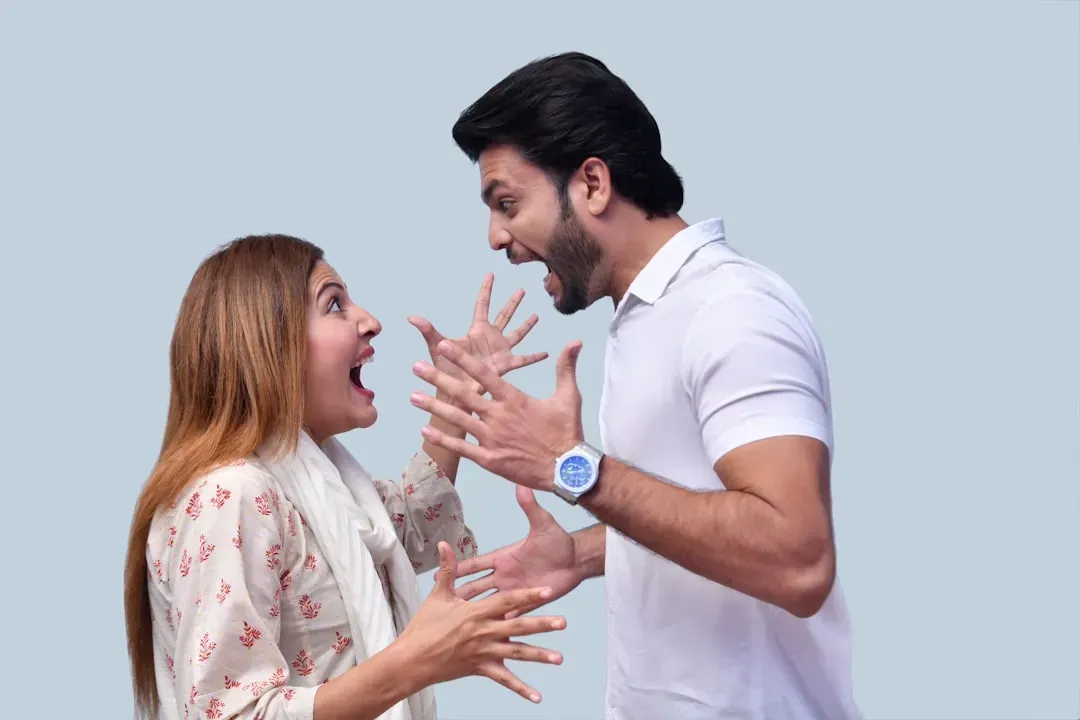
1. "Calm down, you're overreacting" (Image Credits: Unsplash)
This one tends to show up right when emotions are already running high, which makes it about the worst possible time to say it. Instead of de-escalating anything, it usually signals that the speaker isn’t actually listening, just waiting for the other person to stop being upset so the conversation can end. Therapists who study communication patterns often point out that phrases dismissing someone’s emotional state tend to shut down dialogue rather than open it.
Friends who witness this in public settings often describe a very specific kind of cringe, the sense that one partner just got smaller in front of everyone. It’s less about the words themselves and more about the timing and tone, which almost always reads as condescending rather than calming. Even well-intentioned versions of this phrase rarely land the way the speaker hopes.
2. "That's what she said"

2. "That's what she said" (Image Credits: Pexels)
Once a reliable laugh generator from mid-2000s sitcom culture, this joke has aged into something closer to a groan trigger. The problem isn’t necessarily the joke itself but the frequency and randomness with which some guys still deploy it, often in settings where it clashes badly with the conversation’s tone. What used to feel cheeky now often reads as lazy, especially to partners who’ve heard it dozens of times already.
Comedy writers have noted for years that jokes lose power through overuse, and this is a textbook example. When a partner says it in front of coworkers, family, or during a serious moment, the mismatch between the joke’s flippancy and the room’s mood is usually what causes the wince. It’s less about being offended and more about the joke simply not fitting anymore.
3. "I'm not like other guys"

3. "I'm not like other guys" (Image Credits: Pixabay)
This phrase has become something of a running joke online precisely because it tends to undercut itself the moment it’s said. Claiming exceptionalism out loud rarely convinces anyone, and it often invites exactly the skepticism it’s trying to avoid. Social media trends over the past few years have turned this phrase into a punchline, with countless posts mocking the self-aware irony of announcing your own uniqueness.
Partners who hear this often describe an immediate urge to change the subject, not because the sentiment is offensive, but because it feels performative. Actions tend to demonstrate difference far more convincingly than a declaration ever could. When the phrase surfaces in mixed company, it often draws more attention to the insecurity behind it than to any actual distinguishing trait.
4. "Smile more, you'd look prettier"

4. "Smile more, you'd look prettier" (Image Credits: Pixabay)
This one has drawn public criticism for years, particularly as conversations around unsolicited comments on appearance and emotional labor have grown more mainstream. Telling a partner to smile implies their natural expression is somehow lacking, which rarely goes over well regardless of intent. It also puts the focus on how someone looks for others rather than how they actually feel, which many partners find reductive.
Cultural commentary on this phrase spiked noticeably after it became a broader talking point in discussions about everyday sexism, particularly directed at women. Even when said affectionately, it tends to land as a critique rather than a compliment. The secondhand embarrassment often comes from watching someone visibly deflate after hearing it, especially in front of others.
5. "Women be shopping"

5. "Women be shopping" (Image Credits: Unsplash)
Originally a viral meme format, this phrase and its many variations have stuck around far longer than most internet jokes typically do. The issue isn’t necessarily the joke’s origin but its overuse, especially when deployed as a blanket generalization rather than a lighthearted aside. Partners often find it grating specifically because it flattens individual behavior into a lazy stereotype.
What made the meme popular initially, its absurdist tone, tends to get lost when people repeat it earnestly or as a genuine criticism. The gap between the joke’s ironic internet origins and its real-world delivery is usually where the cringe sets in. It reads less like humor and more like a dated reference that missed its expiration date.
6. "It's not that deep"
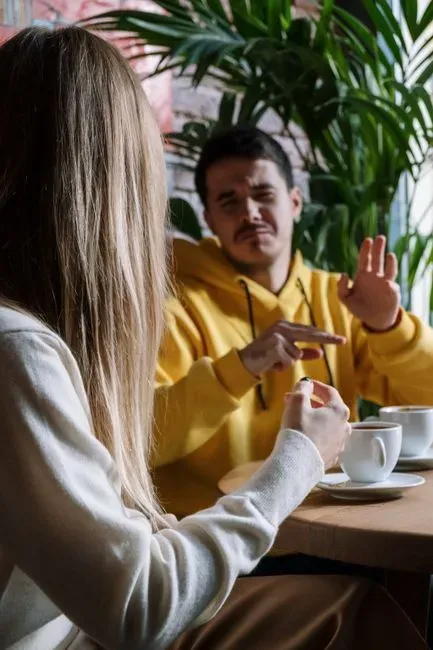
6. "It's not that deep" (Image Credits: Pexels)
This phrase often appears in moments where a partner is trying to express something meaningful, only to have the conversation’s significance flattened in a single sentence. It can feel like a conversational shortcut that avoids engaging with whatever the other person actually cares about. Communication researchers frequently note that minimizing language, even when unintentional, tends to erode trust over time because it signals disinterest.
The secondhand embarrassment here usually comes from watching one partner visibly try to articulate something real while the other brushes it off almost reflexively. It’s a small phrase, but the dismissiveness behind it tends to register loudly to anyone nearby. Often the speaker doesn’t even realize how final and closed-off the phrase sounds until the room goes quiet.
7. "You're so pretty for a [insert body type/race/etc.]"
![7. "You're so pretty for a [insert body type/race/etc.]" (Image Credits: Pexels)](https://nvmwebsites-budwg5g9avh3epea.z03.azurefd.net/onpoint/6feb4a533ef82af397bd7e6643a5a968.webp)
7. "You're so pretty for a [insert body type/race/etc.]" (Image Credits: Pexels)
Backhanded compliments like this one have drawn increasing pushback in recent years as conversations about implicit bias and microaggressions have become more visible in mainstream discourse. The compliment portion tends to get overshadowed entirely by the qualifier, which implies a baseline expectation that the person is somehow beating. Partners on the receiving end often describe feeling more insulted than flattered, regardless of the speaker’s intent.
This kind of phrase has become a frequent topic in discussions about dating and everyday bias, particularly on social platforms where people share firsthand experiences. The cringe factor for bystanders tends to be immediate, since the qualifier is usually obvious to everyone except the person saying it. It rarely requires malice to cause damage, just a lack of awareness about how the words actually land.
8. "I was just joking, relax"

8. "I was just joking, relax" (Image Credits: Pexels)
This phrase typically shows up as damage control after another comment has already landed badly, which makes it feel less like an apology and more like a deflection. Instead of acknowledging that a joke missed the mark, it shifts responsibility onto the partner for reacting at all. Relationship communication experts often describe this pattern as a secondary offense, sometimes worse than the original comment because it avoids accountability entirely.
Bystanders tend to cringe here specifically because the follow-up often makes the original moment feel worse rather than better. It rarely resolves tension and more often escalates it, since the partner on the receiving end is left feeling both hurt and dismissed. The phrase has become something of a red flag in broader conversations about emotional accountability in relationships.
Phrases like these tend to persist not because people mean harm, but because habits and old jokes are hard to shake, even when the room has clearly moved on from them. Recognizing the pattern is usually the first step toward retiring these lines for good.