
Every generation rewrites the unspoken rules of love a little. Boomers built relationships around clear timelines, defined roles, and a shared understanding that commitment meant following a script. Millennials, shaped by financial instability, digital overload, and unprecedented access to psychological ideas, have quietly torn up large parts of that script and replaced it with something more fluid, more negotiated, and sometimes, more demanding.
The shifts aren’t always dramatic. They rarely announce themselves. They show up in how couples handle a disagreement, how they think about personal space, or what they consider a non-negotiable before things get serious. Some of these changes genuinely seem to strengthen relationships. Others are still being tested. Here are eleven of the most telling ones.
1. Treating Therapy as Compatibility, Not Crisis Management

1. Treating Therapy as Compatibility, Not Crisis Management (Image Credits: Pexels)
More than half of millennials say they prefer to date or be friends with people who are already in therapy, and roughly one in eight actively filter for it. That’s a striking shift from the boomer-era assumption that counseling is something you reluctantly seek after a relationship has already started to fall apart. For millennials, going to therapy signals that someone has done the work to understand themselves.
Born between 1981 and 1996, millennials approach psychological well-being with notable openness and self-awareness, viewing therapeutic conversations as opportunities for deep self-understanding, personal development, and increased emotional intelligence. Research backs this up too. Studies show that couples with higher levels of emotional intelligence are significantly more likely to stay together. Therapy has become less a last resort and more a relationship prerequisite.
2. Setting Explicit Boundaries Around Digital Life
2. Setting Explicit Boundaries Around Digital Life (Image Credits: Pixabay)
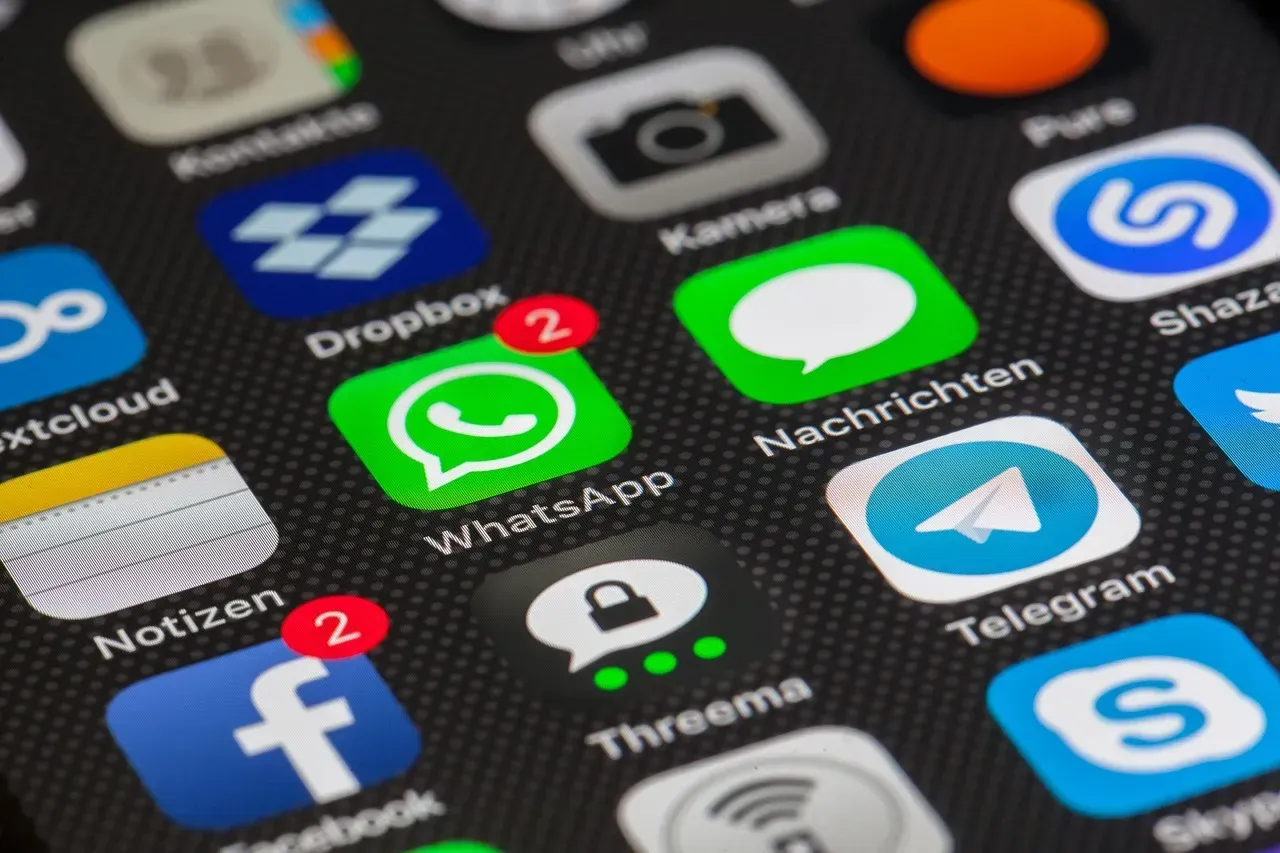
Clear boundaries around social media and apps have become a recognized way to prevent what is now often called “micro-cheating” and digital emotional harm. This is something most boomers never had to navigate. For millennials, questions like “Are you still on dating apps?” or “Why are you liking her posts at 1 a.m.?” carry real emotional weight, and the answers genuinely matter to how trust gets built.
Relationship coaches have warned that staying on apps after becoming exclusive is a serious red flag, and research found that roughly four in ten people in serious relationships were still active on dating apps. For millennials navigating digital dating, an active profile on someone who called you their partner was never ambiguous. This kind of digital transparency expectation would have been inconceivable to boomers simply because the context didn’t exist. Now it’s a baseline.
3. Prioritizing Emotional Safety Over Physical Attraction

3. Prioritizing Emotional Safety Over Physical Attraction (Image Credits: Pexels)
Millennials place a higher value on emotional connection than on financial stability or material possessions, seeking partners who share their values and interests and prioritizing emotional intimacy over physical attraction. This isn’t just self-reporting. It shows up in how long millennials take before committing, how much they discuss feelings early on, and what tends to end relationships when it’s missing.
Emotional safety is increasingly prioritized over physical attraction in the frameworks millennials use to assess compatibility. The boomer generation often operated on a more pragmatic model, where financial security and social standing were central considerations. Millennials have largely swapped those anchors for emotional ones, which brings different strengths and different vulnerabilities to a partnership.
4. Redistributing Emotional Labor Across Multiple Relationships

4. Redistributing Emotional Labor Across Multiple Relationships (Image Credits: Pixabay)
People are redistributing emotional labor in new ways. Rather than placing their entire emotional world on one partner or carrying someone else’s in return, many millennials now spread their emotional needs across different connections instead of overwhelming a single relationship. A close friend handles career anxiety. A therapist holds the childhood stuff. A partner gets the rest. That’s not coldness; it’s a kind of intentional design.
The emerging view is that the future of relationships isn’t about placing all emotional needs on one perfect person, but building a balanced ecosystem of people and spaces that expand emotional experience and create more of the feelings that make life fuller. Boomers generally expected a spouse to be everything: best friend, financial partner, emotional anchor. Millennials are skeptical that any one person can sustain all of that weight indefinitely.
5. Choosing Cohabitation as a Serious, Standalone Commitment

5. Choosing Cohabitation as a Serious, Standalone Commitment (Image Credits: Unsplash)
At the end of early adulthood, clear cohort differences emerge between boomers and millennials, with a large shift away from marriage accompanied by a nearly threefold increase in cohabitation. This isn’t simply about delaying marriage. For many millennials, living together has become a legitimate relationship structure in its own right, not just a stepping stone toward something more “official.”
Many millennials focus on career advancement and personal development and choose cohabitation as a step toward commitment without immediate legal bindings, while financial collaboration also plays a role, with shared expenses making practical sense for couples managing high urban living costs. Boomers often viewed unmarried cohabitation with suspicion or saw it as a failure to commit. Millennials have largely dropped that stigma and built real lives inside these arrangements.
6. Slowing Down the Pace of Commitment Intentionally

6. Slowing Down the Pace of Commitment Intentionally (Image Credits: Pixabay)
Slow dating is on the rise as individuals seek meaningful connections, encouraging potential partners to take their time to understand each other before committing. Millennials have given this a name and made it a conscious strategy, whereas previous generations often moved through courtship on a more externally imposed timeline driven by age, family pressure, or social expectation.
Millennials came of age during a moment of shifting gender roles, evolving cultural expectations, and changing ideas about relationships in real time, and as a result they often approach dating more cautiously, leaning toward assessing compatibility carefully before committing. That caution reads as indecision to some boomers, but millennials tend to frame it differently. Taking your time isn’t failure to launch. It’s due diligence.
7. Reframing Marriage as an Option Rather Than an Obligation

7. Reframing Marriage as an Option Rather Than an Obligation (Image Credits: Unsplash)
A recent study found that roughly two thirds of millennials and Gen Z respondents believe long-term romantic success does not require marriage, or even exclusivity. That’s not cynicism about love. It reflects a generation that watched their parents’ marriages up close and decided the institution itself wasn’t the point. The relationship is the point.
This shift is particularly evident among millennials, who are delaying marriage to focus on personal goals and financial stability, with data from Gallup showing that far fewer millennials were married at comparable ages than baby boomers were at the same life stages. For boomers, marriage was often the moment when adult life was considered to have properly begun. Millennials have separated adulthood from the marriage certificate entirely.
8. Making Shared Values a Non-Negotiable Filter

8. Making Shared Values a Non-Negotiable Filter (Image Credits: Pexels)
According to The Harris Poll, nearly half of millennials say they’ve been in a serious relationship with someone who holds different political beliefs, showing how this generation was more willing to sit with ideological discomfort than to end things over a values gap. That tolerance, though, has been accompanied by a growing clarity about what they actually need from a partner long-term. Compatibility around values has moved from a nice-to-have to a central screening criterion.
Intentionality over ambiguous flings is increasing as singles declare clear goals upfront, while economic alignment and long-term planning now outrank physical attraction for nearly half of women on major dating platforms. Boomers tended to figure values out as they went. Millennials increasingly want to know where someone stands before they invest emotionally. It’s a more deliberate, sometimes more exhausting, way to date.
9. Expecting Independent Growth Within the Partnership

9. Expecting Independent Growth Within the Partnership (Image Credits: Pixabay)
Today’s healthiest millennial couples are widely described as growing side by side without becoming co-dependent, with autonomy seen not as a threat to the relationship but as a genuine strength within it. This is a notable departure from boomer-era norms, where merging identities was often the romantic ideal. Wanting your own friendships, career ambitions, and creative outlets wasn’t always easy to defend in a relationship built around full togetherness.
Authenticity and connection matter deeply for many millennial couples, with open and vulnerable conversation and active listening valued as ways to feel genuinely seen and to grow closer. The nuance here is that millennials want real closeness without enmeshment. They want to be deeply known without losing themselves, and they tend to be more alert than previous generations to where partnership tips into control.
10. Using a Shared Psychological Vocabulary in Conflict

10. Using a Shared Psychological Vocabulary in Conflict (Image Credits: Unsplash)
Terms like “attachment styles,” “love languages,” and “emotional unavailability” are now everyday vocabulary in younger generations’ dating lives, and millennials helped popularize this shift. Where earlier generations might have described a problem as “we just fight about the same thing,” millennials are more likely to say “I think we have incompatible attachment styles.” That framing changes how conflicts get approached.
The divide between boomers and millennials around communication has never really been about different core values, since both generations prize family, loyalty, and hard work. The real difference is that they speak entirely different emotional languages. Millennials have built a shared relational vocabulary around psychology that lets them name dynamics boomers often just endured. Whether that vocabulary always helps or sometimes over-complicates things is a fair question, but it’s clearly changed how problems get articulated.
11. Protecting Relationship Privacy in a Public World

11. Protecting Relationship Privacy in a Public World (Image Credits: Pexels)
Millennials spent a significant part of the last decade treating their personal lives like public content, particularly on platforms where oversharing was actively rewarded. That era is now cracking, with nearly half saying they’ve shared details of dates, breakups, or friendship fallouts online, and roughly one in ten regretting it. The instinct to document love publicly has given way to something quieter and more protective.
This trend shows the cost of hyper-transparency: once intimacy becomes audience-approved, trust becomes harder to build. The pendulum is swinging back toward privacy, not just to protect oneself, but to signal to a partner that the relationship won’t become content. Boomers kept things private largely because there were no platforms to do otherwise. Millennials are choosing privacy now despite having every tool available to broadcast. That choice, increasingly, is the point.
What makes these shifts interesting is that most of them aren’t dramatic rejections of love or commitment. They’re recalibrations. Millennials didn’t stop wanting stable, meaningful relationships. They just changed the conditions under which they believe those relationships can actually grow. Some of those conditions are genuinely better thought-through than what came before. Others are still being tested against the long arc of real partnership. The generational gap here isn’t really about values. It’s about the frameworks people use to protect the things they value most.