
There's a particular moment in every meeting when someone says a phrase that instantly reveals their generation, and it's rarely intentional. Gen X professionals, now largely in their 40s and 50s and often occupying senior roles, carry verbal habits shaped by a career that started with fax machines and ended up on Zoom. These phrases aren't wrong or outdated exactly, but they do stand out next to the clipped, efficiency-driven language younger colleagues tend to favor.
What follows is a rundown of the meeting phrases that tend to give away a Gen X speaker before anyone checks their birth year. Some come from corporate training decades ago, others from a general skepticism about buzzwords that took hold somewhere around the dot-com bust.
1. "Let's circle back on that"

1. "Let's circle back on that" (Image Credits: Pexels)
This phrase has been a staple of American office life since at least the 1990s, and Gen X professionals picked it up early in their careers when it still sounded fresh. It signals a polite deferral without committing to a timeline, which was exactly its appeal in an era before shared calendars made accountability harder to dodge.
Younger workers tend to just say “let’s revisit this next week” or drop a specific date into a shared doc. The vagueness of “circling back” without a plan attached reads as a generational tell, especially in Slack-first workplaces where async follow-ups are expected to include an actual timestamp.
2. "Per my last email"
2. "Per my last email" (Image Credits: Pexels)
Few phrases carry as much passive-aggressive history as this one. It emerged as email became the dominant office communication tool in the late 1990s and early 2000s, and Gen X workers built entire professional identities around the art of the polite paper trail.
In 2026, with most real-time collaboration happening in Slack, Teams, or shared docs, the phrase feels like a relic of a slower correspondence era. Gen Z and younger millennial colleagues are more likely to just tag someone directly in a thread than reference a buried email chain.
3. "Let's take this offline"

3. "Let's take this offline" (Image Credits: Unsplash)
This one has military and corporate roots going back decades, originally meaning to discuss something outside a formal meeting structure. Gen X embraced it during the rise of structured, agenda-heavy meeting culture in the 1990s corporate world, when keeping meetings “on topic” was treated as a management virtue.
The irony is that in fully remote or hybrid workplaces, nothing is really “offline” anymore since everything happens through some digital channel anyway. Younger workers tend to say “let’s DM about this” instead, which is more literally accurate to how the follow-up conversation will actually happen.
4. "I'll shoot you an email"

4. "I'll shoot you an email" (Image Credits: Unsplash)
The verb “shoot” attached to email dates back to a time when email itself felt fast and modern compared to interoffice memos or voicemail. Gen X adopted this phrasing as email became central to office communication through the 1990s and 2000s, and it stuck as a default way to promise follow-up.
Now that instant messaging platforms dominate quick exchanges, promising an email for something urgent can feel oddly slow to younger colleagues. A Slack message or a quick comment in a shared document typically gets a faster response than anything sitting in an inbox.
5. "Can everyone hear me okay?"
5. "Can everyone hear me okay?" (Image Credits: Pexels)
This question became a fixture during the shift to conference calls and later video meetings, and Gen X workers, who remember the genuinely unreliable audio of early dial-in systems, still ask it out of habit. It made sense when speakerphones crackled and international calls dropped without warning.
Modern video platforms like Zoom and Teams have built-in audio indicators that show who’s talking and whether their mic is working, making the question somewhat redundant. Younger employees tend to just start talking and trust the platform, or they wait for someone to react if there’s actually a problem.
6. "Let's put a pin in that"

6. "Let's put a pin in that" (Image Credits: Unsplash)
This idiom borrows from corkboard bulletin boards and physical planning tools, evoking a very analog image of pinning an idea to revisit later. It became common office shorthand for tabling a discussion sometime in the 1990s or early 2000s, right as open-plan offices with actual pinboards were still common fixtures.
Digital-native workers are more likely to just say “let’s park this in the doc” or literally add it to a shared task list with a deadline attached. The physical metaphor of pinning something doesn’t map as cleanly onto a world where most planning happens in Notion, Asana, or similar tools.
7. "Sorry, go ahead, no you go ahead"
7. "Sorry, go ahead, no you go ahead" (Image Credits: Unsplash)
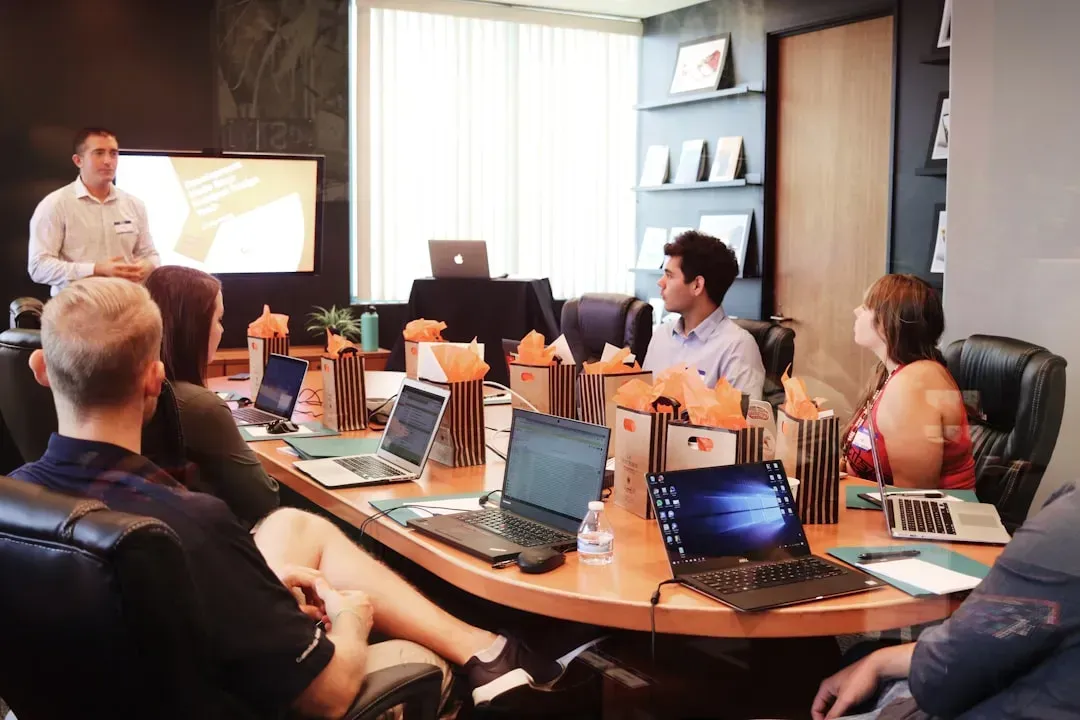
This overly polite conversational stumble became a signature of conference call etiquette when audio lag made it genuinely hard to tell who was speaking first. Gen X workers, who cut their teeth on landline conference calls with noticeable delay, developed this reflexive back-and-forth as a way to avoid talking over each other.
Modern video calls have much lower latency, and platforms often show visual cues for who’s about to speak, reducing the need for this exchange. Younger colleagues tend to just jump in or use a raised-hand emoji feature instead of the verbal dance that once felt necessary.
8. "Let's touch base next week"
8. "Let's touch base next week" (Image Credits: Unsplash)
Borrowed from baseball, this phrase has been corporate shorthand for a check-in meeting since well before Gen X entered the workforce, but they’re the generation that kept it alive the longest. It carries a certain informality that made sense in a pre-calendar-invite world where scheduling was looser and less automated.
Today, most scheduling happens through calendar links and automated booking tools, making vague verbal commitments to “touch base” feel imprecise. A younger colleague is more likely to just send a calendar invite on the spot rather than promise a future conversation that requires someone to remember to schedule it.
9. "I'm going to play devil's advocate here"

9. "I'm going to play devil's advocate here" (Image Credits: Pexels)
This phrase gained popularity in corporate training and MBA programs through the 1990s as a way to introduce dissenting opinions without seeming personally combative. Gen X managers, many trained in that era’s business school culture, adopted it as a verbal signal that critical feedback was coming but shouldn’t be taken personally.
Workplace communication norms have shifted toward more direct feedback styles, particularly in tech and startup cultures that favor phrases like “building on that” or straightforward disagreement without the theatrical framing. The devil’s advocate preamble can now read as an unnecessary buildup to a point that could just be stated plainly.
10. "Let's take a step back"

10. "Let's take a step back" (Image Credits: Unsplash)
This phrase reflects a management style rooted in structured strategic thinking that became popular in corporate consulting culture during the 1980s and 1990s. Gen X professionals absorbed this language from an era when big-picture thinking exercises and structured brainstorming sessions were heavily emphasized in leadership training.
While the sentiment behind it, pausing to reconsider context, remains genuinely useful, younger workers often express the same idea more directly by asking “what’s the actual goal here” or “why are we doing this.” The metaphorical distancing language feels like an extra step compared to more direct framing common in flatter, less hierarchical modern teams.
11. "Are we still doing this in person, or…?"

11. "Are we still doing this in person, or…?" (Image Credits: Unsplash)
This half-question reveals a generation that came of age assuming in-person meetings were the default and remote or hybrid options were the exception requiring clarification. Gen X entered the workforce well before video conferencing was standard, so their instinct is still to assume physical presence unless told otherwise.
Post-pandemic workplace norms, especially since 2023 and 2024, have flipped this assumption for many companies, where hybrid or fully remote defaults are now common enough that the question itself sounds slightly out of step. Younger workers who started their careers during or after the pandemic are more likely to assume a meeting is virtual unless specifically noted otherwise.
12. "Let's get everyone's two cents"

12. "Let's get everyone's two cents" (Image Credits: Pexels)
This idiom, referencing a small monetary contribution to a discussion, has been part of American English for over a century, but it saw heavy use in Gen X corporate culture as consensus-building became a valued management skill during the 1990s. It reflects a meeting style that prioritized going around the room and hearing from everyone before moving forward.
Contemporary meeting culture, influenced by efficiency-focused methodologies and asynchronous work models, increasingly favors written input collected before or after a meeting rather than live verbal rounds. A phrase like “drop your thoughts in the doc” has become a more common substitute, reflecting a shift away from consensus rituals that can extend meetings unnecessarily.
Language evolves inside offices just as much as it does anywhere else, and these phrases aren’t going away entirely, they’re just becoming markers of when someone’s professional habits took shape. Recognizing them isn’t about mocking anyone’s vocabulary. It’s more a small, harmless way of noticing how deeply workplace culture gets shaped by the decade a career began.