
There’s a particular kind of person who, even after accumulating real wealth, still turns off every light when leaving a room, flinches at full-price tags, and feels vaguely guilty about resting on a weekday afternoon. To an outside observer, these moments look like quirks. To a psychologist, they tell a more layered story about where someone came from and how deeply that shapes who they become.
What researchers call the “scarcity mindset” represents one of the most consequential discoveries in behavioral psychology. It reveals how the experience of scarcity doesn’t just affect our bank accounts – it fundamentally rewires how our brains process information, make decisions, and view the world. The remarkable part is that many of these rewired patterns persist long after the financial pressure that created them has gone. Here are thirteen of the quietest ones.
1. Checking the Bank Account Compulsively

1. Checking the Bank Account Compulsively (Image Credits: Unsplash)
Even in adulthood and financial comfort, people raised in poverty often check their bank account obsessively, rehearse worst-case scenarios, and struggle to trust the present moment. That constant sense of waiting for disaster can quietly rob them of the security they’ve genuinely earned.
A child who grew up poor can carry these emotional patterns into adulthood, even after achieving financial security. It’s hard to shake the habits developed early in life, and that includes feelings about money. The checking isn’t about distrust of their bank. It’s muscle memory from years when the number actually could fall to zero.
2. Never Wasting Food

2. Never Wasting Food (jbloom, Flickr, <a href="https://creativecommons.org/licenses/by/2.0/" target="_blank" rel="noopener">CC BY 2.0</a>)
The way they always know how much food is left, how they never waste leftovers – these are quiet autobiographies written in habit, proof that they survived. Someone raised with food insecurity develops a near-automatic awareness of what’s in the fridge, when it expires, and how to use every last bit of it.
Some children who’ve experienced food insecurity develop a preoccupation with food and exhibit behaviors such as hoarding food or obsessing over it, even when they have enough to eat. In a wealthy adult, this might look like admirable frugality or environmental consciousness. In reality, it’s something older and more personal than either of those things.
3. An Inability to Accept Help or Gifts Comfortably

3. An Inability to Accept Help or Gifts Comfortably (Image Credits: Pexels)
By accepting other people’s money or gifts, even if they accept nothing in return, many of these adults feel a sense of obligation, burden, or dependency that threatens their sense of independence and self-reliance – the very same tools that allowed them to cope with financial insecurity as children.
When you grow up with limited resources, you learn early that you have to figure things out on your own. There is rarely someone to bail you out financially or emotionally. That kind of independence becomes a point of pride. It’s a genuinely useful trait, right up until it makes it impossible to let anyone in.
4. Obsessively Comparing Prices

4. Obsessively Comparing Prices (Image Credits: Gallery Image)
Many adults who grew up in poverty were taught to only purchase things when they were on sale. Any kind of coupon, loyalty card, or tactic for saving money was considered better than buying something at full price. This habit tends to survive even when money is no longer a concern. The ritual of finding the better deal feels less about saving and more about not being foolish.
Poor thinking focuses on saving money at any cost. Spending three hours comparing prices to save five dollars is a familiar pattern, even as wealthier people come to value their time over small savings. The gap between those two orientations is something people raised in poverty often spend years quietly bridging.
5. Keeping the Lights Off in Empty Rooms

5. Keeping the Lights Off in Empty Rooms (Image Credits: Unsplash)
This one is so automatic it barely registers as a decision. Someone raised in a household where a high electric bill was genuinely stressful learns to cut the light the moment they leave a room. The reflex stays wired in place for decades, regardless of what their utility account looks like.
Psychologists call this kind of behavior “environmental self-regulation” – the idea that maintaining order and control in your surroundings strengthens your internal sense of control. In this case, it’s less about the environment and more about the memory of scarcity that the light switch quietly represents every single day.
6. Difficulty Resting Without Earning It First

6. Difficulty Resting Without Earning It First (Image Credits: Unsplash)
The overworking, the guilt around spending, the constant calculating – each is a page from an older chapter that kept them going. Survival skills can turn into cages when life finally offers more than survival. The work of adulthood, for many people raised in poverty, is not just earning enough; it’s learning to live as though scarcity is not always just outside the door.
Rest, to someone raised in financial precarity, carries an undertone of risk. Idle time meant unproductive time, and unproductive time meant falling further behind. Even once that pressure evaporates, the guilt surrounding genuine leisure tends to linger in ways that are difficult to articulate and even harder to talk away.
7. A Deep-Seated Distrust of Financial Institutions

7. A Deep-Seated Distrust of Financial Institutions (Image Credits: Pexels)
Some individuals who experienced poverty tend to hide money away in adulthood. It’s a way they protect themselves from the financial troubles they experienced when they were young. This can extend into a broader wariness of banks, investment accounts, and financial advisors – systems that, in their experience, rarely showed up with good news.
As with assets and wealth, scarcity and poverty are also passed down through families. What researchers define as “generational poverty” is a family’s learning of beliefs and behaviors rooted in poverty after only two generations. The distrust of institutions isn’t irrational – it’s inherited, and often quietly reinforced by real memories of accounts being drained by fees or systems failing the people they were supposed to serve.
8. An Exaggerated Fear That It Will All Disappear

8. An Exaggerated Fear That It Will All Disappear (Image Credits: Pexels)
People who grew up in poverty often carry a particular weather in their bones – a sense of approaching storms even on clear days. Financial security, no matter how solid, never quite feels fully real. There’s a persistent background noise that says the floor could give way at any moment, even when every rational indicator says otherwise.
Economists Sendhil Mullainathan and behavioral scientist Eldar Shafir found that scarcity is not just a material condition – it is a cognitive state that fundamentally changes how the mind works. For someone who grew up in genuine need, that cognitive state can linger like a phantom limb long after the actual cause of it has been removed.
9. The DIY Reflex – Fixing Things Rather Than Hiring Help
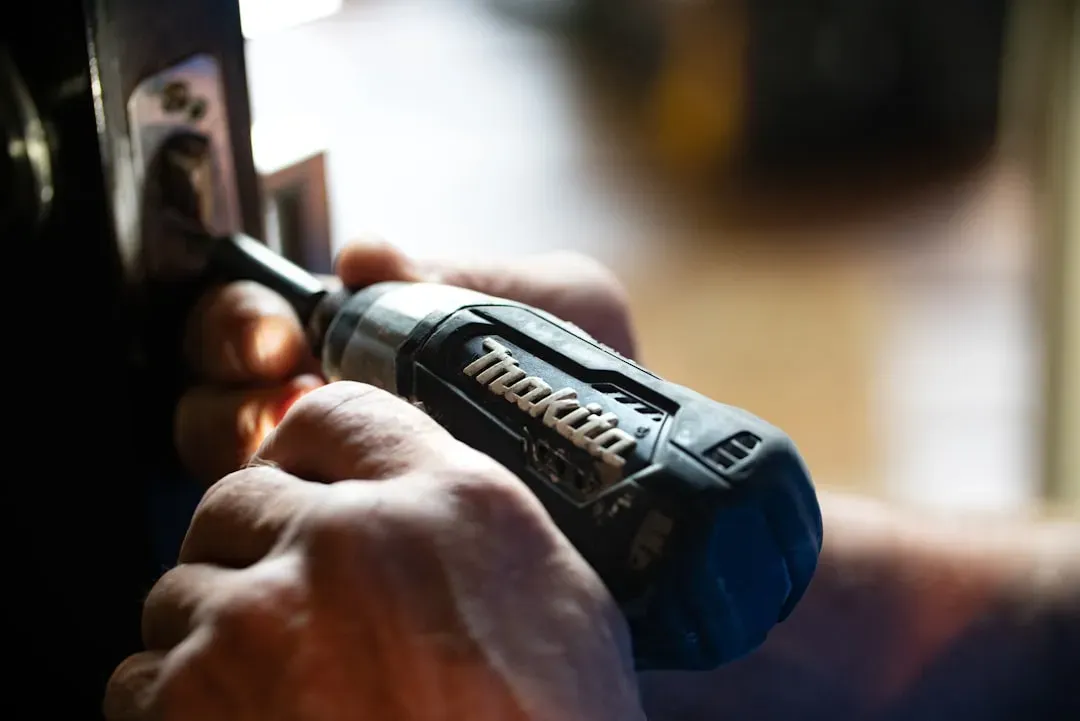
9. The DIY Reflex – Fixing Things Rather Than Hiring Help (Image Credits: Unsplash)
From fixing household repairs to doing it themselves, people who grew up poor continue this habit no matter how much money they have now. They grew up in households where their parents didn’t have the freedom to hire someone, so they either learned or taught themselves. Even if it only saves them money on labor, it’s more of a mindset than a practice of spending – they’d prefer to invest in knowledge rather than offload responsibility onto others.
Research published in the Family Relations journal suggests that kids who grew up in poverty learn how to be independent much earlier than their affluent counterparts, both from a personal and financial perspective, which bolsters their self-reliance and skillset into adulthood. The result is often an adult who is quietly capable across a wide range of practical domains – and quietly resistant to asking for help across all of them.
10. Treating Financial Stability as a Moral Measure

10. Treating Financial Stability as a Moral Measure (Image Credits: Pexels)
People who’ve struggled often develop the belief that financial stability equals goodness. If they have money in the bank, it means they’re doing life right. If they’re broke, they must have screwed up somewhere. It becomes a moral metric. This is one of the quieter and more painful legacies of growing up with very little.
When someone has internalized the message that being poor is a personal failure, even temporary setbacks feel like character flaws. This kind of thinking comes from internalized classism. A person carrying this habit doesn’t just feel financially anxious when their balance dips – they feel like a worse version of themselves, which is an entirely different weight to carry.
11. Heightened Alertness to Social Threat

11. Heightened Alertness to Social Threat (Image Credits: Unsplash)
Research found that childhood poverty, independent of concurrent adult income, was associated with higher amygdala and prefrontal cortical responses to threat versus happy faces, and with decreased functional connectivity between the left amygdala and prefrontal cortex. In plain terms, the brain of someone who grew up poor is measurably more reactive to perceived social threat, even decades later.
This research prospectively links childhood poverty to emotional processing during adulthood, suggesting a candidate neural mechanism for negative social-emotional bias. Adults who grew up poor appear to be more sensitive to social threat cues and less sensitive to positive social cues. In practice, this often shows up as a tendency to read neutral social situations as potentially hostile, or to brace for criticism that never comes.
12. Discomfort in Wealthy Spaces

12. Discomfort in Wealthy Spaces (Image Credits: Pexels)
The awkwardness in wealthy rooms is one of the quiet patterns that persists – a discomfort that exists not in the bank account but in the body itself. Someone raised in poverty who later enters affluent social spaces often describes a low hum of not-belonging that doesn’t track with their current income or status. They know, intellectually, that they belong there. Their nervous system hasn’t caught up.
Research published in the Journal of Personality and Social Psychology revealed that people consistently place more trust in others who grew up poor than those raised wealthy. Yet when it comes to someone’s current financial situation, people trust them less if they’re struggling. This contradiction exposes a quirk in human psychology – we seem to believe that childhood poverty builds character. The person navigating a high-end room knows that their background is seen as a mark of character by some and a mark of otherness by others, and they often carry both perceptions at once.
13. A Private, Almost Superstitious Gratitude for Enough

13. A Private, Almost Superstitious Gratitude for Enough (Image Credits: Unsplash)
This one rarely gets named. It’s the pause before a good meal, the quiet moment of noticing a full refrigerator or a warm house on a cold night. People raised with very little often develop a low-level, almost involuntary awareness of sufficiency that people who always had enough tend never to develop at all.
This doesn’t mean forgetting where they came from. In fact, the people who navigate it most gracefully often do the opposite – they honor the child who counted coins and stretched meals, who wore hand-me-downs and made games out of nothing. That private gratitude isn’t nostalgia. It’s a form of witness. And it may be the quietest, most enduring thing poverty ever leaves behind.
Most of these habits were never chosen. They were built under pressure, in childhood, when the brain was still forming its most durable patterns. Scarcity – whether of money, time, food, or social connection – captures mental bandwidth. The mind, confronted with not enough, becomes consumed by that not-enough in ways that crowd out other cognitive processing. What’s worth understanding is that when those habits travel into a wealthy life, they aren’t signs of failure to adapt. They’re signatures of survival – quiet, persistent, and deeply human.