
Most people who come across an old Buffalo nickel assume it’s worth a few dollars at most – a curiosity from a grandparent’s coin jar, nothing more. Whether found in a coin jar or inherited from a family collection, a Buffalo nickel can be worth anywhere from a few cents to hundreds of thousands of dollars. The gap between those two outcomes is enormous, and it comes down to a surprisingly short list of things to check.
The Buffalo Nickel was minted from 1913 to 1938 and features a Native American profile on the obverse and a buffalo on the reverse. Designed by sculptor James Earle Fraser, the coin was intended to celebrate America’s heritage and culture. The Native American portrait was inspired by a combination of several tribal leaders, while the buffalo was modeled after Black Diamond, a bison from the Central Park Zoo in New York. Three specific coins from that long run have a way of making collectors stop and take notice – and if you happen to own one of them in decent condition, the numbers can be genuinely startling.
1. The 1937-D Three-Legged Buffalo Nickel
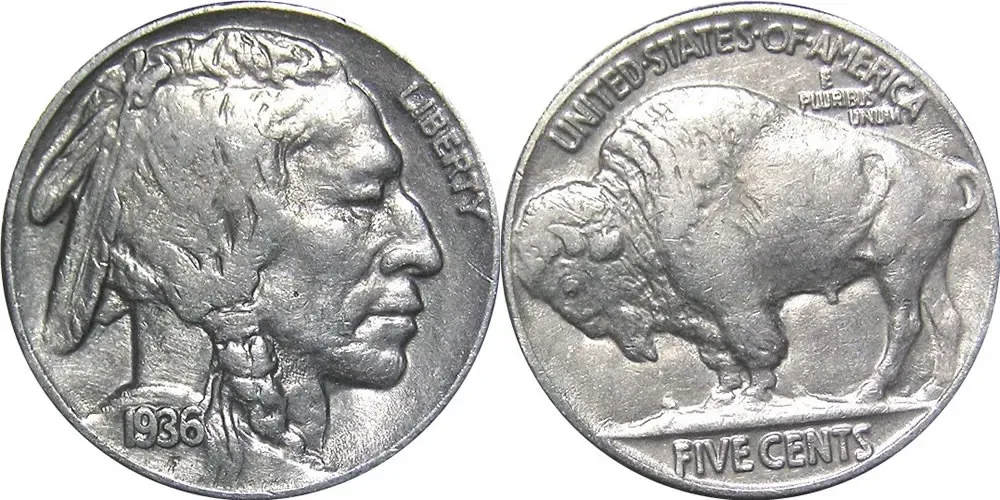
1. The 1937-D Three-Legged Buffalo Nickel (Image Credits: By Bobby131313, <a href="https://commons.wikimedia.org/w/index.php?curid=14972281" target="_blank" rel="noopener">CC BY-SA 3.0</a>)
The coin is supposed to feature a portrait of a Native American on its obverse side and an image of an American buffalo on its reverse side, with four legs and four clearly visible hooves. A mistake at the Denver Mint erased one of the legs and added a bit more character. In 1937, a worker at the Denver Mint polished a Buffalo Nickel die to remove “clash marks.” Unfortunately, this worker did his job too thoroughly and not only removed all the clash marks but one of the buffalo’s legs as well. Amazingly, this mistake was not caught until after thousands of these “three-legged nickels” had been minted and put into circulation.
Experts estimate that around 10,000 of these error coins entered circulation. Of that number, possibly only a handful of hundreds survive in top-grade condition. Coins graded by industry-standard respected outfits like NGC and PCGS have sold for anywhere between $705 and $2,640 at auction. On eBay, a “gem” status of the error coin sold for $5,200.64 in December 2024, and in November 2024, a “near-gem” coin sold for $7,522. The highest recorded auction price for this variety reached close to $100,000 for an exceptional example, so condition makes an enormous difference here. To spot it, look for the missing front right leg on the bison – a faint hoof outline may still be visible beneath the belly, which is actually a key marker of authenticity.
2. The 1918/17-D Overdate Buffalo Nickel
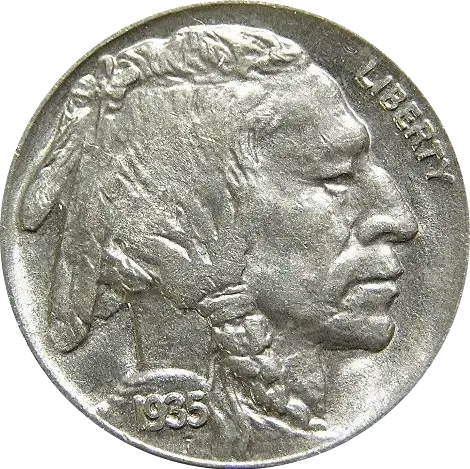
2. The 1918/17-D Overdate Buffalo Nickel (Image Credits: By 1935_Indian_Head_Buffalo_Nickel.jpg: The original uploader was Bobby131313 at English Wikipedia., <a href="https://commons.wikimedia.org/w/index.php?curid=13241782" target="_blank" rel="noopener">Public domain</a>)
The 1918/7-D Buffalo nickel represents an iconic minting error from World War I, when employees at the Denver Mint accidentally struck the 1918 die over a previously prepared 1917 die, causing a clearly visible “7” to appear beneath the “8” in the date. This error went unnoticed by numismatists until the 1930s, meaning almost no examples were saved in Mint State. The population of MS65 or higher specimens is estimated at fewer than 10 coins.
Among non-1913 issues, the standout recent sale is the 1918/7-D Buffalo Nickel at $511,875 in 2024, far ahead of other Buffalo and Jefferson nickel results surfaced in public sources. Even worn, heavily circulated specimens carry real value. A low-grade specimen of this coin has a value of nearly $1,000, while numismatists value a genuine uncirculated version at over $50,000. To identify it, use a magnifying loupe and examine the “8” in the date closely – a faint “7” pressed into the metal beneath it is the telltale sign, and it takes a trained eye to spot on worn examples.
3. The 1916 Doubled Die Obverse Buffalo Nickel
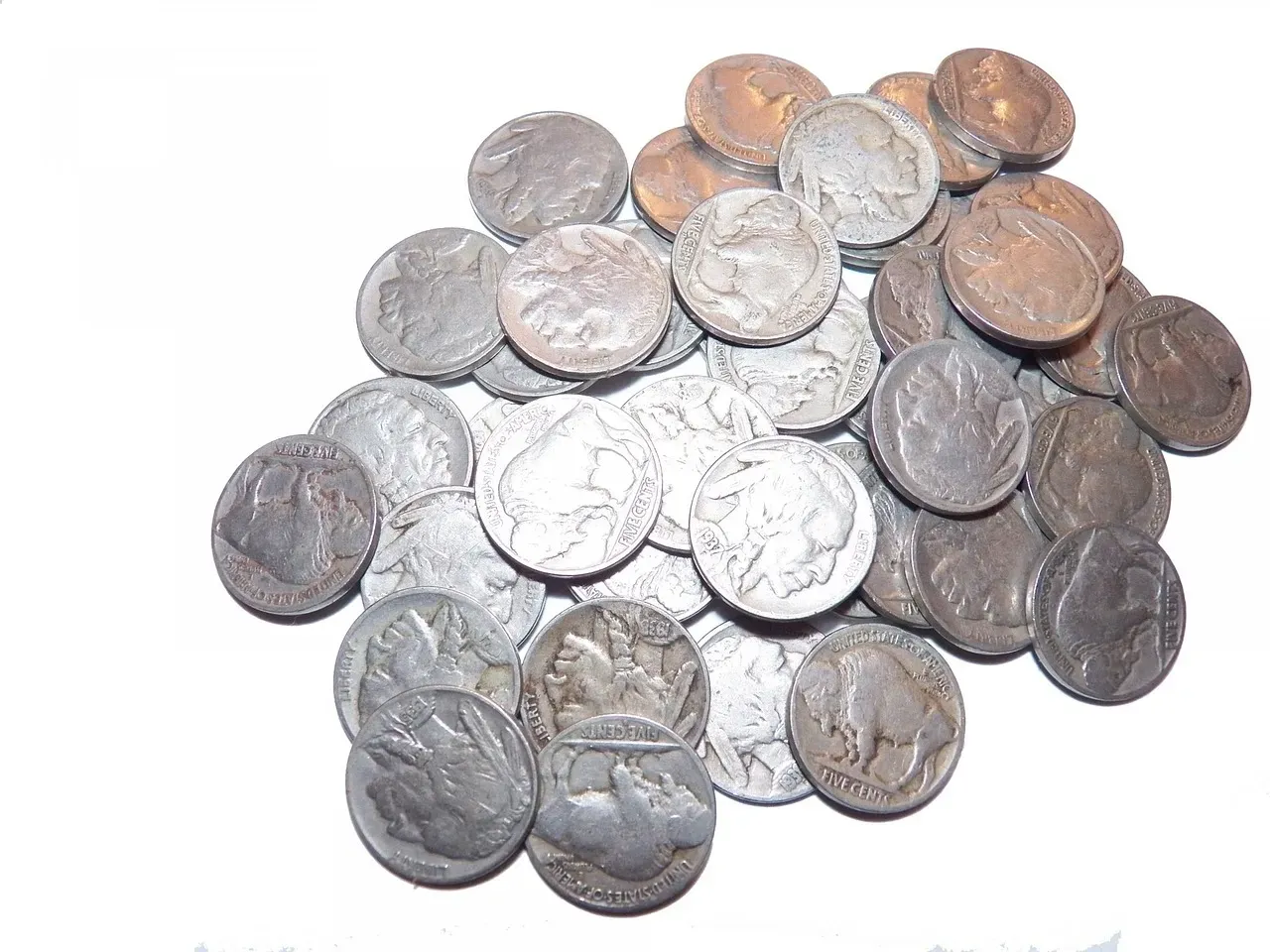
3. The 1916 Doubled Die Obverse Buffalo Nickel (Image Credits: Pixabay)
This error occurred when the die was accidentally engraved twice, creating a doubled image most visible on the date and the word LIBERTY on the obverse side. A genuine 1916 doubled die is extremely rare and valuable, especially in higher grades. PCGS has certified approximately 200 specimens of this ultra-rare coin. Most of these examples are in circulated grades, ranging from VG8 to XF40. Uncirculated grades are extremely scarce, with the highest grade achieved being PCGS MS64.
Prices for 1916 Doubled Die Buffalo Nickels span a wide spectrum, with even lower-end specimens graded G4 fetching around $5,000. Those in mid-circulated grades, such as VF20, easily command prices of $15,000. A PCGS MS64 specimen fetched an impressive $281,750 bid at an auction in 2004. When checking for this variety, look at both the date and the word LIBERTY under magnification – genuine doubling produces a distinct, separated secondary image rather than a blurred or shadow-like effect. Fakes and lesser forms of doubling do exist, so professional certification through PCGS or NGC is strongly advisable before buying or selling.
What ties all three of these coins together is the same lesson: a small production accident, a low mintage at the right mint, or a die polishing mishap from decades ago can turn a five-cent coin into something worth far more than anyone expected. The 1918/7-D overdate and 1937-D 3-legged are among the most counterfeited Buffalo nickels. Condition rarity drives value – jumping one grade can mean thousands of dollars. For any Buffalo Nickel worth over $500, consider PCGS or NGC grading. If you think you’ve found one of these, resist the urge to clean it. The original surface, even with wear, is part of what collectors and graders are evaluating – and a cleaned coin can lose significant value instantly.