
Most people who stumble across a $2 bill in their wallet treat it like a novelty at best, a curious oddity to mention at the checkout counter before handing it over. What they don’t realize is that some of those bills sitting in junk drawers, old wallets, or birthday card envelopes could be worth significantly more than two dollars. The difference between pocket change and a collector’s prize often comes down to a serial number, a seal color, or simply the year it was printed.
Many people think $2 bills are rare, but in reality, there are millions still in circulation, and they continue to be printed. However, while most $2 bills are only worth their face value, certain ones can fetch thousands of dollars on the collectors market. Knowing which category your bill falls into before you spend it is the whole point, and collectors have been making that case for years.
Some Bills Are Worth Far More Than $2 at Auction
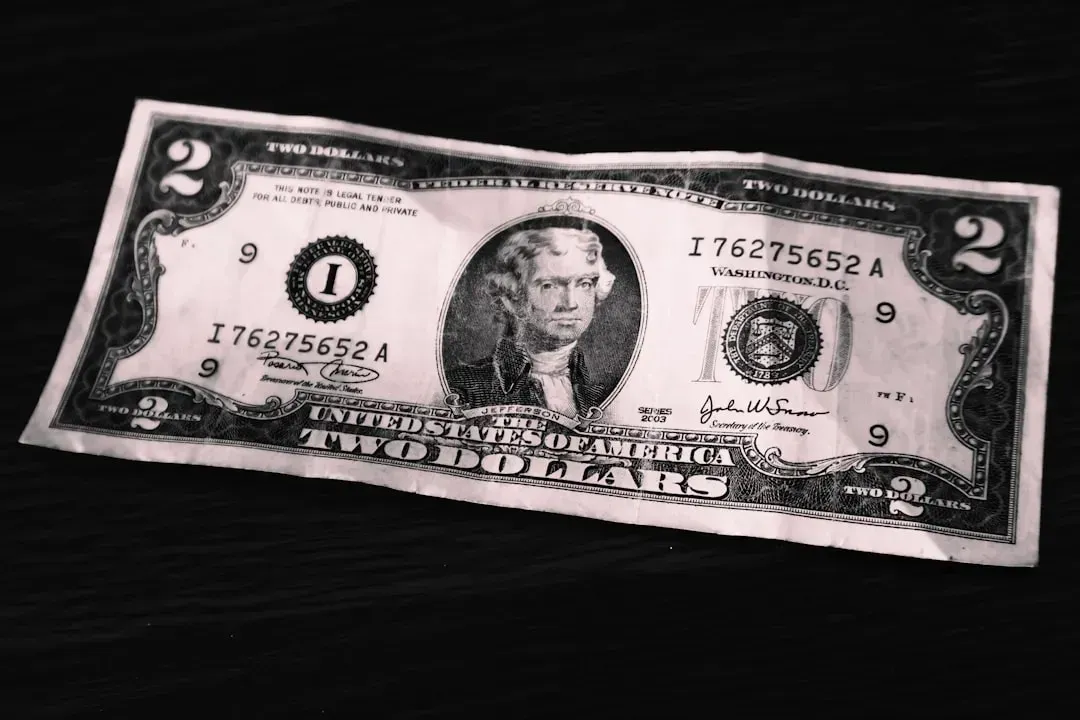
Some Bills Are Worth Far More Than $2 at Auction (Image Credits: Unsplash)
Certain rare $2 bills can fetch $4,500 and up on the collectibles market, according to the U.S. Currency Auctions website. Just about all of the really valuable ones were printed in the 19th century. Even bills printed within the last 30 years might be worth hundreds of dollars, if you have the right one. That’s a hard thing to ignore if you’re about to hand one over for a coffee.
The 1928 $2 bill was the first to feature Thomas Jefferson’s home, Monticello. Unlike later editions, it displayed a red seal rather than a green one. Collectors favor these notes because they were part of the earliest modern $2 bill series. Circulated bills can fetch $5 to $175, but uncirculated bills in pristine condition can be worth several hundred dollars to over $1,000. A single fold in the wrong place can meaningfully reduce that number. A Red Seal $2 United States Note from 1928, in excellent condition, sold for an unbelievable $88,125. The astronomical price tag is due to its rarity, historical significance, excellent condition, and the desirability of Red Seal notes among collectors.
Condition Is Everything, and Spending a Bill Destroys It Instantly
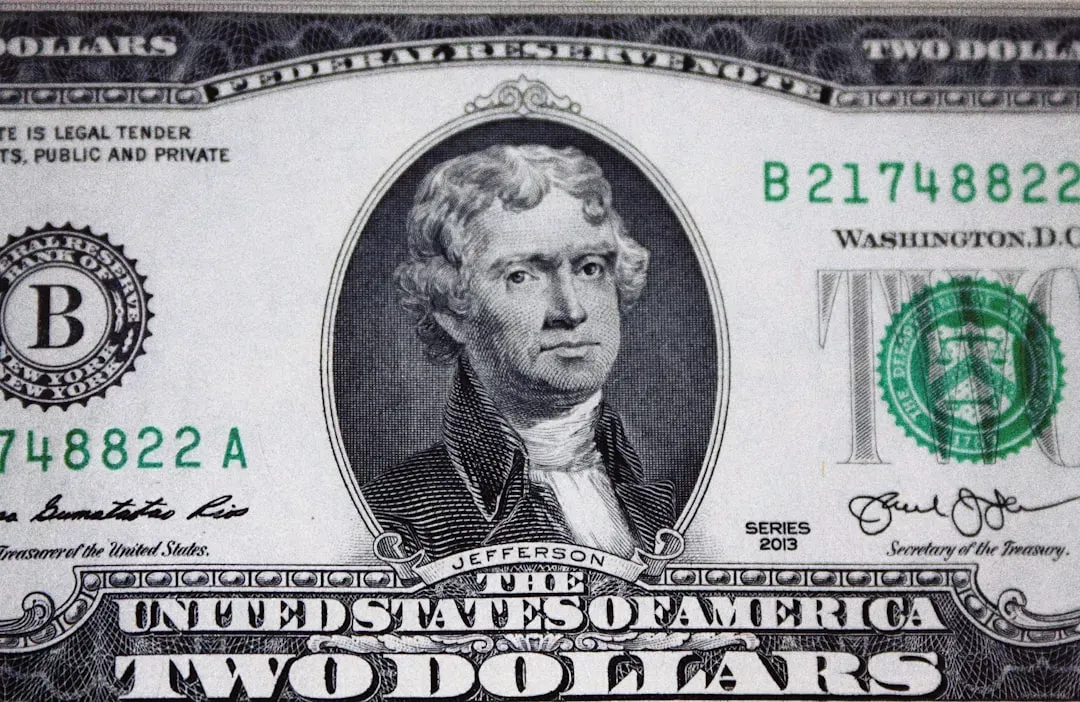
Condition Is Everything, and Spending a Bill Destroys It Instantly (Image Credits: Unsplash)
The condition of a $2 bill significantly impacts its value. Uncirculated bills have never been used in transactions, so they remain crisp, clean, and free of folds or tears. Uncirculated bills are far more valuable, and rare, especially the older they are, than circulated ones. The moment you fold a bill and put it in your pocket, it enters a different grading category entirely.
Collectors care a lot about what kind of shape a bill is in. Uncirculated condition means crisp, clean bills without folds, tears, or stains are worth more. Notes are graded from “poor” to “gem uncirculated,” with each grade affecting value. A perfectly uncirculated 1928 red seal $2 bill might pass $1,000, while a worn-out one slips back toward face value. Spending it at face value doesn’t just cost you two dollars. It potentially costs you hundreds.
Unique Serial Numbers and Printing Errors Can Make Ordinary Bills Extraordinary
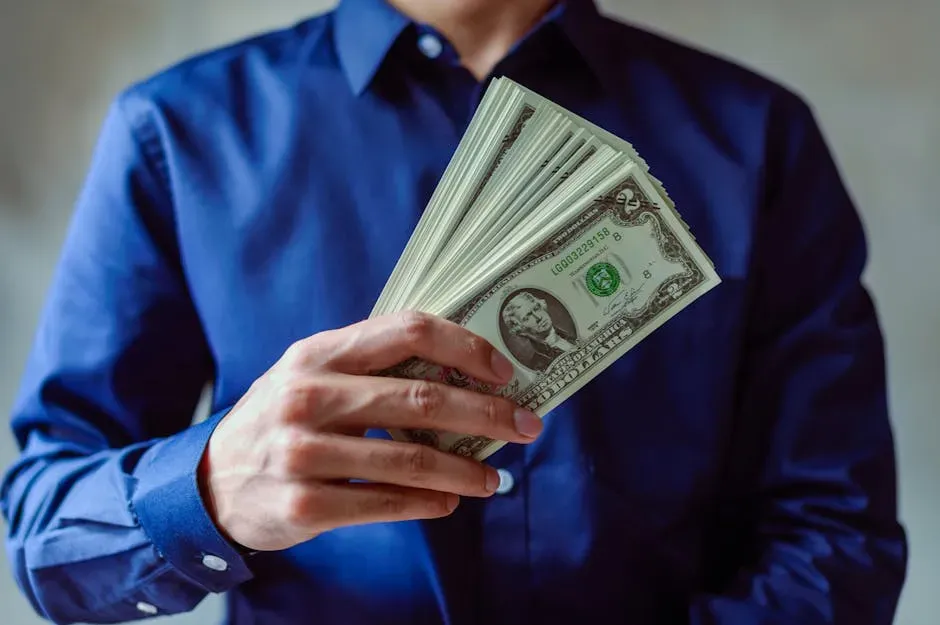
Unique Serial Numbers and Printing Errors Can Make Ordinary Bills Extraordinary (Image Credits: Pexels)
Collectors prize low serials, such as 00000001, repeating patterns like ladders of 12345678, palindromes, or “radar” numbers. Printing errors and misprints, including bills with misaligned seals, double-printed serials, smears, or shifted ink, are rare and valuable. These traits aren’t always obvious at a glance, which is exactly why collectors urge people to look before they spend.
A note with serial number 00000001 or all the same digit, like 77777777, can sell for hundreds. A bill with a reversed back, mismatched serials, or a double print can get up to $25,000. If there’s a star symbol after the serial number, the note is a replacement, and these are scarcer and far more collectible. Star notes exist across all series, but 1928, 1953, and 1963 star notes are especially valuable. A 1953 Star Note in uncirculated condition can bring $1,000 or more.
The real takeaway here isn’t that every $2 bill is a hidden fortune. Most aren’t. The demand for well-preserved or historically significant $2 bills is strong, especially for uncirculated notes or those with uncommon serial sequences. Taking thirty seconds to check the year, seal color, and serial number before spending one costs nothing and could end up being one of the more worthwhile habits a person develops around loose cash.