
Dinner has always been more than just eating. It’s one of the few moments in daily life when people are physically together, without obvious purpose beyond the meal itself, and that’s precisely when habits learned in childhood start to show. Not loudly, not deliberately – just there, in the small reflexes and instincts that nobody really thinks about anymore.
Mealtime still constitutes a privileged cultural site where children are introduced not only to specific table manners, but also to more general and overarching assumptions about how to move through the social world. Most adults carry those assumptions into every dinner they’ll ever attend. Here are five things people do at the table that quietly reveal a great deal about how they grew up.
1. Whether They Wait for Everyone to Be Served Before Eating
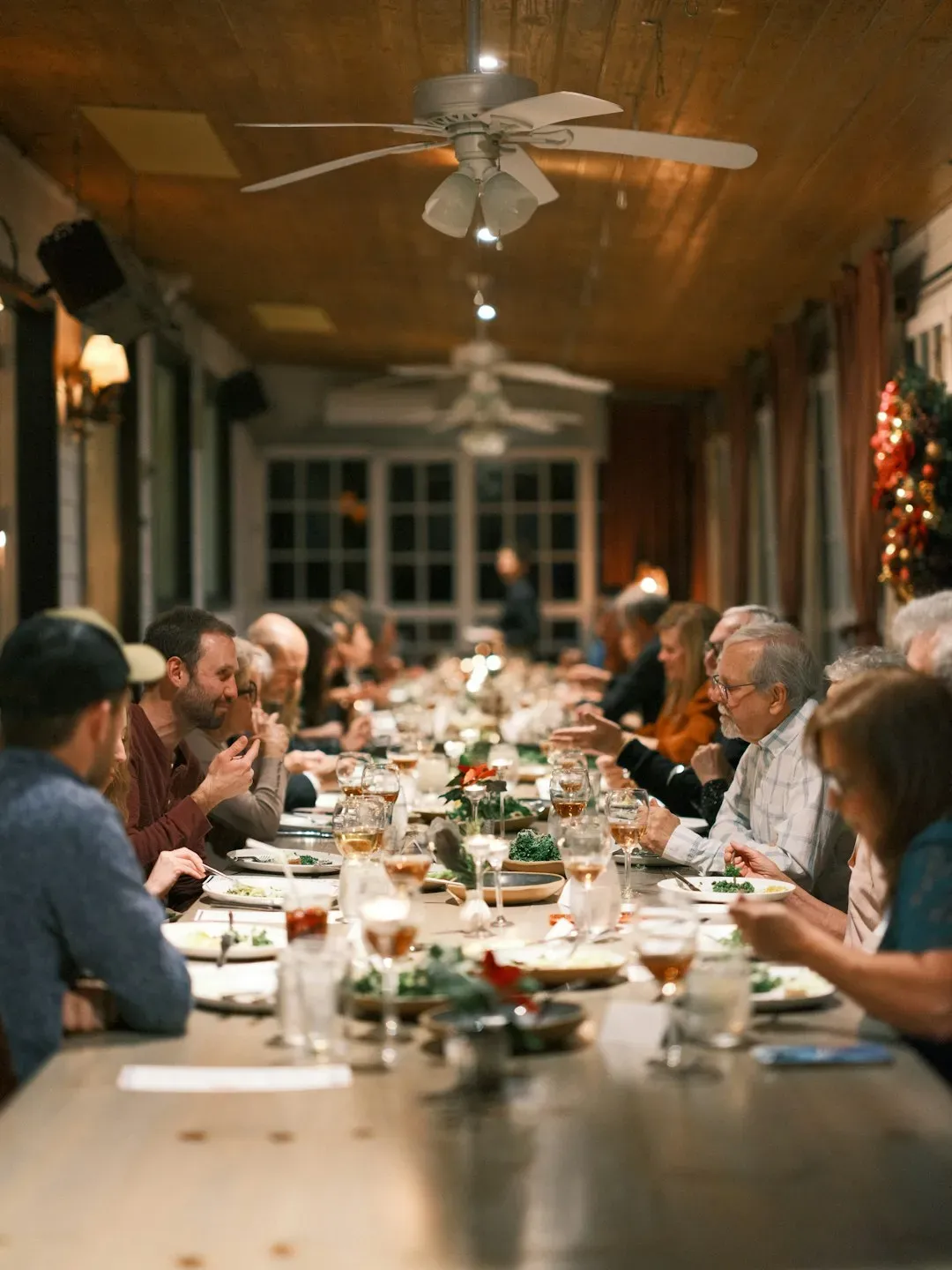
1. Whether They Wait for Everyone to Be Served Before Eating (Image Credits: Unsplash)
Few habits are as immediately telling as this one. Many families with formal dining traditions teach children to wait until every person has their plate before picking up a fork, a practice that shows respect for the group and values the communal experience over individual hunger. For people raised in that environment, the behavior is so deeply automatic they’re barely aware of doing it. They simply wait, without calculating, without effort.
In more formal households, there’s a rule that nobody touches their food until everyone has been served – it’s about collective experience, showing restraint, demonstrating that the social aspect matters more than satisfying immediate hunger. Yet this habit is far from universal. The waiting game is something of a luxury – it signals that a family had enough abundance that a few minutes of cooling food didn’t matter. Two people at the same table can reveal very different childhoods simply by when they pick up their fork.
2. How They Handle a Phone at the Table

2. How They Handle a Phone at the Table (Image Credits: Unsplash)
The phone-at-dinner question is one of the clearest dividing lines of modern upbringing. The scene at the dinner table has changed: people still sit together, but attention often shifts away from the conversation to the devices in their hands. For people raised in households where phones were forbidden at meals, putting the device away isn’t a discipline – it’s a reflex. For those who grew up eating in front of screens, reaching for a phone mid-meal feels perfectly natural.
Technoference, the interruption of family interaction by digital devices, is becoming a growing concern as screens show up more often during shared meals. The values installed at childhood tables don’t disappear at adulthood. Family meals provide parents the opportunity to model appropriate behavior, communicate values, and establish and reinforce cultural traditions – and phone habits are no exception. What someone does with their device during dinner often reflects precisely what their household modeled when they were young.
3. How Naturally They Share or Offer Food to Others

3. How Naturally They Share or Offer Food to Others (Image Credits: Pexels)
Watch who reaches for the bread basket first and whether they offer it around before helping themselves. Whether it’s passing around the bread basket at a dinner party or offering the last slice to others before taking it themselves, individuals who share food habitually show their good upbringing through the art of sharing – and once you notice it, it becomes a clear sign of someone raised with manners and thoughtful etiquette.
This isn’t about generosity in the grand sense. It’s about something much smaller and more instinctive. Sharing food is a silent communication of empathy and mindfulness, and in adult life, people raised with this practice tend to replicate it naturally. Family meals serve as an arena for enhancing adolescent developmental assets, including social-emotional development, and the habit of putting others first at the table is one of the most visible residues of that kind of upbringing.
4. The Way They Hold Conversation – or Don't

4. The Way They Hold Conversation – or Don't (Image Credits: Unsplash)
Dinner conversation is its own kind of skill, and it’s one that gets rehearsed or neglected from a very early age. Repeated conversations at family tables – the values casually named, the family history passed along, the expectations made clear through tone rather than lecture – accumulated into something: children absorbed a framework for how to move through the world, and most didn’t realize it until they were adults. People who grew up having real conversations at dinner tend to listen, ask follow-up questions, and hold their own in social situations without much visible effort.
Comfort with the natural rhythms of dinner conversation – knowing when to speak up, when to let silence breathe, how to gracefully change subjects – developed through thousands of slightly uncomfortable moments around the dinner table. Those raised primarily on screens often haven’t built that internal compass. It’s not a judgment, just an observation. The conversational ease or awkwardness someone shows at dinner almost always traces back to what was normal at home.
5. How They React When the Meal Is Finished – Clearing Up or Walking Away

5. How They React When the Meal Is Finished – Clearing Up or Walking Away (Image Credits: Unsplash)
What happens at the end of the meal is just as revealing as anything during it. Some people begin stacking plates before they’ve even finished their last sip. Others stand up and move on, assuming someone else will handle it. For young children, developing foundational social skills like taking turns and practicing table manners isn’t just about learning politeness – these skills lay the groundwork for respectful interactions, empathy, and understanding the value of community and mutual respect.
Many families are less strict about mealtime behavior and food rules than their own parents were with them, which partly explains why the instinct to clear up after a meal is now less automatic than it once was. Still, people who were raised in households where everyone pitched in at the end of dinner tend to do so without being asked. Children who learn basic courtesy at home carry it into the world – they know how to behave in social situations and make others feel respected and valued. That includes knowing, without being told, that the evening doesn’t end when the food does.
None of these behaviors are about judgment, and none of them are permanent. People change, households vary enormously, and a childhood without formal dinners doesn’t produce a worse person. What’s worth noticing is simply how much information gets communicated at the table without anyone intending it. The small, unremarkable habits of dinner turn out to carry a long history – and that history tends to show up whether we want it to or not.