
Walk into a restaurant almost anywhere and you expect the menu to reflect local taste, not local law. Yet in a handful of countries, what shows up on a plate is shaped less by chefs than by legislators, health inspectors, or religious authorities. Some of these rules protect endangered animals, some guard against genuine health risks, and others are tangled up in culture and identity in ways that go far beyond food safety.
The following six examples show how differently governments think about what belongs on a public table, and why a dish that's celebrated in one country can land a restaurant owner in serious trouble in another.
United States: Shark fin soup faces a patchwork of state bans
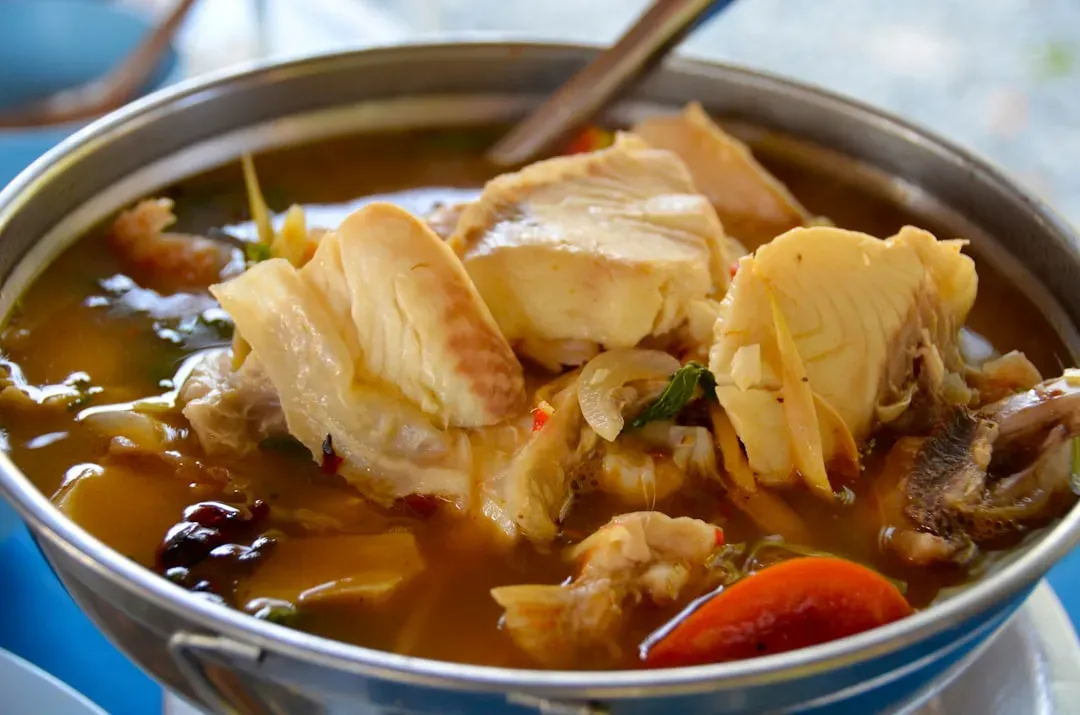
United States: Shark fin soup faces a patchwork of state bans (Image Credits: Unsplash)
Shark fin soup has deep roots in Chinese banquet culture, but in the United States it has become one of the most legally fraught dishes a restaurant can attempt to serve. In the United States, the sale, import, and export of shark fins is illegal. That federal restriction sits on top of state level bans, and several states including California and Hawaii have gone further by prohibiting the dish outright in restaurants and markets.
The reasoning behind the crackdown has less to do with taste and more to do with how the fins are obtained. The process is called finning, and it entails cutting fins off sharks and then simply tossing the animals back into the ocean where they will eventually die. Restaurants caught serving the soup risk fines and license trouble, which is why authentic versions have largely disappeared from American menus even in cities with large Chinese communities.
Costa Rica: Shark fin trading was outlawed more than a decade ago
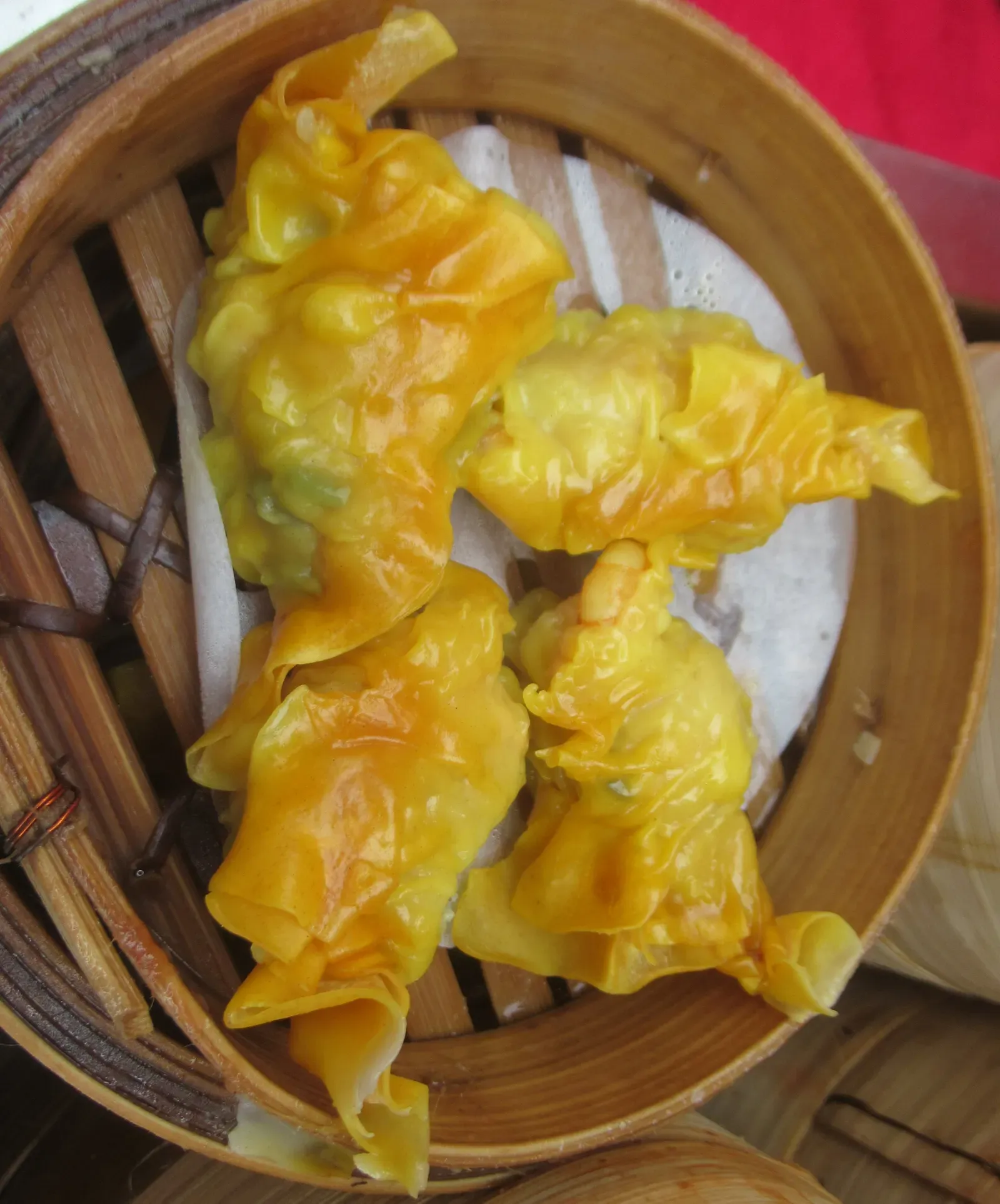
Costa Rica: Shark fin trading was outlawed more than a decade ago (<a href="https://commons.wikimedia.org/w/index.php?curid=158839480" target="_blank" rel="noopener">CC BY-SA 4.0</a>)
Costa Rica presents an interesting case because the country isn't a traditional consumer of shark fin soup, yet it became one of the world's key transit points for the fin trade. Shark fin trading in Costa Rica is an illegal practice in the country, posing a serious threat to shark populations besides the organized crime involvement in the practice. The trade persisted for years because of demand from buyers overseas rather than local diners.
Lawmakers eventually closed the loophole that had let fins pass through Costa Rican ports with minimal oversight. Shark finning in Costa Rica was made illegal in 2012, signed into law by President Chinchilla. Even so, enforcement has been uneven, and there is still a viable illegal market present according to conservation researchers tracking the trade.
Italy: Casu marzu is too alive for the law to allow
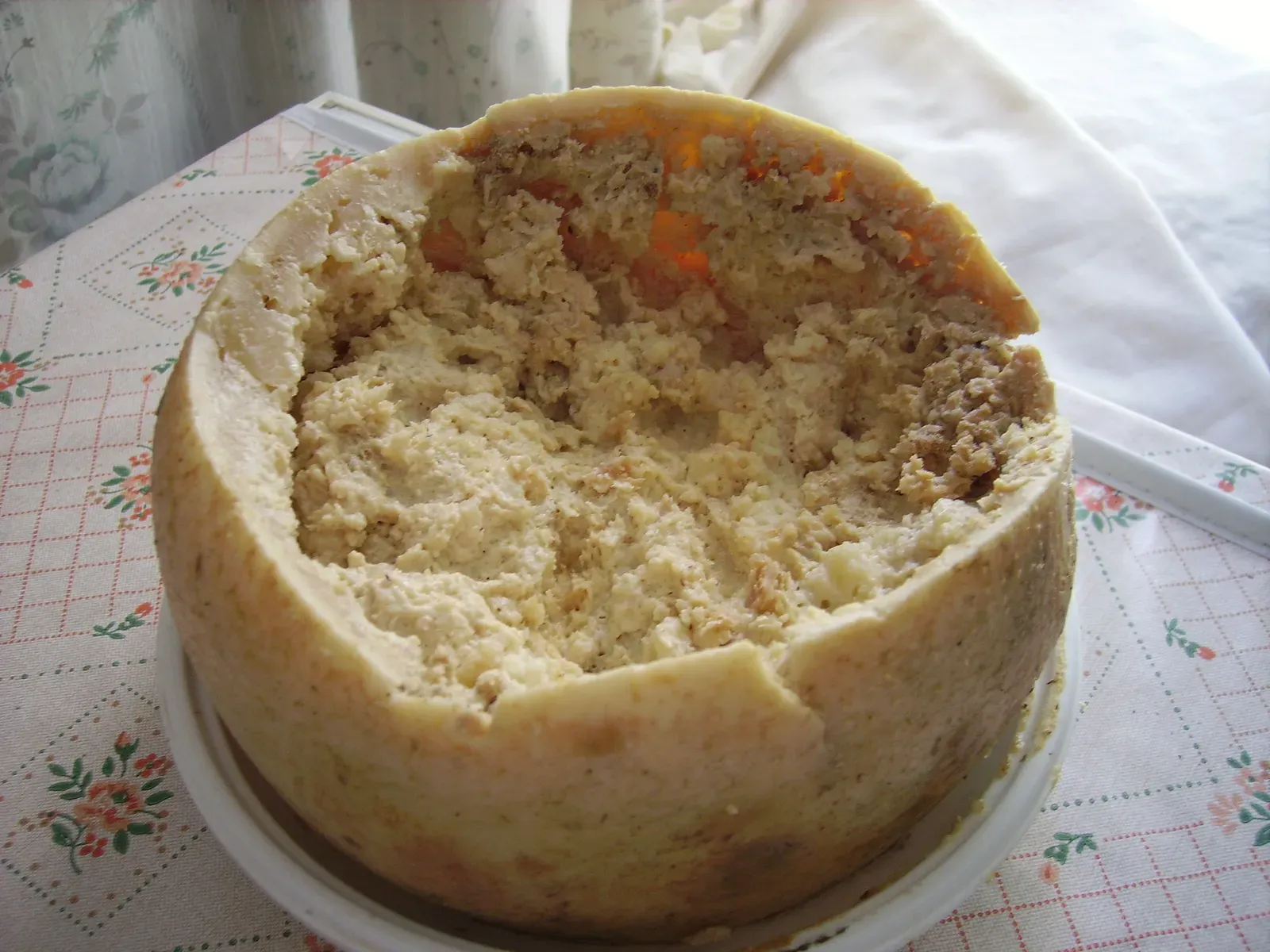
Italy: Casu marzu is too alive for the law to allow (By Shardan, <a href="https://commons.wikimedia.org/w/index.php?curid=4523144" target="_blank" rel="noopener">CC BY-SA 2.5</a>)
Sardinia's casu marzu might be the strangest entry on this list, a sheep's milk cheese deliberately left to be colonized by live fly larvae until it turns soft, pungent, and, depending on who you ask, either revolting or delicious. Casu marzu is illegal because federal and EU food law classifies any food containing insects or their byproducts as adulterated and bans it from sale, with Italy having banned commercial sale since 1962. That makes it illegal in the very region where it was invented.
The health concerns aren't purely theoretical. Officials point to the risk of maggots potentially surviving in the body, along with problems they could cause including bloody diarrhea, vomiting, abdominal pain, allergic reactions, and possibly myiasis. Despite the ban, the cheese hasn't vanished. Production is still thriving, with around 100 tonnes of the risky cheese being made per year, mostly sold quietly outside official channels rather than served openly in restaurants.
India: Beef is off limits across large parts of the country
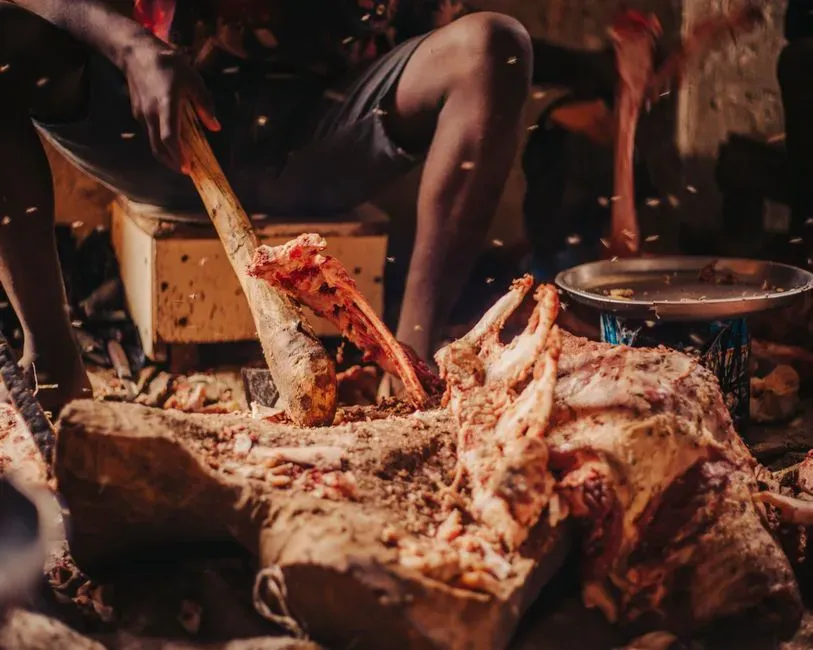
India: Beef is off limits across large parts of the country (Image Credits: Pexels)
India's relationship with beef is shaped by religion as much as by law. Cows are sacred in Hinduism, and over the years a majority of Indian states have passed legislation restricting or outright banning cow slaughter, which in turn makes serving beef in restaurants illegal or heavily restricted in states such as Gujarat, Haryana, and Uttar Pradesh. Enforcement varies sharply from state to state, and in places like Kerala or parts of the northeast, beef remains widely available and openly served.
The practical effect for restaurant owners is that a dish considered ordinary in one part of the country can trigger raids, fines, or even criminal charges just a state border away. Buffalo meat, sometimes labeled as a substitute, occupies a legal gray zone that differs by jurisdiction. Tourists are sometimes caught off guard by how much a menu can change simply by crossing an internal state line.
France: Ketchup is rationed inside public school cafeterias
France: Ketchup is rationed inside public school cafeterias (Image Credits: Unsplash)
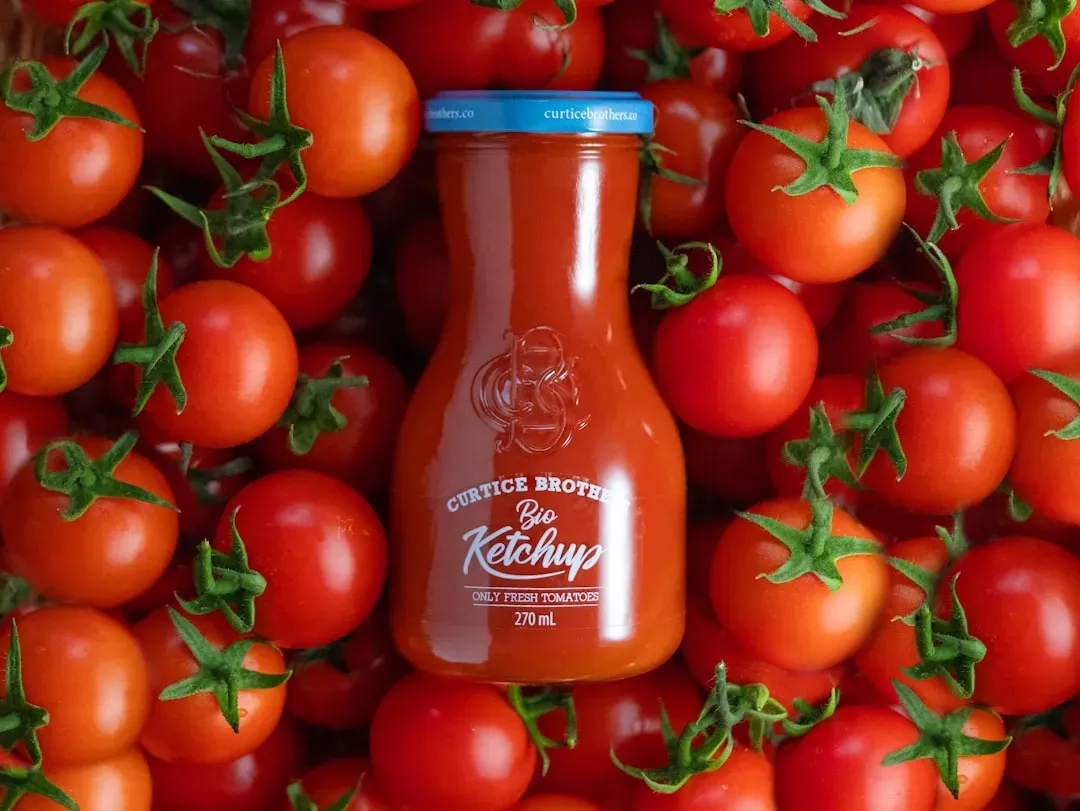
France's rule is far less severe than outright prohibition, but it still counts as a genuine legal restriction on serving a specific food in a public setting. A 2011 government order states that salt and sauces including mayonnaise, vinaigrette, and ketchup are not freely available and are served according to the dishes, while bread and water must remain freely available. In practice, that meant pulling ketchup dispensers out of self serve lines in school canteens nationwide.
Officials framed it as a nutrition and cultural preservation measure rather than a blanket ban. Ketchup cannot be offered with any dish except french fries, and in accordance with the rule cafeterias can only serve french fries once a week. The policy sparked plenty of eye rolling abroad, but inside France it was framed as protecting children's exposure to traditional regional cooking rather than fast food habits.
Saudi Arabia: Restaurants must stay shut to public dining during Ramadan daylight

Saudi Arabia: Restaurants must stay shut to public dining during Ramadan daylight (Image Credits: Pexels)
During the holy month of Ramadan, Saudi Arabia enforces one of the strictest public dining restrictions anywhere in the world. Citizens and expatriates are expected to abstain from eating, drinking, smoking, or chewing gum in public in respect of fasting Muslims' feelings, and foreign offenders can face deportation. Restaurants that would normally serve lunch crowds are required to keep their dining areas closed or curtained off until sunset.
The rule applies regardless of a person's own faith or dietary needs, which has made it one of the more controversial food laws for visitors and residents alike. Public eating during fasting is forbidden for Muslims, non-Muslims, and foreign nationals alike, and violations can lead to fines or short jail terms depending on the emirate or region. Many establishments simply shift to delivery only or takeout during daylight hours to stay compliant while still generating some business.
These six cases show that food law rarely comes down to a single motive. Sometimes it's animal welfare, sometimes public health, sometimes cultural preservation, and sometimes religious observance enforced through the penal code. What they share is a reminder that a plate of food carries more legal weight in certain places than most travelers ever expect.