
There’s a particular kind of competence that Gen X wore quietly, the kind built not in a classroom but in empty houses after school, in car hoods propped open on Saturday mornings, and at kitchen counters where dinner didn’t come from an app. Born roughly between 1965 and 1980, Gen Xers grew up in a world that simply expected you to figure things out. Nobody made a video about it. Nobody left a tutorial.
Widely described as “latchkey kids,” many Gen Xers were left at home without supervision for much of the afternoon and evening following their school days. They often had to put together their own dinners. They had to find the motivation to do their homework without parents present to encourage them. That self-reliance didn’t just shape their personalities. It gave them a working toolkit that most younger generations simply never had the opportunity to develop. Here are six of those skills, and what their disappearance actually means.
Reading a Paper Map Without Any Help

Reading a Paper Map Without Any Help (Image Credits: Pexels)
Long before a calm digital voice told anyone to turn left in two hundred feet, people had to figure out their own way across the country using giant paper maps. Boomers and Gen Xers mastered the art of spatial awareness, learning to orient themselves by landmarks and a steady sense of direction. It required genuine mental engagement, not just a glance at a screen.
Given the technological accessibility that allows younger people to navigate using GPS, it’s not surprising that a great deal of Gen Zers and millennials are unable to read a paper map, a life skill that their parents relied on, but that they never had to learn. Current figures show that about nine in ten drivers now rely on GPS apps to get where they are going without ever looking at a paper atlas. The practical consequence is stark: when a phone battery dies in an unfamiliar city, the confidence to navigate simply isn’t there.
Cooking a Real Meal From Scratch

Cooking a Real Meal From Scratch (Image Credits: Unsplash)
For earlier generations, knowing how to cook wasn’t a lifestyle choice or a social media aesthetic. It was simply what you did. Meals came from the stove, not a delivery app, and the ability to put together a proper dinner was something most people acquired naturally by the time they left home. Gen X teens routinely handled dinner on weeknights while parents worked late shifts.
According to a survey from FindingTheOne, nearly two-thirds of Gen Z admit they lack basic cooking skills, and many prefer to eat out at restaurants to avoid cooking altogether. With advancing technology and shifting generational priorities, the emphasis on learning specific life skills has diminished. Cooking from scratch also built a quiet confidence around improvising, adapting, and tolerating a little mess – none of which a delivery confirmation email can replicate.
Writing and Reading Cursive

Writing and Reading Cursive (Image Credits: Unsplash)
Handwriting, a skill refined over thousands of years of human history, is increasingly becoming a lost art, particularly among younger generations. Recent research from the University of Stavanger reveals that around four in ten Gen Zers are losing their ability to communicate through handwriting, raising pressing questions about the cognitive, cultural, and personal implications of this decline.
Due to changes in the school curriculum, many Gen Zers never learned cursive. This lack of knowledge makes it harder for them to read historical documents and personal family journals written in cursive. For Gen Xers, these skills, including enhanced memory and cognitive stimulation, were a natural part of their youth. They might have disliked penmanship courses and writing in cursive, but research suggests they are better off intellectually and emotionally because they were required to learn them. It wasn’t just penmanship. It was brain training in disguise.
Doing Mental Math Without a Calculator

Doing Mental Math Without a Calculator (Image Credits: Unsplash)
Younger generations are increasingly unable to do mental math, relying too heavily on calculators. This dependency limits their problem-solving ability without digital help, affecting their overall mathematical and cognitive skills. Gen X, by contrast, grew up calculating change at checkout lines, working out tips on paper, and estimating distances without a device in sight.
According to the National Assessment of Educational Progress, the average test scores for U.S. 13-year-olds in reading and math have dipped since 2020. Because of this, their ability to comprehend math, let alone do it in their heads, has become a life skill that has slowly faded out of existence. For older generations like Gen X, they had the time to practice these skills at work, in the classroom, and in their personal lives for years, while younger ones, immersed in technology and online convenience, simply reach for their phones to do basic math.
Basic Home and Car Maintenance
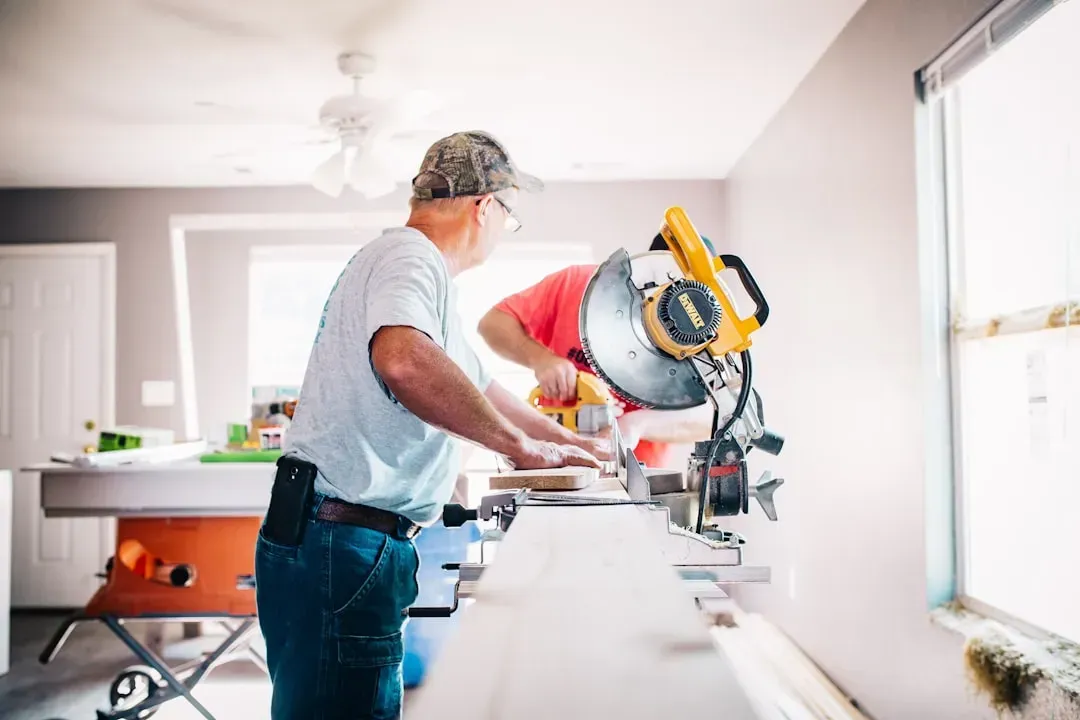
Basic Home and Car Maintenance (Image Credits: Unsplash)
Gen Z rarely learns how to fix basic things around the house. Without these skills, they spend more on repairs and cannot handle common household problems independently. Older generations generally handle home maintenance themselves, from changing the oil in the car to fixing a broken dishwasher. For Gen X, knowing how to unclog a drain or replace a fuse was just part of managing a household.
A 2025 Nationwide Building Society survey found that roughly three in ten people believe DIY skills are being lost among younger generations, while more than four in ten Gen Zers admit they lack confidence in their own abilities. The gap becomes clearer in specific tasks: only nine percent of Gen Z have performed basic home maintenance, such as bleeding a radiator, compared to more than half of baby boomers. According to one survey, nearly three in four respondents said they wouldn’t be able to properly jump-start a car if they were stranded. That’s a telling number for a generation that drives more than ever.
Talking on the Phone with Confidence

Talking on the Phone with Confidence (Image Credits: Unsplash)
Programs designed to address workplace readiness in younger employees now focus on skills described as things “we all got growing up at the kitchen table,” including empathy, communication, setting priorities, and basic conflict resolution. Telephone communication, once practiced daily from adolescence, sits right at the center of that gap. Gen X teenagers routinely called strangers to ask about job openings, schedule appointments, and resolve billing disputes without scripting every word in advance.
Considering Gen Z grew up almost exclusively online and within a tumultuous social climate early in adulthood, it’s not surprising that they struggle with basic social skills that other generations had the opportunity to craft and practice from a young age. From the workplace to their in-person interactions with strangers and even crafting personal relationships, many young people are struggling with isolation. A survey of business leaders in 2024 found that one in six expressed reluctance to hire recent graduates, with three-quarters labeling new hires as “unsatisfactory.” The ability to hold a direct, unscripted conversation still carries enormous professional weight, even if nobody lists it on a resume.
None of this is about blaming younger generations for gaps that were largely built into the world they inherited. The honest read is simpler: certain skills only form through repeated, unassisted practice, and a world of convenient shortcuts quietly closed off those windows before they ever opened. The skills Gen X picked up by necessity are now worth relearning by choice.