
Most people have sat through a dinner, a family gathering, or a casual night out feeling a low-level tension they couldn’t quite name. The couple across the table is doing something – nothing outrageous, nothing worth confronting – but something. Everyone notices. Nobody says a word.
The truth is, certain couple behaviours create a very specific kind of social discomfort: the kind that’s politely absorbed rather than addressed. It tends to build quietly, gathering weight over months or years, until friends start making excuses to cancel plans and family members stop asking certain questions. Here are the fifteen behaviours that consistently produce that reaction.
1. Excessive Public Displays of Affection in Group Settings

1. Excessive Public Displays of Affection in Group Settings (Image Credits: Unsplash)
Excessive displays of affection can make bystanders uncomfortable, draw judgment, or appear attention-seeking. When this happens in the middle of a group outing – a birthday dinner, a family barbecue, a friend’s housewarming – the people nearby have nowhere to look and no way to opt out. It changes the atmosphere of the whole room without anyone being able to say exactly why.
Excessive public displays of affection can be a sign of attachment insecurity and may serve as overcompensation for underlying fears within the relationship. That’s worth keeping in mind, because what reads as confidence often isn’t. Couples would do well to gauge comfort levels, consider the context, and remember that subtle gestures often communicate affection effectively without causing discomfort.
2. Speaking About Each Other in the Third Person, Mid-Conversation

2. Speaking About Each Other in the Third Person, Mid-Conversation (Image Credits: Pexels)
It’s a small habit, but a quietly alienating one. When one partner starts narrating stories about the other as if they’re not sitting right there – “He always does this,” “She never understands” – it puts friends and family in an impossible position. They didn’t sign up to adjudicate.
When you share something your partner wouldn’t want others to know, it can rupture trust. Your partner might feel humiliated or unsafe, and there’s the added layer of dealing with your friends’ judgments. Even when it’s framed lightly, as a joke or an observation, the person being described usually feels it – and so does everyone watching.
3. Venting About Their Partner's Private Struggles

3. Venting About Their Partner's Private Struggles (Image Credits: Unsplash)
Friends and family don’t need to know intimate details about your partner. Yet it happens often: one half of a couple uses a social gathering as an informal therapy session, sharing health issues, financial problems, or emotional struggles that clearly belong to the other person alone. The people receiving this information didn’t ask for it, and most of them genuinely don’t know how to respond.
A partner’s health struggles, whether they’re about infertility, depression, or anything else, are nothing to be ashamed of. That said, it’s ultimately their choice, not yours, whether to share those details with others and when. Removing that choice from them – even with good intentions – is a form of exposure that friends and family often find deeply uncomfortable to witness.
4. Dragging Others Into Their Arguments

4. Dragging Others Into Their Arguments (Image Credits: Pexels)
Communicating confidential information drags unwilling participants into fights to referee. This doesn’t mean you shouldn’t seek couples counseling from a mental health professional or trusted spiritual advisor. It can get nasty if they coerce family and mutual friends into taking sides. Nobody wants to be handed a role in someone else’s conflict, especially when both people involved are people they care about.
Friends are likely to side with you when you share relationship arguments, which may limit your ability to work it out with your partner. Validating who is right or wrong never helps the couple resolve an issue. The friends caught in the middle often carry those biases long after the original argument is forgotten – making every future gathering slightly more complicated.
5. Treating a Group Gathering as a Private Date

5. Treating a Group Gathering as a Private Date (Image Credits: Gallery Image)
That sudden shift when two of your closest friends begin dating can transform group dynamics overnight, leaving you questioning your place in the friendship. When a couple arrives at a group event and essentially retreats into their own world – speaking only to each other, finishing each other’s sentences to the exclusion of others, sitting slightly apart – the signal to everyone else is unmistakable. They’d clearly rather be somewhere else.
When friends couple up, the change isn’t just in their relationship status – it ripples through the entire social ecosystem. Research shows that when romantic relationships form within friend groups, existing platonic relationships often undergo significant restructuring. This transition can trigger feelings of exclusion, social anxiety, and even grief for the friendship dynamic that once was. That’s a heavy emotional toll to place on people who just wanted a normal evening.
6. Constant Competitive Couplehood

6. Constant Competitive Couplehood (Image Credits: Gallery Image)
Some couples seem unable to be around other couples without turning the occasion into a subtle contest. Who is more romantic, more devoted, more communicative. The comparisons come packaged as observations or light humour, but the competitive undertone is audible. One couple being more affectionate in public, or competitive about who is the best couple, creates dynamics others find distinctly uncomfortable.
It creates a lose-lose situation for everyone else in the room. Engage with the competition and you look insecure. Ignore it and you feel faintly dismissed. Most people simply go quiet and wait for the topic to change, which is its own kind of social failure nobody wanted to be part of.
7. Flooding Social Media With Relationship Content

7. Flooding Social Media With Relationship Content (Image Credits: Unsplash)
Couples flood their social media accounts with posts and pictures. Often, they go overboard as if they are chronicling every second of their lives. Such oversharing is a popular reason that some people get blocked and unfriended on these social sites. It’s rarely done with malicious intent, but the cumulative effect on friends and family scrolling through their feeds is a kind of quiet fatigue that’s hard to articulate politely.
Excessive displays were associated with less relationship satisfaction. Content on a partner’s wall that they would be uncomfortable to say in person, or that showed more affection than they normally show in public, was noted as a specific pattern. The irony is that the couples most likely to post constantly are often not the happiest – which makes the performances even harder for onlookers to watch.
8. Using "We" for Everything, Including Individual Opinions

8. Using "We" for Everything, Including Individual Opinions (Image Credits: Pexels)
There’s a version of closeness that tips into erasure. When one or both partners stop expressing any individual thought – when every opinion becomes “we think,” every plan becomes “we decided” – the people around them start to feel they’re no longer speaking to two people at all. When one person is addressed directly, and their partner responds as though they are the same person, it creates a particular kind of social discomfort.
It’s not just awkward for conversation. It signals to friends and family that individual relationships with either person have essentially been dissolved. People who valued a one-on-one friendship with one half of the couple can find this genuinely grief-inducing, even if they’d never describe it that way out loud.
9. Publicly Correcting or Undermining Each Other

9. Publicly Correcting or Undermining Each Other (Image Credits: Pexels)
A couple that interrupts, corrects, and quietly diminishes each other in public creates a specific ambient discomfort. The corrections are often small – “That’s not what happened,” “You always get that part wrong” – but they accumulate. Guests can feel the tension without understanding its full history, and they’re left holding that discomfort with no way to set it down.
Emotional triggers such as unresolved past hurts, insecurity, and sudden mood shifts, alongside communication breakdowns including escalating criticism, explain much of the pattern seen in couple conflict. When those dynamics play out in front of others, the witnesses feel implicated in something they didn’t choose to witness. Most will quietly decline the next invitation to avoid the feeling again.
10. Oversharing Intimacy Details With Friends

10. Oversharing Intimacy Details With Friends (Image Credits: Pexels)
Oversharing in a relationship can include sharing intimate details about past relationships, insecurities, fears, or personal issues that are better addressed with a professional. When this extends to sharing a partner’s sexual behaviour, physical traits, or private vulnerabilities with a group of friends, the people receiving that information often feel implicated in a breach of privacy they didn’t ask to be part of.
When you share something your partner wouldn’t want others to know, it can rupture trust. Your partner might feel humiliated or unsafe – and then there’s the added layer of dealing with your friends’ judgments. It’s not just about the information; it’s about what it communicates. The friends in that moment usually wish they hadn’t been told, and they often carry that awkwardness permanently.
11. Performing Happiness Rather Than Feeling It

11. Performing Happiness Rather Than Feeling It (Image Credits: Unsplash)
The belief that excessive public displays of affection are a direct reflection of how happy a couple is might not be entirely accurate. While physical touch is a direct expression of love and comfort, it is not the sole determining factor, and there can be underlying motives behind excessive displays. Research published in the Journal of Sex Research suggests that young people often engage in “performative” affection for reasons beyond genuine emotional connection.
Friends and family can usually sense when happiness is being performed rather than lived. The slightly too-loud laughter, the declarations of gratitude that feel rehearsed, the insistence on documenting every moment – all of it reads differently than genuine ease. People who care about the couple often feel a low-level worry they can’t express, which is its own uncomfortable position to occupy.
12. Expecting Everyone Else to Accommodate Their Relationship Schedule
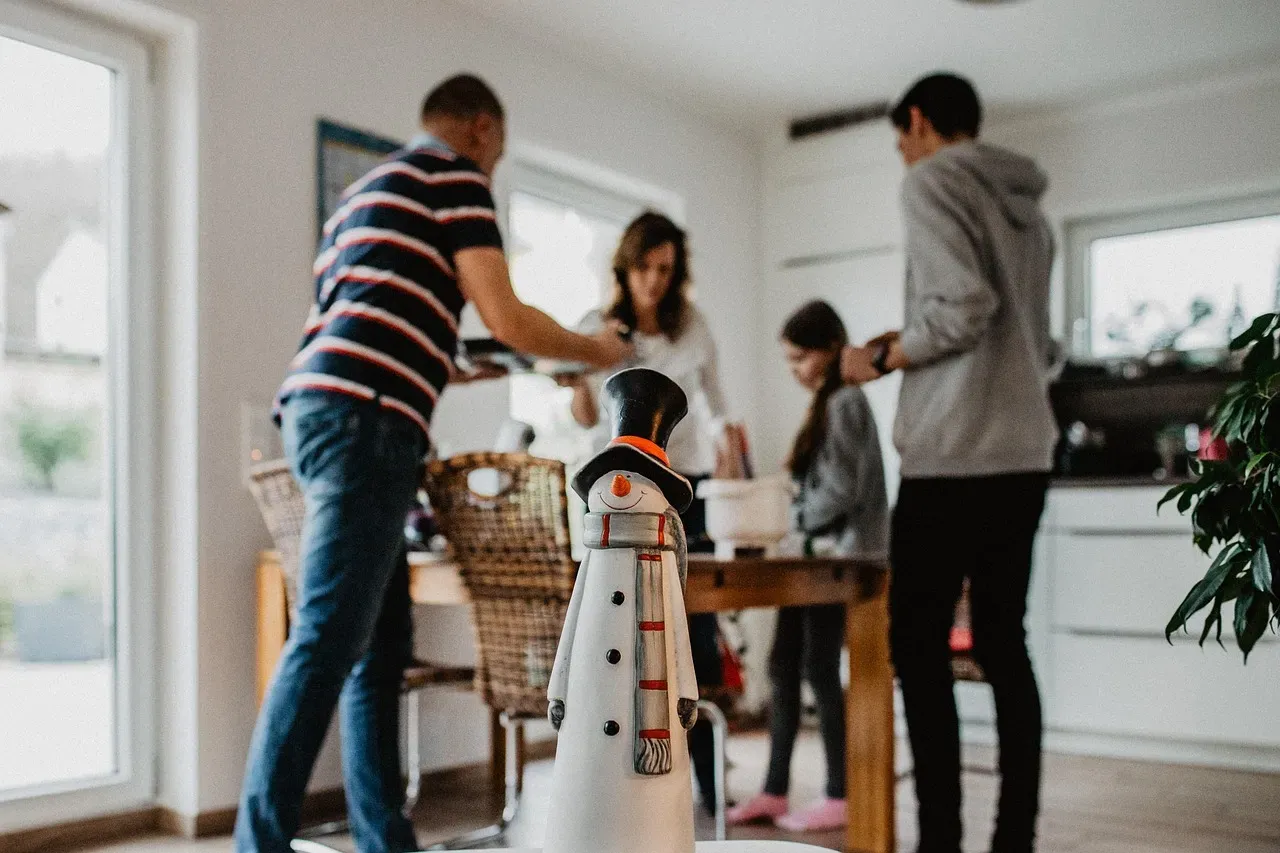
12. Expecting Everyone Else to Accommodate Their Relationship Schedule (Image Credits: Pixabay)
A couple that expects the entire social group to reorganise around their preferences – their dietary choices, their early exit times, their refusal to attend anything without each other – places a recurring tax on everyone else’s goodwill. It’s rarely named directly, but it’s noticed. Plans become elaborate negotiations, and people start planning around the couple rather than including them.
When partners never want to leave the house, don’t get along with friends, or expect the other to focus all attention on them whenever they’re out together, their behaviour can have a direct negative impact on the other person’s social life. Extended to a whole friend group, that pattern eventually produces the quiet social distancing that puzzles many couples who never saw it coming.
13. Texting Each Other Constantly During Group Time

13. Texting Each Other Constantly During Group Time (Image Credits: Pexels)
Excessive social media use and screen-based communication can negatively impact quality time, create conflict, and reduce relationship satisfaction, whether the relationship is romantic or not. When both members of a couple spend a group dinner glued to their phones, texting each other inside jokes or making plans that exclude the people physically present, the message is clear even if unintentional: this gathering is a background event.
The people who organised the evening, or who drove across the city to attend, feel the slight acutely. They rarely say anything, because the behaviour is technically harmless and socially difficult to challenge. That combination – real impact, no easy recourse – is precisely what makes it so persistently uncomfortable.
14. Sharing Partner Complaints Publicly, Then Defending Them Later

14. Sharing Partner Complaints Publicly, Then Defending Them Later (Image Credits: Pexels)
It’s common to vent to close friends about some of the ups and downs in a relationship – perhaps wanting to get something off your chest or seeking another point of view. Just know that, even though the couple may be able to patch things up, friends may still harbour negative feelings toward the partner long after. This dynamic is one of the most commonly reported sources of lingering discomfort in friend groups.
Research shows that couples who publicly discuss their conflicts experience longer periods of tension and emotional distress, as they navigate not only their own feelings but also the opinions of others. Friends who have been recruited as confidants find themselves caught between loyalty and honesty every time the couple is back to normal and expects everyone else to be too. It’s an unfair position, and most people in it eventually withdraw rather than keep navigating it.
15. Making Others Feel Responsible for Their Relationship Happiness

15. Making Others Feel Responsible for Their Relationship Happiness (Image Credits: Pexels)
Oversharing often fosters a dependence on external validation. When couples post about their relationship online, they inevitably look for likes, comments, and approval from others. Instead of focusing on how they feel about each other, they start to rely on what others think of them. While a compliment from a friend might feel good in the moment, constantly seeking validation from the outside world can take a toll on the emotional investment made in the relationship.
This dynamic – when a couple’s emotional stability seems to hinge on constant reassurance from friends and family – creates an exhausting dynamic for the people around them. A quick visit becomes an emotional support session nobody volunteered for. Over time, the people who care most about the couple are often the ones who feel most drained by them, a quiet irony that rarely gets acknowledged.
None of these behaviours are catastrophic on their own. Most couples slip into one or two of them without realising it. What makes them worth examining is the cumulative effect: the slow thinning of friendships, the gradual decrease in genuine invitations, the polite distance that replaces real connection. The people around a couple rarely announce their discomfort. They simply start showing up a little less – and the couple, puzzled, wonders why the room feels emptier than it used to.