
There's a particular kind of honesty that shows up only after the youngest kid leaves for college, or after the third child makes the same mistakes the first two did. Parents who've been at this for twenty, thirty years develop a quieter relationship with expectation itself. They stop measuring their kids against some imagined finish line and start noticing what's actually in front of them.
Talk to enough parents whose children are grown, or nearly grown, and a pattern emerges. The things they once assumed would happen, the milestones they circled on some mental calendar, have mostly faded. What replaced those expectations is a lot more interesting, and honestly, more useful.
1. That their kids would follow a similar life path

1. That their kids would follow a similar life path (Image Credits: Unsplash)
Many parents raised in one era simply assumed their children would move through the same sequence: school, a steady job, marriage, homeownership, kids of their own, roughly on the same timeline. Veteran parents now openly say that script rarely plays out anymore. The economic and cultural landscape their children entered adulthood in looks nothing like the one they knew, and most have made peace with that gap.
Housing costs, shifting career norms, and delayed marriage have all reshaped what a “normal” adult trajectory even looks like. Parents who once expected grandchildren by a certain age, or a mortgage signed by thirty, have largely let go of that timeline. What’s left instead is a looser, more patient hope that their kids find something that works for them, even if it looks unrecognizable compared to their own twenties.
2. That constant communication was a sign of a healthy relationship

2. That constant communication was a sign of a healthy relationship (Image Credits: Pexels)
Younger parents often equate frequent texts or calls with closeness, assuming that a quiet phone means distance or trouble. Veteran parents, especially those with adult children, tend to drop that assumption fairly quickly. They’ve learned that a grown child who calls once a week, or even once a month, isn’t necessarily pulling away emotionally.
Silence, in many cases, simply means the kid is busy living a full life, which is arguably the goal all along. Parents further along in this journey describe recalibrating their sense of connection around quality rather than frequency. A single honest conversation during a holiday visit can outweigh months of surface-level check-ins, and most veteran parents have stopped keeping score.
3. That their advice would be welcomed, let alone followed

3. That their advice would be welcomed, let alone followed (Image Credits: Unsplash)
Early parenting often comes with an assumption that guidance offered will be received gratefully, especially advice drawn from hard-won experience. Parents who’ve raised teenagers and young adults tend to abandon that expectation somewhere along the way. They’ve watched their carefully worded suggestions get politely ignored, or worse, argued against, more times than they can count.
What veteran parents describe instead is a shift toward offering perspective only when asked, or saving it for moments that genuinely call for it. This isn’t resignation so much as recalibration. Many say their relationships with adult children actually improved once they stopped trying to steer decisions and started simply being available.
4. That milestones would arrive in a predictable order

4. That milestones would arrive in a predictable order (Image Credits: Unsplash)
There was once a fairly rigid sequence attached to adulthood: diploma, then job, then partner, then house, then children, each step building on the last. Parents who’ve watched multiple kids grow up say that order has become almost quaint. One child might rent an apartment with roommates well into their thirties while another buys a starter home at twenty-four, and neither path signals success or failure.
Veteran parents have largely stopped expecting a tidy checklist to unfold in sequence. Instead, they describe tracking progress in less linear terms, watching for signs of stability, resilience, and self-sufficiency rather than waiting for specific markers to appear on schedule. The relief in letting go of that old sequence, several say, was almost immediate once they allowed themselves to stop comparing timelines.
5. That their kids would need them the same way forever

5. That their kids would need them the same way forever (Image Credits: Unsplash)
Early parenting is defined by being needed constantly, for meals, rides, homework help, comfort after a bad day. That level of need creates a rhythm that feels permanent, even though it isn’t. Veteran parents describe a gradual, sometimes disorienting realization that the need doesn’t disappear so much as it changes shape entirely.
A grown child might not need help tying shoes anymore, but they might call needing a sounding board for a career decision, or just wanting to hear a familiar voice after a rough week. Parents further into this stage say they’ve stopped expecting to be needed in the old, hands-on way and have instead learned to recognize the newer, quieter forms that need now takes. It requires a different kind of attentiveness, one built more on availability than constant involvement.
6. That parenting would eventually feel finished
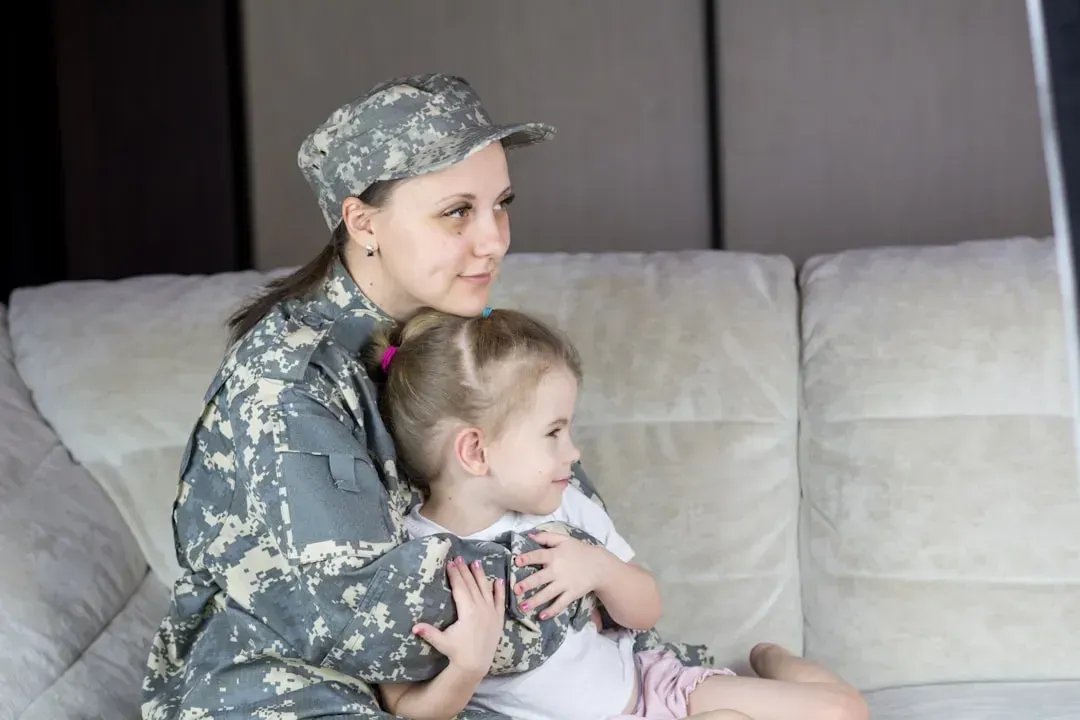
6. That parenting would eventually feel finished (Image Credits: Unsplash)
There’s a common assumption among newer parents that the job has an endpoint, some future moment when the kids are grown and the responsibility winds down. Veteran parents, almost universally, say that moment never quite arrives the way they pictured it. The intensity changes, certainly, but the sense of being a parent, of carrying some quiet responsibility for another person’s wellbeing, doesn’t switch off.
What shifts instead is the form that responsibility takes. Worry about a toddler’s fever becomes worry about an adult child’s job stability or relationship choices, just less visible and less constant. Parents who’ve been through the full arc describe letting go of the idea that there’s a finish line at all, replacing it with a steadier, longer view of what staying present for another person actually looks like over a lifetime.
These six shifts don’t happen all at once, and they rarely follow a clean timeline of their own. They tend to arrive gradually, one recalibrated expectation at a time, usually after enough evidence piles up that the old assumptions simply don’t fit anymore. What veteran parents seem to share isn’t disappointment about any of this. It’s a kind of hard-earned clarity about what actually matters once the noise of expectation quiets down.