
Every generation inherits a set of unspoken rules about how life is supposed to go. You grow up, you get married, you go to church on Sunday, you send a thank-you card after a dinner party. These weren’t just habits – they were the social fabric that knit communities together for decades. Slowly, quietly, that fabric is being rewoven.
Millennials and Gen Z aren’t abandoning tradition for the sake of it. In 2025, traditional milestones often clash with young adults’ realities. Economic pressure, digital life, shifting values, and a broader redefinition of adulthood are all playing a part. Some of these changes feel like losses. Others feel more like corrections. Either way, the shift is real – and worth looking at closely.
1. Getting Married in Your Twenties

1. Getting Married in Your Twenties (Image Credits: Unsplash)
For most of the 20th century, marrying young was simply what you did. A wedding before 25 wasn't a rush – it was on schedule. That expectation has eroded significantly. If current trends continue, one in four Millennials may never marry by middle age, a record high. The delay isn't born out of indifference to partnership, but out of something more practical.
Millennials often pursued higher education, faced a tough job market in their twenties after the Great Recession, and carry high student debt, all of which can delay settling down. They are also more accepting of not following a single traditional life script – cohabiting or staying single longer is common. The institution of marriage itself is also losing some of its cultural authority. The American Family Survey 2025 reports that roughly four in ten survey respondents agreed that society is better off when more people are married, down from just over half in 2018.
2. Attending Weekly Religious Services

2. Attending Weekly Religious Services (Image Credits: Pexels)
Sunday church was once an almost unquestioned part of American life. The pews were full, the community gathered, and formal worship anchored the week. That rhythm has broken down across successive generations. Young adults today have had entirely different religious and social experiences than previous generations did. The parents of Millennials and Generation Z did less to encourage regular participation in formal worship services and model religious behaviors in their children than had previous generations.
The GSS shows that young people are far less religious than older people, and data from the American Time Use Survey shows no sign that church attendance has increased among young people in recent years. There are nuances worth noting though. Gen Z is turning away from traditional religious institutions, but it's not because they don't consider themselves to be religious. They are not losing their faith. The shift is away from formal, institutional worship rather than spirituality itself – a meaningful distinction.
3. Sending Handwritten Thank-You Cards

3. Sending Handwritten Thank-You Cards (Image Credits: Pexels)
A generation ago, receiving a gift or attending a dinner party came with a clear social obligation: you sat down, you wrote a card, you mailed it. The ritual was brief but deliberate, and its absence was noticed. Many people have almost completely stopped the practice of sending thank-you cards, especially handwritten ones after parties, events, and receiving gifts.
Many younger generations like Gen Z are moving away from handwritten letters to express their love, gratitude, and thanks. Focused on convenience – and sometimes affordability – they opt for a phone call, or more reasonably, a text message over handwritten items. Today, instant messaging provides faster, easier interaction. Younger people prefer convenience, viewing handwritten correspondence as time consuming, expensive, and unnecessary for maintaining meaningful relationships consistently. The gratitude still exists; the envelope just doesn't.
4. The Formal Sunday Family Dinner
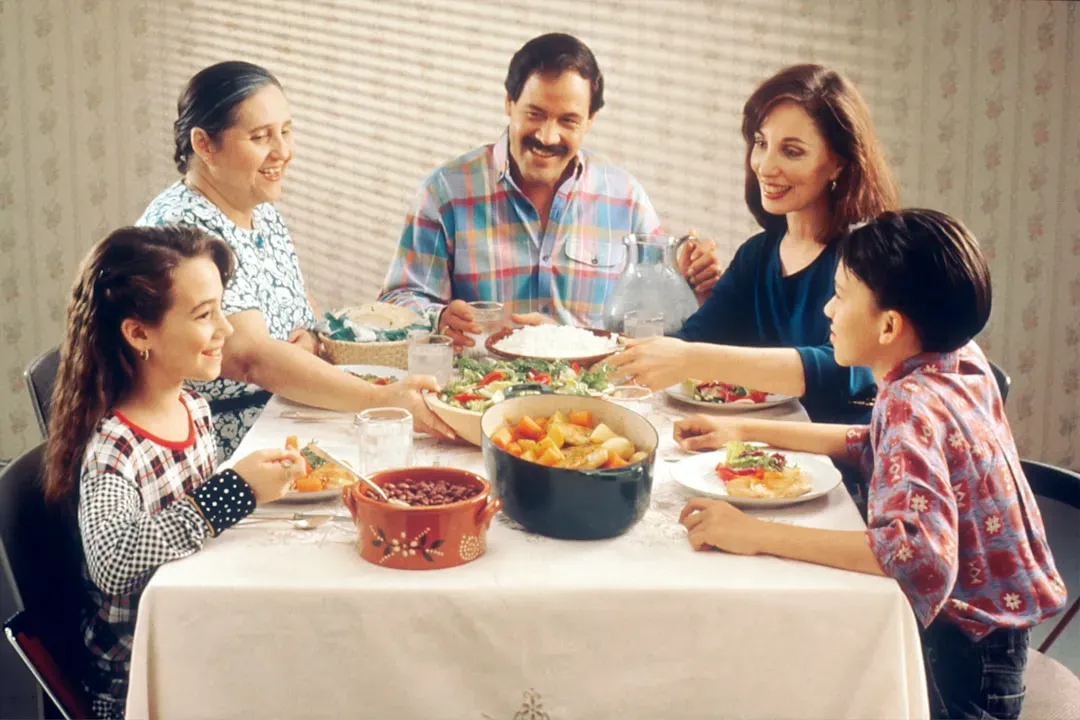
4. The Formal Sunday Family Dinner (Image Credits: Unsplash)
For decades, Sunday dinner was sacred in its own secular way. The whole family assembled, the good dishes came out, and sitting down together at a set time was non-negotiable. It served as both a ritual and a social glue. That structured gathering has largely dissolved into something looser and more occasional. Table manners and basic dining etiquette aren't going away completely – they're just changing on a household and societal level. As new generations bring technology and new slang to the dinner table, there's inevitably going to be changes in the rules and expectations parents have. They might not be actively policing where the silverware sits next to the plate, but they definitely are more concerned about phones at the table.
The dispersal of families across cities and states adds another layer of friction. Younger generations may live in different states or countries, making it harder to maintain the same customs. In these cases, it's important to be open to new ways of celebrating while retaining the essence of the tradition. The desire for togetherness hasn't vanished; it's just harder to schedule around modern life.
5. Mandatory Holiday Visits to Extended Family

5. Mandatory Holiday Visits to Extended Family (Image Credits: Unsplash)
Holidays once meant a pilgrimage home, no matter the distance or the family dynamics involved. You showed up, you stayed, you endured – because that was simply expected. Younger generations are increasingly willing to question that expectation. Many younger generations like Gen Z and Millennials are more concerned with prioritizing their own physical and emotional well-being and setting boundaries with their families around the holidays than forcing themselves to visit family, which only adds to the stress of this time of year.
The concept of setting limits with family – once viewed as cold or disrespectful – has been normalized through broader conversations around mental health and personal wellbeing. Around the world, eighty-four percent of young adults say being true to themselves is extremely or very important. Many of their parents were raised to suppress their true selves, adhering to gender roles and social expectations. Now, these same parents are coming to terms with a generation more open to speak their minds and stay true to themselves.
6. Bringing Flowers or a Gift on a First Date

6. Bringing Flowers or a Gift on a First Date (Image Credits: Pexels)
The image of someone arriving at a door with a bouquet of flowers was, for a long time, a standard romantic gesture. It signaled intention, effort, and a kind of courtly seriousness. In the era of app-based dating and multiple first dates per week, that convention has largely been retired. With changing dating and societal norms, it's more common for a date to show up empty-handed than to bring a bouquet of flowers. Flowers might seem like a waste of money on a first date, especially when you have three more slots for the same week – which is largely a new societal trend that older generations aren't as familiar with.
The mechanics of modern dating have changed the emotional weight of early encounters. New research shows that Americans are changing course on major cultural issues – safety concerns and declining trust are reshaping modern dating, leaving many singles feeling pessimistic about their prospects. Sharp gender divides in attitudes toward dating apps, trust, and relationships reveal how these challenges are redefining the search for connection. Grand gestures feel out of place when the courtship itself has been compressed into a 45-minute coffee meeting.
7. Lifelong Loyalty to a Single Employer

7. Lifelong Loyalty to a Single Employer (Image Credits: Pexels)
Previous generations often built careers at one or two companies, treated job-hopping as a red flag, and measured professional success partly in decades of tenure. That relationship between worker and workplace has fundamentally changed. Baby Boomers and Gen X often value stability and face-to-face interactions, while Millennials and Gen Z prioritize flexibility, work-life balance, and digital communication.
EY's 2024 Work Reimagined report stated that roughly four in ten Gen Z workers plan to quit if they don't feel fulfilled, and that's showing up in hiring and retention. The old social contract – loyalty rewarded with security and a pension – was largely broken by corporate restructuring over the past few decades. Younger generations seek purpose and flexibility in work and are reshaping the timing of adulthood milestones. While often idealistic, they have also been tempered by economic challenges, leading them to adapt traditions to new realities.
8. Saying Grace Before Meals

8. Saying Grace Before Meals (Image Credits: Pexels)
It's a small ritual, lasting maybe twenty seconds – a pause before eating, a moment of collective acknowledgment. For millions of families, it was a daily practice, passed down with almost no discussion required. Its decline is quieter than any of the other shifts on this list, but it reflects something deeper about how religious identity is transmitted across generations. Many childhood religious activities that were once common, such as saying grace, have become more of the exception than the norm.
For as long as we have been able to measure religious commitments, childhood religious experiences have strongly predicted adult religiosity – and they still do. If someone had robust religious experiences growing up, they are likely to maintain those beliefs and practices into adulthood. When fewer parents model the practice, fewer children carry it forward. There is little evidence to suggest that Americans who have disaffiliated will ever return, and most Americans choose to give up their family's religion well before they turn 18, suggesting they have not established a deeply rooted commitment to a set of religious beliefs and practices. Grace before meals may be one of the simplest casualties of that longer arc.
What's worth remembering is that traditions have always evolved. The ones that persist tend to do so because they genuinely serve the people practicing them. The ones that fade often reveal a gap between inherited expectation and lived reality. Younger generations aren't being careless – they're being honest about which rituals still fit.