
Most parents aren’t looking for permission to do something harmful. They’re doing their best, often under real pressure, drawing on how they were raised or what they’ve seen work in the short term. The tricky part is that some of the most common parenting habits feel completely reasonable in the moment, yet quietly undermine the very things parents are hoping to build: confidence, resilience, trust, and emotional health.
Child psychologists spend their careers watching the downstream effects of these patterns. When asked about them directly, many admit they’d never use these approaches themselves. Here’s what the research and the experts consistently flag.
1. Spanking and Physical Punishment

1. Spanking and Physical Punishment (Image Credits: Pexels)
A major analysis published in Nature Human Behaviour found that physically punishing children has exclusively negative outcomes, including poor health, lower academic performance, and impaired social-emotional development, with results consistent across both wealthier and lower-income countries. This wasn’t a small or narrow study. The researchers analyzed 195 studies on corporal punishment published between 2002 and 2024, covering 92 countries and 19 different developmental outcomes ranging from mental health to sleep quality.
Physical punishment was significantly associated with negative consequences in 16 of those 19 outcomes, including worse parent-child relationships, perpetrating violence in adulthood, mental health problems, poor academic outcomes, and impaired social-emotional skills. Harvard research has reinforced that spanking is not only ineffective but can have a measurable impact on brain development, leading to lasting biological consequences in children. The science here is unusually consistent. Notably, not a single study in the analysis found any positive outcomes associated with corporal punishment.
2. Helicopter Parenting and Over-Management
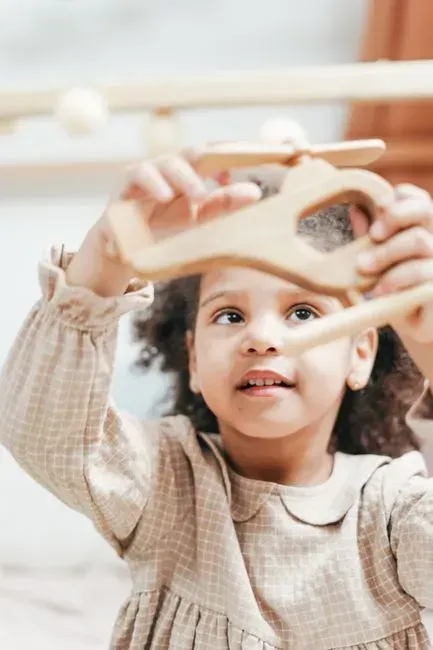
2. Helicopter Parenting and Over-Management (Image Credits: Pexels)
Helicopter parenting involves hovering over children and micromanaging them constantly, which tends to work against the goal of raising autonomous kids. It often comes from a place of genuine love and anxiety, but the effects on children are well-documented. Studies show that children of helicopter parents frequently struggle with independence, decision-making, and emotional resilience, and the behavior itself typically stems from parental anxiety rather than the child’s actual needs.
When parents remove discomfort quickly and consistently, children never develop adequate coping skills. From a behavioral science perspective, children actually build confidence by experiencing consequences and discovering they can handle them. Common traits of this parenting pattern include being over-attentive, fighting the child’s battles, and withholding the chance to fail and learn from those experiences. The irony is hard to miss: the more protection a parent offers, the less equipped the child often becomes.
3. Constant Praise Regardless of Effort
3. Constant Praise Regardless of Effort (Image Credits: Pexels)
Telling a child they are “amazing” no matter what they do removes the learning value of effort and genuine feedback. Many parents grew up being told that praise builds self-esteem, and to some degree it does. The problem is indiscriminate praise, where every ordinary effort gets the same enthusiastic response as a real achievement. It disconnects the reward from anything meaningful.
Confidence doesn’t come from constant praise. It comes from persistence, problem-solving, and purpose, and a little discomfort today can build the psychological flexibility children will need later. Children are also surprisingly good at reading authenticity. When praise feels automatic, many kids begin to discount it entirely, which is the opposite of what parents intend. Specific, effort-based feedback turns out to be far more useful for development than blanket reassurance.
4. Dismissing or Suppressing Children's Emotions

4. Dismissing or Suppressing Children's Emotions (Image Credits: Unsplash)
One of the most important shifts in modern parenting research concerns emotional intelligence development. Traditional approaches often overlooked psychological well-being, focusing primarily on behavioral compliance and academic achievement, while today’s research emphasizes the crucial role of emotional health in child development. Telling a child to “stop crying,” “toughen up,” or “you’re fine” sends a clear message that their internal experience is inconvenient or wrong.
Effective modern parents actively create environments where emotional expression is welcomed and mental health discussions are normalized. When emotions are consistently dismissed, children don’t stop having them. They simply learn to hide them, often from the very people who could help. Research suggests that environments involving emotional dismissal and harsh responses have been linked to increased risk of mental health issues including anxiety, depression, and aggression, as well as poorer academic performance and impaired social skills.
5. Overscheduling Children's Time

5. Overscheduling Children's Time (Image Credits: Pexels)
Endless adult-organized activities leave little room for boredom, which research identifies as a space where creativity and self-direction actually grow. Many parents fill every afternoon with lessons, sports, and enrichment programs with good intentions, but the cumulative effect of a schedule with no breathing room is significant. The pressure for early achievement has reached concerning levels, with parents increasingly pushing children toward accelerated development milestones, often at the expense of crucial developmental stages, leading to rising anxiety levels in young children.
Children need unstructured time not as a reward or a gap between activities, but as a developmental necessity. Free play allows kids to regulate their own experience, build imaginative capacity, and practice resolving conflict without adult intervention. A growing trend among developmental psychologists emphasizes letting children learn from safe, natural consequences by stepping back and allowing kids to solve challenges on their own, building resilience, critical thinking, and decision-making skills.
6. Using Screens as a Default Pacifier or Reward

6. Using Screens as a Default Pacifier or Reward (Image Credits: Unsplash)
Growing research links excessive screen exposure in early childhood to language delays, impaired cognitive and social-emotional development, symptoms resembling ADHD, impulsivity, emotional dysregulation, and weakened caregiver-child bonds. Handing a device to a distressed toddler is understandable in an exhausted moment, but for children experiencing stressful home environments, excessive screen use can become a coping mechanism to alleviate emotional distress, creating a cycle that’s genuinely difficult to reverse.
Young children may be particularly vulnerable to the effects of screen use, as they are in a period of critical physical, cognitive, and social development linked to heightened levels of neuroplasticity. The issue isn’t simply quantity, though that matters too. Research suggests parents might want to be cautious about what screens they allow and use parental controls to manage time, while also recognizing that kids who use screens heavily might need emotional support, not just restrictions.
7. Solving Every Problem Before the Child Can Try

7. Solving Every Problem Before the Child Can Try (Image Credits: Pexels)
Jumping in to solve every problem teaches children that they can’t work things out on their own. It’s one of those habits that looks like attentive parenting from the outside, but consistently sends a quiet message: “You’re not capable.” Over time, that message sticks. One of the biggest mistakes psychologists observe is parents doing everything for their children out of love, or out of a desire to heal their own unhappy childhoods.
The goal isn’t to withhold help entirely. It’s to coach rather than fix. Letting a child struggle with an age-appropriate challenge, staying close without taking over, is one of the more powerful things a parent can do. Many modern parents are working overtime to keep their children’s lives smooth, safe, and happy, and child psychologists consistently note that this well-meaning effort may be leaving kids underprepared for real life. Competence requires practice, and practice requires room to fail.
8. Comparing Children to Siblings or Peers

8. Comparing Children to Siblings or Peers (Image Credits: Pexels)
Traditional parenting often promoted uniform disciplinary and motivational methods, assuming all children would respond similarly to the same approaches. Modern child development research strongly contradicts this stance, highlighting the importance of individualized strategies that consider each child’s unique personality, needs, and circumstances. Comparing a child unfavorably to a sibling or classmate may feel like useful motivation, but the research picture is more complicated than that.
Comparisons tend to shift a child’s focus from growth to status. Rather than asking “am I getting better?”, the child starts asking “am I better than them?” That’s a fragile and anxiety-producing lens. Every child is genuinely different, and because each has unique strengths and growth areas, discipline and encouragement must be tailored to the individual child. When comparisons become a parenting shortcut, they often damage the exact thing they’re meant to build: motivation, confidence, and a healthy sense of self.
The consistent thread running through all eight of these habits is that they typically feel effective in the short term. Punishment stops behavior temporarily. Solving the problem gets everyone moving again. Praise produces a smile. The challenge is that child development plays out over years and decades, and what works in the moment often costs something later. Knowing that is, perhaps, the most useful thing a parent can take from the research.