
Jealousy is nothing new in romantic relationships, but the way it shows up and the way couples respond to it has shifted dramatically in the past decade. A liked photo, an ambiguous comment, or a story shared with a stranger can now trigger the same emotional response that once required actual physical evidence of a rival. Researchers who study attachment and relationship satisfaction have been paying close attention to this shift, and their findings paint a picture of a phenomenon that looks familiar on the surface but behaves very differently underneath.
1. Jealousy now has a near-constant digital trigger

1. Jealousy now has a near-constant digital trigger (Image Credits: Unsplash)
Before smartphones, jealousy usually needed a spark, something seen in person or overheard secondhand. Today, that spark is built into the apps people check dozens of times a day. Social media are a breeding ground for jealousy, whether it’s a new follower liking a partner’s profile picture, an ambiguous comment under a post, or a single emoji taken out of context.
What makes this different from older forms of jealousy is the sheer frequency of exposure. A partner does not need to be doing anything wrong for a jolt of suspicion to appear, because the platform itself keeps surfacing small, ambiguous data points. Psychologists note that this constant low-level stimulus changes the emotional texture of relationships, making jealousy feel more like background noise than an occasional event.
2. Couples increasingly monitor each other electronically
2. Couples increasingly monitor each other electronically (Image Credits: Unsplash)
One of the clearest behavioral shifts researchers have documented is the rise of what they call electronic partner surveillance, essentially checking a partner’s posts, friend lists, and likes. A 2025 longitudinal study published in the Journal of Marital and Family Therapy followed 322 young adults over two years and found that social media jealousy was associated with increased electronic surveillance of one’s partner and lower satisfaction with the relationship one year later.
This creates a kind of feedback loop that did not exist in pre-digital relationships. Jealousy prompts checking, checking surfaces more ambiguous content, and that content fuels more jealousy. Researchers involved in that study noted the connections between social-media-induced jealousy, online surveillance, and relationship outcomes, treating these behaviors as part of a single interconnected pattern rather than separate issues.
3. It is the jealousy itself, not the checking, that damages relationships

3. It is the jealousy itself, not the checking, that damages relationships (Image Credits: Unsplash)
A surprising finding from that same research is that monitoring behavior on its own is not the primary culprit. Electronic surveillance itself, monitoring a partner’s posts, friend lists and likes, was not directly linked to lower satisfaction in the relationship. Instead, the primary factor undermining satisfaction is jealousy triggered by online content, rather than surveillance itself.
This distinction matters for how couples and therapists think about the problem. A partner who occasionally glances at another person’s Instagram story is not necessarily headed for trouble. It is the emotional interpretation attached to what they see, the jealousy that colors how they feel about the relationship afterward, that does the real damage over time.
4. Ambiguity has become the main battleground
4. Ambiguity has become the main battleground (Image Credits: Pexels)
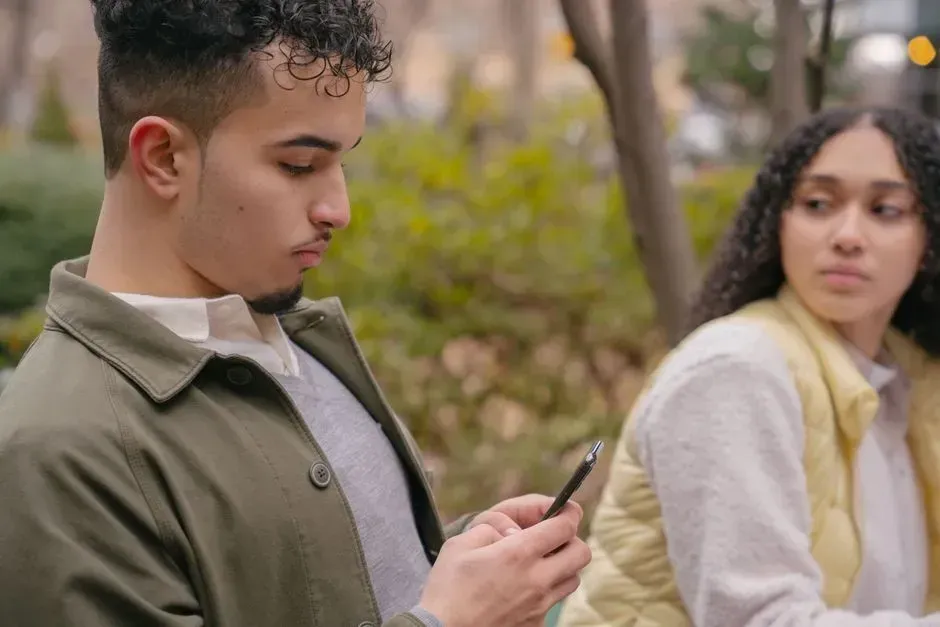
Old-fashioned jealousy usually responded to something concrete, a flirtatious remark witnessed in person or a suspicious phone call. Digital jealousy thrives on ambiguity instead. A like from an ex, a comment that could be read multiple ways, or a photo tag with no context leaves plenty of room for interpretation, and researchers have pointed out that these vague signals are precisely what makes online jealousy so persistent.
Couples therapists have started addressing this directly, since arguments about screenshots and interpretations of tone are becoming as common as arguments about actual events. The Université de Montréal researchers behind the 2025 study suggested that proximal and situational factors, such as exposure to ambiguous content, might be more strongly associated with social media jealousy than a distal trait such as attachment anxiety. In plain terms, what a person happens to scroll past in a given moment may matter more than their general personality when it comes to triggering jealousy.
5. Attachment anxiety still plays a role, but maybe a smaller one than expected

5. Attachment anxiety still plays a role, but maybe a smaller one than expected (Image Credits: Unsplash)
For years, psychologists assumed that people with higher attachment anxiety, those who fear losing a partner more intensely, would be the ones most vulnerable to social media jealousy. Previous studies have shown that people with greater attachment anxiety, who are more fearful of losing their partner, are more prone to jealousy.
The newer longitudinal data complicates that assumption somewhat. This study found no correlation between attachment anxiety and jealousy one year later, suggesting that situational triggers on social media may swamp personality-based predispositions over time. Lead researcher Marie-Ève Daspe has acknowledged that longer-term questions remain open, noting there aren’t yet many longitudinal studies measuring benefits over extended periods.
6. Jealousy after a breakup now lingers through social feeds

6. Jealousy after a breakup now lingers through social feeds (Image Credits: Unsplash)
Ending a relationship used to mean a fairly clean break from a partner’s daily life. Now, an ex’s updates can keep showing up in feeds for months or years, and new research suggests this changes how people recover emotionally. A study on post-breakup behavior found that both active surveillance and passive exposure to an ex-partner’s social media content predict worse recovery outcomes.
Even people who are not actively searching for information about a former partner can stumble across it simply by using the platforms they already check daily. Researchers found that frequent monitoring of an ex-partner’s Facebook page was associated with higher levels of distress and jealousy at both the beginning of the study and six months later, which suggests the emotional aftermath of a breakup now has a digital half-life it never had before.
7. Different platforms produce different jealousy patterns
7. Different platforms produce different jealousy patterns (Instagram app icon on smartphone screen (perspective render), <a href="https://commons.wikimedia.org/w/index.php?curid=97404627" target="_blank" rel="noopener">CC BY 2.0</a>)
Not all social media triggers jealousy in the same way, and researchers have started distinguishing between platforms rather than treating “social media” as one uniform experience. Studies have shown that feelings of jealousy can develop from activities on various social media platforms, including Facebook, Instagram, and Snapchat.
Instagram in particular has drawn attention because of its visual, comparison-heavy format. Research on Instagram-specific behavior found that actual-ideal self-discrepancies were sequentially associated with increased Instagram-enabled infidelity and dissolution through increased photo-manipulation behaviors on Instagram and Instagram-related conflict. Given that Instagram leads in popularity with 76% of young adults using this platform as of 2024, according to Pew Research Center data, it has effectively replaced Facebook as the main stage where these dynamics now play out for younger couples.
8. Couples are being pushed toward more explicit communication norms

8. Couples are being pushed toward more explicit communication norms (Image Credits: Pexels)
Perhaps the most constructive shift researchers have observed is that couples can no longer rely on unspoken assumptions about appropriate online behavior. Because so much of modern courtship and commitment happens visibly online, from relationship status to who comments on whose posts, couples increasingly need to negotiate digital boundaries the way earlier generations negotiated in-person social boundaries.
Clinicians studying this shift point to specific practices that help. Effective interventions to enhance trust within a relationship, be it online or offline, include transparency, open communication, explicit rules regarding appropriate behaviors within the relationship, and quality time with the romantic partner through shared activities. Therapists have also pointed to structured approaches like emotionally focused couple therapy, since EFT interventions target deep-seated insecurities by helping individuals with greater attachment anxiety build more secure emotional connection with their romantic partners.
The research on this topic is still fairly young, and much of it comes from studies of people in their late teens and twenties rather than the broader population. Even so, a consistent thread runs through the findings: social media has not invented jealousy, but it has changed its shape, its frequency, and the tools couples now need to manage it. Whether that amounts to a net negative for relationships or simply a new set of skills to learn is a question researchers themselves say they have not fully answered yet.