
Most couples don't fight about texting. They fight about what texting starts to represent over time, the sense of being an afterthought, the guessing games, the slow erosion of tone that used to feel warm. Therapists who work with couples say these patterns rarely show up as one dramatic moment. Instead, they build quietly, message by message, until two people who talk constantly still feel oddly disconnected.
1. Leaving messages on read without acknowledgment
1. Leaving messages on read without acknowledgment (Image Credits: Unsplash)
Seeing that a message has been read but ignored can trigger a surprisingly strong emotional response, even when the delay is completely innocent. Relationship therapists often point out that humans are wired to notice social exclusion, and an unanswered read receipt can register almost like a mini rejection, even between people who trust each other deeply.
The habit becomes corrosive when it turns into a pattern rather than an occasional slip. A partner who consistently reads and delays responding, without ever explaining why, teaches the other person to expect to be low priority, which chips away at felt security in the relationship.
2. Replying only in short, clipped fragments

2. Replying only in short, clipped fragments (Image Credits: Pixabay)
One word answers like “k” or “fine” might save time, but they often communicate more than intended. Couples counselors frequently hear complaints from partners who say short replies make them feel like a burden or an interruption, even if that was never the sender’s intention.
Tone is already hard to convey through text, and brevity strips away what little context remains. Over months, a habit of clipped responses can flatten the emotional texture of a relationship, making everyday exchanges feel transactional instead of connected.
3. Using texting to avoid difficult conversations

3. Using texting to avoid difficult conversations (Image Credits: Pexels)
Texting can feel safer for bringing up sensitive topics because it creates distance from the other person’s immediate reaction. Therapists caution that this safety is often an illusion, since tone, sarcasm, and nuance get lost, and misunderstandings multiply quickly in text form.
When serious issues, apologies, or emotional check ins consistently happen over text rather than face to face or by phone, couples miss the nonverbal cues that actually repair conflict. This pattern can train partners to avoid vulnerability altogether, favoring the emotional buffer that a screen provides.
4. Multitasking through emotionally important texts

4. Multitasking through emotionally important texts (Image Credits: Pexels)
Responding to a heartfelt or vulnerable message while distracted, watching television, scrolling another app, or half paying attention, often shows in subtle ways. Delayed replies, mismatched tone, or answers that miss the emotional point of the original message are common giveaways.
Partners tend to notice when their words aren’t really landing, even if they can’t always articulate why. Therapists suggest that giving full attention to emotionally weighted texts, even briefly, signals respect in a way that a quick distracted reply simply cannot replicate.
5. Overusing texting instead of in person quality time

5. Overusing texting instead of in person quality time (Image Credits: Pexels)
Texting throughout the day can feel like connection, and in smaller doses it genuinely is. Problems arise when text exchanges start substituting for real time together, creating a false sense of closeness that doesn’t hold up when couples are actually in the same room.
Some couples report feeling like they know everything about each other’s day through texts, yet still feel emotionally distant in person. Relationship therapists often encourage couples to treat texting as a supplement to connection rather than the main source of it.
6. Sending mixed signals through inconsistent tone
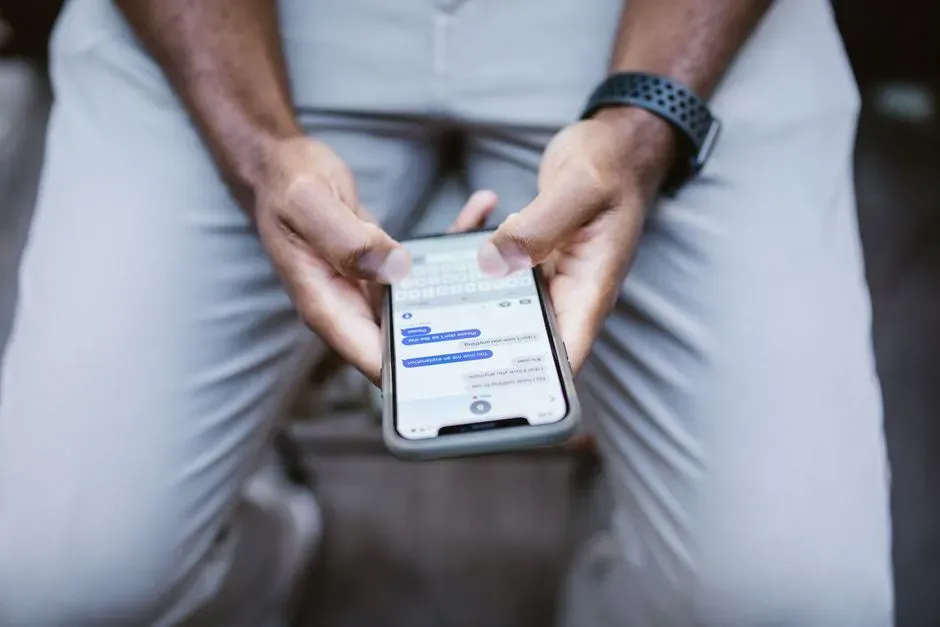
6. Sending mixed signals through inconsistent tone (Image Credits: Pexels)
Warm, engaged texting one day followed by flat, distracted texting the next can leave a partner constantly recalibrating. This inconsistency creates a low grade uncertainty that therapists sometimes describe as more damaging than steady, even mildly reserved communication.
Partners on the receiving end often start overanalyzing punctuation, emoji use, or response speed, trying to decode mood shifts that may have nothing to do with the relationship at all. Predictable tone, even when brief, tends to build more trust than sporadic bursts of enthusiasm.
7. Using group chats or social media to avoid direct conversation
7. Using group chats or social media to avoid direct conversation (Image Credits: Unsplash)
Some partners default to public or semi public digital spaces to communicate things that should happen privately, whether that’s an inside joke, a passive complaint, or an emotional update meant for a partner’s ears first. This habit can leave the other person feeling like they’re learning about their own relationship secondhand.
Therapists note that this pattern often reflects, and reinforces, a deeper avoidance of direct one on one communication. Even small instances, like sharing a private frustration in a group setting, can quietly signal that the relationship isn’t the primary emotional priority.
8. Ghosting mid conversation without explanation

8. Ghosting mid conversation without explanation (Image Credits: Pexels)
Starting a meaningful or even light exchange and then disappearing without acknowledgment, only to resurface hours later as if nothing happened, is a habit many partners find unsettling. It leaves the other person unsure whether to keep the conversation open, follow up, or simply let it go.
This kind of unpredictability can quietly train a partner to expect incompleteness, lowering their investment in future exchanges as a form of self protection. A simple “can’t talk right now, will follow up later” costs very little but prevents the sense of abandonment that abrupt silence can create.
9. Relying on texting for reassurance instead of real repair
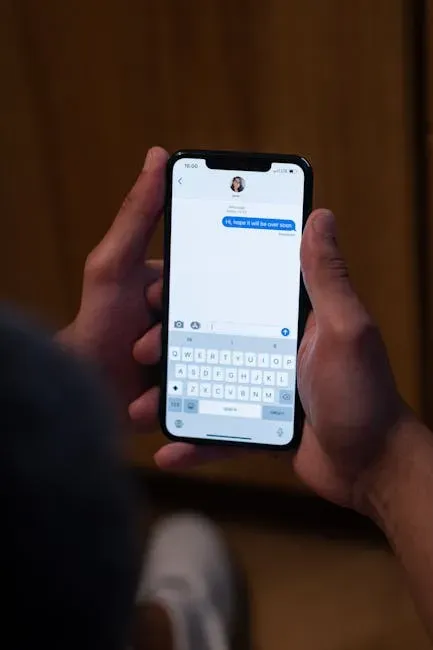
9. Relying on texting for reassurance instead of real repair (Image Credits: Pexels)
After an argument, a quick text saying everything is fine can feel like closure, but therapists often point out that it rarely addresses the underlying issue. It can function more like a pressure release valve than actual resolution, allowing both partners to move on without truly repairing the disconnect.
Over time, couples who rely on this shortcut may notice the same conflicts resurfacing again and again, since the real conversation never actually happened. Text based reassurance works best as a bridge to a deeper conversation, not as a replacement for one.
None of these habits are inherently dramatic on their own, and most couples slip into a few of them without meaning any harm. What matters more than any single text is the overall pattern it belongs to, whether communication as a whole still feels attentive, honest, and mutual. Small adjustments, like acknowledging a message even briefly or saving harder conversations for real time, often do more for closeness than any grand gesture ever could.