
Most financial mistakes don’t look like mistakes when you make them. They come dressed in confidence, logic, and a surface-level reasonableness that makes them feel almost prudent. That’s precisely what makes them dangerous. The traps covered here aren’t obscure schemes or obvious scams. They’re the kind of moves that sound like good strategy at the dinner table or on a financial podcast.
The uncomfortable truth is that money traps are financial behaviors or situations that appear harmless but systematically drain wealth over time. They compound quietly, year after year, until the damage becomes impossible to ignore. Here are nine of the most common ones.
1. Overconfidence in Your Own Stock-Picking Ability

1. Overconfidence in Your Own Stock-Picking Ability (Image Credits: Pexels)
Overconfidence bias is a behavioral principle that can be used to describe overestimating one’s financial acumen. Investors may be tricked into thinking they can beat the market or may suffer higher trading costs as a result. It’s a remarkably widespread problem. Around two thirds of investors rate their investment knowledge highly, according to a FINRA study. The research found that younger investors tend to be more confident than older investors. Yet investors with more confidence answered fewer questions correctly on an investment knowledge quiz.
Overconfidence bias is one of the most pervasive and damaging cognitive biases in investing. By overestimating knowledge and control, investors expose themselves to higher risk, lower returns, and repeated errors in judgment. Research indicates that overconfident investors trade more frequently, generating higher transaction costs and lower net returns. The irony is sharp: the more certain you feel, the more vulnerable you often are.
2. Paying High Fees on Actively Managed Funds

2. Paying High Fees on Actively Managed Funds (Image Credits: Unsplash)
The pitch sounds reasonable enough. Pay a bit more, get professional stock selection, and hopefully outperform the market. The data, though, tells a very different story. Over the decade from 2014 to 2024, roughly three quarters of actively managed funds underperformed their passive alternatives, meaning investors paid more for worse results in most cases. A 0.75% fee difference costs nearly $30,000 on a $100,000 portfolio over 20 years due to compound effects. That’s money coming straight out of retirement.
Index funds carry a 0.11% average asset-weighted annual fee, while active funds carry a 0.59% fee, according to Morningstar. Active funds need to have higher relative returns just to overcome that fee differential. Most never manage it. A study from S&P shows that roughly 90% of active public equity fund managers underperform their index on a 10-year horizon. Fees are guaranteed. Returns are not.
3. The Sunk Cost Trap
3. The Sunk Cost Trap (Image Credits: Pexels)
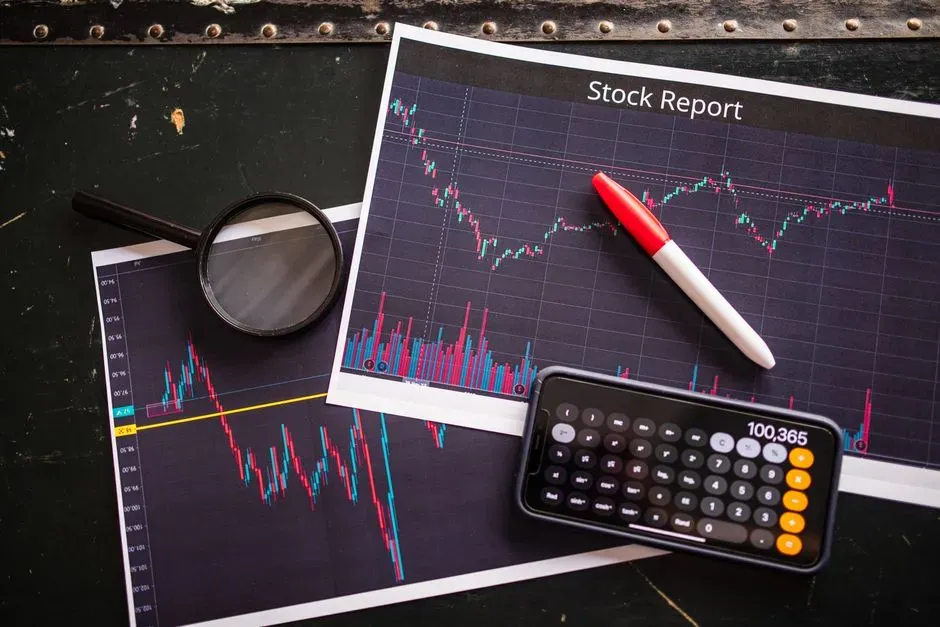
The sunk cost fallacy is the irrational idea that you should keep investing in something just because you’ve already invested time or money in it. In practice, this means holding a losing stock for years because selling would mean “locking in” the loss, as though the market cares what price you originally paid. The sunk cost fallacy points out that individuals tend to justify further investment in a decision or action based on the resources they have already committed, even when evidence suggests the decision is no longer rational. This bias is particularly relevant in trading, where traders might hold onto or add to losing positions in a misguided attempt to recoup their losses.
Instead of focusing on future value, decisions are influenced by past investments, leading to poor outcomes, wasted resources, and delayed course correction. This bias is driven by psychological factors such as loss aversion, fear of failure, unrealistic optimism, and personal responsibility. The smarter move is always the same: instead of focusing on how much you spent, ask what the investment looks like going forward.
4. Chasing Recent Performance
4. Chasing Recent Performance (By User:Hellerick, based on the data from the Moscow Exchange website., <a href="https://commons.wikimedia.org/w/index.php?curid=8367556" target="_blank" rel="noopener">Public domain</a>)
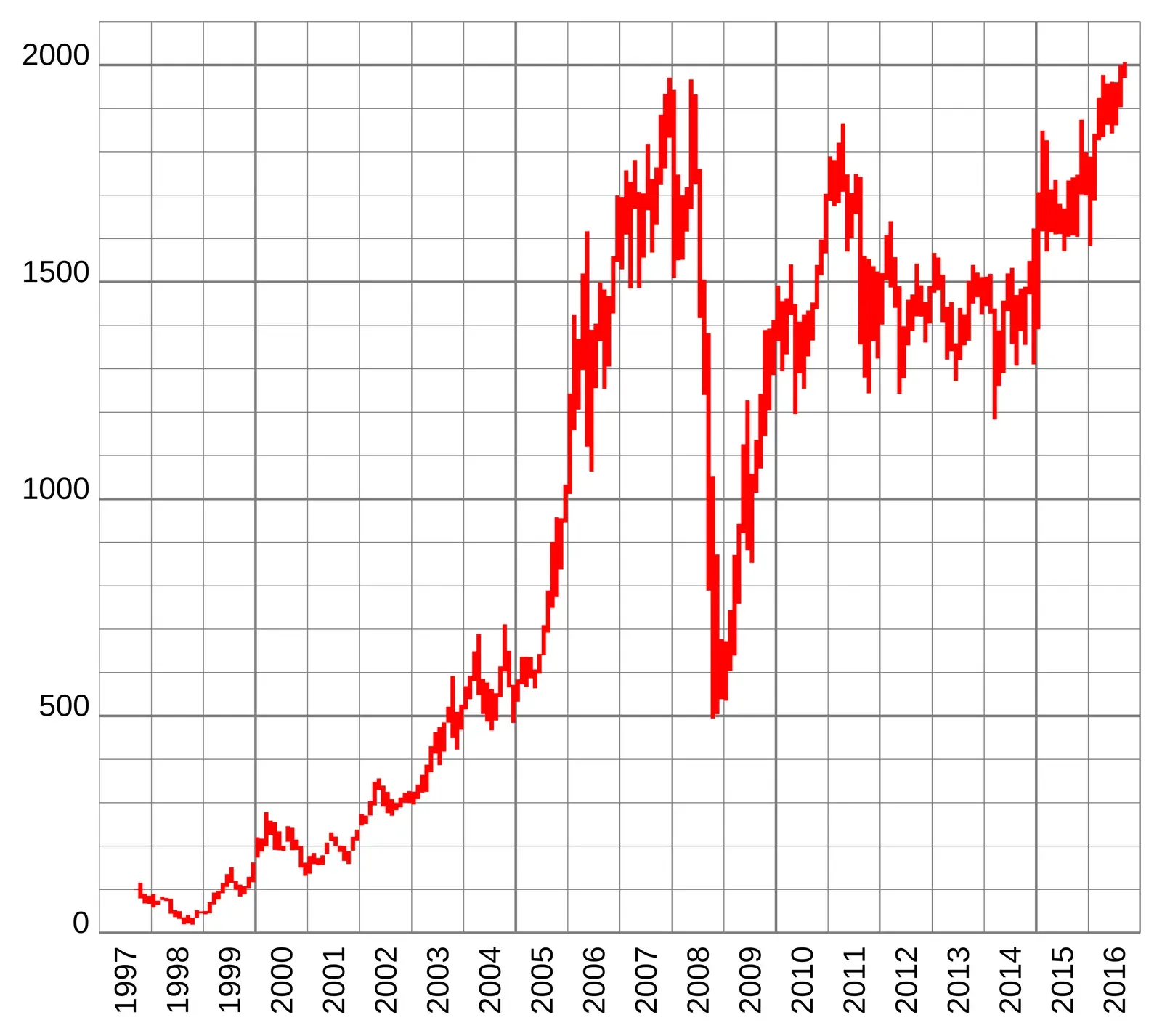
Every investor has felt the pull. A fund or asset class posts spectacular returns for two or three consecutive years and suddenly it feels almost careless not to move money into it. This is recency bias in action. Recency bias occurs when people more easily remember and emphasize recent events rather than those that happened further in the past. It leads investors to pile in near a peak, treating yesterday’s winners as tomorrow’s certainties.
After rising sharply in the late 1990s during the dot-com bubble, the S&P 500 Index fell over nine percent across the entire decade from 2000 to 2009. This is not to say that the S&P 500 shouldn’t be part of a broadly diversified investment mix. It simply highlights the range of possible outcomes so investors can make educated decisions and remain disciplined against the increased risks that come with performance chasing. A strong recent track record is not a reliable indicator of what comes next.
5. Treating Your Home as Your Primary Investment

5. Treating Your Home as Your Primary Investment (Image Credits: Unsplash)
Homeownership carries enormous cultural weight, and for many people it does build meaningful equity over time. The trap isn’t in buying a home. It’s in treating that home as a wealth-building engine while ignoring its real costs. Many buyers fail to account for the substantial hidden costs of homeownership beyond mortgage payments, including maintenance, property taxes, insurance, and HOA fees. These expenses typically add one to four percent of a home’s value annually to the actual cost of ownership.
The societal pressure to buy rather than rent often pushes people into homeownership before they are truly ready, creating vulnerability to market downturns or income disruptions. Buying too soon can damage financial security rather than enhancing it. A home is a place to live. It can also be an asset. Conflating the two, and concentrating most of your net worth in a single illiquid property, is a structural risk that often goes unexamined until it’s too late.
6. Home Bias: Investing Only in What You Know

6. Home Bias: Investing Only in What You Know (Image Credits: Pexels)
There’s a certain logic to investing in companies you use and understand. Familiarity feels like insight. The problem is that familiarity and investment quality are not the same thing. Investors often gravitate towards companies they know or use, assuming familiarity equates to good investment potential. This “home bias” can lead to concentrated portfolios and increased risk.
Geographic home bias operates the same way, leading many investors to massively overweight their domestic market while ignoring the rest of the world’s economy. Behavioral finance examines how psychological factors and cognitive biases influence financial decisions, often leading to market fluctuations and potentially costly investment mistakes. The definition of behavioral bias in finance encompasses how cognitive and emotional biases affect an investor’s ability to process information and make rational economic decisions. Sticking close to home can feel safe. Statistically, it often isn’t.
7. Waiting for the "Right Time" to Invest
7. Waiting for the "Right Time" to Invest (Image Credits: Gallery Image)
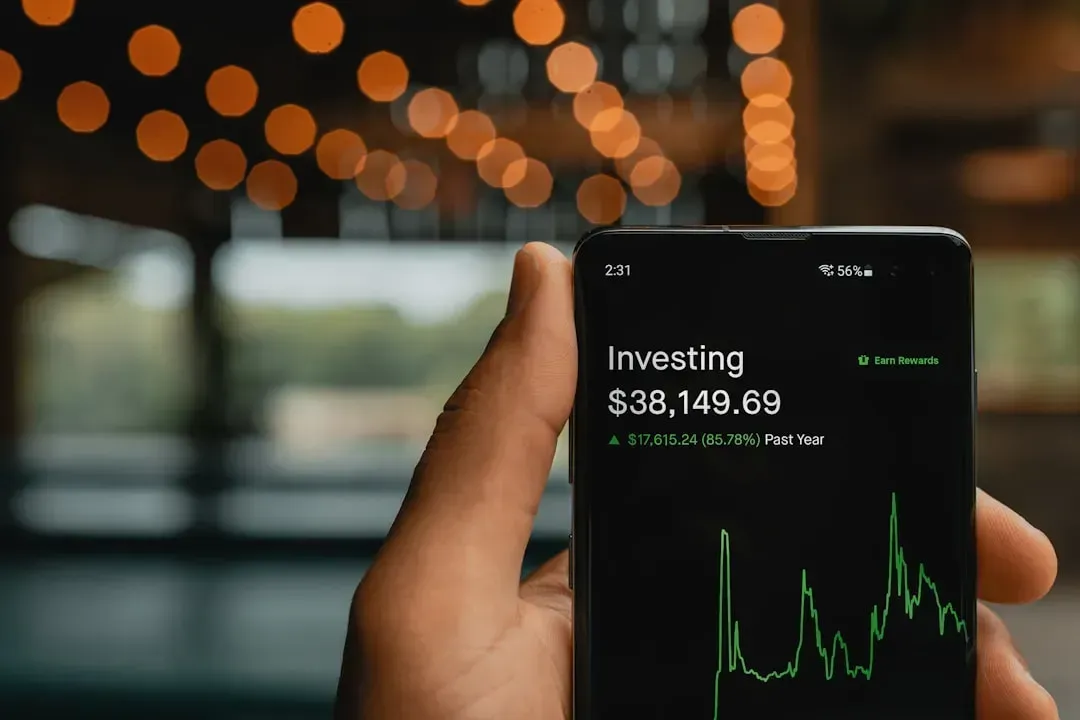
Timing the market is one of the most seductive ideas in personal finance. Wait for a dip. Wait for certainty. Wait until things calm down. The cost of that waiting is rarely visible, which makes it easy to rationalize indefinitely. The pursuit of perfect investment knowledge often leads to analysis paralysis, with the cost of delayed action frequently exceeding the value of additional research. Each year of hesitation represents lost growth potential. Time in the market typically outperforms timing the market, making procrastination particularly costly.
The math on this is unambiguous. According to Fidelity’s retirement calculator, if you start investing $200 monthly at age 25 versus age 35, you could have an extra $320,000 by retirement, assuming seven percent annual returns. That gap is not the result of superior stock selection. It’s simply the result of showing up earlier and letting compounding do its work. Waiting for the perfect moment is, in most cases, waiting for something that never arrives.
8. Herd Behavior and FOMO-Driven Investing

8. Herd Behavior and FOMO-Driven Investing (Image Credits: Unsplash)
Investors often follow the crowd, buying what’s popular and selling what’s not, leading to speculative bubbles and crashes. This pattern repeats itself reliably across every market cycle, from tulip mania to dot-com stocks to meme stocks and speculative crypto assets. The rise of meme stocks and speculative crypto assets has led to many losing significant amounts of money. A Charles Schwab survey found that roughly one third of new investors jumped into the market due to FOMO.
Fear and greed can drive impulsive decisions, leading to panic selling in downturns or chasing hot investments in uptrends. What makes herd behavior particularly insidious is that it feels rational in the moment. When everyone around you is buying something and talking about it, standing still requires genuine discipline. The crowd is loudest and most compelling right at the point where the risk is greatest.
9. Anchoring to a Price That No Longer Matters
9. Anchoring to a Price That No Longer Matters (Image Credits: Pexels)
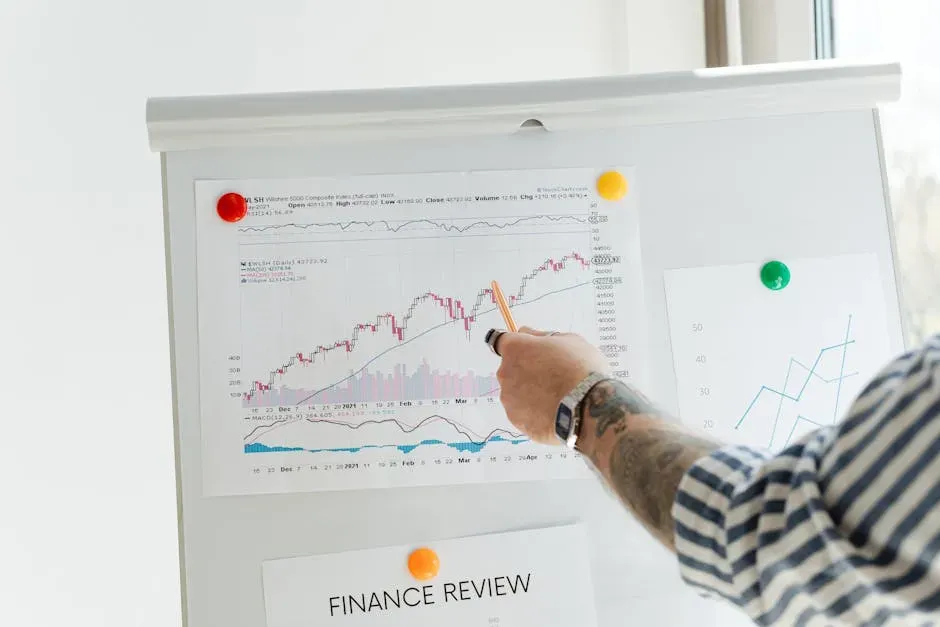
Anchoring is a psychological trap rooted more in a lack of flexibility than anything else. Rather than adapting to current conditions, anchoring is a problem where your way of thinking sits too prominently on top of your strategy. In practice, investors anchor to the price they paid for an asset, treating that number as meaningful when the market has long since moved on. They refuse to sell below their purchase price, or they hold waiting to “get back to even,” even when the investment’s fundamentals have deteriorated.
It’s easy to find yourself banking on the assuredness of something that has remained for a long time. Technology stocks continued to show off extreme growth for so long that some thought it might signal a forever changed marketplace. Yet the end of 2022 brought rough waters for the tech sector, demonstrating inherent weaknesses that demanded action. Being mistakenly overconfident in investment decisions interferes with the ability to practice good risk management. The overconfidence bias often leads investors to view their investment decisions as less risky than they actually are. Anchoring and overconfidence tend to travel together, and together they can do serious damage.
None of these traps require bad intentions or a lack of intelligence to fall into. Most of them, in fact, tend to catch careful, thoughtful people who simply trusted a feeling or a narrative more than the underlying evidence. Recognizing them is not a guarantee against them, but it shifts the odds. The investors who build lasting wealth tend not to be the most aggressive or the most clever. They’re the ones who stay honest about what they don’t know, keep their costs low, and resist the pull of the crowd at precisely the moments when that resistance is hardest.