
Most people renew their homeowners policy without ever opening the declarations page, let alone reading the fine print buried underneath it. That's not laziness so much as trust, and insurers know it. A whole set of routine annual habits quietly work against homeowners, not because anyone is being deceptive, but because the system rewards not asking questions.
1. Filing every small claim instead of paying out of pocket

1. Filing every small claim instead of paying out of pocket (Image Credits: Pexels)
It feels responsible to use the insurance you’re paying for, so a cracked pipe or a small roof leak often gets reported the same day it happens. But insurers track every filed claim, and the data shows this habit backfires more often than homeowners expect. Filing a home insurance claim raises your premium by 18% to 28% on average for a first claim, and by up to 49% for a second claim filed within five years.
The math rarely works in the homeowner’s favor for minor repairs. A $2,000 claim that costs you $300 more per year for five years results in a $500 net loss. Insurance professionals generally suggest saving claims for losses that are genuinely catastrophic rather than routine wear and tear, since a claim can raise your premium for years and cost you your claims-free discount, so for minor damage, paying out of pocket is often the cheaper move.
2. Never pulling their own CLUE report

2. Never pulling their own CLUE report (Image Credits: Pexels)
Almost nobody has heard of a CLUE report, yet it follows every homeowner around for years. Most homeowners have never heard of a CLUE (Comprehensive Loss Underwriting Exchange) report – yet this database plays a major role in determining how much you pay for coverage, and even whether you can get insured at all. Insurers use it constantly, but almost no policyholder ever checks it themselves.
The report can contain outright mistakes, and those mistakes cost real money if left uncorrected. Pull your free copy every year, since LexisNexis is required to give you one free CLUE report per year under federal law, and catching errors before an insurer sees them can save you thousands in premiums. Few homeowners ever bother, which means insurers are often the only ones actually reading it closely.
3. Assuming a routine phone call to their agent won't count against them

3. Assuming a routine phone call to their agent won't count against them (DSC_0039, <a href="https://commons.wikimedia.org/w/index.php?curid=63760573" target="_blank" rel="noopener">CC BY 2.0</a>)
Calling an agent to ask “would this be covered?” feels harmless, almost like a courtesy question. In many cases, though, that call gets logged internally in ways that can shape future underwriting decisions. Inquiries can sometimes get logged as claims, so if you’re unsure whether to file, talk to an independent agent first or get a repair estimate before contacting your carrier.
Even when a call doesn’t become an official claim, it can still leave a mark. Your individual insurer may still log the call in their own internal system, which can affect renewals or future underwriting at that specific company. That distinction between a public CLUE record and a private internal note is one most homeowners never learn until it’s already affected their renewal.
4. Assuming their roof is covered at full replacement value

4. Assuming their roof is covered at full replacement value (Image Credits: Unsplash)
Homeowners tend to assume a damaged roof gets replaced at today’s prices, no questions asked. Increasingly, that isn’t how it works. Many carriers now pay roof damage from wind or hail on an actual cash value schedule based on the roof’s age, meaning an older roof gets a heavily depreciated payout even if the damage is total.
The gap between what a homeowner expects and what actually gets paid can be enormous. Many carriers now use an actual cash value schedule that depreciates over 30 years rather than 20, so under a 30-year schedule, a 15-year-old roof is 50% depreciated, and if hail destroys it, coverage pays approximately half the replacement cost, leaving the homeowner to cover the rest. Reading the roof endorsement section every renewal, rather than assuming it hasn’t changed, is one of the few defenses against this.
5. Letting personal belongings default to actual cash value
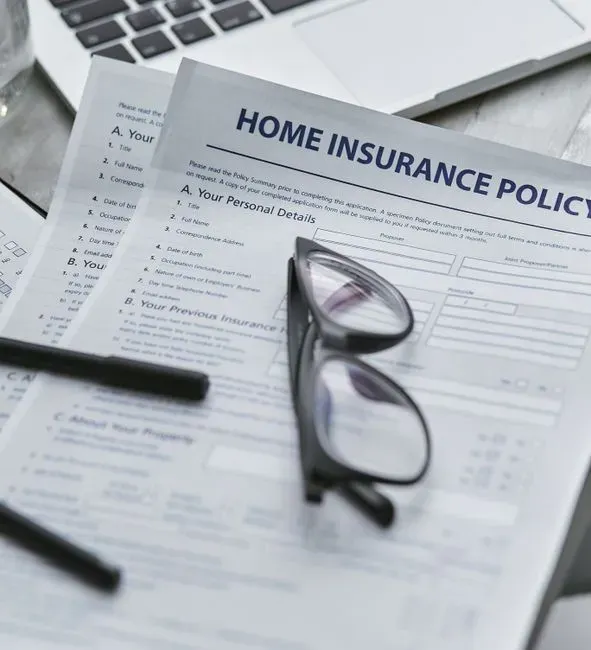
5. Letting personal belongings default to actual cash value (Image Credits: Pexels)
It’s not just roofs. The contents inside a home, the furniture, electronics, and clothing, are frequently insured on the same depreciated basis unless a homeowner specifically asks for something different. Contents coverage is often set to actual cash value by default, meaning your used furniture, clothes, and electronics are paid at their depreciated value, and to get new-for-old on your stuff, you typically need a personal property replacement cost endorsement added to the policy.
This endorsement is usually inexpensive relative to the protection it provides, yet it’s easy to go years without ever adding it because nobody flags it at renewal time. It’s usually an affordable add-on, and it makes a dramatic difference at claim time, so if you’ve never checked which one you have, this is the setting to look at first. Most people find out the hard way, at the exact moment they can least afford a surprise.
6. Renovating without telling the insurance company first

6. Renovating without telling the insurance company first (Image Credits: Unsplash)
A new kitchen or a finished basement adds real value to a home, but it also changes the risk profile the policy was originally priced for. An unreported renovation might void part, or all, of a homeowner’s insurance coverage, partly because a major renovation may dramatically increase the overall value of and cost to repair the property, and if the home is going to be worth more, it’s also going to cost more to rebuild.
There are also coverage gaps that show up specifically during construction, not just after it. Remodeling creates temporary conditions that can leave your home more vulnerable to damage and loss, since removing a roof or replacing windows can expose your home to rain, wind and debris. Notifying the insurer before work starts and documenting the project is a small step that closes a surprisingly large gap.
7. Running a home business without adjusting coverage

7. Running a home business without adjusting coverage (Image Credits: Pexels)
Selling handmade goods online, seeing clients for consultations, or storing inventory in a spare room has become common, and most people never think of it as a coverage issue. It usually is one. Converting part of the house into a salon or storing retail inventory on-site immediately shifts the risk profile, and standard homeowners policies usually exclude coverage for business-related losses.
The built-in protection for home office equipment is thinner than most people assume. Most homeowners policies protect equipment for home-based businesses up to about $2,500, which might not be enough for a business owner who uses specialized machinery or stores large amounts of supplies or inventory at their home. A modest business rider or separate policy usually costs far less than the coverage gap it closes.
8. Leaving the home vacant during travel or a move without notice

8. Leaving the home vacant during travel or a move without notice (Image Credits: Pexels)
Extended trips, hospital stays, and slow-moving relocations all create the same quiet risk: an empty house that no longer looks like the one described in the policy. Most standard policies restrict coverage if a home sits empty for more than 30 to 60 consecutive days, since vacant properties pose a higher risk of burglary, vandalism, and burst pipes, and not notifying your insurer before leaving for an extended period could leave you uninsured during that window.
This clause catches people off guard specifically because it isn’t tied to anything dramatic, just time. A month or two away, with no one checking in, is enough to trigger it in many standard policies. A short call to the insurer before an extended absence, or a temporary vacancy endorsement, is usually all it takes to stay covered.
9. Never shopping around or reviewing coverage limits at renewal

9. Never shopping around or reviewing coverage limits at renewal (Image Credits: Pexels)
Auto-renewal is convenient, and most homeowners simply let their policy roll over year after year without a second look. That passivity tends to favor the insurer, not the policyholder, especially once a claims history starts to build. Shopping with multiple carriers matters because underwriting standards vary significantly between companies.
Even homeowners who’ve been declined or hit with a steep increase after a claim often assume they’re stuck. Many homeowners give up after one or two declinations, yet the market includes hundreds of carriers with different appetites for risk, and some specialize precisely in the situations that others avoid. A yearly comparison, even a quick one, is one of the few habits that consistently works in the homeowner’s favor instead of the insurer’s.
None of these nine habits involve dishonesty or negligence. They’re simply the small, understandable choices that come from trusting a system most people were never taught to question closely. Insurance companies aren’t hiding this information exactly, it’s written into policy documents and underwriting guidelines that are technically public. It’s just rarely explained in plain language, and that gap between what’s disclosed and what’s understood is where most of the cost quietly accumulates.