
The dinner table has always been more than a place to eat. For families with significant wealth, it often doubles as a classroom, a boardroom, and a quiet stage for passing down values that money alone can't buy. Researchers who study family wealth transitions keep circling back to the same observation: what happens over a shared meal shapes children's habits long before they ever touch a trust fund or a business ledger.
There's a growing body of interest, from financial advisors to family psychologists, in how these routines actually work in practice. Some of it is intuitive, some of it surprisingly deliberate. Here's a closer look at nine habits that tend to show up again and again in households where wealth has lasted more than one generation.
1. They treat meals as scheduled, non-negotiable time

1. They treat meals as scheduled, non-negotiable time (Image Credits: Pexels)
In many affluent households, dinner isn't something that happens if the schedule allows it. It's blocked off, protected, and treated with the same seriousness as a work meeting. Family wealth advisors often note that consistency, not luxury, is the real marker of these gatherings.
This regularity gives children a predictable space to bring up questions, share wins, or admit failures without competing with phones or television. The table becomes a low-stakes rehearsal space for conversations that matter later, whether that's about school, friendships, or eventually, money.
2. They use the table to talk about money, not just spend it
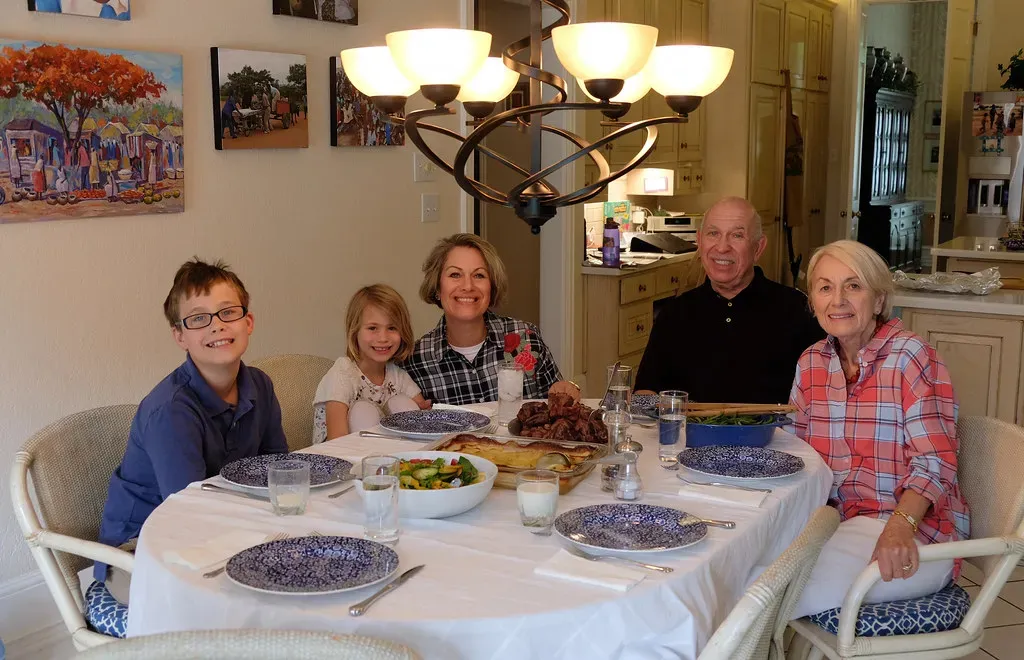
2. They use the table to talk about money, not just spend it (Lars Plougmann, Flickr, <a href="https://creativecommons.org/licenses/by-sa/2.0/" target="_blank" rel="noopener">CC BY-SA 2.0</a>)
Financial literacy rarely gets taught in a single sit-down lecture. Instead, wealthy families tend to weave money talk into ordinary dinner conversation, mentioning a stock that dropped, a charitable gift that was made, or why a big purchase got postponed. It normalizes the subject instead of making it taboo or awkward.
Studies on family business succession, including work published by groups like the Family Firm Institute, consistently point to open communication as a top predictor of whether wealth survives into the next generation. Dinner conversation is often the informal training ground where that communication habit gets built, long before any formal estate planning meeting happens.
3. They rotate who leads the conversation

3. They rotate who leads the conversation (Image Credits: Pexels)
Rather than letting one parent dominate every discussion, many wealthy households make a point of giving children turns to steer the topic. It might be as simple as asking each person to share the best and hardest part of their day, or letting a teenager explain something they read that week.
This rotation does something subtle but important. It teaches kids that their voice carries weight at the table, which tends to translate into confidence speaking up in other settings, including future family meetings about business or inheritance.
4. They keep meals relatively modest, even when they can afford more

4. They keep meals relatively modest, even when they can afford more (Image Credits: Unsplash)
It's a common misconception that wealthy dinners are elaborate affairs with private chefs every night. In reality, many financially secure families deliberately keep everyday meals simple, saving extravagance for genuine occasions. This isn't about frugality for its own sake; it's about avoiding the message that every day should feel like a celebration.
Family wealth consultants who work with multigenerational households often describe this as a guardrail against entitlement. When lavish meals are rare and earned rather than routine, children tend to appreciate them more and expect less as a default.
5. They involve kids in meal planning and prep

5. They involve kids in meal planning and prep (Image Credits: Pexels)
Even in households with household staff or catering options, there's a noticeable trend toward involving children in choosing menus, shopping, or helping cook. It's a small act, but it signals that contribution matters more than convenience. Some families rotate responsibility so each child takes a night to plan or help prepare the meal.
This habit ties back to a broader value seen in long-lasting wealthy families: work ethic isn't optional just because resources are available. Involvement in small daily tasks, dinner included, keeps that expectation alive early.
6. They limit phones and screens deliberately

6. They limit phones and screens deliberately (Image Credits: Unsplash)
Screen-free dinners aren't unique to any income bracket, but wealthy families often treat the rule with unusual consistency, sometimes even collecting devices in a basket before sitting down. The goal isn't nostalgia for a phone-free past; it's protecting the table as one of the few times the whole family is actually present with each other.
Pediatric and family researchers have repeatedly linked device-free family meals to stronger communication skills and lower reported stress in children. For families managing complex financial lives, that undistracted time can be one of the only windows where real conversation, not logistics, gets to happen.
7. They use dinner to debrief, not just to eat

7. They use dinner to debrief, not just to eat (billac, Flickr, <a href="https://creativecommons.org/licenses/by/2.0/" target="_blank" rel="noopener">CC BY 2.0</a>)
Beyond small talk, many wealthy households treat dinner as a natural checkpoint for reviewing the day or week. Parents might ask about a specific challenge a child faced, or revisit a decision that didn't go as planned. It's less formal than a family meeting but carries some of the same reflective purpose.
This habit of debriefing mirrors practices common in business leadership, where regular check-ins prevent small issues from becoming bigger ones. Applying that same rhythm to family life, even informally over pasta or roast chicken, helps normalize reflection as a lifelong habit rather than something reserved for crises.
8. They model gratitude and philanthropy at the table
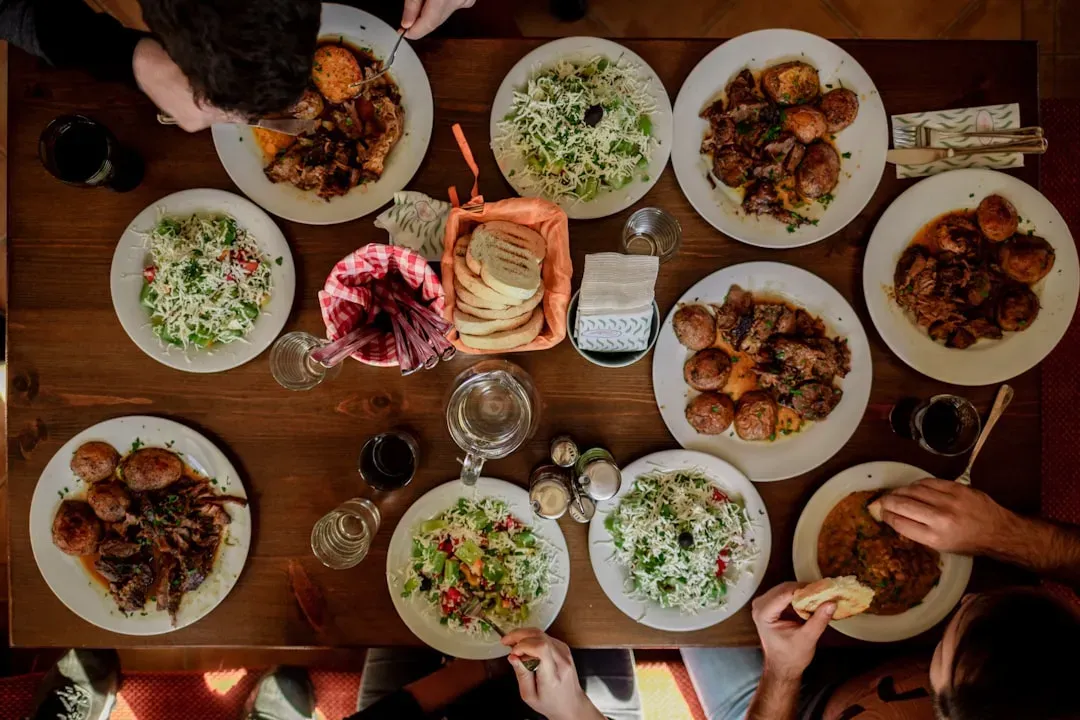
8. They model gratitude and philanthropy at the table (Image Credits: Unsplash)
It's common for wealthy families to use dinner as a moment to discuss giving, whether that's a recent donation, a volunteer project, or simply naming something they're grateful for that day. This isn't performative; it's often woven quietly into conversation rather than announced with fanfare. Family philanthropy advisors frequently point to these small, repeated moments as more influential than any single big charitable gesture.
Children who grow up hearing giving discussed as normal, rather than exceptional, tend to carry that expectation into adulthood. It becomes part of how they think about wealth generally, not just something their parents did once for a tax write-off or photo opportunity.
9. They let disagreements happen, within limits

9. They let disagreements happen, within limits (Image Credits: Unsplash)
Contrary to the image of a perfectly polished family dinner, many wealthy households allow real debate at the table, about politics, business decisions, or even family disagreements, as long as it stays respectful. Shutting down every uncomfortable topic, some family psychologists argue, teaches children to avoid conflict rather than navigate it.
Allowing pushback and differing opinions at dinner builds a skill that matters enormously later, especially in families where children may eventually need to negotiate shared business interests or estate decisions together. Learning to disagree without the relationship breaking down starts, in many of these households, at a very ordinary kitchen table.
None of these habits require significant wealth to adopt. What separates these families isn't the china pattern or the size of the dining room. It's the consistency with which they turn an everyday meal into a small, repeated lesson in communication, responsibility, and connection.