
Predicting the economic future of any single U.S. state is, by nature, a messy exercise. There are too many moving parts – demographics, federal policy, climate shifts, and the slow churn of industry. Still, the question is worth asking. So I fed it to ChatGPT and asked it to think through which states looked most vulnerable heading toward 2050, not in terms of a single bad year, but structurally, over the long arc.
The answers were grounded in trends that researchers and economists are already tracking: population flight, fossil fuel dependency, aging workforces, and a widening gap between states that attract talent and those that lose it. What follows is what ChatGPT laid out, framed against what we currently know from data and forecasts available as of 2026. No crystal balls, just patterns.
Why 2050 Is a Meaningful Horizon
Why 2050 Is a Meaningful Horizon (Image Credits: Pexels)
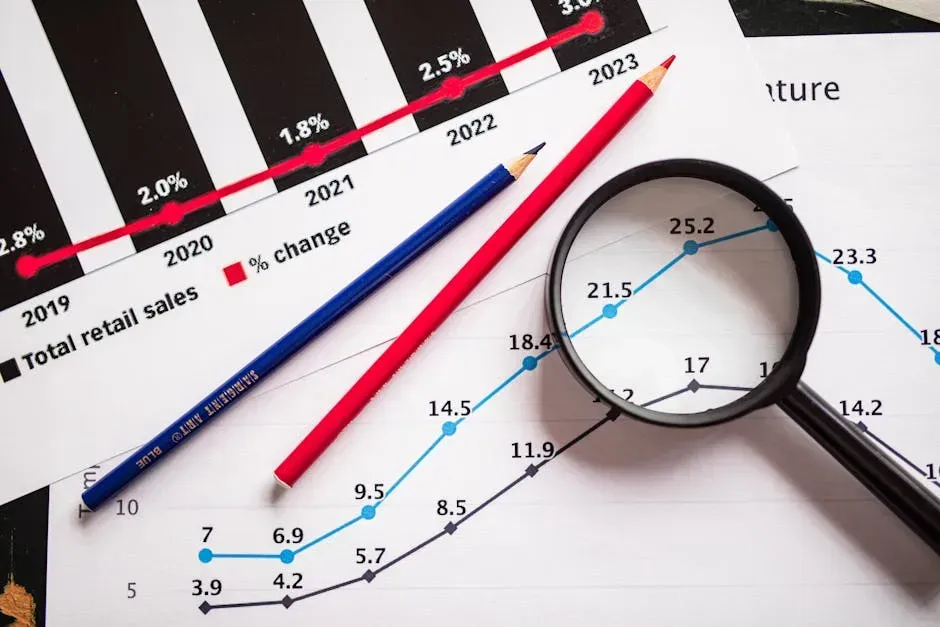
Long-range economic forecasting at the state level isn’t just an academic exercise anymore. Forecasts of this kind are built around variables like income, population, education, and temperature, and while they carry genuine uncertainty, some things are more predictable than others. The structural forces reshaping state economies today – demographic decline, energy transitions, and technological displacement – move slowly but relentlessly.
Economies are complex systems in constant flux, and many economic changes are structural rather than cyclical, meaning they don’t get captured by simple trend-line approaches to long-term forecasting. For states already carrying structural weaknesses in 2026, that 25-year runway is less a buffer than it is a slow countdown.
Mississippi: Chronic Poverty With Few Escape Routes
Mississippi: Chronic Poverty With Few Escape Routes (Image Credits: Unsplash)
Mississippi is the poorest state in the nation in terms of per capita GDP, sitting at roughly $53,500. ChatGPT flagged it as one of the states with the weakest long-term outlook, and the data backs that up without much argument. The state depends heavily on the federal government, with nearly half of its state budget coming from Washington, and it derives nearly a third of its GDP from international trade, making it vulnerable to tariff shocks and federal budget cuts alike.
Population projections already show Mississippi among the states expected to see consistent decline over the next few decades. The state faces an uphill battle in any economic downturn, with very limited unemployment coverage and joblessness trending sharply upward. Without a significant diversification of its economy, those trends are likely to compound through mid-century.
West Virginia: The Coal Economy's Long Goodbye
West Virginia: The Coal Economy's Long Goodbye (Image Credits: Pexels)
West Virginia was ranked near last in multiple economy assessments due to its declining labor force and low GDP growth, compounded by the lowest innovation potential in the country. ChatGPT pointed to this state as perhaps the clearest example of what happens when a regional economy ties its identity too tightly to a single industry on its way out. The state showed some healthy growth a year ago, but federal job cuts are starting to show up in an economy where federal workers account for roughly two and a half percent of the total workforce.
Counties in West Virginia that are heavily dependent on fossil fuel production face higher levels of economic distress and are highly rural, which could make it harder to grow new economic sectors. West Virginia has been steadily losing residents over the last decade, and without a credible reinvention strategy, that trajectory is unlikely to reverse before 2050.
Louisiana: Federal Dependency and Climate Exposure

Louisiana: Federal Dependency and Climate Exposure (Image Credits: Unsplash)
Louisiana fully funds half of its state spending through the federal government, more than any other state, which puts it in a precarious position when it comes to the potential effect of federal budget cuts. More than a third of Louisiana residents rely on Medicaid, the majority of which is paid for by Washington. ChatGPT viewed this reliance as a structural vulnerability, not just a political one.
Louisiana’s budget situation has only gotten worse in recent years, with the state banking only about eight and a half percent of spending in government reserves and providing unemployment coverage to only a small fraction of its unemployed population. Add the state’s significant Gulf Coast climate exposure and aging energy infrastructure, and the picture by 2050 grows increasingly difficult to paint as optimistic.
Illinois: Population Exodus and Fiscal Strain

Illinois: Population Exodus and Fiscal Strain (Image Credits: Unsplash)
From 2025 to 2029, the Illinois economy is expected to grow just 1.4% annually, compared to 1.8% in the Midwest and 2.2% nationally. ChatGPT noted that Illinois presents a different kind of challenge than poorer Southern states – it’s not starting from the bottom, but it’s actively shedding the assets that keep a large economy healthy. Moody’s predicts Illinois’ outmigration challenges will worsen, with the state projected to lose an additional 600,000 residents by 2033 on top of roughly 200,000 lost over the prior eight years.
An uncompetitive business environment driven by high business taxes is a key factor behind Illinois’ weak GDP and employment growth, and the state lost over 200 businesses to other states in 2023 alone, while lower-tax states led in gaining businesses. The departure of current and future workers puts significant pressure on both state finances and economic growth, shrinking both the tax base and the number of people available to fill jobs.
Alaska: Oil Decline and Geographic Isolation
Alaska: Oil Decline and Geographic Isolation (Image Credits: Unsplash)
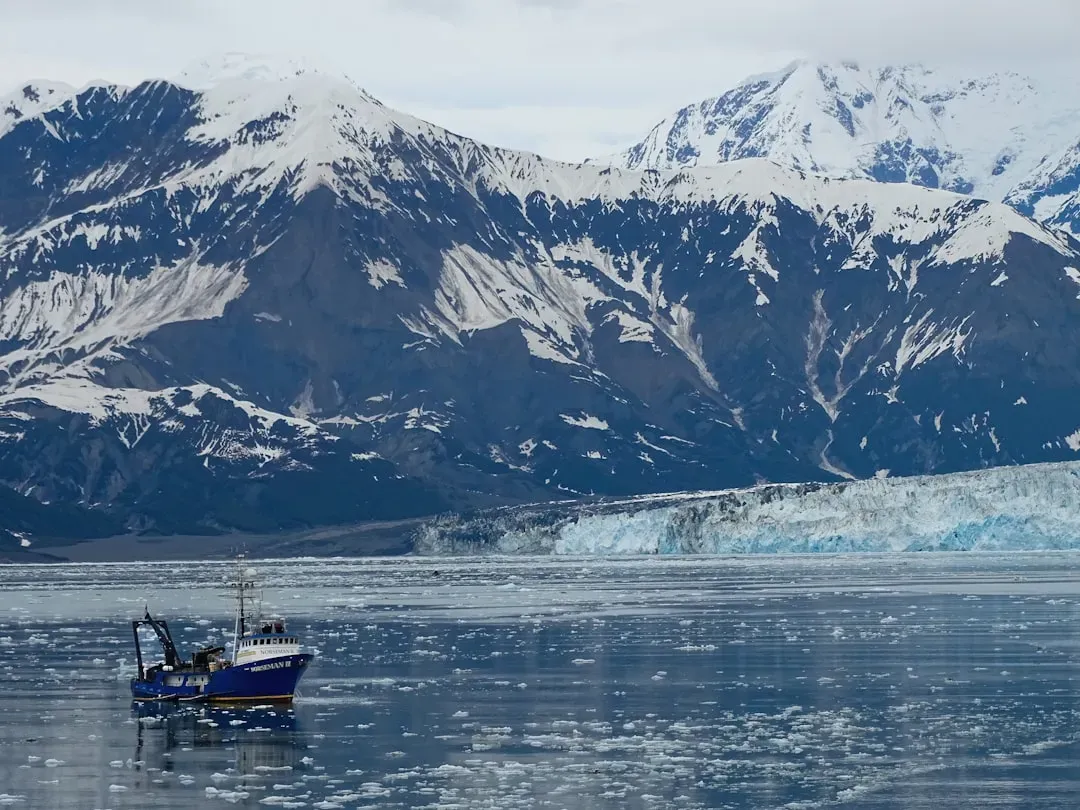
Alaska was dead last in economic performance in recent years, with its economy shrinking, largely because of declining oil production. Last year’s output was the lowest since 1976, according to the Energy Department. ChatGPT highlighted Alaska as a state whose core revenue engine is not just struggling but structurally declining, a problem that geography makes uniquely hard to solve.
The global energy transition threatens to erode Alaska’s primary economic asset long before the state can develop meaningful alternative industries. Climate change and the actions to mitigate its effects represent a central challenge of our time, and the green transition will have major implications for several commodity-producing economies in the coming decades. For Alaska, whose vast land mass and small population limit its economic diversification options, the path to 2050 looks narrow.
The Rust Belt Overhang: Ohio and Michigan
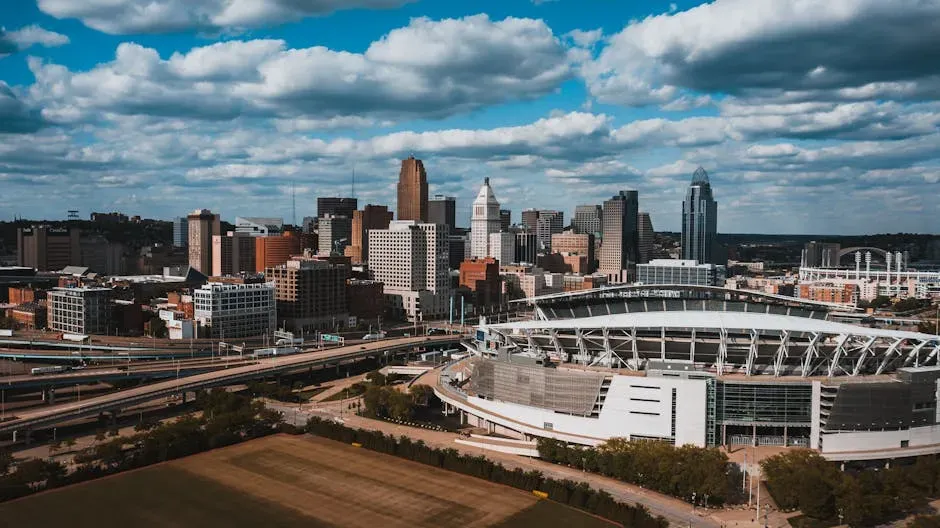
The Rust Belt Overhang: Ohio and Michigan (Image Credits: Pexels)
ChatGPT didn’t single out Ohio and Michigan as categorically doomed, but it flagged both as states carrying heavy structural debt from decades of manufacturing decline. Moody’s projects job losses in key industries including manufacturing and retail, driven partly by federal trade policy uncertainty and the continuation of long-term industry trends. This pattern affects much of the Midwest but hits these two states particularly hard given how much of their economic identity is still tied to industrial production.
Between 2040 and 2050, the Midwest is expected to see negative population change, shrinking even earlier than the Northeast. States in this region that don’t succeed in attracting knowledge-economy employers and younger workers over the next 10 to 15 years are likely to find themselves in a significantly weaker position by mid-century. The window for reinvention is open, but it isn’t unlimited.
New England's Aging Problem: Vermont and Maine
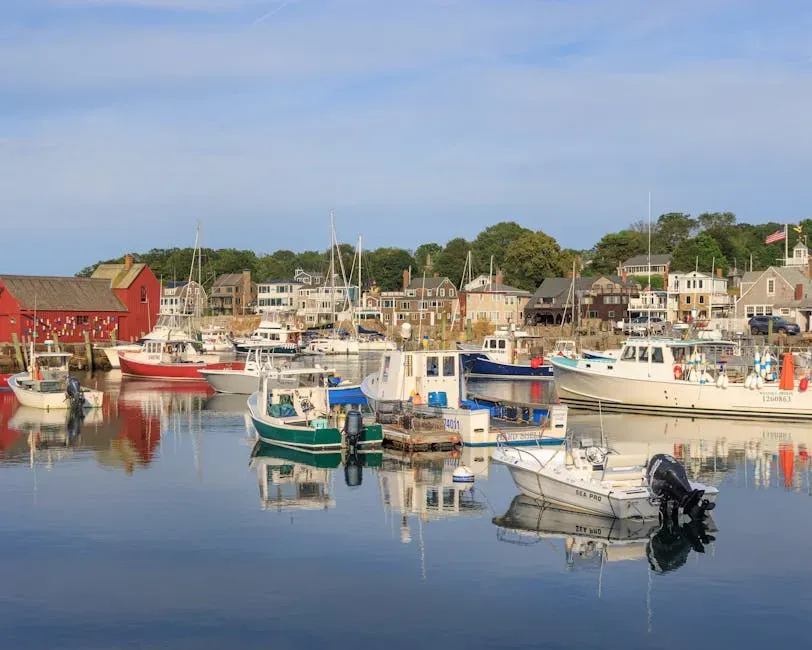
New England's Aging Problem: Vermont and Maine (Image Credits: Pexels)
Vermont’s population recently declined due to negligible migration inflows, and the median age in the northern tri-state New England region is five years older than the national average. This older population means the region will likely continue to face labor supply challenges as international migration is expected to slow further. ChatGPT singled out Vermont and Maine as states where demographic aging poses the sharpest near-term economic risk.
In Maine, nearly a quarter of the population is expected to be over age 65 by 2030. Population aging is currently reducing the growth rate of the U.S. labor force, and the share of the population over the age of 65, when labor force participation tends to fall sharply, is rising rapidly. For states like Maine and Vermont, that national-level problem is already arriving early and without the economic buffers that larger states enjoy.
The Demographic Wildcard: Immigration Policy and State Futures

The Demographic Wildcard: Immigration Policy and State Futures (Image Credits: Gallery Image)
One of the more nuanced points ChatGPT raised was that the relative fortunes of struggling states by 2050 depend heavily on immigration policy over the next decade. With net migration at just 321,000 in 2026, Deloitte now expects the working-age population to decline modestly throughout the forecast period, meaning labor force participation will need to be higher to maintain positive employment growth.
Zero or near-zero immigration can easily become stagflationary, since a smaller workforce means lower output while labor shortages can push up wages and prices in the short term. States that are already losing working-age residents and lack the economic magnetism to attract domestic migrants face a compounding problem: fewer workers, less tax revenue, and growing pressure on public services. If current trends persist, the United States could face population decline within the next decade, an unprecedented shift for the nation. For the most vulnerable states, that shift will arrive sooner, and hit harder.
What ChatGPT Got Right – and Where It's Humble

What ChatGPT Got Right – and Where It's Humble (Image Credits: Pexels)
What made ChatGPT’s analysis relatively useful here wasn’t any single bold prediction. It was the consistent framing: recession readiness and long-term economic resilience aren’t about having the biggest economy. They’re about having the financial cushion and structural flexibility to weather storms without massive budget cuts or layoffs. That logic applies just as cleanly to a 25-year horizon as it does to a two-year one.
The AI was also appropriately cautious. Long-term forecasting is perilous ground for economists, and predictions of what will happen in the long run tend to revert to the mean, implying that trend growth returns to an average recorded over the previous several years. It’s important to keep in mind that these are ChatGPT’s findings, and whether or not they reflect what actually happens remains to be seen. The states flagged here aren’t destined for failure. They’re carrying the heaviest structural loads heading into the next quarter century, and which ones successfully adapt will depend on choices – political, economic, and social – that haven’t been made yet.