
Millennials have spent the better part of two decades being labeled as the generation that broke everything – killing chain restaurants, rejecting diamond rings, refusing to buy homes. The reality, as it turns out, is considerably more nuanced. Millennials aren’t the “young kids” anymore. They’re now in their late 20s to early 40s, building families, leading companies, and shaping policies while driving the global economy.
What makes this generation genuinely interesting in 2026 is not just where they’ve arrived, but how they got there – often on completely different terms than the generations before them. The shifts below aren’t dramatic rebellions. They’re steady, measurable reorientations happening across work, money, health, and how people choose to live.
Redefining What Homeownership Actually Means

Redefining What Homeownership Actually Means (Image Credits: Unsplash)
Millennials, the largest and most educated generation in U.S. history and once branded "forever renters," are rapidly buying homes in their thirties and reaching parity with Gen X by their early forties, proving the dream of homeownership wasn't dashed, just delayed. The timeline shifted, but the destination largely did not. The median age of first-time homebuyers was 40 years old in the U.S. as of 2025, an all-time high.
According to the National Association of Realtors' 2026 Home Buyers and Sellers Generational Trends report, older millennials, now ages 36 to 45, have quietly become the highest-earning, biggest-spending generation of homebuyers in the market. They post the highest median household income of any generational group at $132,700, buy the largest homes at a median 2,100 square feet, and are the most likely to have children living under their roof. The generation once dismissed as permanent renters is now setting the market's pace.
Choosing Stability and Skills Before Career Titles
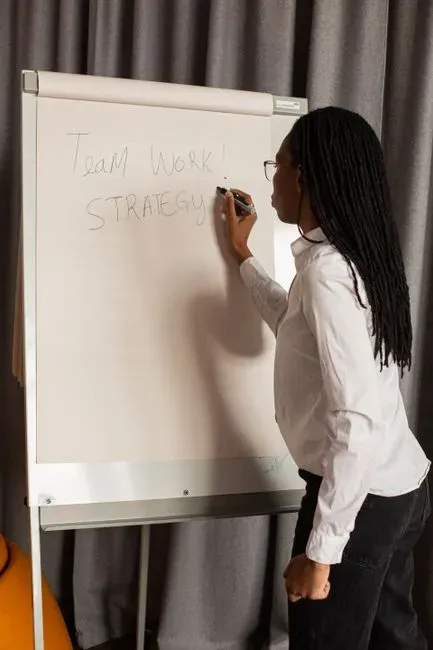
Choosing Stability and Skills Before Career Titles (Image Credits: Pexels)
As Gen Zs and millennials move deeper into adulthood and leadership, they are reshaping how progress at work is defined, often prioritizing stability, skills, and well-being before advancement, according to Deloitte's 2026 Global Gen Z and Millennial Survey. This isn't apathy. It's a recalibration. More than half of millennials in Deloitte Global's 2026 Gen Z and Millennial Survey say they have delayed major life decisions because of their financial situation.
In a world where learning is continuous rather than episodic, millennials are prioritizing skills like adaptability, communication, creativity, and increasingly, AI fluency. Adaptability itself has become a core career capability, one that enables them to remain relevant and resilient amid constant change. Nearly a quarter of millennials surveyed have a part or full-time side job. While financial need is a primary driver, more than a third of those with a side job say that work helps them develop important skills and relationships, further reinforcing a shift toward capability over title.
Making Mental Health a Non-Negotiable Priority

Making Mental Health a Non-Negotiable Priority (Image Credits: Unsplash)
The key findings on well-being and mental health from the Deloitte Global 2025 Gen Z and Millennial Survey, which polled over 23,000 respondents across 44 countries, show that mental health is the fourth most cited societal concern for millennials. That's a striking number for a generation that grew up being told to simply push through. Roughly 56% of millennials report increased stress over the past year.
This reflects a generational shift: younger workers are rejecting outdated notions of resilience as "toughing it out" and are instead embracing structured, proactive approaches to care. They're building a new model of sustainable career success, where mental health support, flexible roles, and integrated wellbeing tools are non-negotiable parts of the workplace experience. Along with their prioritization of health and wellness, millennials are more likely than other generations to view work-life balance and not having enough free time as major career concerns, at 41% and 36% respectively. Only 29% of Gen Xers and 20% of baby boomers feel the same.
Embracing AI as an Accelerant, Not a Threat

Embracing AI as an Accelerant, Not a Threat (Image Credits: Unsplash)
Nearly three-quarters of millennials report using AI to some extent in their day-to-day work. That's an adoption rate that would have been hard to imagine just a few years ago. They largely see the proliferation of AI as an accelerant, not a threat, expecting it to free up more time, improve output, open new paths for growth, and create new opportunities – though many also feel they are adapting to AI faster than their organizations.
Gen X and millennials primarily use AI for professional tasks, with roughly half using it in that context. Half of millennials surveyed use or experiment with generative AI, compared with just 38% of Gen Xers and 22% of Baby Boomers. Of those millennials who use generative AI for projects, a large share do so every day. This is a generation that navigated smartphones, social media, and remote work already. Layering AI into that toolkit feels less like disruption and more like the next natural step.
Putting Sustainability at the Center of Spending Decisions

Putting Sustainability at the Center of Spending Decisions (Image Credits: Unsplash)
Environmental sustainability concerns play a considerable role in the career and consumption choices of millennials, with seven out of ten reporting that companies' environmental credentials are important when choosing employers, and nearly two-thirds saying they are willing to pay more for sustainable products. That's not a fringe position. It's a mainstream value reshaping entire industries. Millennials are highly conscious of environmental issues and prefer brands that demonstrate sustainability and ethical practices. They are more likely to support companies that prioritize eco-friendly products and transparent supply chains.
Gen Z and millennials are more than four times more likely than boomers to say they rent products instead of buying new ones. In the U.S., these generations are 15 times more likely to rent than boomers. According to the Mastercard Economics Institute, U.S. clothing rental spending grew by more than 17% year-over-year in 2025. Conscious consumption, for millennials, isn't a trend so much as a baseline expectation they bring to every purchase.
Rethinking Wealth-Building Beyond Traditional Paths

Rethinking Wealth-Building Beyond Traditional Paths (Image Credits: Pexels)
Homeownership has been viewed as a wealth-building cornerstone, but millennials are challenging this assumption. The median home price has risen dramatically while wages haven't kept pace, creating affordability crises in many markets. Some extended renting while investing the difference between rent and potential mortgage payments into other investments. This is a practical pivot, not a defeat. A recent study from the Nationwide Retirement Institute reveals that roughly 58% of millennials feel they must decide between buying a home and securing their retirement.
One area where millennials excel is income diversification. The gig economy and digital platforms have made it easier than ever to develop multiple income streams. Millennials stand to inherit over $68 trillion from Baby Boomer and early Gen X parents by the year 2030, setting them up to potentially become the wealthiest generation in U.S. history. The path looks different – side income, delayed purchases, digital investing – but the destination of financial security hasn't changed. The strategy just evolved to fit the conditions they actually inherited.
What runs through all six of these shifts is something worth noticing: millennials aren't abandoning traditional goals so much as finding different, often more pragmatic routes toward them. The generation shaped by two recessions, a global pandemic, and a housing market that barely left room for them has become, quietly, one of the most adaptable cohorts in modern economic history.