
You know the feeling. You open an app during a quiet Tuesday night, and within seconds you're looking at someone else's beach trip, engagement party, or perfectly plated dinner. It's easy to forget that what you're seeing is a carefully chosen fragment, not the full picture of anyone's actual week.
Why our brains are wired to compare

Why our brains are wired to compare (Image Credits: Pexels)
The urge to measure ourselves against others isn't new, and it isn't really about social media at all. Festinger argued that humans have an innate drive to evaluate their own opinions and abilities, and that in the absence of objective standards, they do so by comparing themselves to others. That idea, first published back in 1954, has held up remarkably well.
Social comparison theory was formally proposed by social psychologist Leon Festinger in his landmark 1954 paper, and is cited in over 200 peer-reviewed PMC studies, making it one of the most cited papers in social psychology history. A 2024 review of the field found that interest in social comparison theory has surged, driven by social media's impact on body image and self-esteem. The mechanism is ancient, but the environment triggering it has changed dramatically.
The three types of comparison you're actually making
The three types of comparison you're actually making (Image Credits: Unsplash)
Not all comparisons feel the same, and understanding the difference helps explain why scrolling sometimes leaves you inspired and other times leaves you flat. The theory identified three comparison directions: upward, to those perceived as better, lateral, to peers, and downward, to those in worse situations, each serving a different psychological function.
Social feeds are engineered, whether intentionally or not, to surface upward comparisons almost constantly. You rarely see someone's mediocre Tuesday. You see their best vacation photo, their promotion announcement, their new relationship. That skew toward upward comparison is a big part of why a normal, unremarkable day can suddenly feel disappointing after fifteen minutes of scrolling.
What a highlight reel actually is

What a highlight reel actually is (Image Credits: Pexels)
The phrase gets used casually, but it describes something specific. Researchers studying short-video platforms have pointed to short-video algorithms that amplify comparison loops through curated highlight reels, which is a fairly precise way of saying the content you see is filtered twice, once by the person posting and again by the algorithm deciding what to show you.
That double filtering matters. A person chooses their best photo from fifty attempts, and then the platform prioritizes that photo because it performs well, showing it to more people than a mundane update ever would. The result is a feed that's statistically unlikely to represent anyone's average moment, yet it's the only version of other people's lives most of us ever see.
The loneliness paradox nobody talks about enough

The loneliness paradox nobody talks about enough (Image Credits: Pexels)
Here's the part that surprises people. Platforms built around connection are, for a large share of users, linked to feeling more isolated rather than less. Sixty-three percent of people on social media report feelings of loneliness.
This isn't necessarily a contradiction. Watching curated snapshots of other people's social lives can create the sense that everyone else has a fuller calendar, closer friendships, or a more exciting circle, even when that isn't true. The comparison itself, not the platform's core function, tends to be the thing driving the isolation.
The gap between what teens see and what they feel
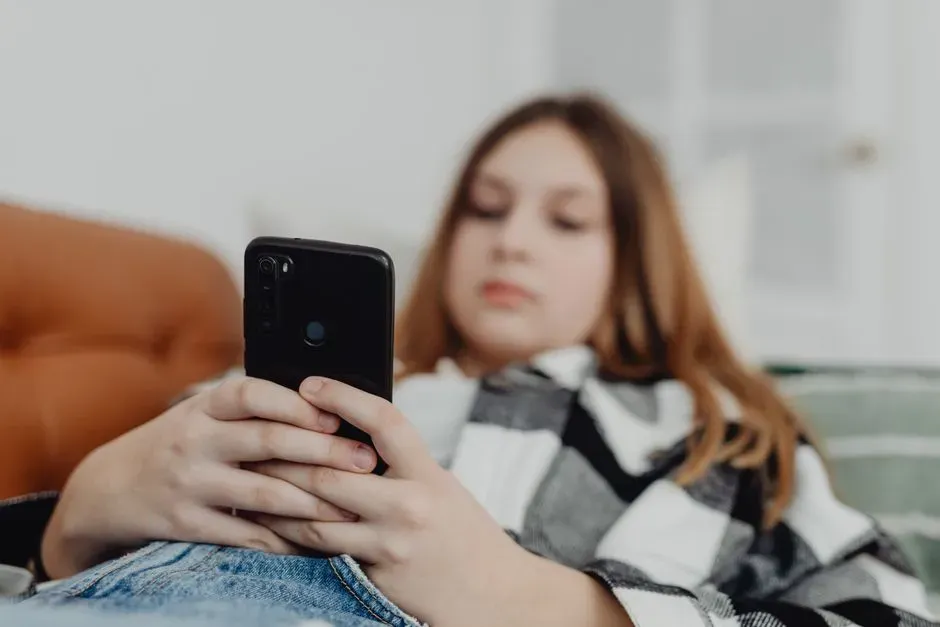
The gap between what teens see and what they feel (Image Credits: Pexels)
One of the more revealing findings in recent research is the difference between how young people judge social media's effect on others versus on themselves. Nearly half think it harms other people their age, while only fourteen percent say it harms them.
That gap has been consistent for years, and it says something important about how comparison works. It's easier to spot the highlight-reel effect in someone else's feed than to recognize it shaping your own mood. Forty-eight percent of U.S. teens say social media has a mostly negative effect on peers in 2025, up from thirty-two percent in 2022, yet personal self-assessments remain far lower.
Body image takes a disproportionate hit
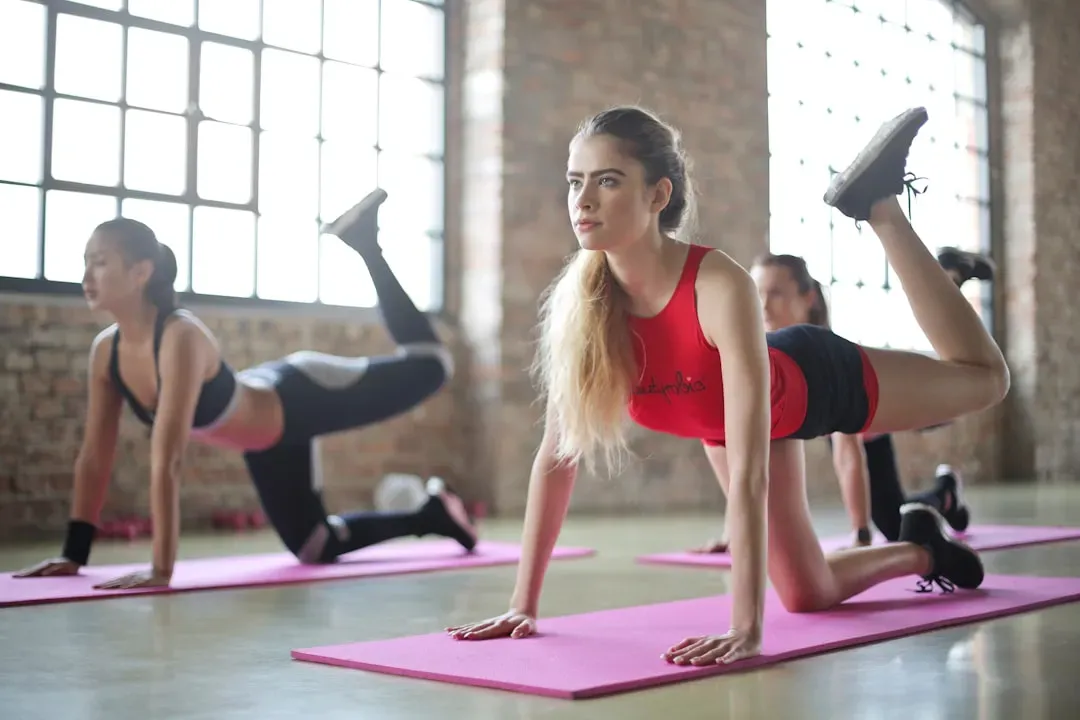
Body image takes a disproportionate hit (Image Credits: Unsplash)
Comparison doesn't distribute its damage evenly. Appearance-based content tends to hit harder than almost any other category, particularly for younger users. Research from 2025 shows that forty-six percent of teen girls say social media makes them feel worse about their body image, while for boys the figure is thirty percent, though it's rising.
This isn't a fringe concern buried in academic journals. Internal research from Meta, leaked in the Facebook Files, showed that thirty-two percent of teen girls said Instagram made them feel worse about their bodies, and the company knew it. When a platform's own internal data points in that direction, it's worth taking the pattern seriously rather than dismissing it as anecdotal.
Not every platform works the same way

Not every platform works the same way (By Ccmsharma2, <a href="https://commons.wikimedia.org/w/index.php?curid=44920707" target="_blank" rel="noopener">CC BY-SA 4.0</a>)
It's tempting to treat "social media" as one monolithic thing, but the comparison effect varies by design. Visually driven platforms built around appearance and lifestyle content tend to be the worst offenders. The visual focus on appearance, lifestyle, and status creates perfect conditions for social comparison and FOMO.
Other platforms show a murkier picture. TikTok's short-form, algorithm-driven format has drawn concern around compulsive use, though rigorous published data specifically linking it to mental health outcomes remains limited, while YouTube shows a more mixed profile, with long-form educational content showing neutral or positive associations in some studies. The honest takeaway is that comparison risk tracks more closely with content type and usage pattern than with any single app's brand name.
How much time actually matters
How much time actually matters (Image Credits: Unsplash)
Duration isn't the whole story, but it's not irrelevant either. Adolescents who spend more than three hours a day on social media are twice as likely to experience poor mental health outcomes, and young females and minorities are at higher risk of harm from more social media use.
Usage has also been climbing steadily rather than leveling off. Back in 2015, about twenty-four percent of teens said they were online almost constantly; by 2025, that number had jumped to thirty-five percent. More time spent scrolling generally means more exposure to the highlight-reel effect, simply by volume.
The upside people tend to overlook
The upside people tend to overlook (Image Credits: Unsplash)
It would be misleading to frame social media purely as a comparison machine, because that's not the whole picture either. A meaningful share of users report real benefits alongside the risks. Seventy-four percent of U.S. teens say social media makes them feel more connected to their friends, and sixty-three percent say it gives them a sense of support they might not otherwise have.
The difference often comes down to how a platform is used rather than whether it's used at all. Passive scrolling through strangers' curated content tends to fuel comparison, while active engagement, messaging friends, joining interest communities, or following creators whose work genuinely adds value, tends not to carry the same emotional cost. That distinction rarely gets enough attention in conversations that treat all screen time as equivalent.
Practical ways to loosen comparison's grip
Practical ways to loosen comparison's grip (Image Credits: Unsplash)
Some of the most effective interventions are also the simplest, and they don't require quitting anything entirely. Curating a feed deliberately, unfollowing accounts that consistently trigger a bad mood, and muting content categories tied to appearance or wealth can meaningfully change what shows up. Fifteen percent of U.S. teens often organize their social media feeds to see only certain content, while thirty-one percent do so sometimes, which suggests this kind of curation is underused relative to how effective it can be.
Time boundaries help too, even loose ones like avoiding scrolling right before bed or setting a soft cap on evening use. Recognizing when you're using a platform to connect versus when you're using it to compare is often the clearest signal for when to put the phone down. That distinction, more than any specific app setting, tends to be the real turning point for people trying to change their relationship with their feed.
When comparison becomes something more serious

When comparison becomes something more serious (Image Credits: Pexels)
For most people, comparison fatigue is uncomfortable but manageable with small adjustments. For others, it compounds into something heavier, and the data on that is worth taking seriously. A 2025 study of youth treated for depression or suicidal ideation found forty percent reported problematic social media use.
Clinical settings are already adjusting to this reality. Mental health clinics are increasingly treating young adults whose symptoms correlate with excessive social media use, and schools are adapting their curricula to address digital well-being in response to rising anxiety and sleep disturbance trends. If comparison-driven scrolling starts affecting sleep, mood, or daily functioning in a persistent way, that's a signal worth discussing with a professional rather than something to manage alone.
A quieter way to measure a good life

A quieter way to measure a good life (Image Credits: Unsplash)
The most useful shift isn't necessarily deleting an app or swearing off scrolling forever. It's remembering, in the moment you feel that familiar pang of comparison, that you're measuring your unedited life against someone else's edited one. That's not a fair contest, and it never was.
A social life doesn't need to look impressive from the outside to be genuinely good on the inside. The friend who texts you back, the plans that actually happen, the quiet nights that don't make it onto anyone's feed, those are the parts that hold up over time, long after the highlight reel has scrolled past and been forgotten.