
Money habits are rarely born from individual decisions alone. Many of the patterns that quietly hollow out our bank accounts each month were shaped long before we ever held our own credit card. They lived in the kitchen table conversations our parents had, in the way groceries were bought, in whether splurging felt like a reward or a source of guilt.
The tricky part is that inherited financial behaviors tend to feel completely normal. Your parents’ money habits have a direct impact on your relationship with finances, and their relationship with money is the first modeled behavior you see as a child. That early modeling runs deep, often shaping how you earn, spend, and save decades later without you ever noticing the connection.
1. Treating Retail Therapy as a Coping Mechanism

1. Treating Retail Therapy as a Coping Mechanism (Image Credits: Unsplash)
A child raised in a financially stressed household may grow up believing money is always scarce, while a child in a household that freely spends without budgeting might learn to equate spending with self-worth or emotional relief. Both patterns, different as they seem, can lead to the same outcome: shopping as a response to discomfort rather than genuine need.
These associations can lead to habits like impulsive spending, retail therapy, or guilt around enjoying money. When stress, boredom, or sadness trigger an impulse to buy, you're often replaying a script absorbed in childhood. Recognizing the emotional trigger is the first real step toward rewriting it.
2. Impulse Buying Without a Second Thought

2. Impulse Buying Without a Second Thought (Image Credits: Unsplash)
The average consumer spent an estimated $282 per month on impulse buys in 2024, totaling roughly $3,381 for the year, and made nearly ten impulse purchases per month on average. What's easy to miss is how much of this behavior is learned. Families that browsed stores for entertainment or regularly picked up items "just because they were on sale" passed that casual relationship with unplanned spending to their children.
Roughly seven out of ten consumers have impulsively bought an item simply because it was on sale. For younger generations, this has become especially tempting through in-app purchases that take only a few clicks and don't feel like real money transactions, making wallets a leaky sieve for funds that could be better used elsewhere.
3. Keeping Up With the Joneses
3. Keeping Up With the Joneses (Image Credits: Pixabay)
Social factors play a pivotal role in spending behaviors. Social media, peer pressure, and societal norms can push individuals toward spending more to keep up appearances or feel part of a community, a phenomenon known as "keeping up with the Joneses," where comparison drives unnecessary spending. This behavior is not new, but social media has amplified it enormously across every generation alive today.
Many fall victim to needless material acquisition, increased debt, and dwindling savings as a result. Crucially, even though people facing income inequality tend to buy and spend more, they are no happier as a result. This type of consumption is often driven by the human inclination to make social comparisons, and individuals often have to live beyond their financial means in order to keep up.
4. Subscription Creep Hiding in Plain Sight

4. Subscription Creep Hiding in Plain Sight (Image Credits: Pexels)
Subscription creep refers to the gradual accumulation of subscriptions that sneak up on your finances without you fully noticing. It often starts innocently with a few small monthly trials here and there, but these automated charges are easy to overlook. Families that normalized recurring automatic payments without regular review have quietly passed that inattentiveness to the next generation as standard household practice.
A 2024 CNET survey found that U.S. adults spend around $91 on subscriptions each month on average, which adds up to more than $1,000 a year, and nearly half have forgotten to cancel a free trial before it rolled into a paid plan. The second half of 2025 delivered another round of quiet price hikes across streaming and music services, often framed as small adjustments that were easy to overlook, and these can quickly add up to $15 to $30 more per month without any change in behavior.
5. Using Credit as Default Rather Than Strategy
5. Using Credit as Default Rather Than Strategy (lendingmemo_com, Flickr, <a href="https://creativecommons.org/licenses/by/2.0/" target="_blank" rel="noopener">CC BY 2.0</a>)
Household debt relative to disposable income has surged dramatically in recent decades, and buying on credit has become so popular that an increasing number of firms now generate more profit from financing than from selling their actual products. Households where credit cards were casually used to bridge gaps, with no real repayment plan, tend to raise children who adopt the same reflex without questioning the long-term cost.
Research provides evidence that the income inequality effect on consumer borrowing is a result of conspicuous consumption, with rising inequality forcing households with smaller income gains to use debt simply to maintain their consumption level relative to those with larger income gains. When debt is normalized at home, children absorb it as a routine tool rather than a measure of last resort.
6. Paying No Attention to Cashless Spending
6. Paying No Attention to Cashless Spending (Image Credits: Unsplash)
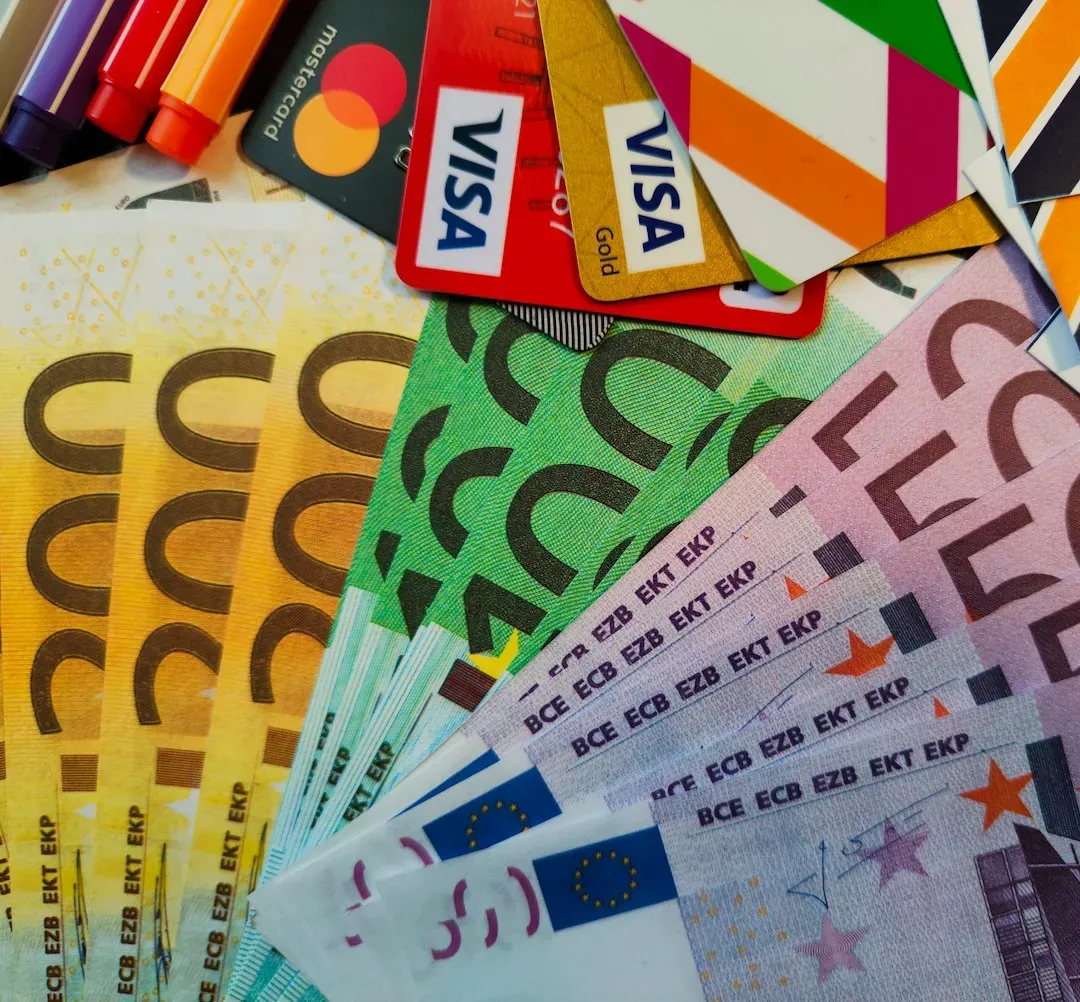
Research reveals that declining visibility in modern payment systems weakens the psychological checkpoints that traditionally regulate financial decisions. Cash, with its high transparency and tactile cues, encourages deliberate spending, whereas cards introduce moderate detachment and reduced emotional friction. Older generations that moved to card-only households without discussing the psychological shift effectively modeled frictionless spending as the new normal.
Digital wallets create an almost invisible financial outflow that drives the highest levels of impulsivity, overspending, and weak budget recall. As transparency declines, both spending volume and impulse buying increase while perceived financial awareness declines sharply. Behavioral economics identifies the "pain of paying" as a critical psychological barrier that helps regulate expenditure, and when this barrier weakens, individuals lose a key emotional checkpoint against unnecessary purchases.
7. Lifestyle Creep After Every Income Increase
7. Lifestyle Creep After Every Income Increase (Image Credits: Pexels)
Spending habits often mirror the time you grew up in and the stage of life you're in now. One of the most persistent inherited patterns is the assumption that every raise deserves an immediate lifestyle upgrade. If parents consistently spent up to or slightly beyond their income at each new level of earnings, children rarely learn that the real wealth-building window sits in the gap between income earned and income spent.
Finances are closely tied to emotions, and often they evoke negative feelings such as shame or guilt. Lifestyle creep is particularly insidious because it rarely feels like a mistake in the moment. Each individual upgrade seems justified, even modest. It's only in aggregate, months or years later, that the pattern becomes visible as a steady leak with no corresponding benefit to well-being or savings.
8. Avoiding Conversations About Money Altogether

8. Avoiding Conversations About Money Altogether (Image Credits: Pexels)
If parents did not model healthy money scripts or a healthy relationship with money, it's likely the children do not have a healthy one now. Households that treated financial discussion as taboo, or where money was only mentioned during arguments and crises, raised children who associate money talk with anxiety. That discomfort translates directly into avoidance: not checking bank balances, not reviewing bills, not setting a budget.
The conceptual framework of financial literacy research shows how financial knowledge affects spending directly and indirectly through financial behaviors, arguing that better financial knowledge leads to better spending decisions while also fostering positive behaviors like budgeting and saving. The families who normalized open, calm conversations about money gave their children a measurable practical advantage, one that gets underestimated precisely because it's invisible to those who never had it.
9. Scarcity Mindset Spending That Backfires

9. Scarcity Mindset Spending That Backfires (Image Credits: Pexels)
A child in a financially stressed home may grow up believing money is always scarce, leading to anxiety-driven saving or hoarding. Paradoxically, a scarcity mindset doesn't always produce frugality. It can produce overcorrection: panic-buying in bulk, over-purchasing when money is temporarily available, or resisting small useful investments that would save money in the long run because the outlay feels dangerous.
Financial trauma is a constellation of experiences that overwhelms our psychological and physiological systems where we have not returned to a state of safety and security related to our finances. This trauma, passed silently from one generation to the next, can produce financial behaviors that look irrational from the outside but make complete emotional sense to the person living them. Identifying the origin of the pattern is often the only way to loosen its grip.
What makes inherited spending habits particularly hard to shake is that they don't feel inherited at all. They feel like common sense, like just how things work. The practical shift starts with noticing them without judgment, tracing them back to where they came from, and asking honestly whether they still serve any purpose in your life today. Some habits are worth keeping. Most of the ones on this list are not.