
There’s a certain comfort in believing that only the big decisions matter. The career change, the move to a new city, the major health scare that finally gets someone to act. Meanwhile, the missed text, the unopened bill, the broken streetlight nobody reports, these things get filed away as background noise.
But a surprising amount of research from psychology, medicine, criminology, and personal finance points in the same direction: the smallest, most forgettable moments are often doing the most work. They just don’t announce themselves the way a crisis does.
The relationship test hiding in ordinary moments

The relationship test hiding in ordinary moments (Image Credits: Unsplash)
Psychologist John Gottman spent decades observing couples in what became known as the “Love Lab,” tracking how partners responded to small, everyday attempts to connect, a comment about the weather, a sigh, a glance toward a sunset. A bid for connection is any small gesture that seeks closeness, attention, or affection, and these moments add up over time into a reservoir of trust and intimacy. None of it looks dramatic in the moment. That’s exactly the point.
What made the research striking wasn’t the bids themselves but what happened when they were ignored. In successful marriages, couples turned toward each other’s bids roughly eighty six percent of the time, while in marriages that ended in divorce, this happened only about a third of the time. It wasn’t the big arguments that predicted the outcome. It was whether someone looked up from their phone when their partner said, essentially, notice me.
The dollar that never feels like a dollar

The dollar that never feels like a dollar (Image Credits: Pixabay)
Nobody budgets seven dollars a month for a meditation app they used twice. That’s precisely why it keeps getting charged. The average American now spends around 219 dollars a month on subscriptions but estimates the figure at closer to 86 dollars, a gap of more than two and a half times. The number of active subscriptions per household has quietly climbed too.
The pattern isn’t really about carelessness with money. It’s a structural feature of the subscription model itself, small recurring charges running on autopilot, spread across different cards and billing dates, designed for frictionless payment, which also makes for frictionless forgetting. A seven dollar charge feels irrelevant in isolation. Multiplied across a year and stacked against a dozen similar charges, it stops being small at all.
What a nineteen item checklist did in operating rooms

What a nineteen item checklist did in operating rooms (Image Credits: Gallery Image)
Surgeons already know how to operate. That was the objection when the World Health Organization introduced a short, unglamorous checklist covering basics like confirming the patient’s identity and counting surgical instruments before closing. It seemed almost insulting to highly trained professionals. The results argued otherwise.
In the checklist’s initial multi city, multinational study, it reduced the rate of inpatient complications and deaths by more than a third. More specifically, checklist use reduced the rate of inpatient complications from 11 percent to 7 percent, while deaths fell from 1.5 percent to 0.8 percent. None of the individual boxes on that checklist were complicated. Ticking them consistently, it turned out, was the hard part.
The compounding math of one percent
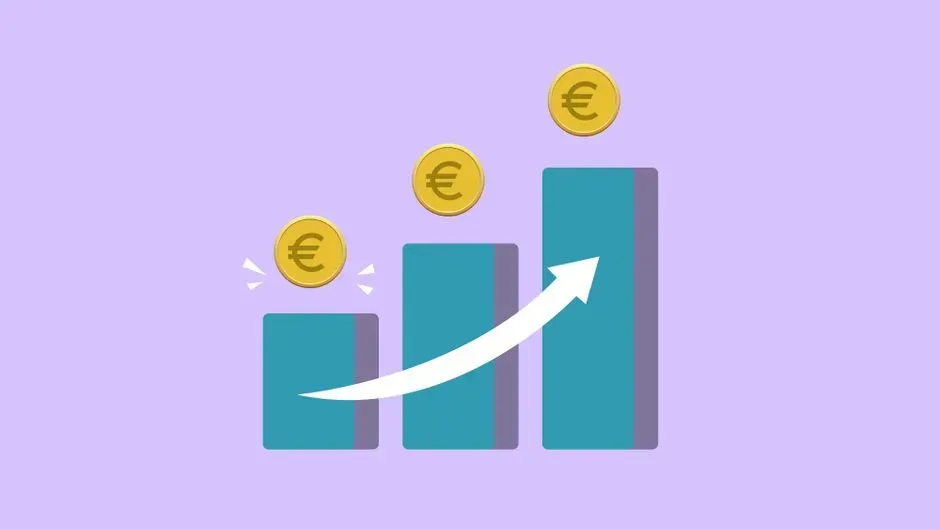
The compounding math of one percent (Image Credits: Pexels)
British cycling had barely won anything internationally before a new performance director took over the team and began hunting for tiny, unglamorous improvements everywhere he could find them. He used what’s now called the aggregation of marginal gains, aiming to get just one percent better every single day. No single tweak, a better pillow, a slightly cleaner bike frame, was supposed to win a race on its own.
Together, though, those adjustments reshaped an entire program’s results within a few years. Neuroscience offers a mechanical explanation for why this works at the individual level too, since consistently repeating specific actions rewires neural pathways, and each small repetition builds structural change beneath the surface until transformation becomes visible. The frustrating part is that one percent feels like nothing on any given Tuesday. It only starts to look like something after a year of Tuesdays.
The debate over broken windows

The debate over broken windows (Image Credits: Pexels)
In 1982, social scientists James Wilson and George Kelling published an idea that reshaped urban policy for a generation. One unrepaired broken window, they argued, signals that no one cares, so breaking more windows costs nothing, and disorder increases fear among residents, leading them to withdraw and reduce their own informal social control. A single piece of graffiti left up for months, in this reading, quietly gives everyone else permission to add more.
The theory is not without serious critics, though, and that nuance matters. Later research from Northeastern University found that disorder in a neighborhood does not actually cause residents to commit more crime, with no consistent evidence that disorder induces higher aggression or more negative feelings toward the area. What does seem to hold up is subtler: neglected spaces change how safe people feel, even when they don’t change behavior in the ways the original theory predicted. Small signs of disrepair still send a message. It just may not be the message everyone assumed.
Minutes counted in years

Minutes counted in years (Image Credits: Unsplash)
Health advice tends to arrive in extremes, run a marathon or do nothing at all. A large research effort tracking sleep, activity, and diet found something more forgiving than that framing suggests. A 2025 study linked just 15 extra minutes of sleep, 1.6 minutes of activity, and modestly better eating to a 10 percent lower risk of death. That’s barely enough time to notice.
The effect scaled with effort, but not in a way that demanded perfection. Benefits appeared once daily activity climbed past about 22 minutes, and at the higher end, more than 42 active minutes combined with 7.2 to 8.0 hours of sleep and better meals aligned with nine extra years of life. Nobody needs to train like an athlete to see a measurable difference. A slightly earlier bedtime and a short walk apparently do real work.
The small hellos that build a life

The small hellos that build a life (Image Credits: Unsplash)
It’s easy to dismiss small talk as filler, the exchange with a barista or a neighbor that doesn’t seem to accomplish anything. Research indicates that minimal social interactions, such as greeting or thanking someone, can significantly enhance life satisfaction. These moments cost almost nothing and rarely feel meaningful in the instant they happen.
What they seem to do instead is accumulate, quietly reinforcing a sense of belonging that larger, rarer events can’t replicate on their own. A single thank you to a delivery driver won’t change a week. A habit of noticing people, repeated daily for years, appears to shape something closer to a person’s baseline mood. It’s a low cost, high frequency kind of maintenance, the emotional equivalent of changing the oil regularly instead of waiting for the engine to fail.
What leaders miss when they overlook small risks

What leaders miss when they overlook small risks (Image Credits: Pexels)
Google spent years studying its own internal teams to figure out what separated its highest performing groups from the rest, expecting to find answers in talent or resources. Instead, the long running internal research known as Project Aristotle found that psychological safety, the confidence to take small risks without fear of embarrassment, was the strongest predictor of a team’s success. Not brilliance. Not budget. Just whether people felt safe enough to say something small and half formed out loud.
That finding reframes what a lot of workplace friction actually is. A meeting where nobody pushes back, a question left unasked because it seemed obvious, these are small moments of self censorship rather than big organizational failures. Encouraging micro experiments and daily feedback loops, and publicly recognizing small improvements, appears to reinforce the kind of momentum that larger initiatives depend on. A team that handles small disagreements well tends to survive the big ones better too.
The small delay that becomes a big one
The small delay that becomes a big one (Image Credits: Unsplash)
There’s a particular kind of task that stays on a to do list for months, not because it’s difficult, but because it’s forgettable. Renewing a passport. Replying to an email that requires two sentences. Filing a form that takes ten minutes. None of these carry any urgency on their own, which is precisely why they’re so easy to postpone indefinitely.
The cost shows up later, usually at the worst possible time, when the passport is needed for a trip in five days or the unanswered email has quietly cost an opportunity. Small delayed tasks don’t disappear while they wait. They just wait for a moment when procrastination suddenly gets expensive. The fix isn’t dramatic either, it’s usually just doing the ten minute thing on the day it appears, before it has time to become a problem with a deadline attached.
The takeaway

The takeaway (Image Credits: Pexels)
None of this argues for obsessing over every minor detail or treating a missed text message as a crisis. It’s simpler than that. The small stuff isn’t small because it’s unimportant, it’s small because it’s frequent, and frequency is what turns a minor pattern into an outcome.
Whatever gets repeated daily, in a relationship, a budget, a habit, a neighborhood, or a team, ends up carrying more weight than the occasional big event that feels more urgent in the moment. Paying attention to it doesn’t require more effort. It mostly requires remembering to look.