
Somewhere between the wedding toast and the mortgage paperwork, a lot of couples run into a question they thought they'd already settled. Maybe it never actually came up in early conversations, or maybe one person's answer quietly shifted over the years. Either way, the mismatch tends to surface at the worst possible time, usually when the relationship has already deepened past the point of an easy exit.
A more common disagreement than most couples realize

A more common disagreement than most couples realize (Image Credits: Unsplash)
Couples often assume their situation is unusual, but the numbers say otherwise. Research using Gender and Generation Survey data across 19 countries reports that in 25 to 50 percent of all couples where at least one partner wants a baby, the other partner does not. That’s not a rare glitch in a relationship. It’s a fairly standard fork in the road that a large share of couples eventually reach.
The disagreement doesn’t only show up in couples deciding whether to have a first child. Among couples who already have two children, more couples disagree about having a third than couples who agree on it. In other words, the tension doesn’t necessarily resolve itself once a couple starts a family. It can resurface at every stage of family planning.
Why the conversation often comes too late

Why the conversation often comes too late (Image Credits: Unsplash)
Plenty of couples don’t have a real conversation about kids until years into the relationship, sometimes not until marriage is already on the table. By then, breaking up over a difference in values feels far riskier than it would have felt on date five. Shared finances, a lease, a social circle built around the relationship: all of it raises the emotional cost of walking away.
Attitudes have also shifted generationally, which adds another layer of complexity. One Pew study of US young adults in 2024 found that 15 percent of men and 21 percent of women did not want to have children. A partner’s stance isn’t necessarily fixed either; some people discover their feelings only after watching friends become parents or after a health scare changes their sense of time.
The emotional weight carried by both sides

The emotional weight carried by both sides (Image Credits: Pexels)
It’s tempting to frame this as one partner “wanting” something and the other simply “refusing,” but that framing rarely captures the full picture. The partner who wants children may feel a ticking biological or emotional clock, along with grief at the idea of a future they imagined slipping away. The partner who doesn’t want children often carries their own weight too, including guilt, social judgment, and the fear of being cast as the villain in someone else’s life story.
Neither position is inherently selfish or noble. A national study found that women who choose to be permanently childfree feel less distress about not having kids than women who are childless from infertility or other reasons, while voluntarily childfree women perceive more social pressure to become mothers than women who cannot have children. That pressure doesn’t disappear just because a person is confident in their choice.
What the research says about divorce risk

What the research says about divorce risk (Image Credits: Pexels)
The idea that a childbearing disagreement can end a relationship isn’t just anecdotal. Research indicates the birth of a child can negatively affect relationship functioning, especially if one or both partners did not intend to have a child, and disagreed-upon births may elevate the risk of dissolution. That’s a meaningful finding, because it suggests the risk isn’t only about disagreeing before a child arrives. It can also show up after, if one partner felt pressured into parenthood.
Divorce data tied specifically to childlessness is less tidy than people often assume. Divorce data on childfree couples isn’t clear-cut, with some studies showing slightly lower divorce rates and others showing higher. What seems to matter more than the decision itself is whether both partners actually agreed on it in the first place.
When "I'm not sure yet" becomes a dividing line

When "I'm not sure yet" becomes a dividing line (Image Credits: Pexels)
Not every disagreement is a clean split between “yes” and “no.” A lot of couples get stuck in the murkier territory of one partner being ready and the other saying “maybe later” for years without a real answer. That ambiguity can be more corrosive than an outright disagreement, because it keeps both people in limbo rather than forcing a decision.
Fertility windows make this stall especially costly for the partner who wants children, adding a layer of urgency that the other partner may not feel at all. Meanwhile, the partner who keeps saying “maybe” is sometimes genuinely undecided, and sometimes using ambiguity to avoid a confrontation they know is coming. Telling the difference between the two usually requires an honest, specific conversation rather than another round of vague reassurance.
Common compromises and why they rarely satisfy both partners

Common compromises and why they rarely satisfy both partners (Image Credits: Unsplash)
Couples facing this divide often reach for compromises that sound reasonable on paper. One common option is agreeing to have just one child instead of the larger family one partner wanted, or delaying the decision until a certain age or career milestone. These middle grounds can work, but they often just postpone the core disagreement rather than resolving it.
Researchers who study fertility intentions describe a few patterns couples fall into. The “golden mean rule” describes couples who view each other’s views as equally important and try to find a middle number of children or an intermediate timeline, a pattern documented in the Netherlands, the United States, and Sweden. Other couples follow what researchers call the social drift rule, where the status quo tends to favor the partner who does not want another child, since inaction naturally defaults to no pregnancy.
The role of counseling and structured conversations

The role of counseling and structured conversations (Image Credits: Pexels)
Couples therapists who specialize in this issue generally push back against vague compromises like “we’ll see how I feel.” Instead, they encourage partners to name specifics: how many children, what age range for trying, what happens if one partner changes their mind after a child is born. Vague agreements tend to unravel the moment real-life pressure sets in.
A structured conversation also gives both partners room to talk about the reasons behind their stance, not just the stance itself. Someone who doesn’t want kids because of career ambitions is in a different situation than someone who doesn’t want kids because of a difficult childhood. Similarly, someone who wants kids because of family expectation is different from someone who has always pictured parenthood as central to their identity. Getting to those underlying reasons often reveals whether there’s actual room to move or not.
Recognizing when the gap won't close
Recognizing when the gap won't close (Image Credits: Pexels)
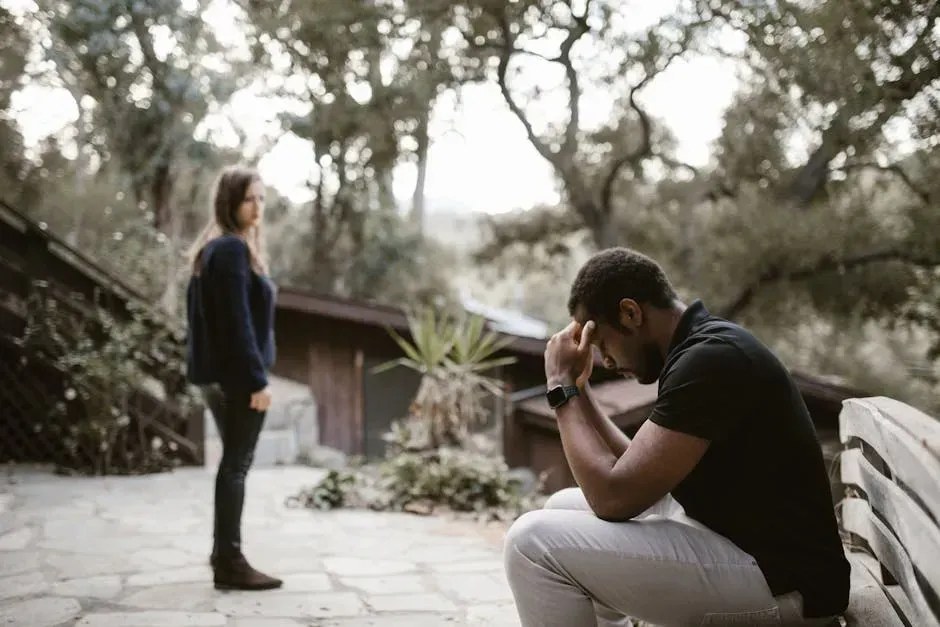
Some couples do the work, have the hard conversations, and still land in the same place they started. That’s a difficult outcome to accept, but it’s an important one to recognize rather than avoid. Continuing to hope a partner will eventually come around, without any real evidence that they will, tends to breed resentment on both sides.
The research on core values backs this up. Disagreements over childbearing are frequently described by relationship professionals as one of the most reliable predictors of relationship breakdown, precisely because the mismatch often becomes a dealbreaker, since it’s a core life-value difference. Unlike disagreements over finances or household chores, wanting or not wanting a child usually isn’t something either partner can quietly compromise their way out of forever.
If the relationship ends: what separation looks like

If the relationship ends: what separation looks like (Image Credits: Pexels)
When couples do separate over this issue, without children already in the picture, the legal process tends to be more straightforward than a typical divorce. Without custody or parenting issues, the divorce focuses mainly on finances, property, and support, which tends to make the process simpler and faster. That doesn’t make the separation painless, but it does remove one major layer of complexity that most divorces have to navigate.
The emotional aftermath varies quite a bit from couple to couple. Some people feel grief, societal judgment, or fear of starting over, while others feel relief or clarity, since the emotional experience varies just like any other divorce. For the partner who wanted children, there’s often the added weight of feeling like time was lost. For the partner who didn’t, there can be relief mixed with guilt about the pain their honesty caused.
Finding clarity, not just compromise

Finding clarity, not just compromise (Image Credits: Pexels)
There’s no universal fix for this kind of disagreement, and anyone promising one is oversimplifying a genuinely hard situation. What research and clinical experience both point to is the value of clarity over comfort. Vague hope, half-answers, and conversations postponed until “someday” tend to cause more damage than an honest, difficult talk held early.
Whether a couple ends up compromising, one partner changing their mind, or the relationship ending, the outcomes that seem to hold up best share one thing in common: both people knew exactly where they stood before decisions were made that couldn’t be undone.