
There's a reason some people circle the neighborhood block party on their calendar while others quietly slip away to the farmers market instead. Psychologists have spent decades mapping how personality shapes the way we socialize, gather, and choose to spend our free time. The community events we gravitate toward, it turns out, are rarely random. They tend to reflect deeper patterns in how we process novelty, structure, and human connection.
Farmers markets and weekly produce stalls
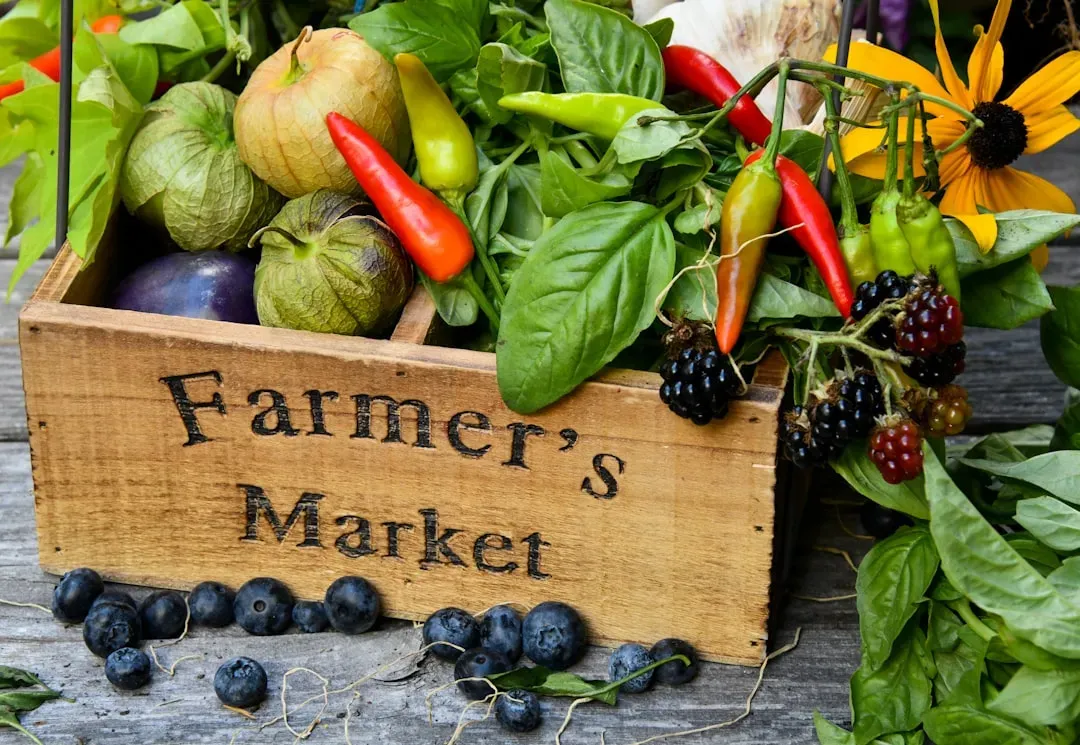
Farmers markets and weekly produce stalls (Image Credits: Unsplash)
People who make a ritual out of the Saturday farmers market often score higher on openness to experience, one of the five core traits psychologists use to describe personality. This trait reflects a person's level of imagination, curiosity, intellectual depth, and preference for variety, with individuals scoring high enjoying novelty and abstract thinking while those scoring low prefer routine and tradition. Wandering between unfamiliar vendors, trying a new heirloom vegetable, or striking up a conversation with a stranger selling honey all fit that curious, exploratory mindset.
There's also a quieter, sensory pleasure at play. Farmers markets reward people who like to slow down and notice small details, the texture of a peach, the smell of fresh bread, rather than rushing through a checklist. That unhurried attentiveness tends to overlap with openness more than any other single trait, which is why this event often draws a specific kind of regular.
Neighborhood block parties
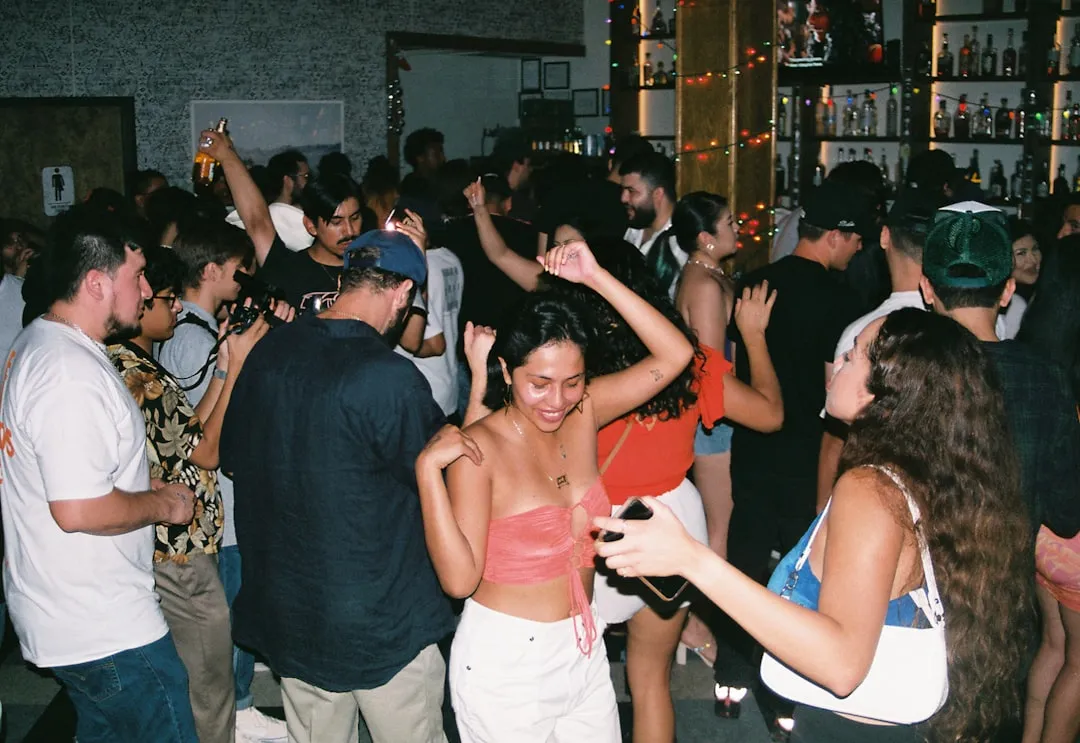
Neighborhood block parties (Image Credits: Unsplash)
Block parties are built for extraversion. Extroversion is marked by sociability and assertiveness, and there are few community events that reward those qualities more directly than a street full of neighbors, folding tables, and casual small talk. People high in this trait tend to draw energy from crowds rather than feel drained by them, which makes the noise and unpredictability of a block party feel more like fuel than friction.
What's interesting is how quickly extraverts become the informal organizers of these events, without anyone officially asking them to. They're the ones setting up chairs, introducing new neighbors to each other, and keeping conversations moving. It's a small but telling example of how personality shapes not just attendance, but the actual shape an event takes once people show up.
Volunteer cleanup days

Volunteer cleanup days (Image Credits: Unsplash)
Community cleanup events, the kind where people show up with gloves and trash bags to tidy a park or beach, tend to attract a blend of conscientiousness and agreeableness. Conscientious people are drawn to the structure of a task with a clear goal and a visible before-and-after result. Agreeableness, meanwhile, is linked to stronger interpersonal relationships and higher levels of empathy, and highly agreeable individuals are more likely to seek emotional support and maintain stable social networks.
Research on community group participation backs this up in a broader sense. Fostering the development of community groups can be an important part of boosting community participation and improving health and well-being outcomes in rural communities. Cleanup days offer a low-pressure way to combine that structured, goal-oriented mindset with genuine care for shared spaces, which is exactly the mix conscientious and agreeable people tend to look for.
Charity runs and fundraising walks
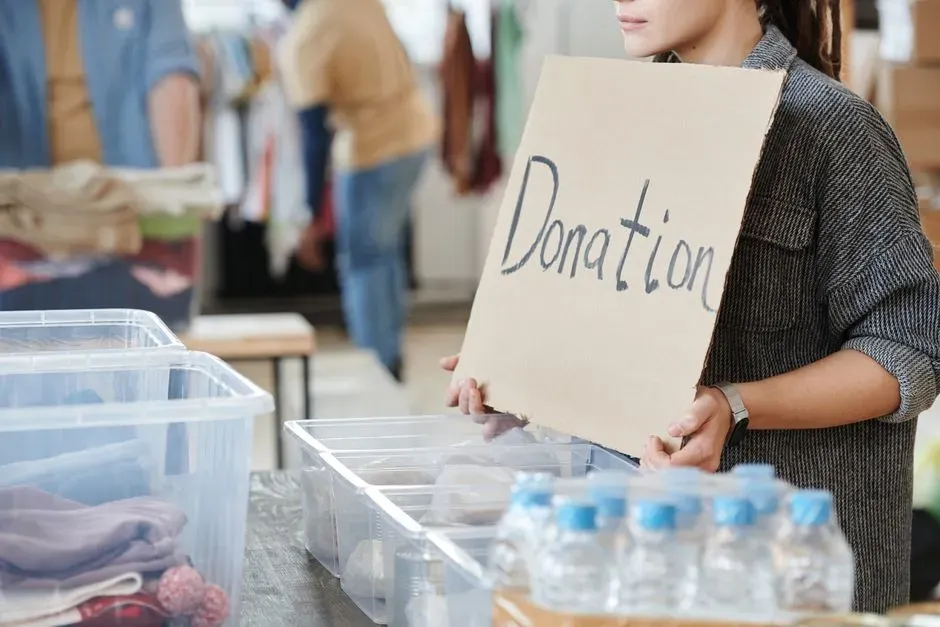
Charity runs and fundraising walks (Image Credits: Pexels)
Signing up for a five-kilometer charity run says something specific about how a person is wired, and researchers have actually looked into this. A recent study on multi-marathon participants found that athletes generally scored higher in conscientiousness and extraversion, traits linked to both sports participation and success compared to non-athletes. That combination of discipline and sociability explains why these events attract people who like both the training routine and the shared finish line energy.
The same research also connected certain traits to performance over time, noting that high conscientiousness and emotional stability were strongly associated with athletic effectiveness, underscoring the importance of these traits in sustained high performance. For casual participants, this shows up less as competitiveness and more as reliability, the person who commits to training for months rather than backing out closer to the date.
Local arts and music festivals
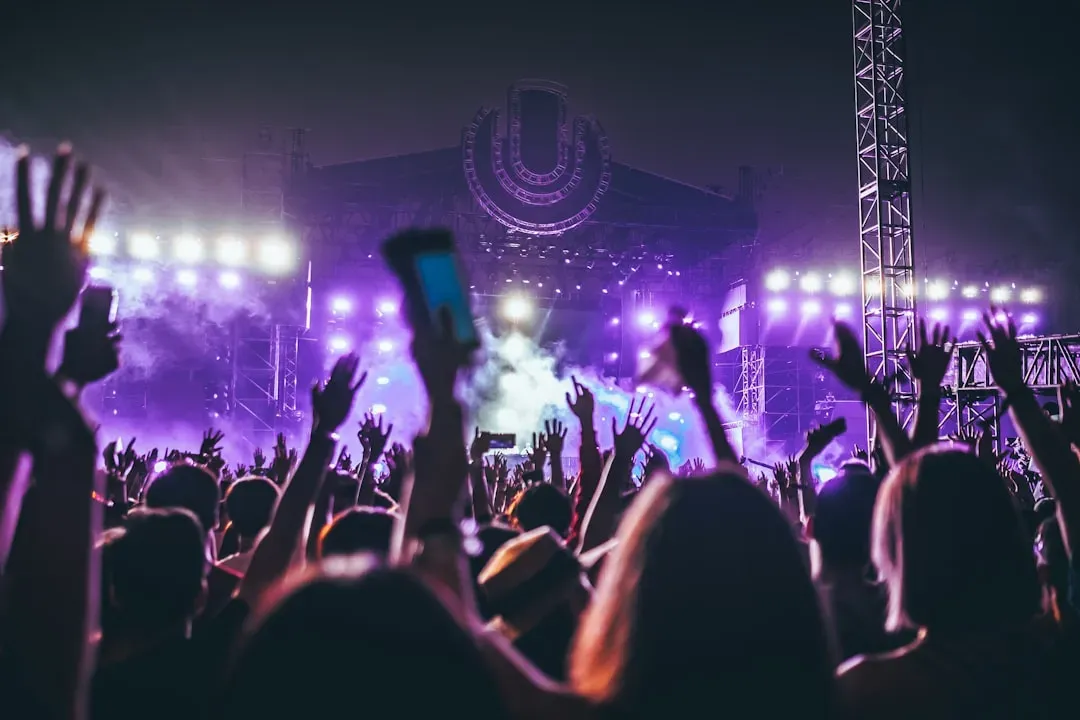
Local arts and music festivals (Image Credits: Unsplash)
Multi-day festivals with live music, food trucks, and rotating art installations tend to pull in people who score high on openness. Individuals scoring high in this trait enjoy novelty, abstract thinking, and art, while those scoring low prefer routine, tradition, and practicality. The appeal isn't just the music itself, it's the unpredictability of the whole experience, discovering a new artist by accident or stumbling into an unplanned conversation near the food stalls.
Festival regulars also tend to tolerate, and even enjoy, a certain amount of chaos that would frustrate more routine-oriented personalities. Long lines, changing schedules, and crowded fields don't register as problems so much as part of the texture of the day. That comfort with ambiguity is one of the clearer behavioral fingerprints of high openness.
Town hall meetings and civic forums
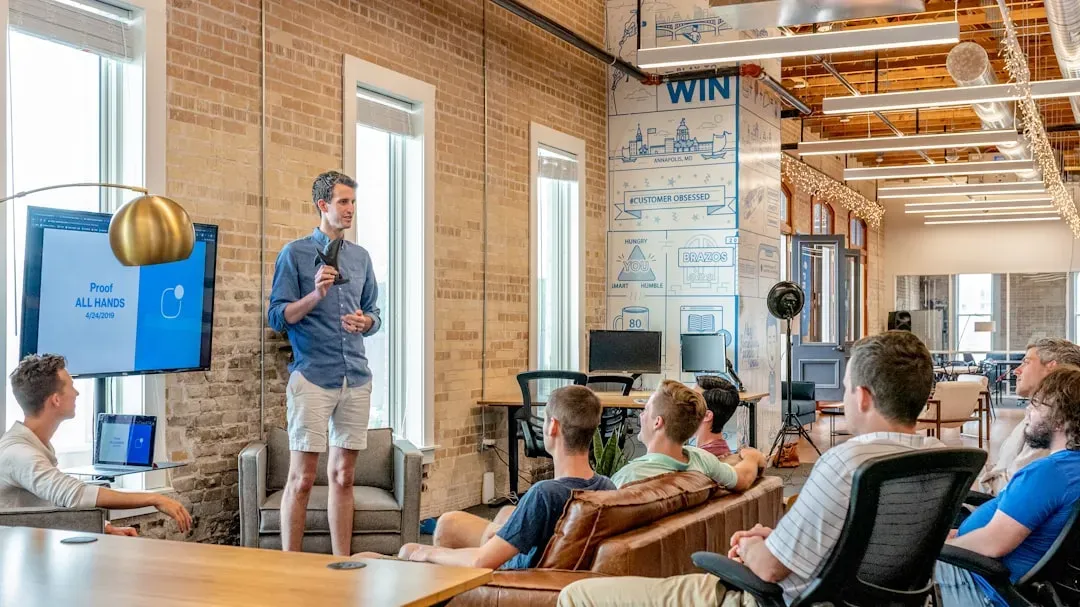
Town hall meetings and civic forums (Image Credits: Unsplash)
Civic gatherings, the ones focused on zoning disputes, school board decisions, or local ballot measures, draw a different crowd than festivals or block parties. Interestingly, research on public participation in campaigns has found that participation was negatively correlated with conscientiousness, with people low in this trait, meaning more spontaneous and impulsive individuals, showing higher rates of participation than those ranked high on it. That same research found openness to be a strong predictor as well, with open minded individuals almost three times more likely to join a public campaign compared to their more conservative counterparts.
The same study also found a connection to emotional intensity. Campaign participants were more likely to score high on neuroticism, the tendency to experience unpleasant emotions such as anger, anxiety, and vulnerability, and were nearly two times more likely to support a cause than more emotionally stable individuals. Town hall attendees, in other words, are often people who feel strongly enough about an issue to show up and say so, even when it's uncomfortable.
Community potlucks and shared dinners
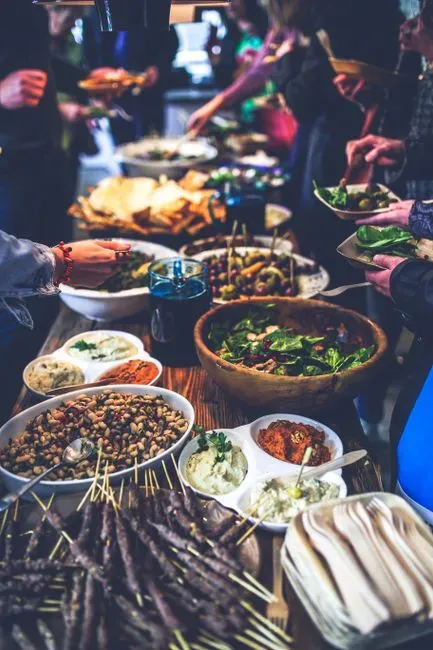
Community potlucks and shared dinners (Image Credits: Pexels)
Potlucks reward a particular kind of social generosity. People who consistently show up with a homemade dish, remember dietary restrictions, and linger to help clean up tend to score high on agreeableness. Agreeableness is linked to stronger interpersonal relationships, higher levels of empathy, and a lower risk of interpersonal conflict, all of which contribute to positive mental health outcomes.
These gatherings also work well for people who prefer smaller, more intimate forms of connection over the noise of a large festival. There's less performance involved than at a block party, and more genuine exchange, conversations over food tend to run deeper and slower. That combination of warmth and low pressure is part of why potlucks remain popular across such a wide range of communities, from churches to apartment buildings to workplace teams.
Book clubs and library programs

Book clubs and library programs (Image Credits: Unsplash)
Book clubs occupy an interesting middle ground. They attract people high in openness, drawn to new ideas and perspectives, but they also tend to appeal to more introverted personalities who prefer structured, smaller-scale conversation over large crowds. This isn't a contradiction so much as a reminder that traits combine in individual ways rather than sorting people into neat categories.
A study on older adults in Japan found that personality shapes how much people benefit emotionally from this kind of participation. Higher openness positively moderated the association between private group participation, including volunteering, sports, hobby, and learning groups, and mental health, while higher neuroticism negatively moderated it. That finding lines up with what many book club regulars describe anecdotally: the format works best for people who are curious but don't necessarily need a crowd to feel fulfilled.
Holiday parades and seasonal celebrations
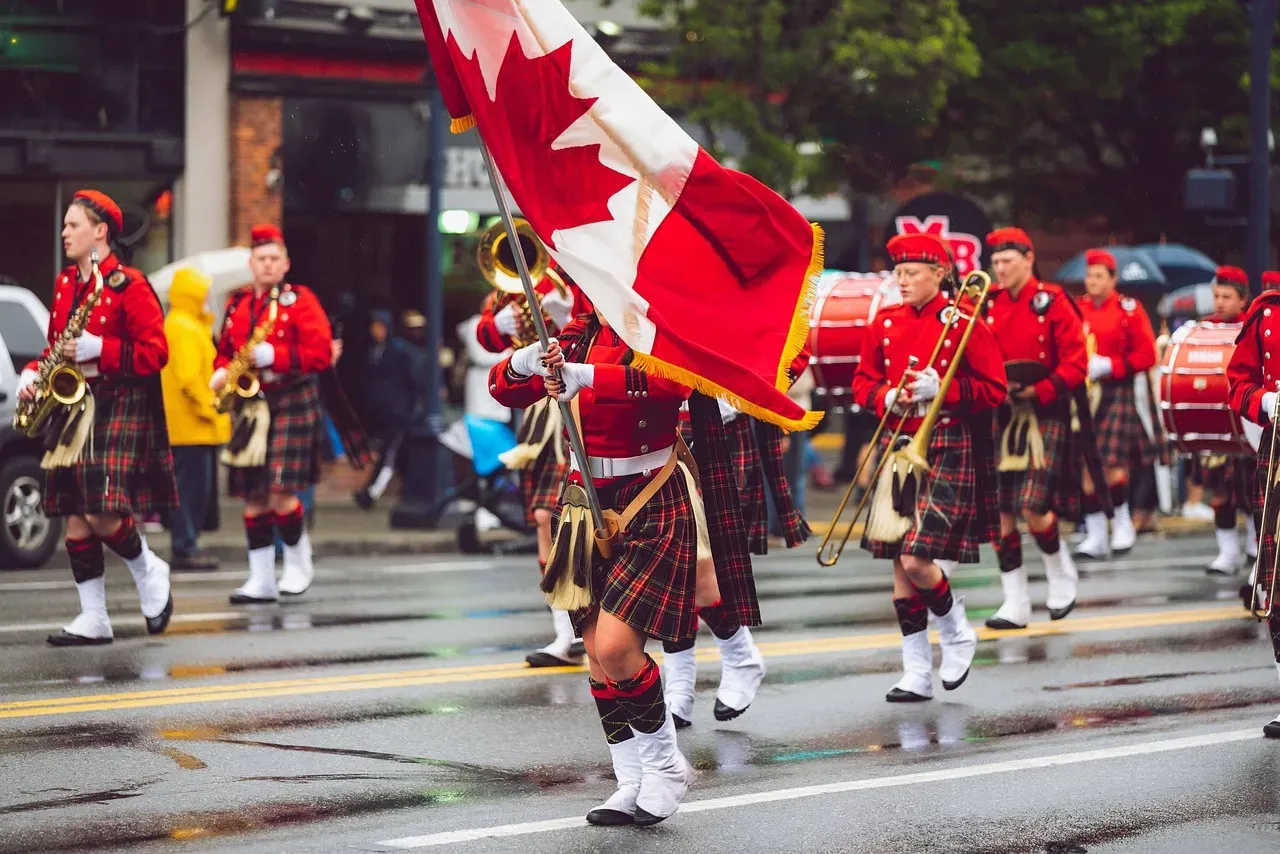
Holiday parades and seasonal celebrations (Image Credits: Pixabay)
Parades and seasonal street festivals draw out a specific mix of extraversion and nostalgia-driven agreeableness. These are events built around tradition and repetition, the same route, the same floats, often the same families showing up year after year, which appeals to people who find comfort in ritual as much as excitement.
Unlike arts festivals, which reward spontaneity, parades tend to attract people who like knowing what's coming next. There's a predictability to a Fourth of July parade or a holiday lights procession that offers social connection without the uncertainty of a more improvised event. That's part of why these gatherings tend to draw multi-generational crowds rather than skewing toward any single age group or personality type.
Night markets and food truck rallies
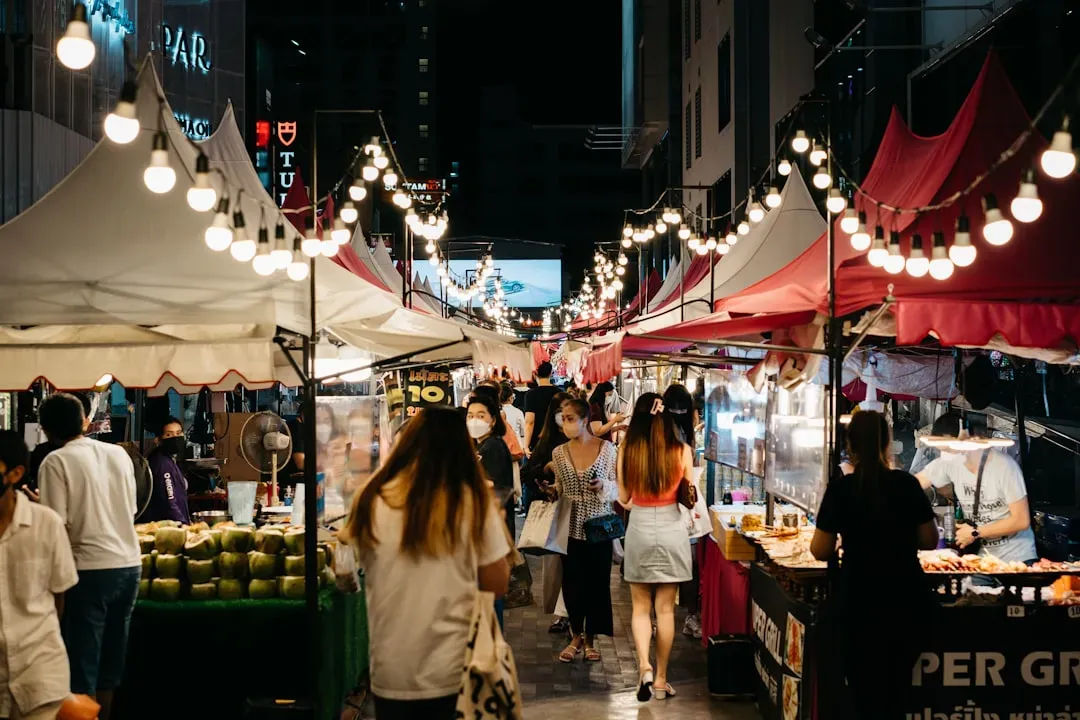
Night markets and food truck rallies (Image Credits: Unsplash)
Night markets and rotating food truck events sit closer to festivals than potlucks in terms of the personality traits they attract. The appeal again centers on openness and a taste for variety. This trait reflects a person's level of imagination, curiosity, intellectual depth, and preference for variety. Trying five different cuisines in one evening, wandering between vendors without a fixed plan, fits naturally with that exploratory mindset.
These events also tend to draw a slightly younger, more socially adventurous crowd compared to more traditional community gatherings. There's an implicit comfort with unfamiliarity here, new foods, new pop-up vendors, unfamiliar music, that separates night market regulars from people who prefer the reliability of a weekly farmers market or an annual parade.
The takeaway

The takeaway (Image Credits: Pexels)
Personality doesn't dictate exactly where anyone will show up on a Saturday afternoon, but it does shape what feels comfortable, energizing, or worthwhile. The Big Five framework, built on openness, conscientiousness, extraversion, agreeableness, and neuroticism, has held up across decades of research precisely because it captures these kinds of everyday patterns without oversimplifying them. The next time you notice yourself gravitating toward the same kind of gathering, whether that's a noisy block party or a quiet library book club, it might be worth asking what that preference is actually telling you.