
Something has shifted in how families think about the hours between the final school bell and dinner. For decades, a packed after-school schedule was treated almost like a badge of good parenting. Now, more households are pulling back, and they’re not always talking about it out loud.
The reasons vary from family to family, but a few patterns show up again and again once you start asking around or digging into the surveys. Money, exhaustion, and a general sense that kids need unstructured time again all play a role. Here’s a closer look at nine activities parents are backing away from, and the reasoning behind each decision.
1. Travel and club sports teams

1. Travel and club sports teams (Image Credits: Unsplash)
Travel sports were once the exception; now they're often treated as the default path for any kid who shows a bit of talent. That shift has come with a price tag many families simply can't absorb anymore. In 2024, the average U.S. sports family spent more than $1,000 on its child's primary sport, a 46 percent increase since 2019.
The financial strain is pushing some families out entirely rather than just trimming back. Nearly 20% of parents go into debt to afford sports, and 21% consider pulling their kids out due to cost, while around 64% of parents feel the financial squeeze and 20% report having had to reduce or stop participation altogether. For a lot of parents, one travel-team season is enough to realize the math doesn't work long term.
2. Recreational youth soccer leagues

2. Recreational youth soccer leagues (Image Credits: Unsplash)
Soccer has a reputation as the accessible, low-cost sport that almost any kid can try. That reputation is fading fast. In 2024, the families of youth soccer players spent $910 annually, up from $537 in 2019, according to an Aspen Institute's Project Play survey.
Field access has become its own quiet burden on families, even before registration fees enter the picture. Soccer is typically the sport kids play first, but also the one whose participation rate declines the fastest, often because of expense. Parents who once signed their kids up automatically each fall are now weighing whether the cost still matches the payoff.
3. Multiple simultaneous sports

3. Multiple simultaneous sports (Image Credits: Pexels)
The idea of a kid playing soccer in the fall, basketball in the winter, and baseball in the spring used to be normal. That pattern is eroding, and not because kids have lost interest in variety. Multi-sport participation dropped 13% since 2019, with the average young athlete now playing just 1.63 sports.
Part of this comes down to scheduling logistics, and part comes down to money, since each additional sport means another set of fees, gear, and travel. CivicScience polling conducted in 2025 shows 65% of kids in organized sports play at least two, and 30% play three or more, which means the families still juggling multiple sports are shouldering a genuinely heavy load. Parents watching that math from the outside are increasingly choosing to let their kids specialize in one activity, or none at all, rather than stretch across several.
4. Traditional team sports like baseball and tackle football

4. Traditional team sports like baseball and tackle football (Image Credits: Unsplash)
Some sports are seeing outright declines rather than just a slowdown in growth. According to the SFIA, several traditional team sports (baseball down 19%, tackle football down 7%, soccer down 3%) continue declining despite overall participation growth.
Concerns about injury risk, particularly around football, have pushed some parents toward flag football or other lower-contact alternatives instead. Cost and time commitment factor in too, since these sports often require extensive gear, travel for tournaments, and a season that stretches far longer than a typical school term.
5. Elite music lessons and competitive ensembles

5. Elite music lessons and competitive ensembles (Image Credits: Pixabay)
Private instrument lessons, especially the kind tied to competitive youth orchestras or audition-based ensembles, have quietly become one of the pricier line items in a family's activity budget. Weekly lessons, instrument rental or purchase, recital fees, and travel for competitions add up fast. Parents expect to spend an average of $337 on sports and other after-school activities, followed by $275 on clothes and shoes, $118 on school supplies, $102 on technology, and $52 on books.
For arts programs specifically, the costs can rival those of club sports once instruments, sheet music, and performance fees are factored in. Some families are opting for school-based music programs instead of private lessons, accepting a slower pace of progress in exchange for a much lighter bill.
6. Year-round club activities with no off-season

6. Year-round club activities with no off-season (Image Credits: Pixabay)
The push toward year-round commitment in clubs, whether it's dance, gymnastics, or competitive cheer, has worn down a lot of parents who miss having an actual off-season. There's no natural break to catch up on rest, spend a free weekend as a family, or simply let a kid decompress. The age-group data shows that the sharpest participation decline happens between ages 13 and 15, right around when many of these programs intensify their schedules and expectations.
Burnout isn't just a kid problem either. Parents are feeling it too, ferrying children to practices, fundraisers, and competitions with barely a pause between seasons. Some families are choosing to step away from year-round programs in favor of activities with clear start and end dates.
7. Formal tutoring add-ons beyond core subjects

7. Formal tutoring add-ons beyond core subjects (Image Credits: Unsplash)
Supplemental tutoring in subjects a child is already doing fine in, sometimes marketed as "enrichment" rather than remediation, is one of the quieter cuts happening in household budgets. It's an easy expense to justify when money is loose and an easy one to drop when it's not. Parents increasingly reserve tutoring dollars for subjects where a child is genuinely struggling rather than treating it as a blanket academic insurance policy.
This pullback lines up with broader financial pressure across the school calendar, not just after three in the afternoon. A third of parents say they can't afford back-to-school shopping at all, and nearly half expect to sacrifice essentials like groceries or bills to make room. When the basics are tight, optional academic extras tend to be first on the chopping block.
8. Long-distance travel teams and tournament circuits

8. Long-distance travel teams and tournament circuits (By PDM Touristik GmbH, <a href="https://commons.wikimedia.org/w/index.php?curid=18173911" target="_blank" rel="noopener">CC BY-SA 3.0</a>)
Beyond the cost of playing itself, travel teams often demand weekend trips to out-of-state tournaments, hotel stays, and meals on the road. That's on top of the registration fees already covering coaching and field time. Combined with the driving burden many parents already feel during the school year, it's become one of the easier categories to simply opt out of.
Time spent shuttling kids around has become its own measurable strain on families. A new survey of 2,000 U.S. millennial parents of school-aged kids found that simply driving their kids to and from their school activities consumes an average of 38 minutes a day, with the average parent losing nearly 7,000 minutes a year in the car. Add weekend tournament travel on top of that daily grind, and it's easy to see why some families are drawing a line.
9. Overscheduled enrichment programs stacked back to back
9. Overscheduled enrichment programs stacked back to back (Image Credits: Pexels)
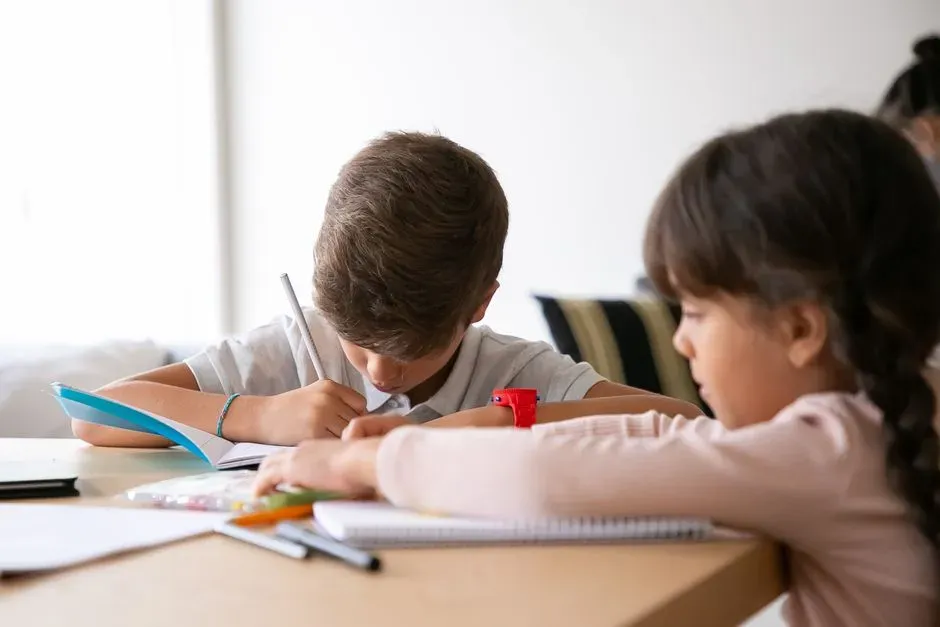
The last category isn't a single activity so much as a scheduling philosophy: filling every weekday afternoon with a different structured program, one after another, with barely a gap in between. It's the model that dominated the last decade or so of parenting culture, and it's the one families seem most eager to loosen their grip on now. Fewer parents are treating a jam-packed calendar as proof of good parenting.
The stress data backs up why this shift is happening. A survey by The Kids Mental Health Foundation reveals 4 in 10 parents experience more stress during the school year than summer, with top concerns including school routines, work-life balance, and kids' mental health. A growing number of parents are choosing a lighter, more breathing-room schedule over a resume-building one, even if it means fewer activities on paper.
The bigger picture

The bigger picture (Image Credits: Unsplash)
None of these cuts happen in isolation. They're tied together by cost pressure, shrinking free time, and a slow cultural correction away from the idea that busier is automatically better for kids. Rising fees, longer commutes, and the sheer physical toll of ferrying children between commitments have made trimming the schedule feel less like giving up and more like common sense.
What's emerging instead isn't necessarily a retreat from enrichment altogether. It's a more selective approach, where families choose one or two activities that genuinely matter to their child rather than stacking a full roster out of habit or obligation. Whether that shift sticks around as a lasting norm or fades once budgets loosen again is something only the next few school years will tell us.