
For decades, the image of retirement success involved a suitcase, a warm destination, and a calendar built around escaping winter. Pack up in November, land somewhere sunny, come home when the snow melts. That rhythm defined a generation of retirees.
Lately, though, the math and the mood around that lifestyle have shifted. Rising costs, insurance headaches, and a changing sense of what retirement should actually feel like are pushing many older adults toward different models entirely, ones that look less like a seasonal commute and more like a settled, intentional life.
The two-home budget has gotten harder to justify

The two-home budget has gotten harder to justify (Image Credits: Pexels)
Snowbird living refers to retirees who divide the year between two homes, typically leaving colder northern regions during fall and winter in favor of warmer climates, and monthly expenses typically start around $5,000 for a modest setup and can climb past $8,500 for larger homes or a very active lifestyle. That is not pocket change for someone living on fixed income and Social Security.
Rising costs across housing, healthcare, travel, and everyday expenses have transformed what used to be a middle-class retirement option into a luxury that fewer people can afford, with the financial reality of maintaining two residences increasingly difficult to sustain on a typical retirement income. Grocery bills add up faster than people expect too, since retirees cannot stock up or buy in bulk when splitting time between homes, which leads to higher overall food costs.
Insurance premiums are scaring off would-be snowbirds

Insurance premiums are scaring off would-be snowbirds (Image Credits: Pexels)
Anyone who has priced a second home in a coastal or desert state recently knows the sticker shock. Climate change has driven many increases, with hurricanes, wildfires, and other disasters making insurers reluctant to cover popular snowbird areas, and even retirees with decades of claim-free history now face high premiums.
It is not just the premium itself that wears people down. Managing insurance on two properties is also more complex, with inspections, maintenance proof, and vacancy documentation adding financial and administrative burdens. For a lot of retirees, that paperwork headache eventually outweighs the appeal of a warm porch in January.
Florida's own numbers tell an uneven story

Florida's own numbers tell an uneven story (Image Credits: Pexels)
Florida still pulls people in, but it is not the one-way magnet it once was. Florida recorded the highest total inbound moves (45,696) among residents 65 and older, but also saw 44,881 outbound moves, resulting in a net gain of just 815. That is an almost even trade, not the flood of retirees the state’s reputation suggests.
Some of the churn comes down to disappointment after the fact. Snowbirds who discover they prefer their home state, or retirees who realize a warm-weather city does not suit their lifestyle, often list homes after experiencing a full winter season, and these motivated sellers tend to be more flexible on price than typical summer sellers. In other words, a lot of people try the snowbird dream, then quietly reverse course.
Canadian snowbirds are rethinking the U.S. altogether

Canadian snowbirds are rethinking the U.S. altogether (Image Credits: Unsplash)
North of the border, the calculus has shifted for reasons that go beyond dollars and cents. For many snowbirds, the decision to sell has been made more urgent by growing concerns over Florida’s future, with recent hurricanes causing billions in insured losses and driving up premiums. Political tension has added another layer of hesitation.
According to Florida Realtors, Canadians accounted for 33 percent of foreign-owned properties sold in Florida during 2025, a sharp increase from the previous year. Separately, some snowbirds have been scrambling to sell their homes in the state, with others hesitant to go because of a weak loonie, high insurance costs, and threats toward Canada from the U.S. president.
Some retirees are choosing one settled home instead of two

Some retirees are choosing one settled home instead of two (Image Credits: Unsplash)
Rather than juggling two properties, a growing number of older adults are consolidating into a single, right-sized residence. Older adults overwhelmingly favor mid-priced, moderately sized homes, especially two to three bedroom, two bath properties. That preference speaks to a broader appetite for simplicity over sprawl.
This is not a small trend either. More than 2.1 million Americans age 65 and older relocated in 2025 according to recent moving data, and the pattern behind those moves looks different than the old snowbird playbook. The result is a clearer picture of modern retirement migration, one driven by affordability, comfort, and long-term livability rather than simply chasing sunshine every winter.
Mid-sized, affordable cities are pulling retirees in

Mid-sized, affordable cities are pulling retirees in (Image Credits: Unsplash)
Instead of migrating seasonally, many retirees are relocating permanently to cities that offer a balance of cost, climate, and community. South Carolina led the nation in net gains among residents 65 and older, adding 5,427 residents in that age group. That is a striking number for a state that rarely gets the spotlight Florida and Arizona do.
Growing metro areas outside the traditional Sun Belt hubs are drawing attention too. Charlotte has become one of the fastest-growing places in North Carolina and the entire Southeast, with 147 people moving to the city every day, part of a larger trend that has made North Carolina a top-five destination for movers nationwide. Retirees make up a meaningful share of that wave, drawn less by beaches and more by cost of living and a manageable pace of life.
A new kind of mobility is replacing the seasonal shuffle

A new kind of mobility is replacing the seasonal shuffle (Image Credits: Pexels)
Rather than owning two homes and shuttling between them on a fixed schedule, some retirees are opting for a more flexible, multi-base lifestyle. A global cohort of early retirees, financially independent professionals, and passive-income earners are embracing strategic mobility, constructing portfolios of residences and lifestyle bases across multiple jurisdictions that let them move between homes and stay as long as they like, and the demand for this kind of location optionality is not driven by a desire for sunshine alone.
What is pushing this shift is not glamour so much as practicality. It reflects changes such as rising living costs in traditional warm weather enclaves like Arizona and Florida, the increasing range and accessibility of residence and citizenship programs, and a growing appetite for long-term security, diversification, and enhanced lifestyle choice. For retirees with the means, that looks less like a winter home and more like a life without a single fixed address at all.
International retirement is gaining ground over domestic snowbirding

International retirement is gaining ground over domestic snowbirding (Image Credits: Unsplash)
Some retirees are skipping the domestic snowbird circuit entirely and looking abroad instead. While many snowbirds have headed to familiar U.S. destinations such as Florida, Arizona, Texas, or the Carolinas, interest in warmer locations beyond the United States appears to be growing, with 44 percent of AARP survey respondents planning trips in 2025 considering international travel, up from 37 percent the year before.
Canadian retirees in particular are broadening their horizons well past the usual choices. While Portugal and the United States have long been favourites of Canadian retirees and snowbirds, these destinations are no longer topping the list, and travel experts say Canadian retirees are increasingly considering destinations across Europe, Latin America, and Southeast Asia that offer affordable living costs, quality healthcare, and better weather. Spain continues to be a strong draw as well, since it attracts Canadians to regions including Costa del Sol, Mallorca, and the Canary Islands, due to established international communities, excellent healthcare, and a relaxed Mediterranean lifestyle.
The Caribbean is stepping in as a practical alternative to Europe
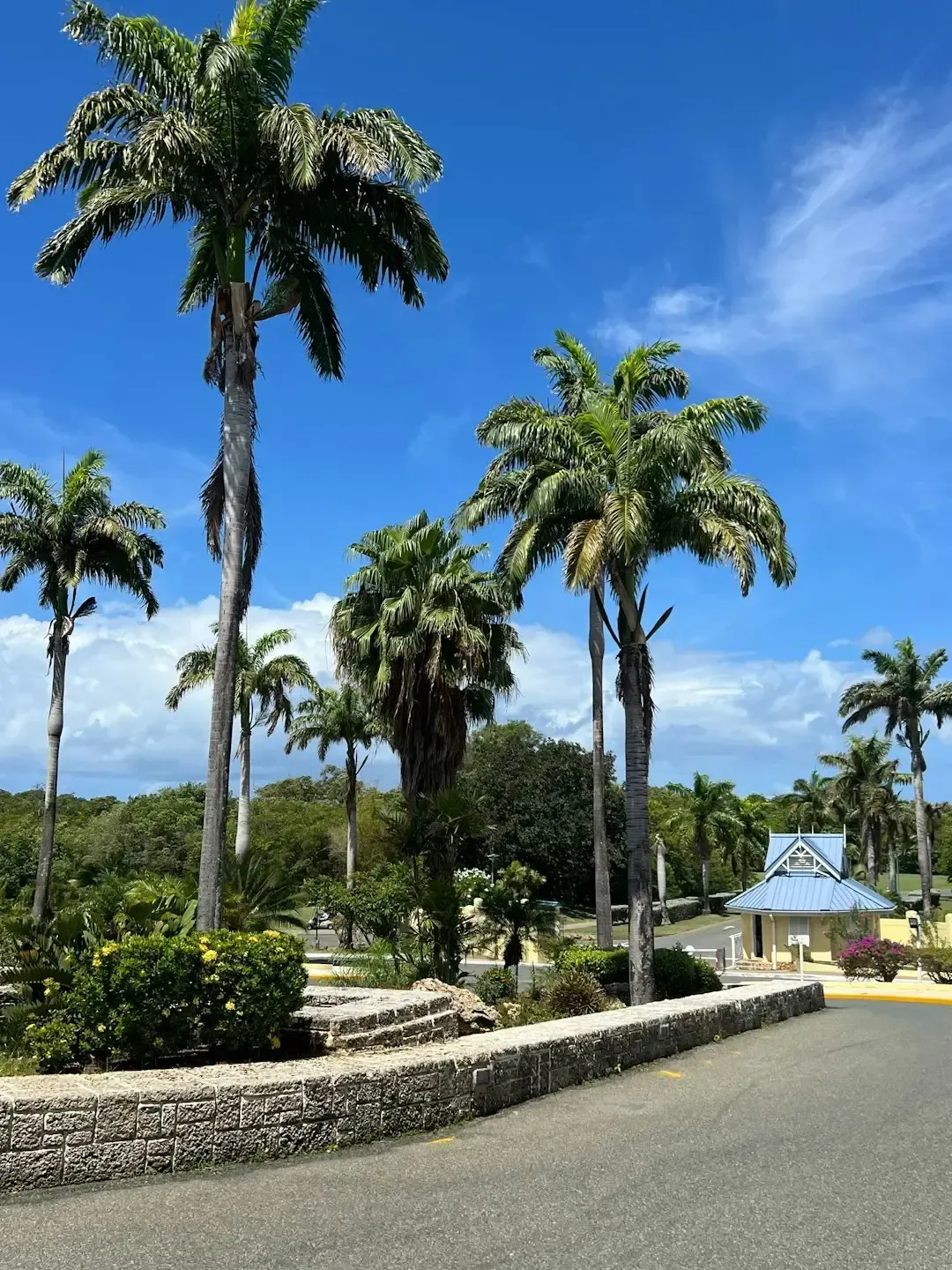
The Caribbean is stepping in as a practical alternative to Europe (Image Credits: Unsplash)
For Canadian retirees specifically, the math on going overseas has gotten more complicated. Most European countries apply the Schengen Area’s 90 days within any 180 day period rule for Canadians, and that restriction makes Europe impractical for the traditional four to six month snowbird lifestyle many retirees prefer. New entry systems are not helping either, since Europe is also introducing additional travel authorization systems, including ETIAS and the Entry or Exit System scheduled for the last quarter of 2026, reducing some of the spontaneity Canadians once enjoyed.
That combination of rules, distance, and cost has redirected attention closer to home. Add longer flights, higher costs, and colder winters, and the Caribbean starts to look like the more practical alternative for people who still want warmth without the visa complications. It is a smaller shift than a full lifestyle overhaul, but it shows how even minor rule changes can redirect where retirees choose to spend their winters.
Retirement mobility is turning into a long-term strategy, not a seasonal habit

Retirement mobility is turning into a long-term strategy, not a seasonal habit (Image Credits: Pexels)
What ties a lot of this together is a change in mindset rather than just geography. What is emerging is not merely a travel trend but a broader shift in retirement psychology, with many affluent retirees now thinking in terms of Plan B mobility strategies, diversifying not only investments but also lifestyle options, residency possibilities, healthcare access, and long-term retirement planning.
That framing matters because it reframes the old snowbird question. It used to be about where to spend winter. Now, for a growing number of retirees, it is about building a flexible base of options that can adapt to health, finances, family, and politics, rather than locking into the same seasonal migration every single year.
The takeaway

The takeaway (Image Credits: Unsplash)
The classic snowbird life is not disappearing overnight, but its grip on retirement planning has loosened. Insurance costs, cross-border tension, and simple fatigue with managing two households have pushed retirees toward options that once looked like fringe choices: settling into one right-sized home, relocating permanently to an affordable mid-sized city, or building a more flexible, multi-location life instead of a fixed seasonal loop. For today’s retirees, the goal increasingly isn’t escaping winter. It’s finding a setup that actually fits how they want to live, all year round.