
Scroll through any social feed for five minutes and you’ll likely see a haul video, a discount code, or a countdown clock urging you to check out before a deal disappears. That’s no accident. Economists and consumer researchers have spent the past few years tracking how these platforms have rewired the basic mechanics of buying and saving, and the data shows changes that go well beyond simple advertising.
From instant checkout buttons to viral frugality trends, the way people part with their money has shifted in ways that would have seemed unusual just a decade ago. Here’s a look at eight documented shifts economists and researchers point to when explaining how social media has reshaped everyday spending.
1. In-app checkout has erased the pause between wanting and buying
1. In-app checkout has erased the pause between wanting and buying (Image Credits: Pexels)
One of the most measurable shifts is structural. Platforms like TikTok and Instagram now let users buy directly from a video or livestream without leaving the app, which removes the natural friction that once gave shoppers a moment to reconsider. Many social media platforms now have online shops embedded into the app, such as Instagram Shop or TikTok Shop, and through TikTok Shop users can directly purchase products used in videos or LIVE streams by clicking the link embedded into the video, so users don't have to cross many obstacles to make purchases, and therefore might spend less time considering the purchase altogether.
Researchers studying this design describe it in almost mechanical terms. TikTok Shop impulse buying is driven by a stack of psychological and design mechanisms operating simultaneously, including native checkout that eliminates the cart-abandonment window and creator social proof that transfers trust faster than brand advertising. The result is a shopping journey that has compressed from days of consideration into seconds of reaction.
2. Impulse purchases have become a normal, documented pattern rather than an exception
2. Impulse purchases have become a normal, documented pattern rather than an exception (Image Credits: Unsplash)
Impulse buying used to be treated as an occasional slip. Now it shows up as a consistent, quantifiable share of transactions on major platforms. Roughly 55% of American TikTok users have made an impulse purchase on social media, according to research compiled by Capital One Shopping.
Other surveys land in a similar range. Impulse buying is on the rise, with nearly 1 in 4 shoppers admitting to making an impulse purchase, and 23% later regretting a purchase due to quality or advertising mismatch. Academic work backs this up too. Peer-reviewed research confirms this shift, with one study of 350 university students finding that impulse buying mediates the link between TikTok content and purchase intent, meaning users are reacting emotionally, not strategically.
3. Livestream and social commerce sales have grown into a genuine slice of the economy

3. Livestream and social commerce sales have grown into a genuine slice of the economy (Image Credits: Unsplash)
What began as a novelty feature has turned into a real revenue category that economists now track alongside traditional retail. By 2026, over 17% of online sales are expected to occur through social platforms, with livestream shopping reaching 50 billion dollars in the US as consumers blur the lines between entertainment and purchasing. That kind of growth changes how economists model consumer demand, since discovery and purchase now often happen in the same five-second scroll.
The scale on individual platforms is striking. TikTok Shop reached 64.3 billion dollars in global GMV in 2025, nearly doubling year on year, with the US market contributing 15.1 billion dollars, a 68% increase over 2024's 8.5 billion dollars. For 2026, eMarketer projects US TikTok Shop GMV to exceed 20 billion dollars, a figure that would have seemed implausible for a video app just a few years ago.
4. Influencers now function as a trusted middle layer between brands and consumers
4. Influencers now function as a trusted middle layer between brands and consumers (Image Credits: Unsplash)
Traditional advertising asked people to trust a brand. Social media has replaced much of that with trust in a person, and economists studying consumer behavior say this shift changes how price and quality signals get processed. Influencers drive nearly half of sales, as 63% of respondents take product recommendations from influencers, and almost 50% of TikTok Shop purchases originated from influencer posts.
This dynamic is strong enough that some buyers say they'll spend more simply because a creator they trust vouched for something. Close to 50% of TikTok Shop purchases are tied to influencer content, and users say they would spend up to 95 dollars on recommendations from trusted creators. A newer offshoot of this trend, so called finfluencers, has extended that trust into budgeting and investing advice, which researchers note carries both promise and risk depending on the accuracy of the guidance being shared.
5. Buy Now, Pay Later has moved from a niche option to a mainstream habit

5. Buy Now, Pay Later has moved from a niche option to a mainstream habit (Image Credits: Unsplash)
Installment payment tools have grown alongside social commerce, often marketed through the same short videos that drive impulse purchases. BNPL drove 10.1 billion dollars in November spending in 2025, a 9% jump year over year, and on Cyber Monday it accounted for about 7% of all spending, roughly 1.03 billion dollars, making it the biggest single day for the payment method in US history.
Growth projections suggest this isn't a temporary fad. The US Buy Now Pay Later market was valued at 189.01 billion dollars in 2025 and is estimated to reach 220.17 billion dollars in 2026, growing at a compound annual rate of 16.49% through 2034. Economists watching household debt levels have flagged this pairing of social media discovery with deferred payment as a combination worth monitoring closely, since it can make spending feel smaller in the moment than it actually is.
6. Younger generations show measurably higher rates of social media driven spending

6. Younger generations show measurably higher rates of social media driven spending (Image Credits: Pexels)
Age has become one of the clearest dividing lines in this research. Gen Z consistently shows up as the most influenced group across nearly every study. 86% of Gen Z shoppers say social media influences their shopping habits, and after the introduction of TikTok Shop in 2023, purchasing directly through social media has become increasingly common.
The generational gap extends into likelihood of buying, not just awareness of products. Gen Z adults aged 18 to 24 are about 3.2 times more likely than the average consumer to buy something on TikTok Shop, and those aged 25 to 34 are 1.8 times more likely. Millennials aren't far behind either, since social media heavily influences their consumption habits too, with 60% making purchase decisions based on influencer recommendations.
7. A counter-movement of visible frugality has emerged as its own economic signal
7. A counter-movement of visible frugality has emerged as its own economic signal (Image Credits: Pexels)
Not every trend on social media points toward more spending. Economists have also noted a backlash movement that treats restraint as content worth sharing. Underconsumption core is a TikTok associated social media trend in which creators present anti-haul style content that emphasizes using, reusing, repairing, and repurposing existing possessions instead of buying new items.
The economic context behind this shift is fairly concrete. As rent in the US surged by 135% between 1999 and 2022 while incomes grew by only 77%, Gen Z has turned to a frugal lifestyle, prominently featured on social media under the underconsumption core trend. Researchers describe this less as a rejection of consumer culture and more as a rebalancing, where budgeting content and haul videos now sit side by side on the same feeds, often pulling the same viewers in opposite directions depending on the day.
8. Public money talk has normalized budgeting conversations that used to stay private
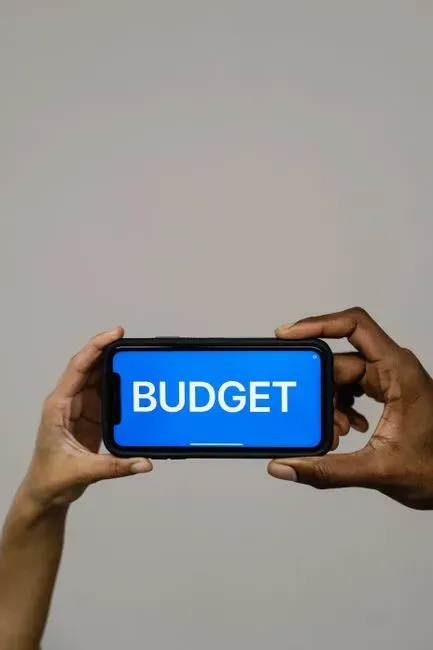
8. Public money talk has normalized budgeting conversations that used to stay private (Image Credits: Pexels)
Perhaps the least flashy shift, but one economists say matters most for long term financial health, is how openly people now discuss money limits online. This openness appears to be reshaping social spending pressure in measurable ways. When living costs are high and money feels tight, being upfront about financial boundaries can take the pressure off social spending, and it also builds a sense of solidarity and accountability, since friends are more likely to adjust plans when everyone's honest about what they can and can't afford.
This shift shows up in behavior, not just attitude. People are beginning to normalize saying no to purchases, events, and subscriptions without guilt, a shift that makes room for healthier financial habits and may push brands to rethink how they market, with fewer fear of missing out messages and more transparency around real value. Combined with the underconsumption trend, this kind of public accountability has given some researchers reason to believe social media's influence on spending isn't purely one directional.
Taken together, these eight patterns paint a picture of an economy where the line between scrolling and shopping has essentially dissolved. Checkout friction is gone, trust has migrated from brands to individual creators, and payment has stretched out over installments that make purchases feel lighter than they are. At the same time, the same platforms driving impulse buys are hosting a visible pushback, with budgeting content and frugality trends gaining real traction alongside the haul videos. Economists studying this space generally agree on one point: social media hasn't just changed what people buy, it has changed the entire decision making process behind the purchase, compressing it, publicizing it, and in some cases, reversing it entirely depending on which corner of the feed someone happens to land on that day.