
Ask a dozen financial advisors what separates people who build lasting wealth from those who stay stuck in paycheck-to-paycheck cycles, and you'll hear a surprising amount of agreement. It isn't income level, investment savvy, or even how much someone earns. Instead, the pattern keeps circling back to a single, unglamorous behavior that shows up again and again in client conversations and research alike.
The habit advisors keep pointing to

The habit advisors keep pointing to (Image Credits: Unsplash)
When advisors describe what separates their most financially secure clients from everyone else, they rarely mention a clever investment or a lucky break. Wealthy Americans asked about their financial stability rarely credit lottery wins or risky stock picks, pointing instead to one simple habit: tracking where their money goes, consistently. It sounds almost too simple to matter, yet the consistency of that answer across different sources is hard to ignore.
The habit isn’t complicated in theory. It just means knowing, on a regular basis, exactly where every dollar is landing. What makes it powerful isn’t the tracking itself but what tracking forces a person to confront.
Why awareness beats willpower

Why awareness beats willpower (Image Credits: Unsplash)
Most people assume financial discipline comes down to willpower, resisting temptation, saying no to purchases. Advisors and researchers tend to disagree with that framing. Budgeting improves financial awareness and accountability, and tracking expenses helps identify spending patterns and opportunities for improvement, with awareness often leading to smarter financial decisions.
This matters because willpower is a limited resource that fluctuates day to day. Awareness, once built, tends to stick around. It changes the way someone sees a purchase before they make it, not after the money’s already gone.
The research behind the habit
The research behind the habit (Image Credits: Pexels)
This isn’t just anecdotal advice from advisors trying to sound wise. A study in the Journal of Consumer Research looked closely at how budgeting actually affects behavior. The study examined budgeting and spending data, a field experiment and a financial diary study, and found that budgets were often optimistic, yet setting them still helped consumers reduce spending, with effects continuing six months later.
That six-month persistence is notable. A lot of financial resolutions fade within weeks, so a behavior change that lasts half a year suggests something structural is happening, not just a temporary burst of motivation. Separate work on expense tracking backs this up. Separate research on expense tracking has found that persistent tracking is associated with a lower share of discretionary spending.
What people get wrong about their own spending

What people get wrong about their own spending (Image Credits: Unsplash)
One reason tracking works so well is that most people are genuinely bad at estimating their own spending without help. According to consumer spending studies, over 65% of people misjudge their monthly expenses by at least $300. That’s not a small rounding error. Over a year, it adds up to thousands of dollars quietly slipping away unnoticed.
Small recurring charges are often the culprit. A few dollars here for coffee, a delivery fee there, a forgotten subscription, none of it feels significant in the moment. A $5 coffee, a $14 delivery fee, a $9 streaming add-on don’t hurt individually, but together they sink ships.
Net worth tracking as the natural next step

Net worth tracking as the natural next step (Image Credits: Pexels)
Once someone gets comfortable tracking expenses, many advisors suggest widening the lens to net worth. It’s a related habit that builds on the same principle of visibility. Checking your net worth monthly or quarterly, kept in context, is a good financial habit, since knowing your net worth encourages awareness of your spending, saving, and debt, which can lead to healthier financial habits.
This doesn’t mean obsessing over a number every day. The best tracking system is not the most detailed one, but the one you will still use six months from now. A recurring monthly check-in, done consistently, tends to matter more than an elaborate spreadsheet abandoned after two weeks.
How the habit reframes debt payoff

How the habit reframes debt payoff (Image Credits: Unsplash)
Tracking also changes how people relate to debt, which is often the biggest obstacle to long-term stability. Seeing the direct effect of a payment on paper can shift motivation in a real way. Using $300 of income to reduce credit card principal lowers liabilities by $300 and raises net worth by the same amount, and seeing that improvement can make an extra payment feel more rewarding than leaving the debt hidden behind minimum-payment habits.
That reframing matters because debt reduction can otherwise feel invisible and discouraging. Minimum payments create the illusion of progress without much real movement. A visible tracking system turns an abstract obligation into something concrete and trackable, which keeps people engaged with paying it down instead of ignoring it.
The role of automation in making it stick
The role of automation in making it stick (Image Credits: Pexels)
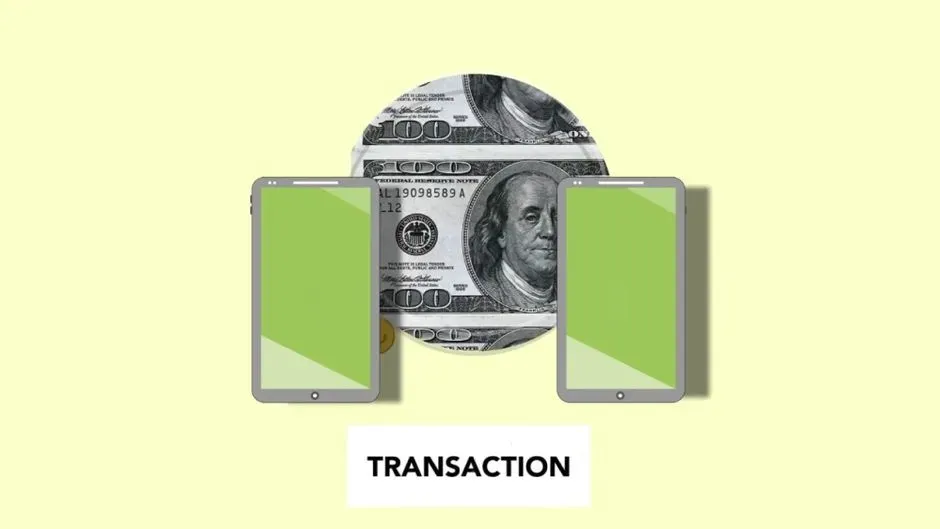
Tracking works best when it’s paired with systems that don’t rely on memory or motivation. Automating transfers removes a lot of the friction that causes people to fall off track. Automation can simplify saving and investing by creating consistency and reducing the need for ongoing decisions, making it easier to prioritize financial goals while minimizing the risk of forgetting or delaying contributions.
This is where tracking and automation reinforce each other rather than compete. Someone who automates a transfer still needs to check in periodically to make sure the numbers reflect their goals. The tracking habit becomes the feedback loop that tells them whether the automated system is actually working as intended.
Why consistency outperforms intensity

Why consistency outperforms intensity (Image Credits: Unsplash)
A common mistake is treating budgeting like a diet, an intense burst of restriction followed by burnout. Advisors tend to push back on that model. Motivation changes from day to day, but systems create consistency, and people who build lasting financial habits often rely on systems that support positive financial behavior over time.
Small, steady check-ins beat occasional deep dives. Financial success does not require perfect decisions, since long-term success usually comes from making good decisions consistently over many years, and small improvements often create significant financial results when maintained over time. That framing takes some of the pressure off, which ironically makes the habit easier to keep.
Connecting tracking to written financial plans

Connecting tracking to written financial plans (Image Credits: Pexels)
The habit of tracking tends to overlap with another strong predictor of financial health, having an actual written plan. Households that document their finances in some structured way tend to show measurably different outcomes. The Federal Reserve’s 2022 Survey of Consumer Finances revealed that households with a written financial plan had a median net worth 2.5 times higher than households without one.
A similar pattern shows up with automated saving specifically. According to a 2022 Fidelity Investments report, Americans who automated their savings contributions saved 2.5 times more annually than those who saved manually. Both figures point in the same direction: structure and visibility tend to outperform good intentions alone.
Starting small without overhauling everything
Starting small without overhauling everything (Image Credits: Pexels)
Advisors generally warn against trying to fix every financial habit at once. The people who succeed tend to start narrow and build from there. There is value in starting small, since trying to overhaul your life overnight is unrealistic, and it’s better to pick one or two small habits and build from there.
For someone who has never tracked a single expense, that might mean simply writing down purchases for one month before setting formal budget categories. You can write each expense down in a notebook, use a spreadsheet, or link your bank account to a budgeting app, and it’s a good idea to track expenses for at least one month to get a realistic idea of what you spend. The goal at first isn’t perfection. It’s simply building the muscle of paying attention.
The takeaway for anyone rethinking their finances

The takeaway for anyone rethinking their finances (Image Credits: Stocksnap)
The evidence doesn't suggest that tracking spending is some secret formula that guarantees wealth. What it does suggest is that the habit of paying close, consistent attention to where money goes tends to precede better decisions almost every time. Advisors keep returning to this idea not because it's flashy, but because it's the one behavior that seems to hold up across income levels, life stages, and financial goals. For anyone looking for a place to start, the answer isn't a new investment strategy or a complicated spreadsheet. It's simply looking, regularly and honestly, at where the money is already going.