
Summer brings out the folding tables, the string lights, and that one neighbor who insists on grilling for forty people with a single propane tank. Block parties run on goodwill more than anything else, and that goodwill is surprisingly easy to spend. A few small missteps can turn a fun afternoon into the reason your name quietly disappears from next year's group chat.
Showing up without bringing anything, then eating like you catered the whole thing
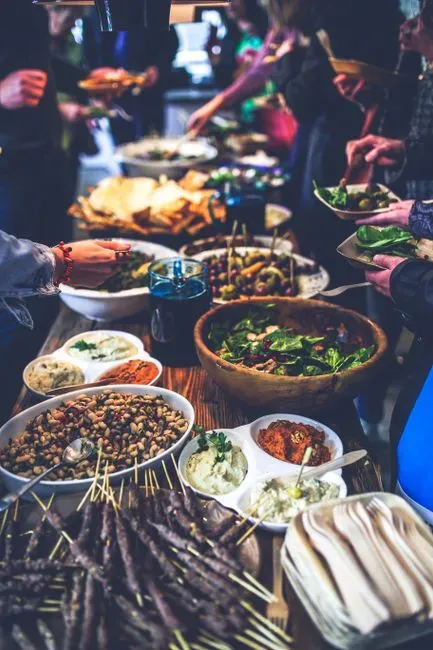
Showing up without bringing anything, then eating like you catered the whole thing (Image Credits: Pexels)
Block parties usually work on an informal barter system. Someone brings burgers, someone else brings a salad nobody asked for but everyone eats anyway, and somebody always ends up with three extra bags of chips. When a person arrives empty handed and heads straight for the food table, it registers fast with the people who spent the morning shopping and prepping.
It is not really about the cost of a bag of ice or a case of soda. It is about the appearance of not caring whether the event succeeds. Neighbors tend to remember who pitched in and who just showed up for the free plate, and that memory sticks around longer than the leftovers do.
Letting your kids or pets run wild through other people's yards and coolers
Letting your kids or pets run wild through other people's yards and coolers (From geograph.org.uk, <a href="https://commons.wikimedia.org/w/index.php?curid=13634215" target="_blank" rel="noopener">CC BY-SA 2.0</a>)
A block party often spills across several front lawns, and that shared space only works if everyone treats it with a bit of care. Unsupervised kids digging through someone else's cooler, or a dog off leash trotting into a stranger's folding chair setup, creates tension fast. Most neighbors will not say anything in the moment, but they notice, and they talk about it later.
Part of the appeal of a block party is that it feels safe and low key, almost like an extension of your own yard. When that sense of order gets disrupted by someone not watching their kid or their dog, it chips away at the relaxed vibe the whole event depends on. People tend to invite back the neighbors who make the gathering easier, not harder.
Turning up the music louder than everyone else's

Turning up the music louder than everyone else's (Image Credits: Unsplash)
Speaker systems have gotten cheap and powerful, which means it is easier than ever for one person's playlist to drown out every other conversation on the block. A little music adds atmosphere. A booming subwoofer that rattles the folding tables two houses down usually just annoys people who came to talk, not to attend a concert.
Noise complaints are one of the most common friction points at outdoor neighborhood gatherings, and block parties are no exception. Local noise ordinances in many cities set decibel limits for residential areas, and even informal events can run into trouble if someone calls it in. Beyond the legal side, cranking the volume without asking is a quick way to make people associate you with the headache rather than the fun.
Parking in a way that blocks driveways or emergency access
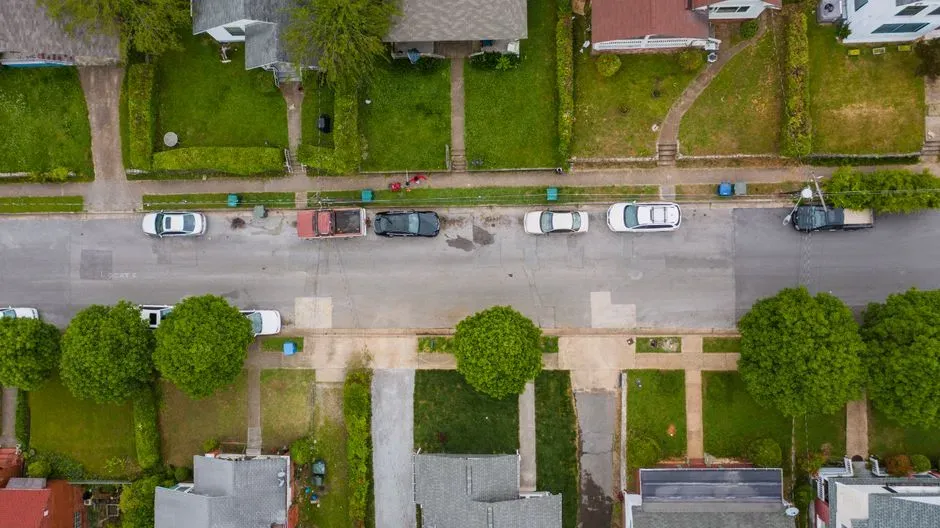
Parking in a way that blocks driveways or emergency access (Image Credits: Pexels)
Street closures for block parties usually require a permit from the local municipality, and part of that process typically involves keeping enough clearance for emergency vehicles. Many cities that issue block party permits specifically require organizers to maintain access lanes for fire trucks and ambulances even while the street is closed to regular traffic. When someone parks carelessly across a driveway or narrows that lane just to be closer to the action, it puts the whole event at risk.
It also creates a smaller, more immediate problem: the neighbor who cannot get their car out to leave for a shift, or the one who now has to ask three people to move their vehicles. That kind of hassle gets remembered. Being the person who made parking harder is an easy way to get quietly left off the list next summer.
Bringing up neighborhood drama or gossip in front of everyone

Bringing up neighborhood drama or gossip in front of everyone (Image Credits: Pexels)
Block parties tend to work best when they stay light. People want a few hours away from HOA disputes, property line disagreements, or whatever happened at the last neighborhood meeting. Someone who uses the gathering to relitigate an old argument, or worse, to gossip loudly about another neighbor who might be standing twenty feet away, changes the mood for everyone nearby.
These events are often one of the few times an entire street actually interacts face to face, and that makes them oddly fragile. A single tense exchange can color how people remember the whole afternoon. Neighbors who keep things easygoing tend to get remembered fondly, while the ones who stir up old conflicts tend to get a polite but firm exclusion the following year.
Overstaying the setup or cleanup without helping
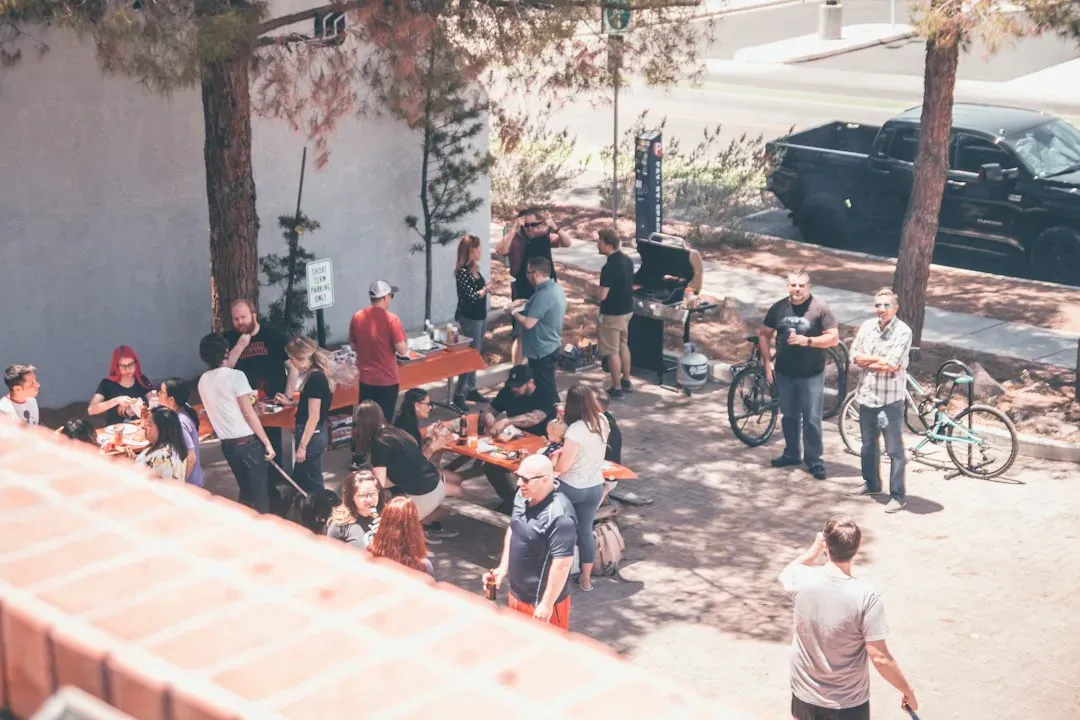
Overstaying the setup or cleanup without helping (Image Credits: Unsplash)
Someone has to arrive early to set up tables, chairs, and grills, and someone has to stay late to fold it all back up, sweep the street, and haul the trash bags to the curb. It is common at these gatherings for a small group of neighbors to handle the bulk of that labor while others drift in right as the food is ready and drift out the moment dessert is gone.
Skipping the setup is understandable if someone has a schedule conflict. Skipping the cleanup while still enjoying the party from start to finish is a different story, and it tends to stand out to the small crew left holding trash bags at nine at night. Offering to help fold a table or carry a cooler back inside costs almost nothing and buys a surprising amount of goodwill.
Block parties run on small, unspoken agreements about effort and courtesy. Nobody writes these rules down, but everyone on the street tends to know them anyway, and everyone notices when they are broken. The neighbors who keep getting invited back are usually just the ones who show up, help a little, and leave things a bit better than they found them.