
Most parenting conversations tend to frame styles as a competition. One parent is the “strict” one, the other is the “fun” one, and children supposedly end up navigating some kind of confused middle ground. The reality, backed by decades of research, is more interesting. Each parent has a unique approach to interacting with and guiding their children, and parents often blend characteristics from multiple categories. That blending, when done thoughtfully, can be genuinely powerful.
The study of parenting styles and parental stress has undergone significant evolution in recent years, necessitating a critical reevaluation of traditional paradigms and the development of more nuanced, multidimensional approaches, reflecting the changing nature of family dynamics, societal structures, and our understanding of child development in the 21st century. The question is no longer which single style is best, but how two parents can combine different strengths into something that actually benefits their child.
The Authoritative Anchor: Why One Parent Leading With Structure Works

The Authoritative Anchor: Why One Parent Leading With Structure Works (Image Credits: Pexels)
The authoritative parenting style is an approach to child-rearing that combines warmth, sensitivity, and the setting of limits. Parents use positive reinforcement and reasoning to guide children, and they avoid resorting to threats or punishments. When one parent in a household consistently leads with this approach, it provides children with a reliable framework. Rules feel reasoned rather than arbitrary, and that distinction matters enormously to a child's developing sense of fairness.
Kids raised by authoritative parents are more likely to become independent, self-reliant, socially accepted, academically successful, and well-behaved. They are also less likely to report depression and anxiety, and less likely to engage in antisocial behavior like delinquency and drug use. When this style anchors a family's dynamics, the second parent has more freedom to introduce complementary traits without undermining the overall structure.
The Warmth Amplifier: How a Permissive Lean Can Actually Help

The Warmth Amplifier: How a Permissive Lean Can Actually Help (Image Credits: Pexels)
While children of permissive parents typically possess good self-esteem and decent social skills, they may also be impulsive, demanding, and struggle with self-regulation. On its own, permissiveness carries real risks. Paired with a structuring partner, though, the warmth and emotional openness it brings can act as a genuine asset. Children who feel unconditionally accepted by at least one parent tend to be more willing to take risks, ask for help, and express vulnerability.
Research suggests that even the effects of both permissive and authoritarian styles tend to be positive, as long as these styles are combined with the authoritative one. When it comes to exposure to different parenting styles during childhood, lack of authoritative parenting was identified as the most important factor in lower life satisfaction among young people. The permissive parent, in this setup, isn't causing harm. They're softening edges and building emotional safety, provided the household still has meaningful structure.
Cooperative Co-Parenting: The Difference Alignment Makes

Cooperative Co-Parenting: The Difference Alignment Makes (Image Credits: Unsplash)
Co-parenting refers to the cooperation, coordination, and management of conflict between parents and parent figures who raise children. Scientific research has shown that the quality of the co-parenting relationship affects the well-being of parents and the development of children in any family structure, beyond other factors such as a parent-child relationship. The actual styles matter less than whether parents feel they're genuinely working together rather than against each other.
When parents' perspectives on co-parenting were positive and congruent, children fared best. Children also fared well when co-parenting quality was moderate, and mothers were less positive than fathers. This is a useful reminder that perfection isn't the target. What children need is a general sense that both parents respect each other's role, even when their specific approaches differ noticeably.
Emotion Coaching Meets Discipline: Combining Two Powerful Tools

Emotion Coaching Meets Discipline: Combining Two Powerful Tools (Image Credits: Pexels)
Parental emotion coaching involves acknowledging and validating children's feelings, as well as guiding them on how to manage intense or negative feelings. When one parent specializes in this area while the other holds firm on behavioral expectations, the combination creates something children rarely get from a single approach alone: the feeling that their inner world is understood, and that the outer world still has rules.
Gottman and others found that maternal coaching regarding emotions predicted a number of positive outcomes in children, including their self-regulation skills. A meta-emotion philosophy and behaviors emphasizing supportive reactions to youth's emotions may serve to buffer the harmful impact of family stress on youth. A parent who coaches emotions while the other reinforces consistent limits isn't creating confusion. They're actually covering both the emotional and behavioral dimensions of healthy development simultaneously.
Structured Freedom: The Authoritative-Democratic Blend
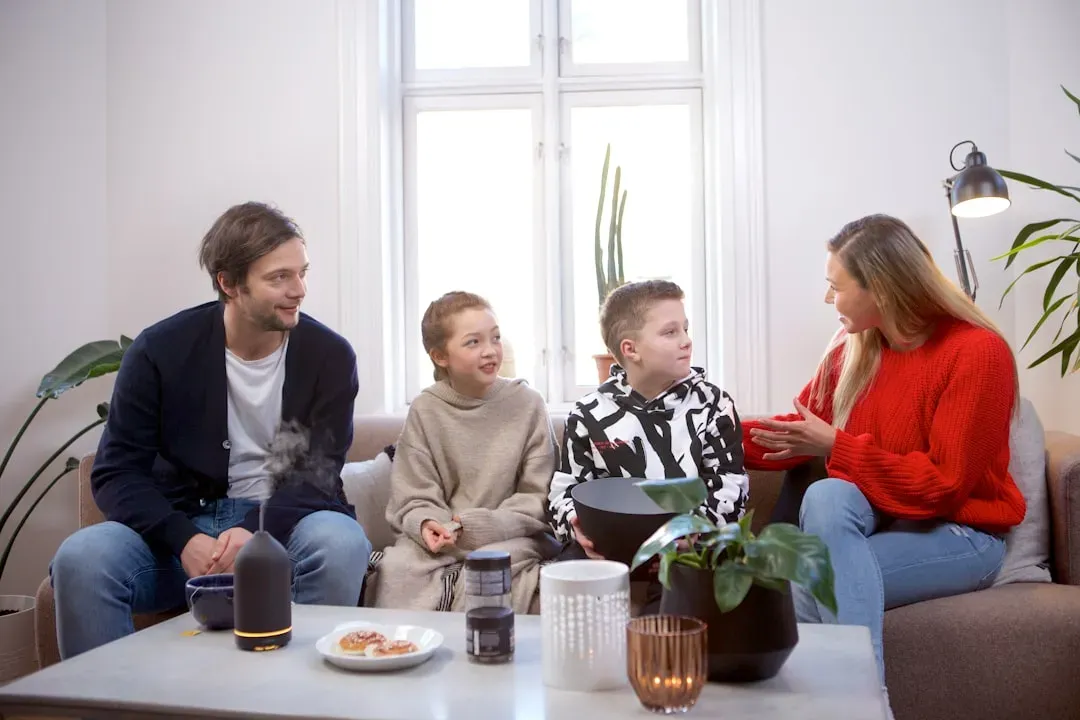
Structured Freedom: The Authoritative-Democratic Blend (Image Credits: Unsplash)
Democratic parenting emerges as a critical factor in promoting children's well-being, equitable access to education, and the fostering of peaceful societies. When one parent leans toward a democratic approach and the other holds an authoritative stance, the combination tends to produce children who feel heard without feeling entitled. The democratic lean gives children practice in voice and reasoning. The authoritative presence ensures those conversations still happen within boundaries.
Authoritative parenting has been linked to children in aspects of positive peer relations since the approach cultivates empathy, communication, and problem-solving abilities in a child. A parent who adds democratic elements, like family discussions, shared decision-making for age-appropriate choices, or collaborative problem-solving, deepens those social capacities further. Together the two approaches reinforce rather than cancel each other.
The Structure-Sensitivity Split: When One Parent Holds the Line and the Other Holds Space

The Structure-Sensitivity Split: When One Parent Holds the Line and the Other Holds Space (Image Credits: Pexels)
Parenting styles affect a child's attachment theory foundation and emotional regulation capabilities. Authoritative responsiveness encourages secure base dominance and better emotional regulation because parental warmth and behavior impose limits to teach children how to regulate their feelings appropriately. In practice, many healthy two-parent households function through a natural division where one parent is primarily the boundary-holder and the other is primarily the emotional safe harbor. Children figure this out quickly and use both accordingly.
The "sweet spot" for parenting, as strongly suggested by decades of research, involves parents actively and thoughtfully engaging with both the emotional and behavioral needs of their child. When two parents divide those dimensions between them rather than both trying to cover everything equally, children effectively receive both. The key is that neither parent undermines the other when those roles diverge. Quiet consistency between the two adults matters more than visible uniformity.
Flexible Adaptation: Adjusting the Dual Approach as Children Grow

Flexible Adaptation: Adjusting the Dual Approach as Children Grow (Image Credits: Pexels)
Researchers have questioned whether it makes sense to think of a parent as consistently authoritative, or permissive, or authoritarian. Instead, we may shift our approach depending on the situation. This flexibility is especially relevant when two parents are consciously combining styles. A teenager needs a different balance than a five-year-old. The approach that worked brilliantly at age eight may need recalibration by fourteen, and parents who have already built a cooperative framework tend to adapt more successfully.
Research reveals that parenting style exerts a distinct influence on children's development, separate from socio-economic factors such as education and race, and that parenting styles adapt to the evolving environment in which children are raised. Current issues like the incorporation of technology in our lives, working parents, and issues to do with mental health among parents only cement the fact that parenting is a dynamic process. Two parents who communicate openly about what their child currently needs, and who adjust their respective roles accordingly, are practicing one of the most evidence-supported strategies available.
The clearest takeaway from the research isn't that parents must match each other perfectly. It's that the way that parents work together in their roles as parents, the co-parenting relationship, has been linked to parental adjustment, parenting, and child outcomes. Different approaches can coexist, complement, and even strengthen each other when the adults behind them are genuinely aligned on what matters most: the child in the middle of it all.