
Not that long ago, the path through life looked very predictable. You grew up, graduated, found someone suitable, married in your mid-twenties, and had children before thirty. That was not a suggestion – it was the plan, written in invisible ink across every family dinner table in America. Deviation from that plan came with raised eyebrows, unsolicited advice, and the occasional tearful phone call from a parent wondering why you weren’t “settling down.”
Something has shifted. Profoundly. The expectations that families once carried about relationships – when to find a partner, what kind of partner to find, whether to marry at all, and how to define commitment – have been quietly but dramatically rewritten over the last few decades. The changes aren’t just cultural noise. They show up in hard data, in research labs, and in millions of individual conversations between parents and adult children who are navigating a world their elders barely recognize. Let’s dive in.
Marriage Is No Longer the Default Starting Line

Marriage Is No Longer the Default Starting Line (Image Credits: Pexels)
For generations, marriage was the assumed first step into real adulthood. A rite of passage, a social contract, a signal that you had arrived. Families expected it and planned for it. Today, that assumption has quietly collapsed. In 2024, U.S. adults were less likely to be married than at almost any point since the Census Bureau began tracking marital status in 1940, and fewer people are marrying while doing it later in life. That is not a minor statistical blip. That is a generational realignment.
Fewer adults are married today, but most still hope to be. Slightly less than half of U.S. adults are married (around 46%), down from two-thirds in 1950 according to U.S. Census Bureau data. Think about that contrast for a moment. In your grandparents’ era, being unmarried in your thirties made you an exception. Today, it makes you entirely ordinary. Family expectations had no choice but to follow that shift, even if reluctantly.
The Age of "When Are You Getting Married?" Has Moved Way Later

The Age of "When Are You Getting Married?" Has Moved Way Later (Image Credits: Unsplash)
One of the most concrete ways family expectations have changed is the acceptable age for marriage. Pressure that once arrived in someone’s early twenties has moved noticeably down the calendar – or in some households, disappeared altogether. According to the U.S. Census Bureau, the median age at first marriage is now 30.8 years for men and 28.4 years for women – the highest ages in U.S. recorded history, up from 23.5 and 21.1 respectively in 1975.
Historically, the average age for first marriages was much younger – around 23 for men and 20 for women in the 1950s. The recent shift toward older first-marriage ages reflects broader social changes and evolving personal priorities. Families who once expected grandchildren before their own retirement now increasingly accept that their adult children are simply living differently. Honestly, it’s hard to say for sure how much of that acceptance is genuine versus resigned – but the data shows the shift is real and accelerating.
Cohabitation Went from Scandal to Standard

Cohabitation Went from Scandal to Standard (Image Credits: Unsplash)
Living together before marriage was, for a very long time, something that happened but was rarely discussed openly at family gatherings. It carried stigma, especially in more religious or traditional households. That cultural weight has largely evaporated. Today, half of Americans say couples who live together before getting married are more likely to have successful relationships, and nearly three in five adults between ages 18 and 44 have lived with an unmarried partner at some point.
In 2022, the number of cohabiting adults aged 50 and older was nearly quadruple what it was in 2000, and increasingly, cohabitation is not a step on the path to marriage but a destination in itself. Family expectations have had to accommodate this reality. What was once framed as “living in sin” by older generations is now, for many families, simply acknowledged as normal adult life. The shift in tone, from moral judgment to casual acceptance, speaks volumes about how deeply those expectations have transformed.
Gen Z Is Redefining What Commitment Looks Like

Gen Z Is Redefining What Commitment Looks Like (Image Credits: Unsplash)
Here is the thing about Gen Z that often surprises people: they are not anti-marriage. Far from it. Gen Z values marriage but is rethinking family – the majority, around 81%, still believe in marriage and hope to wed someday, yet they’re rethinking what family and commitment look like in modern life. They want it, they just want it on their own terms and at their own pace. That distinction matters enormously.
Millennials were more cynical about their odds for long-term marital success, but Gen Z has adopted a more idealistic attitude – with many saying they want to find their soulmates, more than 40% in serious relationships, 27% actively looking for “the one,” and an overwhelming 93% interested in the idea of marriage. Traditional ideas of and roles in marriages have changed, with rigid constructs of femininity and masculinity turned on their head, and more young people expecting equal partnership in terms of household duties and breadwinning. Families expecting their Gen Z children to simply replicate the old model are, increasingly, finding that model quietly rejected.
Cultural Backgrounds Still Shape Expectations Very Differently
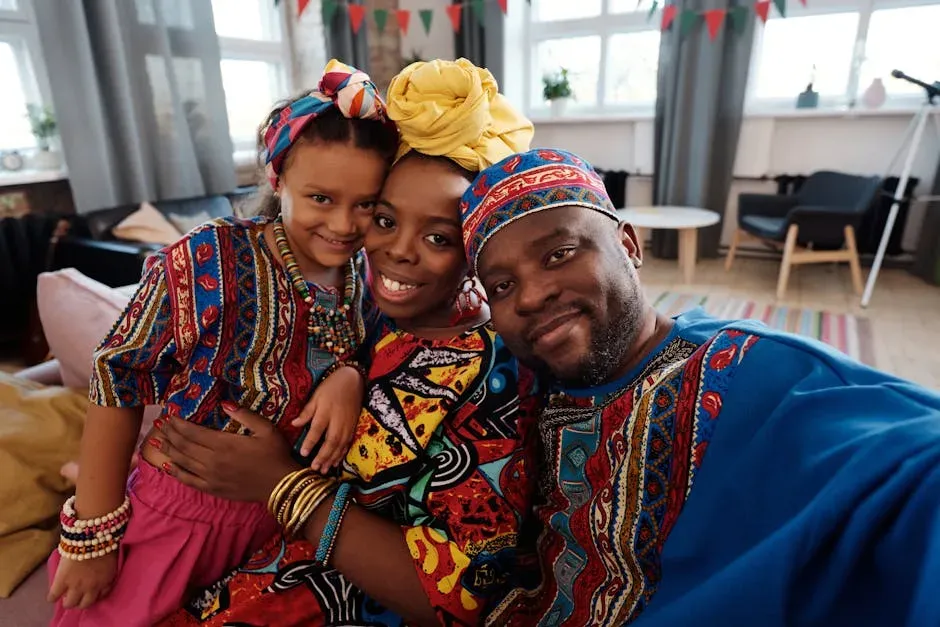
Cultural Backgrounds Still Shape Expectations Very Differently (Image Credits: Pexels)
Let’s be real: family expectations around relationships are not uniform across cultures, and that gap has not closed. Family expectations and involvement can vary significantly across cultures. In many collectivist cultures – including those in Asia, the Middle East, and Latin America – family plays a central role, with members often influencing decisions related to relationships and marriage, including partner selection and wedding arrangements.
Conversely, in more individualist cultures such as those in North America and Western Europe, family involvement in relationships is often secondary to the relationship itself, and individuals are generally encouraged to make independent choices. This tension reflects a shift in societal attitudes where younger generations increasingly value individualism and autonomy within their marriages, often clashing with traditional expectations of family involvement. The friction between these two worldviews plays out in real families every single day, especially in immigrant households caught between two sets of norms simultaneously.
The "Gray Divorce" Phenomenon Changed How Older Families See Relationships

The "Gray Divorce" Phenomenon Changed How Older Families See Relationships (Image Credits: Pixabay)
It is not only young people who are reshaping relationship expectations. Something remarkable has been happening among older adults that has quietly shifted how entire families think about long-term commitment. As “gray divorces” among adults over 50 rise, the share of divorced adults aged 50 and over is three times higher than it was in 1990, rising from roughly 5% to about 15% in 2022, according to a 2024 report from the National Center for Family and Marriage Research.
Gray divorce stands out as a remarkable trend. While overall divorce rates fall, people over 50 are divorcing twice as much as they did in 1990, and women aged 65 and older show an even more dramatic change – their divorce rate jumped from 1.4 per 1,000 in 1990 to 5.6 in 2021. When parents and grandparents themselves begin divorcing in their fifties and sixties, the implicit family message that marriage is permanent becomes harder to pass on to younger generations. It is a feedback loop nobody quite anticipated.
Public Attitudes Toward Marriage as a Social Institution Have Cooled

Public Attitudes Toward Marriage as a Social Institution Have Cooled (Image Credits: Unsplash)
Beyond individual families, something broader is shifting in how society collectively values marriage as an institution. The expectation that marriage is simply what adults do – the invisible social contract – is losing its grip. The American Family Survey 2025 found that only 45% of respondents agreed that “society is better off when more people are married,” down from 53% in 2018. That is a meaningful erosion of one of the most foundational social expectations in Western life.
Survey data also reveals that 54% of people agree that “being legally married is not as important as having a personal sense of commitment to your partner,” up from 44% in 2018. Marriage is no longer seen as the only path to a fulfilling life, with many individuals choosing long-term cohabitation, prioritizing careers, or embracing singlehood – and the stigma around remaining unmarried is gradually fading as personal happiness takes precedence over societal expectations. When families are embedded in a society that increasingly shrugs at the question of marriage, it becomes harder for individual families to maintain the old pressure. The cultural scaffolding is simply no longer there to support it.
Well-Being Research Still Makes a Case for Marriage – Just Differently

Well-Being Research Still Makes a Case for Marriage – Just Differently (Image Credits: Unsplash)
Despite all of the loosening expectations, the research on marriage and personal well-being has not disappeared. In fact, some of the most recent findings are genuinely striking. Comparing across relationship status, adults who are married are by far the happiest. Gallup data from 2020 to 2023 show that marital status is a stronger predictor of well-being for American adults than education, race, age, and gender. That finding deserves to sit with you for a moment.
In 2023, married adults aged 25 to 50 were 17 percentage points more likely to be thriving than adults who had never married, up from 12 percentage points in 2009. The way families talk about this research, though, has changed. Where older generations used it as a mandate – “you must marry” – more thoughtful families today use it as context, acknowledging that a good marriage can genuinely enrich life without treating the institution as an obligation. That is a healthier, more honest conversation, and it is one more sign that family expectations are slowly growing up alongside the people they are meant to guide.
What does all of this mean for families navigating relationships in 2026? The expectations have shifted from rigid social scripts to something messier, more personal, and arguably more humane. The pressure hasn’t vanished entirely – it’s just wearing different clothes. What do you think: has your own family found a better way of holding these expectations, or does the old pressure still linger at the dinner table?