
Nobody stands at an altar thinking it will end in a courthouse. When you’re young and in love, the future feels like an open field, and the idea of a permanent commitment seems less like a risk and more like an obvious next step. That confidence is one of the most seductive parts of marrying young.
But the data is humbling. Research suggests that getting married at a younger age genuinely does increase the odds of divorce. One study identified age 32 as an optimal age for marriage, with every year before that associated with roughly an 11 percent higher likelihood of ending in divorce. That’s not a reason to never marry young. It is, however, a reason to understand what tends to go wrong. Here are eleven of the most common and honest reasons young marriages unravel.
1. You Hadn't Finished Becoming Yourself Yet

1. You Hadn't Finished Becoming Yourself Yet (Image Credits: Unsplash)
Younger couples often have less life experience and may not be fully prepared for the demands of a lifelong partnership. Decisions made early in life can change as people grow, causing couples to drift apart. This isn’t a character flaw. It’s simply human development running its natural course.
The stage of identity development and exploration becomes especially transformational for young adults, as they can unlearn maladaptive communication patterns through independence from their parents and learn effective communication through opportunities in romantic relationships. When two people marry before that process is complete, they’re essentially committing to versions of themselves that may not last very long.
2. Marrying Too Young Was Cited as a Direct Cause

2. Marrying Too Young Was Cited as a Direct Cause (Image Credits: Pexels)
In a well-known study on divorce, the most often cited reasons at the individual level were lack of commitment at 75 percent, infidelity at nearly 60 percent, and too much conflict and arguing at nearly 58 percent, followed by marrying too young at 45 percent. That’s nearly half of all respondents pointing directly at age as a contributing cause.
Getting married too young was reported as a major contributing factor to divorce by 45 percent of individuals and by at least one partner in over 61 percent of couples. What makes this finding especially striking is that the people reporting it had already lived through the outcome. This wasn’t speculation. It was reflection.
3. The Numbers Were Working Against You from the Start

3. The Numbers Were Working Against You from the Start (Image Credits: Pexels)
According to the Bureau of Labor Statistics, couples who marry before age 18 have nearly a 48 percent divorce rate within ten years. Those who wait until after age 25 have only about a 25 percent divorce rate in the same timeframe. That gap is hard to ignore.
The sweet spot appears to be ages 28 to 32, with couples who marry in this range showing the lowest divorce risk. Couples who marry before age 25 face significantly higher divorce risks, while those who marry between 28 and 32 tend to have the lowest likelihood of divorcing. None of this is destiny, but statistics do reflect real patterns across many real lives.
4. Financial Stress Hit You When You Were Least Prepared

4. Financial Stress Hit You When You Were Least Prepared (Image Credits: Pexels)
Research suggests that financial stress can negatively influence marital outcomes. Various financial stressors have been found to predict lower levels of marital satisfaction, higher levels of marital distress, decreased marital quality, and higher rates of divorce. Young couples, often starting careers or carrying student debt, are especially exposed to these pressures early in marriage.
Young couples frequently fight over issues such as shared financial responsibility, unequal financial status, undisclosed financial situations, overspending, and lack of financial support. The Institute for Divorce Financial Analysts reports that financial stress contributes to approximately 40 percent of all divorces in the United States. Marrying young often means starting that financial journey before either person has solid footing.
5. Communication Skills Were Still Developing

5. Communication Skills Were Still Developing (Image Credits: Pexels)
Communication problems affect more than half of divorcing couples, leading to emotional disconnection and unresolved relationship conflicts. For young married couples in particular, this is a serious vulnerability. Conflict resolution is a skill, and most people are still learning it in their twenties.
Overall, participants in divorce studies indicated that conflicts were not generally resolved calmly or effectively. Communication problems increased in frequency and intensity throughout their marriages, which at times coincided with lost feelings of positive connection and mutual support. By the end of the marriage, there was a significant lack of effective communication. What starts as small arguments can calcify over years into something much harder to undo.
6. You Grew in Completely Different Directions

6. You Grew in Completely Different Directions (Image Credits: Unsplash)
Sometimes couples simply grow apart over time. They may find that they want different things in life or have disparate values, and this incompatibility often leads to divorce. The National Survey of Marital Strengths highlights incompatibility as one of the leading reasons for divorce. When you marry in your late teens or very early twenties, this kind of divergence is almost predictable.
The person you are at 21 and the person you become at 31 can be genuinely different people. Career paths shift. Values evolve. Priorities that once felt shared can quietly separate over a decade. Age of marriage is not the potent, straightforward predictor of marital outcomes it apparently was a generation or two ago, but the underlying risk of personal change within a young marriage remains very real.
7. Lack of Commitment Crept in Over Time

7. Lack of Commitment Crept in Over Time (Image Credits: Pexels)
Lack of commitment is consistently cited as the number one cause of divorce, reported by between 75 and 85 percent of divorced individuals in national surveys. This is worth sitting with for a moment. More than three quarters of people who divorced said that one or both partners simply stopped trying to make the relationship work.
Lack of commitment ranks highest among reasons for divorce, with many saying that one or both partners stopped trying to make the relationship work. Young couples, who often haven’t yet developed the discipline or tools to nurture a long-term relationship through difficult stretches, are particularly susceptible to this slow erosion of effort.
8. Infidelity Entered the Picture

8. Infidelity Entered the Picture (Image Credits: Unsplash)
The most often cited reasons for divorce were lack of commitment at 75 percent, infidelity at nearly 60 percent, and too much conflict at nearly 58 percent. Infidelity is devastatingly common and shows up consistently across every major study on divorce. Young marriages are not immune, and in some ways may be more vulnerable during the years when partners are still forming their adult identities and social lives.
Nearly 69 percent of divorces are initiated by women, often due to unmet needs and infidelity. When a young marriage hasn’t yet built deep reserves of trust, connection, and shared history, betrayal can be harder to survive. The foundation simply isn’t thick enough yet to hold the weight of it.
9. The First Few Years Were a Rude Awakening
9. The First Few Years Were a Rude Awakening (Image Credits: Pexels)
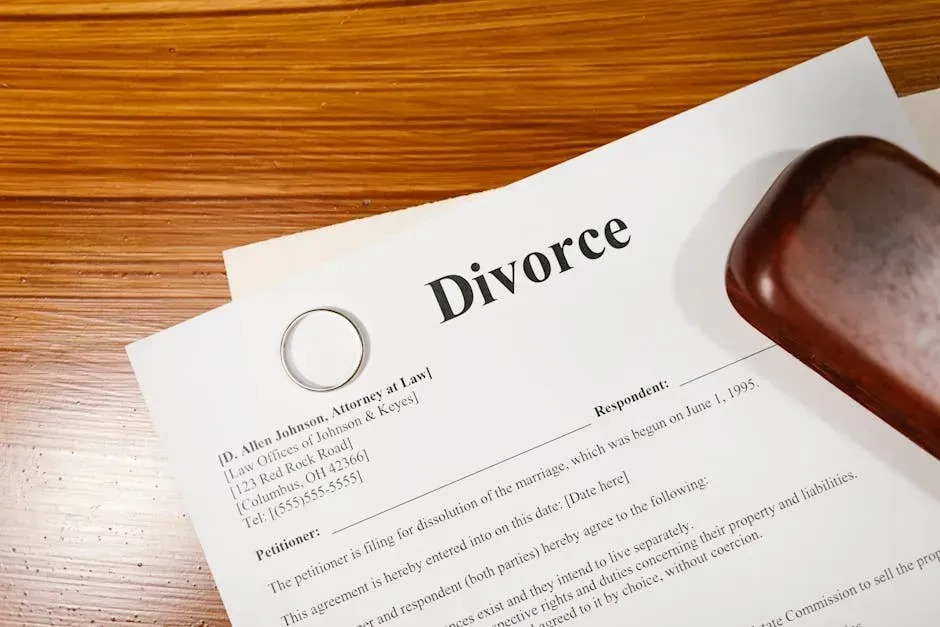
Young couples often rush into marriage without knowing the stresses of living with a partner for the rest of their lives. After a period of complete happiness which usually lasts from one to five years, there is constant fighting, ultimately leading to divorce. The honeymoon phase ends for everyone, but when you married young and relatively inexperienced, the contrast can feel especially jarring.
About one in five first marriages ends within five years. By the ten-year mark, about one third of marriages have ended in divorce. That timeline maps closely onto the years when young couples are also managing the biggest identity and life transitions of their adult lives, making the early window particularly fragile.
10. You Didn't Know Each Other Long Enough Before the Wedding

10. You Didn't Know Each Other Long Enough Before the Wedding (Image Credits: Unsplash)
Some participants in divorce studies reported that they had only known their partners for short periods of time before their marriage and wished they had dated their partners longer in order to gain a better perspective on the relationship or to make a more rational decision about whom they should marry. Rushing from dating to wedding leaves a lot of important information undiscovered.
Additional comments from divorced individuals included reports that participants were too young to make mature, objective decisions regarding their marriage decisions. Knowing someone well enough to share a life with them takes time, and for many young couples, the excitement of love substitutes for that slower, more deliberate kind of knowledge-building that strengthens a lasting partnership.
11. The Broader Patterns of Commitment Were Simply Harder to Maintain

11. The Broader Patterns of Commitment Were Simply Harder to Maintain (Image Credits: Pexels)
The average first marriage that ends in divorce lasts about eight years. For couples who marry very young, that eight-year mark often lands right in the middle of their most personally transformative decade. Career changes, shifts in ambition, geographic moves, and new social circles all converge at once.
Numerous social and economic factors influence marital stability. Age at marriage, education level, and income status each have a significant impact on a couple’s likelihood of staying together. Younger couples face a higher divorce risk compared to those who marry later. Marrying young doesn’t guarantee failure, but it does mean entering a difficult institution during the most unstable and changeable chapter of adult life, with the least experience to draw on when things get hard.
Looking back on a young marriage that didn’t survive, what’s often missing isn’t love. It’s time. Time to know yourself. Time to know the other person. Time to build the patience and communication skills that long marriages actually run on. The wedding is one day. The marriage is every single day after it.