
Kids today have GPS trackers on their phones and parents who know their location within a few feet at any moment. Back in the 1980s, the rule was simpler: be home when the streetlights come on. That single instruction summed up an entire philosophy of raising children that would look almost reckless by today’s standards, yet it produced a generation that mostly turned out fine.
Looking back at how households operated during that decade offers a strange kind of nostalgia mixed with disbelief. Some of these rules seem charming now, while others make modern parents wince. Either way, they shaped childhood for millions of people who are now raising kids of their own with a completely different rulebook.
1. Seatbelts and car seats were optional suggestions

1. Seatbelts and car seats were optional suggestions (Image Credits: Pexels)
Piling into the back of a station wagon without a seatbelt wasn't just common, it was expected. Kids bounced around in truck beds, sat on laps in the front seat, and sometimes rode in the far back of a wagon facing the rear window, waving at cars behind them. Federal child passenger safety laws didn't exist nationwide until states started passing them throughout the late 1970s and 1980s, and enforcement was spotty at best.
Booster seats as we know them today weren't standard practice, and many families treated seatbelts as something you used only on long highway trips, if at all. The idea of a five point harness for a toddler would have struck most parents as excessive. Car safety simply wasn't the cultural priority it later became once crash test data and advocacy groups changed public expectations.
2. Bike helmets barely existed

2. Bike helmets barely existed (Image Credits: Pexels)
Riding a bike without a helmet wasn't a rebellious choice in the 80s, it was just how everyone rode. Helmets were bulky, uncool, and mostly associated with competitive cyclists rather than kids cruising the neighborhood. Skateboarding, roller skating, and even early BMX tricks happened bare headed as a matter of course.
Parents weren't ignoring safety so much as operating under a completely different set of assumptions about acceptable risk. Bike helmet laws for children didn't start appearing in the United States until the early 1990s, starting with a few counties and states before spreading more broadly. Until then, a scraped scalp was just considered part of growing up.
3. Corporal punishment was mainstream discipline

3. Corporal punishment was mainstream discipline (Image Credits: Pexels)
Spanking, and sometimes harsher physical discipline, was a widely accepted parenting tool rather than something debated in parenting forums. Many schools still permitted paddling as an official disciplinary measure, and plenty of parents used a wooden spoon or a belt without a second thought about long term psychological research. The phrase "spare the rod, spoil the child" wasn't ironic, it was genuinely how a lot of households operated.
Attitudes have shifted dramatically since then, with research on child development pushing many pediatric and psychological organizations toward recommending non physical discipline strategies. Several countries have since banned corporal punishment entirely in homes and schools. Back then, though, a swat on the backside in the grocery store aisle rarely drew judgmental stares from other shoppers.
4. Unsupervised outdoor play was the default

4. Unsupervised outdoor play was the default (Image Credits: Unsplash)
The classic image of 80s childhood involves a kid leaving the house after breakfast and not coming back until dinner, with parents having little to no idea what happened in between. Neighborhoods functioned as informal playgrounds where groups of children roamed freely, built forts, rode bikes to friends' houses, and negotiated their own conflicts without adult mediation. There were no cell phones to check in, so parents relied on trust and the loose network of other neighborhood adults keeping half an eye on things.
This kind of free range independence gave kids a strong sense of problem solving and social negotiation skills that some researchers argue has diminished in more supervised modern childhoods. It also meant real risks went unmonitored, from traffic to strangers to plain physical injury. Whether this was healthier or simply lucky remains a genuine debate among child development researchers today.
5. Secondhand smoke was everywhere

5. Secondhand smoke was everywhere (Image Credits: Unsplash)
Cigarette smoke filled cars, living rooms, restaurants, and even some school break rooms during the 1980s, and children were rarely shielded from it. It wasn't unusual for a parent to smoke with the car windows rolled up while kids sat in the back seat. Public health messaging about secondhand smoke exposure to children hadn't yet reached the level of urgency it would in later decades.
The U.S. Surgeon General's landmark report on secondhand smoke wasn't released until 1986, and it took years afterward for smoke free policies to become widespread in public spaces. Before that shift, exposing children to tobacco smoke in enclosed spaces simply wasn't treated as the serious health hazard it's now known to be. Parents weren't being careless by the standards of the time, they were operating with less information.
6. Junk food and sugar were everyday staples

6. Junk food and sugar were everyday staples (Image Credits: Unsplash)
Sugary cereal for breakfast, soda with lunch, and candy as an after school reward were completely normal parts of an 80s kid's diet. Nutrition labels existed but weren't scrutinized the way they are now, and portion control wasn't a common household conversation. Fast food outings were treated as a fun family activity rather than an occasional indulgence to be managed carefully.
Childhood obesity rates in the United States were notably lower during the 1980s than they are today, though researchers point to a combination of factors beyond diet alone, including more outdoor activity and less screen time. Parents back then weren't necessarily healthier eaters, they simply lived in a different food and activity environment. The sugary cereal aisle wasn't seen as a minefield, it was just breakfast.
7. Screen time had no limits because screens were limited

7. Screen time had no limits because screens were limited (Image Credits: Unsplash)
Kids in the 80s watched plenty of television, but the sheer variety and accessibility of modern screens simply didn't exist yet. There was no streaming, no tablets, no smartphones, just a handful of channels and whatever was on Saturday morning cartoons. Parents didn't need screen time rules in the way they do now because there were natural limits built into the technology itself.
Video game consoles like the Nintendo Entertainment System, released in North America in 1985, did start creeping into households and sparking early debates about how much play was too much. Even so, the conversation was nowhere near as complex as the one parents face today with algorithm driven apps and endless content feeds. In many ways, today's screen time anxiety simply didn't have room to exist yet.
8. Strangers and neighbors filled in as backup supervision
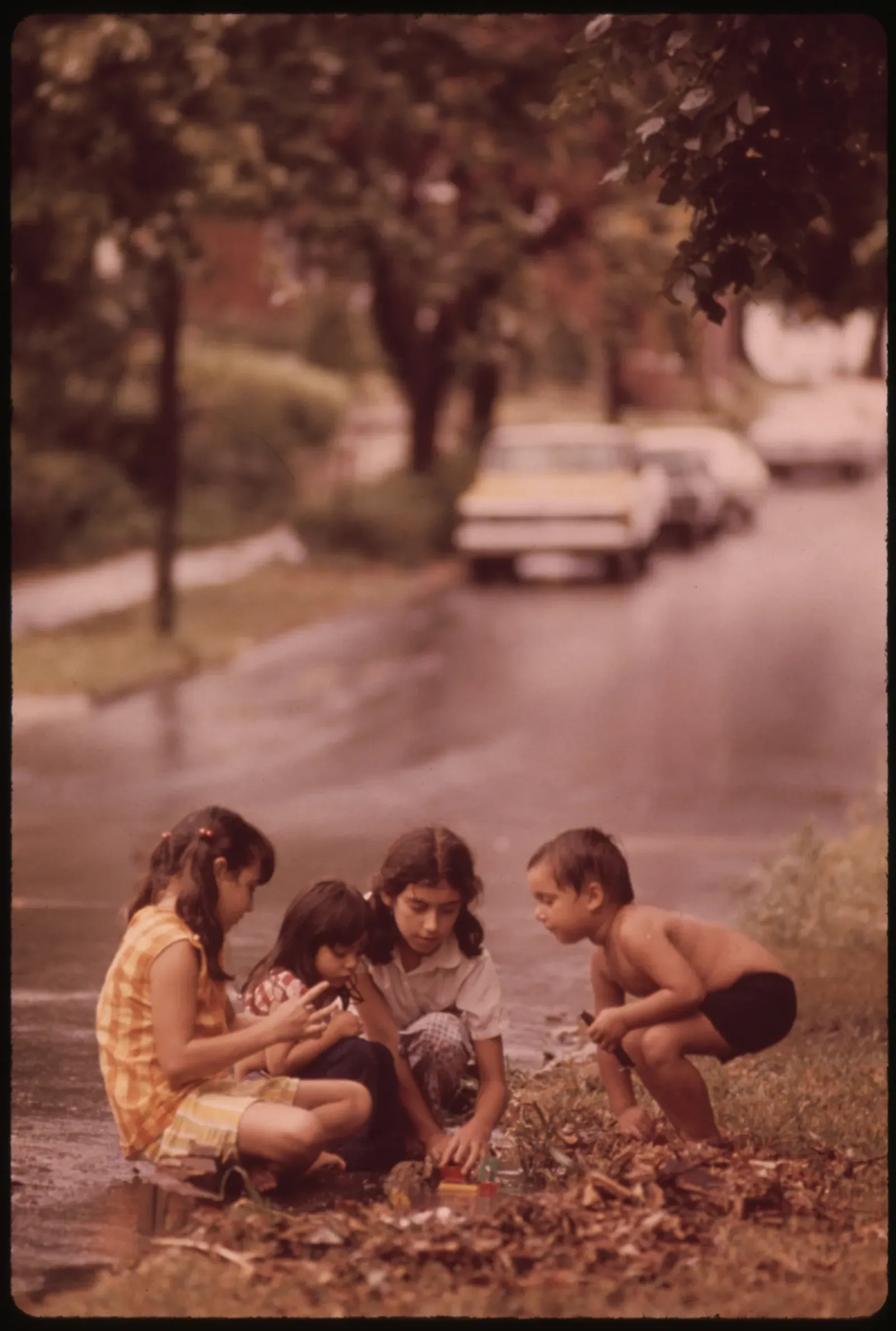
8. Strangers and neighbors filled in as backup supervision (U.S. National Archives and Records Administration, <a href="https://commons.wikimedia.org/w/index.php?curid=17116530" target="_blank" rel="noopener">Public domain</a>)
It was completely normal for a neighbor to yell at a kid for misbehaving, feed them dinner if they showed up at the door, or drive them home if it got dark. This informal web of communal supervision meant parents didn't feel obligated to know exactly where their child was every minute of the day. Trust in neighbors and the broader community played a much larger role in daily parenting decisions.
This model relied on stable, often long term neighborhoods where families knew each other well, something that has become less common as mobility and privacy expectations have changed. Sociologists have written about the decline of this kind of communal childrearing as suburban life became more insular over subsequent decades. For 80s kids, though, an adult on any given street was a potential source of guidance, a ride home, or, just as often, a scolding that got reported straight back to your own parents.