
There was a stretch of time, roughly the late 1960s through the early 1980s, when childhood ran on a completely different operating system. No tracking apps, no scheduled playdates, no constant check-ins. Just a set of unspoken household rules that every kid seemed to know, whether they lived in a suburb, a small town, or a city block.
Looking back, those rules shaped an entire generation's sense of independence and self-reliance in ways that feel almost foreign now. Here are nine of the rules that, if you remember them clearly, mean you came up in a very different world than the one kids know today.
1. Be home before the streetlights turn on

1. Be home before the streetlights turn on (Image Credits: Unsplash)
This was the unofficial curfew system that governed entire neighborhoods long before anyone had a cell phone to check in on. Parents did not need a schedule because the streetlights did the job automatically, flicking on right around dusk and signaling that playtime outside was officially over.
Kids ranged blocks away from home for hours at a stretch, and nobody panicked because the system was simple and understood by everyone. The moment those lights buzzed to life, bikes turned around and kids sprinted the last few hundred feet home, often arriving out of breath and a little dirtier than when they left.
2. Answer the phone properly, every single time

2. Answer the phone properly, every single time (Image Credits: Pexels)
Landlines were shared property, which meant answering the phone came with actual etiquette. Kids were trained to say something polite and clear, never just a mumbled hello, because it might be a parent’s boss, a grandmother, or a neighbor with news.
Cordless phones eventually stretched the leash a little, but the core rule stayed the same well into the 1980s. If the phone rang during dinner, someone got up, answered it respectfully, and took a message on a notepad kept by the kitchen wall for exactly that purpose.
3. Finish what is on your plate before leaving the table

3. Finish what is on your plate before leaving the table (Image Credits: Pexels)
Food waste was not tolerated in most Gen X households, largely because many of their parents had grown up during or right after the Great Depression or through wartime rationing in other parts of the world. That mindset trickled down hard, and clean plates were simply expected at nearly every dinner table.
There was no negotiating with vegetables, no separate kids’ menu mentality, and definitely no walking away from the table until an adult gave the nod. Some households even revisited the same plate at the next meal if it was not finished, which sounds harsh now but was fairly common practice at the time.
4. Do not call adults by their first names

4. Do not call adults by their first names (Image Credits: Pexels)
Every adult in a Gen X kid’s orbit had a title attached to their name, whether it was Mr., Mrs., Miss, Aunt, or Uncle, even if there was no actual family connection. This applied to teachers, neighbors, coaches, and basically any grown-up who crossed a child’s path on a regular basis.
Dropping the honorific was considered disrespectful and would earn a quick correction, sometimes from the adult in question and sometimes from a parent standing nearby. It was less about formality for its own sake and more about a clear, unspoken hierarchy between kids and adults that most households enforced without much explanation.
5. Entertain yourself, because nobody is going to do it for you

5. Entertain yourself, because nobody is going to do it for you (Image Credits: Pexels)
Structured activities existed, but they were nowhere near as constant or curated as they are for kids today. Boredom was treated almost like a personal problem to solve rather than something a parent needed to fix immediately.
This meant kids built forts, invented games with barely any rules, or spent entire afternoons riding bikes with no destination in mind. Complaining about having nothing to do usually resulted in being handed a chore, which taught most kids to keep their boredom to themselves fairly quickly.
6. Walk or ride your bike to school, no questions asked
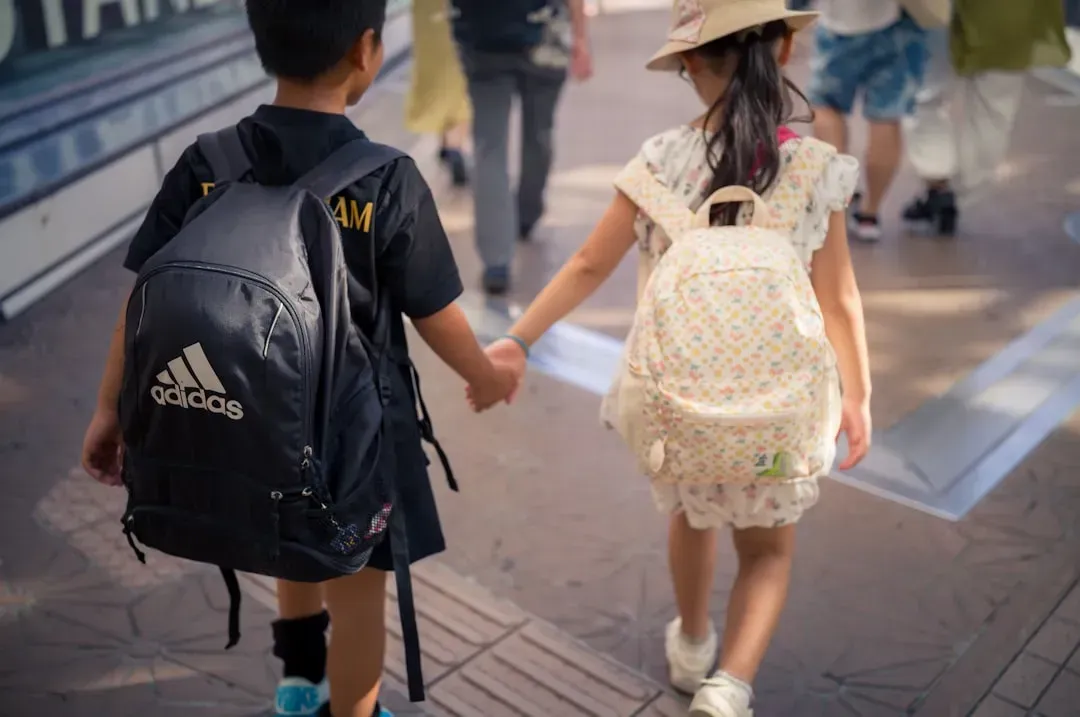
6. Walk or ride your bike to school, no questions asked (Image Credits: Unsplash)
Independent travel to and from school was simply the default for most Gen X children, often starting as young as first or second grade. Research from organizations tracking childhood independence, including surveys referenced by outlets like The Atlantic and Psychology Today, has repeatedly noted this generational shift toward far less unsupervised mobility in later decades.
Groups of neighborhood kids would form loose walking packs, picking up friends along the route without any formal arrangement. There were no organized walking buses or parent volunteers directing traffic, just kids figuring out logistics among themselves, rain or shine.
7. Do not interrupt when adults are talking

7. Do not interrupt when adults are talking (Image Credits: Unsplash)
Adult conversation was treated as a kind of protected space that kids were expected to stay out of unless specifically invited in. Interrupting to share something, even something exciting, usually earned a firm “wait your turn” or a stern look that communicated the same message without a single word.
This rule extended to phone calls, dinner parties, and casual chats between parents and neighbors on the front porch. Kids learned patience largely because the alternative, pushing through and interrupting anyway, rarely worked out in their favor.
8. Watch television only when it is actually on, and only what is showing

8. Watch television only when it is actually on, and only what is showing (Image Credits: Unsplash)
Before recording technology became common in most households during the 1980s, television operated on a fixed schedule that nobody could bend. If a favorite show aired at a specific time and a kid missed it, that episode was simply gone until a rerun happened to show up months later.
This shaped a very different relationship with screens overall, since watching television required planning around the schedule printed in the newspaper or a dedicated TV guide. There was also usually just one television in the house, which meant negotiating with siblings or parents over what actually got watched on any given night.
9. Play outside until you are called in, not a minute sooner

9. Play outside until you are called in, not a minute sooner (Gauthier 郭天, Flickr, <a href="https://creativecommons.org/licenses/by/2.0/" target="_blank" rel="noopener">CC BY 2.0</a>)
Outdoor play was not scheduled or supervised the way it often is now, and it was considered a normal, expected part of almost every day, weather permitting. Being called inside meant something specific was happening, dinner was ready, it was getting late, or a chore needed doing, and it was not a suggestion.
Kids ignored minor scrapes, kept playing through light rain, and generally treated the outdoors as their default environment rather than an occasional activity. This constant unstructured outdoor time is frequently cited by child development researchers as a major factor behind the generation’s reputation for resourcefulness and risk tolerance.