
There’s a moment that keeps repeating itself in offices across the country. A manager sends a text at 8pm expecting a quick reply, and instead of the usual scramble to respond, there’s just… silence until morning. For decades, that kind of immediate availability was simply how work worked. Now it’s becoming the single biggest flashpoint between generations in the modern workplace.
The rule in question sounds simple enough on paper: be reachable, always. Answer the call, check the email, stay plugged in even after you’ve clocked out. Yet a growing share of Gen Z employees have decided that particular expectation no longer applies to them, and the pushback is reshaping how companies think about boundaries, loyalty, and what a workday actually means.
The rule itself: always-on availability

The rule itself: always-on availability (Image Credits: Unsplash)
For much of the twentieth and early twenty-first century, being available outside office hours was treated as a mark of dedication. Answering a late-night email or picking up a weekend call signaled that you were committed, promotable, and part of the team in a way that clock-watchers weren’t. Answering emails and texts after business hours was once considered a badge of honor.
That expectation didn’t come from nowhere. It grew alongside smartphones and constant connectivity, until the line between “at work” and “off work” nearly disappeared for millions of employees. Gen Z entered the workforce at the tail end of that era and looked at the arrangement with genuine confusion rather than admiration.
What the polling actually shows

What the polling actually shows (Image Credits: Unsplash)
The generational split isn’t just anecdotal. A Newsweek poll conducted with Redfield & Wilton Strategies asked Americans directly whether it’s appropriate for a manager to contact an employee outside work hours, and Gen Z and Millennials leaned toward a situational stance at 38 percent each, saying it depends on the circumstances, whereas Gen X and older generations overwhelmingly agreed it’s appropriate, at 53 and 73 percent respectively.
That gap matters because it shows the divide isn’t really about laziness or entitlement, as critics sometimes claim. It’s a difference in what each generation was taught to consider normal. Older workers came up in a system where after-hours contact was rare enough to be an event; younger workers came up in a system where it had become routine enough to be exhausting.
Leaving work at five, and meaning it

Leaving work at five, and meaning it (Image Credits: Pexels)
One of the more visible symptoms of this shift is the hard stop at the end of the shift. Leaving work exactly at five is practically a religion for younger staff members, who shut down their laptops and completely vanish until the next morning.
That habit tends to unsettle managers who spent years treating a full inbox at bedtime as a normal part of career-building. Millennials often check their inboxes before bed to stay ahead, and seeing junior team members ignore urgent night messages drives them absolutely crazy, since the strict cutoff feels like a lack of dedication to older colleagues. For Gen Z, though, it’s less a statement of rebellion than a boundary they consider basic.
Why they're drawing this line

Why they're drawing this line (Image Credits: Pexels)
Burnout sits at the center of the reasoning. MetLife’s 2025 report found that over 40% of Gen Z employees face burnout, yet they’re leading the push for balance. When you’ve watched a large share of your peers already worn down by their mid-twenties, treating after-hours silence as non-negotiable starts to look less like a luxury and more like self-preservation.
There’s also a values shift underneath the behavior. A recent Moneycontrol.com report found 72% of Gen Z professionals value work-life balance over a higher salary. That’s a notable reordering of priorities compared to the climb-the-ladder mindset that defined earlier decades of corporate life.
The legal backdrop nobody mentions

The legal backdrop nobody mentions (Image Credits: Unsplash)
Part of what makes this fight interesting is that it isn’t purely cultural. There’s a legal history tangled up in it too. The Fair Labor Standards Act of 1938 made 40-hour workweeks the standard for full-time employees and required them to be compensated for any overtime.
The catch is that the rule hasn’t kept pace with reality. The wage threshold determining who can actually be paid for overtime hasn’t been updated since the 1970s, so few workers are eligible for it now, meaning many employees have been heavily encouraged to work unpaid overtime. Gen Z workers pointing out that after-hours availability is unpaid labor aren’t inventing a grievance out of thin air. They’re highlighting a gap that’s been sitting in the system for fifty years.
It's not entirely a new fight

It's not entirely a new fight (Image Credits: Unsplash)
It’s worth noting that Gen Z didn’t invent this particular battle, even if they’re the ones currently winning attention for it. Gen Z has had to put their foot down about not being able to answer work messages 24/7, but they weren’t the first to do so.
Millennials and even some Gen X workers pushed back on the same expectation years earlier, just with less social media amplification. Previous generations had to set boundaries around phone calls and emails years before Gen Z entered the picture. What’s different now is the scale of the pushback and how openly it’s discussed, partly because workplace boundaries have become a normal topic of conversation rather than a private grievance.
Not every Gen Z worker feels the same way

Not every Gen Z worker feels the same way (Image Credits: Unsplash)
The picture isn’t quite as unanimous as the headlines suggest. Some recent research complicates the “Gen Z hates after-hours contact” narrative in an unexpected way. Nearly one in five Gen Z workers say they feel happy when receiving work communications outside of hours, and thirty percent say after-hours messages make them feel appreciated or needed, signaling that recognition matters more than strict boundaries alone.
That finding suggests the resistance isn’t purely about hating contact itself. It’s more about control and consent, being asked rather than expected. There’s also an internal contradiction worth noting: while 77% of Gen Z workers report a healthy work-life balance, 67% still believe sacrificing personal time is necessary for success, a tension the younger generation is actively redefining.
How employers are actually responding
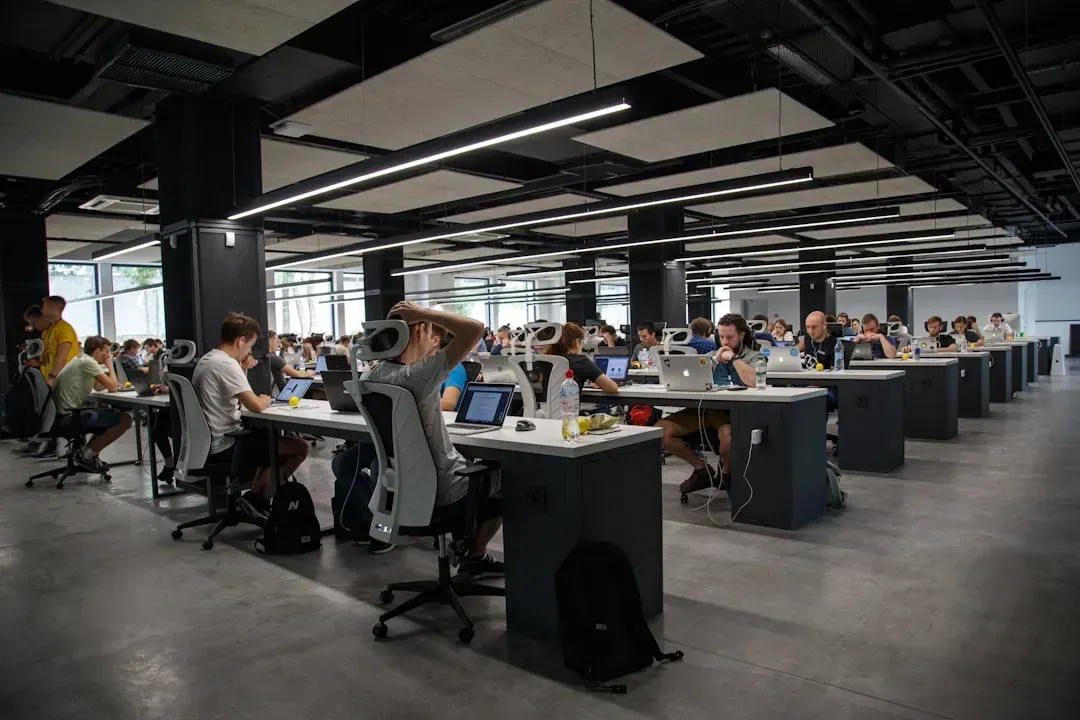
How employers are actually responding (Image Credits: Unsplash)
Companies aren’t ignoring this shift, mostly because ignoring it has a cost. Turnover tied to burnout and rigid expectations has become expensive enough that some employers are adjusting policy rather than fighting the trend. Open dialogue about burnout, therapy, and boundaries is increasingly part of daily workplace culture rather than something whispered about privately.
Some organizations have started formalizing “no contact after hours” policies, while others lean on flexible scheduling instead of outright bans, letting employees choose when they’re reachable as long as the work gets done. The businesses seeing the least friction tend to be the ones treating this as a negotiation rather than a discipline problem. The most successful workplaces won’t be the ones that cater to Gen Z entirely or demand full conformity to old models, but the organizations that adapt on both sides, aligning expectations around flexibility, accountability, growth, and purpose.
What older colleagues get wrong about it

What older colleagues get wrong about it (Image Credits: Pexels)
A lot of the generational friction comes down to a simple misread. Managers who grew up answering emails at midnight often interpret a Gen Z employee’s silence as apathy, when it’s frequently the opposite: a deliberate choice meant to protect focus and energy for the actual workday. Workplace etiquette is important because it establishes respect among co-workers, but respect should be mutual, so the rules at a job need to work for everyone involved.
That mutual framing tends to get lost in the noise of viral complaints and generational finger-pointing. The more grounded version of the story is less dramatic than social media makes it look. It’s a workforce testing whether decades-old norms still make sense in an environment where phones never really turn off unless someone decides they will.
Where this leaves the modern workplace

Where this leaves the modern workplace (Image Credits: Gallery Image)
The after-hours availability rule was never really written down anywhere. It was absorbed, generation after generation, as an unspoken cost of being taken seriously at work. Gen Z is simply the first cohort large enough, and vocal enough, to say out loud that the cost doesn’t feel worth it anymore.
Whether that reshapes corporate culture permanently or just adds another item to the long list of workplace debates remains to be seen. What’s clear from the data so far is that this isn’t a passing quirk of one generation being difficult. It’s a slow renegotiation of what work is actually supposed to demand from a person’s time, and it’s likely to keep shifting as more Gen Z workers move into management roles of their own.