
There’s a moment every manager eventually reaches: you’re standing in a conference room, watching a 62-year-old and a 24-year-old talk past each other in real time, both completely convinced the other is being unreasonable. Neither is wrong, exactly. They’re just operating from entirely different maps of what work is supposed to look like. That moment, in various forms, repeats itself constantly across today’s offices.
By 2024, Gen Z surpassed Baby Boomers as a share of the active workforce for the first time, and Millennials remain the single largest group, with Gen X still holding a significant portion of the labor force – while a meaningful number of Boomers are staying in their roles later in life. The result is the most age-diverse workplace on record, and the friction it creates is real. What follows are the nine conflicts that don’t just flare up occasionally. They show up every single week.
1. How We Communicate – and Which Channel Even Counts

1. How We Communicate – and Which Channel Even Counts (Image Credits: Unsplash)
Different communication preferences – like Baby Boomers’ preference for face-to-face interaction and Millennials’ affinity for digital tools – account for a significant share of age-related workplace conflicts. Older workers often feel that a quick message on Slack doesn’t carry the same weight as a proper meeting or even a phone call. Meanwhile, younger workers find it puzzling that something requiring three screens of email couldn’t just be a two-line message in a team chat.
Older generations may be intimately familiar with email, while Gen Z is much more familiar with texting and direct messaging, two communication modes better suited for team collaboration platforms like Slack and Microsoft Teams. This isn’t laziness on either side. It’s a genuine gap in what each generation understands as a “professional” channel, and closing it requires acknowledging that both instincts have legitimate roots.
2. The Feedback Frequency Fight
2. The Feedback Frequency Fight (Image Credits: Unsplash)
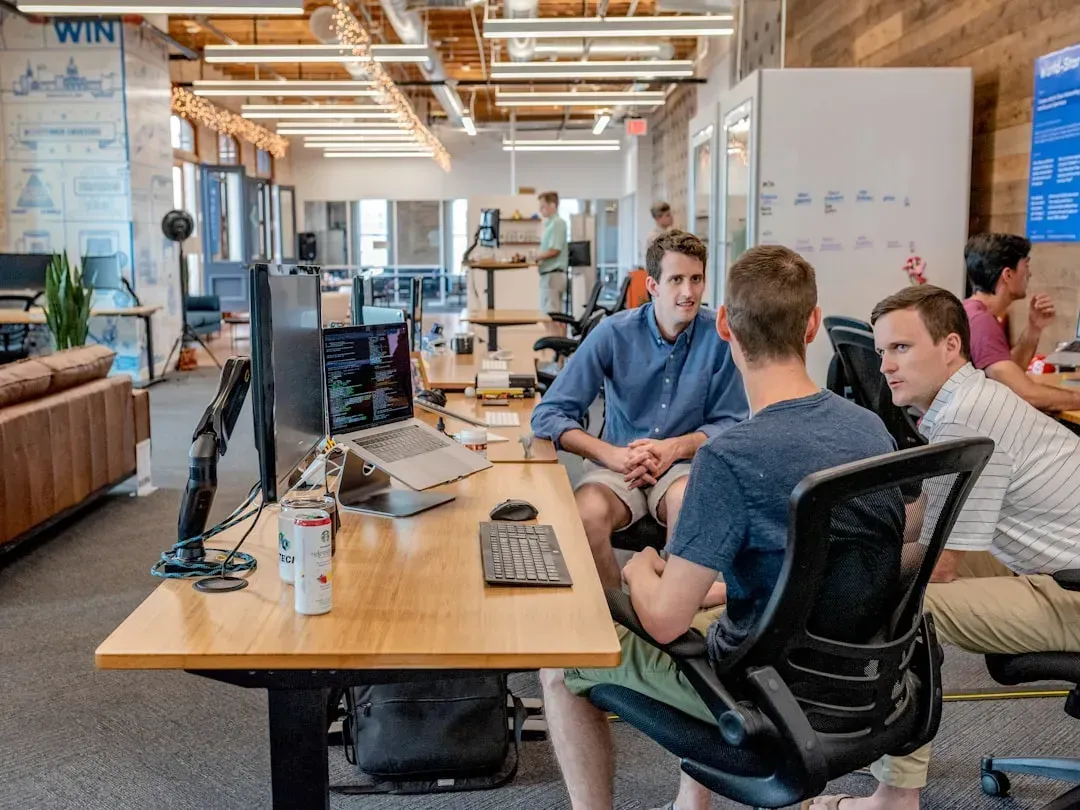
Part of the generational strife in the workplace is due to communication differences and misaligned principles. While nearly half of Gen Z workers want better communication and teamwork training, only about a quarter of Boomers think there’s even a problem. Gen Z in particular expects frequent, direct feedback – not a quarterly review buried in HR paperwork. Boomers and many Gen Xers learned to wait, read the room, and earn feedback through tenure.
Gen Z tends to ask for feedback, flexibility, and transparency openly and early – often in the interview itself – rather than waiting years to raise them. This can read as impatience or entitlement to older managers who were trained to observe silently and prove themselves over time. In reality, it’s simply a different tempo of expectation, shaped by a very different set of formative experiences.
3. The Remote vs. In-Person Standoff

3. The Remote vs. In-Person Standoff (Image Credits: Pixabay)
According to a survey by FlexJobs, roughly four in five Millennials and nearly three in four Gen Z workers want more remote work options, compared to only about half of Gen X and fewer than a third of Baby Boomers. That gap alone is enough to generate weekly friction, especially when scheduling meetings, setting office attendance norms, or deciding who gets the “flexible Friday” precedent.
The nuance here is worth noting. According to Gallup’s May 2025 findings, Gen Z workers in the U.S. are actually the least likely generation to prefer exclusively remote work. Only about a quarter of remote-capable Gen Z employees say they would prefer fully remote, compared with roughly a third among each older generation. The conflict, then, isn’t simply “young wants remote, old wants office.” It’s more tangled – and that tangle shows up in policy meetings every week.
4. Hierarchy: Who Earns Respect, and How

4. Hierarchy: Who Earns Respect, and How (Image Credits: Unsplash)
According to a 2024 LinkedIn survey, nearly three quarters of Gen Z workers have either left or considered leaving a job due to lack of flexibility. This generation has little tolerance for rigid schedules, fixed workplaces, and top-down hierarchy. For Boomers who spent decades working their way through clearly defined org charts, this can feel like a rejection of the very structure that makes an organization function.
Gen Z has little tolerance for top-down hierarchies, partly because they were mostly raised in an atmosphere of support, and they expect to be heard, to co-create systems, and to work within frameworks they help define. That’s not the same as refusing to respect authority. It’s a different model of earning and extending trust – one that runs on transparency rather than tenure, and that collides with older models on a near-daily basis.
5. Attitudes Toward Work-Life Balance

5. Attitudes Toward Work-Life Balance (Image Credits: Pexels)
Financial pressure compounds mental health challenges for Gen Z and explains why roughly three quarters of them prioritize work-life balance over traditional career climbing. Older managers who built careers on long hours and visible dedication often interpret this as a lack of commitment. The numbers tell a more complicated story, though.
Peak burnout now hits workers at age 25 for Gen Z, compared to 42 for the average American worker. This early burnout fundamentally changes their approach to career advancement and explains why traditional leadership roles hold less appeal. Millennials, for their part, largely agree on the need for balance. Gen Z values purpose-driven work that aligns with personal ethics and societal impact, and flexibility and autonomy are treated as non-negotiables rather than perks. That’s a philosophical gap that surfaces in conversations about overtime, scheduling, and what “dedication” actually looks like.
6. Technology Adoption Speeds

6. Technology Adoption Speeds (Image Credits: Unsplash)
New research highlights the importance of the role Gen Xers can play in smoothing over intergenerational differences in behavioral norms and outlooks – differences that can divide older Baby Boomer colleagues from their younger Millennial and Gen Z workmates. Nowhere is that mediating role more necessary than around technology. A new project management platform, an AI-assisted workflow, a redesigned dashboard – each of these can trigger a slow-down that the youngest workers find baffling and that the oldest find genuinely stressful.
Baby Boomers often find themselves critiquing younger workers’ reliance on technology, while younger workers frequently scrutinize Boomers for their perceived resistance to change and outdated approaches. The truth is that adoption speed is rarely about intelligence. It’s about comfort zones that were formed over decades and are now being retested at an accelerating pace. That process creates friction in real time, during real meetings, every week.
7. Values Clashes Over Meaning and Purpose at Work

7. Values Clashes Over Meaning and Purpose at Work (Image Credits: Pexels)
Gen Z and Millennials are focused on meaning, with EY’s 2024 Work Reimagined report finding that more than a third of Gen Z plan to quit if they don’t feel fulfilled. Boomers, by contrast, are more invested in legacy – they look for stability and structure. These are not trivially different preferences. They represent fundamentally different answers to the question of why you go to work in the first place.
Millennials pursued homeownership and career advancement as personal milestones. Boomers prioritized duty and societal contribution. Gen Z brings a different mindset – one that values meaning, flexibility, and identity alignment. When a company mission statement doesn’t resonate emotionally with younger staff, they say so. When they say so in an all-hands meeting, older colleagues sometimes experience that as destabilizing rather than constructive. That friction is weekly, low-grade, and very real.
8. Age Bias Running in Both Directions

8. Age Bias Running in Both Directions (Image Credits: Pexels)
Data from Diversity.com’s 2025 report showed that workers under 25 and over 65 were most likely to feel excluded or undervalued by their managers. That’s a striking finding: the youngest and oldest workers in the room are simultaneously the least likely to feel heard. AARP’s latest workplace report found that nearly four in five workers aged 50 and older have experienced or witnessed age bias on the job.
Deloitte’s multigenerational workplace study showed that Gen Z workers feel less psychologically safe and more hesitant to speak up in meetings, while neither the youngest nor the oldest group is being fully heard. Younger workers get labeled as lazy, entitled, or job-hoppers; older workers get seen as outdated, resistant to change, or close to retirement. Both sets of stereotypes corrode team trust, and both tend to play out in subtle but recognizable ways during any given work week.
9. Salary Expectations and What "Fair" Actually Means

9. Salary Expectations and What "Fair" Actually Means (Image Credits: Pexels)
Only about half of all workers said they were compensated fairly in 2024 for the value they brought to their company, with Gen Z feeling the most underpaid of any generation. That perception – right or not – shapes how younger employees show up in negotiations, performance reviews, and conversations about raises. It also shapes how they talk about it with each other, which feeds into broader team dynamics.
Roughly half of Gen Z and nearly half of Millennials said they would find a new job if not given a raise going into 2025, while only about a fifth of Baby Boomers shared the same sentiment. The divergence in willingness to walk away is itself a source of conflict. Managers from older generations often interpret this as disloyalty or short-termism. Younger workers see it as rational self-advocacy in a market that has rarely rewarded patience. Research shows that roughly six in ten people believe generational differences play a significant role in creating conflicts in the workplace – and compensation sits near the top of that list every single time.