
Dating has always come with its share of friction, but something feels different right now. Across the matchmaking industry, professionals are noticing a clear and consistent pattern: certain personality traits that once flew under the radar are now sending potential partners running before a second date even gets scheduled. It’s not about physical appearance or lifestyle mismatches. It’s subtler than that.
In 2026, matchmaking increasingly emphasizes shared values rather than surface-level traits, and compatibility now includes lifestyle choices, long-term priorities, and emotional availability. That shift has raised the stakes considerably. When a personality trait actively disrupts those deeper elements of connection, it’s no longer just a quirk. For a growing number of daters, it becomes a reason to walk away.
1. Chronic Pessimism

1. Chronic Pessimism (Image Credits: Pexels)
Among the top dealbreakers identified by matchmakers are individual traits, and pessimism sits prominently on that list. It’s not the kind of bad day everyone has. It’s the persistent, corrosive negativity that colors every conversation, every plan, and every observation about the world. Over time, it drains the energy of the person across the table.
When a partner is constantly complaining and viewing life through a negative lens, that attitude will affect the other person and make them feel negative too. This type of person is genuinely difficult to sustain a relationship with, which is why those seeking something healthy tend to look for someone positive who makes them feel better about life. Matchmakers consistently flag this as one of the fastest ways to kill romantic momentum.
2. Deep-Seated Insecurity

2. Deep-Seated Insecurity (Image Credits: Pexels)
Research on relationship dealbreakers has found that they can be grouped into clear categories, and in the long-term mating context, being “Apathetic” and “Clingy” rank at the very top of what repels potential partners. Clinginess and the behavior it produces are rooted in insecurity. It’s one thing to want closeness in a relationship. It’s another to need constant reassurance just to feel stable.
While a small amount of jealousy is normal in relationships, excessive jealousy can become a major dealbreaker. A partner who is overly jealous may try to control interactions with others, make accusations without reason, or constantly demand reassurance, creating a toxic environment that leads to constant conflict. Matchmakers note this trait has become harder to overlook as daters increasingly prioritize emotional security in a partner.
3. Emotional Unavailability

3. Emotional Unavailability (Image Credits: Unsplash)
In the current climate, people are increasingly prioritizing deep, meaningful relationships over casual encounters. The introspection of recent years has left a lasting mark on how people date, with singles now seeking more intentional partnerships grounded in shared values, emotional intelligence, and long-term compatibility. Someone who can’t or won’t open up emotionally simply doesn’t fit that picture anymore.
Unresolved issues and past traumas, such as carrying baggage from a previous relationship, can lead to destructive behaviors and emotional unavailability, which puts serious strain on new connections. What used to be tolerated as “playing it cool” is now more often read as a fundamental inability to show up. Emotional intelligence is just as important as physical attraction in today’s matchmaking landscape, and professionals often work with clients specifically to improve self-awareness and communication skills.
4. Inflexibility and Rigidity

4. Inflexibility and Rigidity (Image Credits: Pexels)
Inflexibility appears directly alongside insecurity and pessimism as one of the top individual-trait dealbreakers identified by matchmakers. Rigid people don’t just have strong preferences. They struggle to adapt, to compromise, or to see things from a different angle. That creates a relationship dynamic where one person feels like they’re constantly accommodating and the other isn’t even trying.
Compatibility is often more complicated than finding two people with similar personalities, because what matchmakers are often searching for is complementary qualities. No two people are exactly the same, and a healthy pairing creates a balance between two different but harmonious personalities. When one person is rigidly unwilling to bend at all, that balance becomes impossible to find. Relationships in 2026 tend to be slower and more intentional, with people taking time to build trust and assess compatibility before committing, which requires a degree of openness on both sides.
5. Conversational Self-Centeredness

5. Conversational Self-Centeredness (Image Credits: Pixabay)
There’s even a name for this pattern now. It’s called “yap-trapping,” and it’s far from rare. Nearly half of all daters have been on a date with someone who droned on without asking a single personal question, according to a Plenty of Fish survey of close to 6,000 members. It might seem like a small thing. In practice, it signals something larger about how much genuine interest someone has in another person.
When someone genuinely cares about their potential partner, they want to know all about them. A sincere partner is curious about the other person as an individual rather than treating them as an extension of themselves or someone to use. Matchmakers say this trait has become much more glaring now that intentional dating is the norm. Singles are no longer interested in aimless conversations that go nowhere, and dating now involves clearer goals, honest exchanges, and realistic expectations.
6. Lack of Ambition

6. Lack of Ambition (Image Credits: Pexels)
A study on dealbreakers ranked by more than 2,400 participants found that seven dealbreaker factors could be extracted, and “Unambitious” appeared as one of the core categories. This doesn’t mean every partner needs to be climbing a corporate ladder. It’s more about showing up with drive, direction, and some sense of what you’re working toward in life. That quality signals investment, not just in career, but in the relationship itself.
With inflation, rising rents, and ongoing economic pressure, financial compatibility has become increasingly important, and financial incompatibility is now cited as a leading dealbreaker across many relationship surveys. Ambition and financial seriousness are connected. In the long-term mating context, being “Unmotivated” ranks among the top dealbreaker categories for both men and women. Someone who seems comfortable with indefinite stagnation tends to read as a long-term liability rather than a long-term partner.
7. Performative Inauthenticity
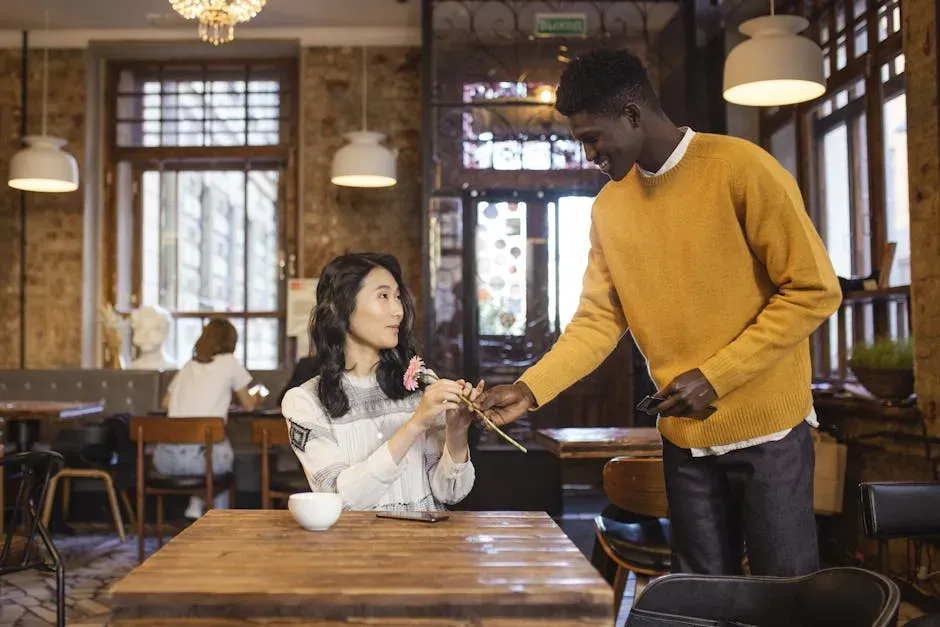
7. Performative Inauthenticity (Image Credits: Pexels)
One of the dominant shifts in dating right now is a trend toward radical transparency, with roughly seven in ten singles seeking serious relationships now embracing explicit honesty about their intentions and expectations. That cultural turn has made one trait significantly less tolerable: the person who curates a version of themselves rather than simply being themselves. Matchmakers report that clients are sharper than ever at detecting when someone is performing rather than connecting.
Some individuals may initially pretend to meet a potential partner’s criteria, only to reveal their true character later on, acting perfectly at first to gain favor until the honeymoon phase ends and their real personality surfaces. That kind of reveal, whenever it comes, tends to feel like a betrayal. Presenting one’s true self in early interactions and throughout the dating process attracts people who are genuinely compatible, and authenticity is considered vital for healthy relationship psychology.
Why These Traits Are Hitting Differently Now

Why These Traits Are Hitting Differently Now (Image Credits: Pixabay)
According to a 2024 Pew Research study, more than six in ten online daters reported frustration with app-based dating, citing issues such as lack of serious intent, misleading profiles, and emotional exhaustion. That level of accumulated fatigue has made people less willing to rationalize away traits that once might have been given a pass. Daters have simply run out of patience for patterns they recognize as problems.
Professional matchmakers factor in personality traits, lifestyle preferences, educational background, family values, and long-term goals when creating matches. From that position, they have a uniquely clear vantage point. They see which traits consistently derail connections before they even have a chance to form. Where dating apps rely on algorithms and chance, matchmaking applies psychology to each potential introduction, with professionals looking specifically for the traits that draw two people together and sustain a relationship over time.
What Matchmakers Actually Look for Instead

What Matchmakers Actually Look for Instead (Image Credits: Unsplash)
The top preferences matchmakers consistently identify include being communicative, having a good sense of humor, and being kind, alongside genuine ambition and intellectual curiosity. These aren’t especially surprising qualities. What’s notable is how consistently they surface across different clients, age groups, and cultural backgrounds. The fundamentals of what people want haven’t changed. The tolerance for their opposites has.
People are more likely to form lasting connections when their core values align, whether in lifestyle choices, family outlook, or vision for the future. Matchmakers say the clients who do best in the process are those who come in with genuine self-awareness rather than a checklist. Professional matchmakers offer curated introductions based on emotional readiness, lifestyle fit, and long-term compatibility, and this human-driven approach appeals particularly to singles who are serious about relationships but short on time. Matchmakers also help clients reflect on past patterns, improving self-awareness and communication skills in the process.
The Bigger Pattern Behind the Shift

The Bigger Pattern Behind the Shift (Image Credits: Gallery Image)
A report by the Survey Center on American Life found that safety concerns and declining trust are reshaping modern dating, leaving many singles feeling pessimistic about their prospects. That general climate of wariness has raised the threshold for what people are willing to invest in. When trust is already fragile, personality traits that erode it further get cut loose faster than they ever did before.
The seven traits listed here share a common thread: they all make it harder for a partner to feel seen, safe, and genuinely wanted. That’s ultimately what matchmakers are working to protect. Matchmaking’s resurgence isn’t just a passing trend but a response to modern dating challenges and a reflection of deeper cultural shifts, with people craving genuine human connections, emotional depth, and trusted guidance. In that environment, personality matters more than ever, and the traits that undermine real connection are being noticed far more quickly than before.