
Somewhere between the last dial-up modem and the first iPhone, a whole set of assumptions about adulthood quietly started to crumble. Nobody sent out a memo. There was no single moment when millennials collectively decided to rewrite the rulebook their parents handed down, but bit by bit, decade by decade, that's exactly what's happened.
What's interesting in 2026 is how many of these shifts weren't loud rebellions at all. They were slow fade-outs, the kind of thing you only notice when you look back and realize a tradition that used to be automatic just isn't anymore.
1. Marrying young and settling down by their mid-twenties

1. Marrying young and settling down by their mid-twenties (Image Credits: Unsplash)
For a generation whose parents often married straight out of college or shortly after, the timeline has stretched considerably. Since 1950, the average age at which adults are first getting married has increased by about eight years, from 22.8 to 30.2 years old for men and from 20.3 to 28.6 years old for women. The broader marriage rate has kept sliding too, with the US marriage rate expected to fall to 5.8 marriages per 1,000 people in 2025, continuing a downward trend from a recent high of 6.2 in 2022.
None of this means millennials have given up on marriage as an idea. As millennials age, their marriage rates are increasing, with 42% now married and only 5% divorced, revealing a generational shift not away from marriage itself but toward redefining what it means to build a lasting family today. They’re just getting there on their own schedule, usually after establishing a career and some financial footing first.
2. Buying a starter home the moment they can afford one

2. Buying a starter home the moment they can afford one (Image Credits: Pexels)
Homeownership used to be the next logical box to check after marriage. That box has moved. According to an analysis from Redfin, 57% of people in their mid-thirties now own their residences, while 64% of their parents owned homes at the same age.
The reasons are mostly financial rather than philosophical. The median age of first-time homebuyers in the US dipped to 35 years old in 2025, down from 36 the previous year, but still well above the peak of 38 reported in 2018. Meanwhile, millennials’ homeownership rate improved slightly, to 55.4% from 54.9%, a sign that plenty of them are getting there eventually, just later and with more help from family than their parents ever needed.
3. Weekly church attendance as a family ritual
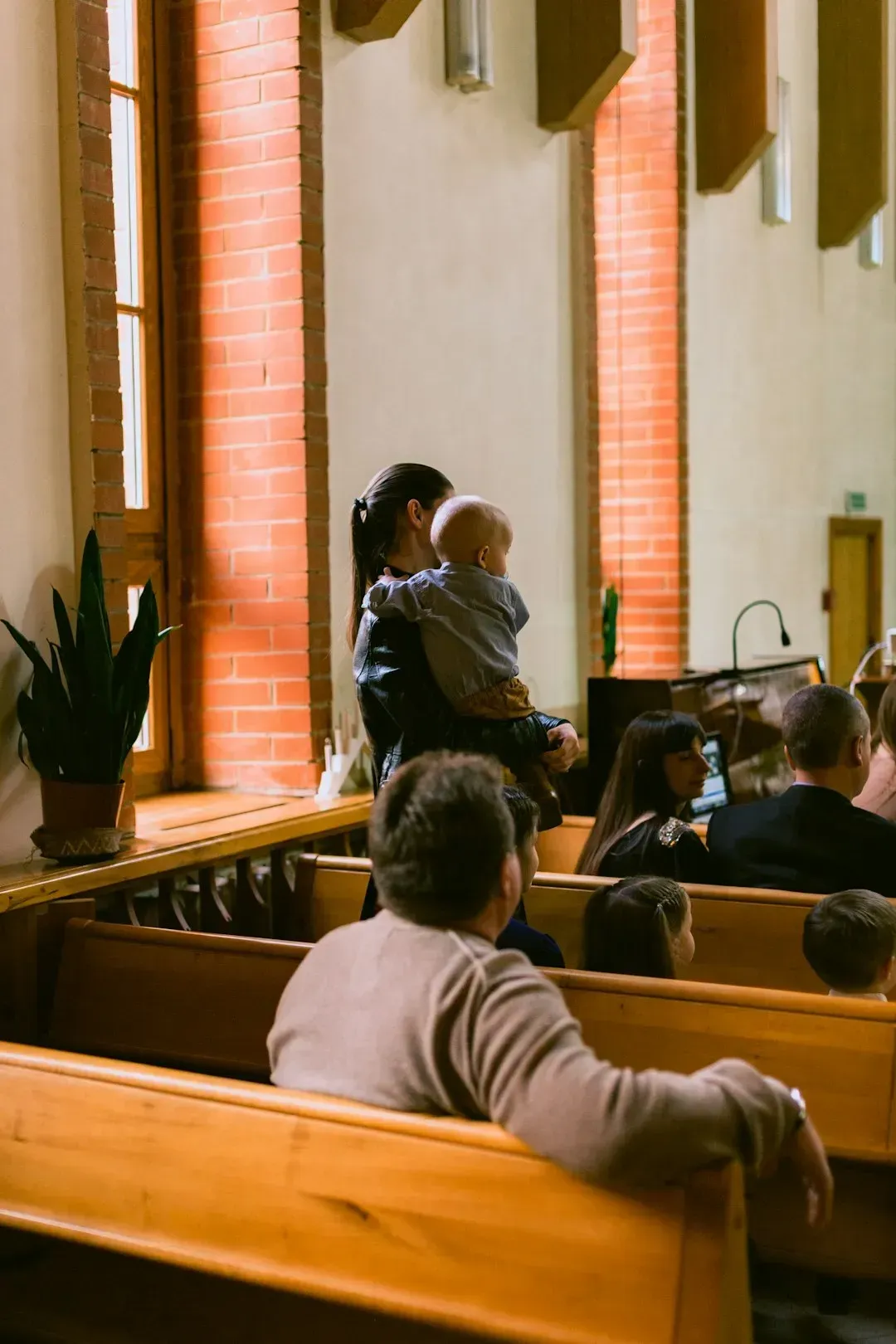
3. Weekly church attendance as a family ritual (Image Credits: Unsplash)
Sunday service used to be as fixed a part of the weekly calendar as school on Monday. That’s changed sharply for millennials. Church membership is strongly correlated with age, with 66% of traditionalists belonging to a church compared with 58% of baby boomers, 50% of Generation X, and just 36% of millennials.
The drop-off isn’t only about attendance either. The percentage of millennials with no religious affiliation may be continuing to grow, with an average of 33% in recent Gallup surveys saying they have no religion at all. Interestingly, some of that trend appears to be softening again in the last couple of years, with Gen Z churchgoers now attending about 1.9 weekends per month and millennials close behind at 1.8, marking some of the highest levels Barna has recorded for young adults.
4. Staying loyal to one employer for an entire career

4. Staying loyal to one employer for an entire career (Image Credits: Pexels)
The idea of a thirty-year career at a single company, capped off with a pension and a retirement party, isn’t really part of the millennial experience. Many watched their parents get laid off during the 2008 recession despite decades of loyalty, and that lesson stuck.
Job hopping every few years, freelancing, or building a side business has become the norm rather than the exception. It’s less about disloyalty and more about recognizing that companies rarely offer the kind of long-term security that made staying put worthwhile in the first place.
5. Throwing a big, traditional wedding with all the trimmings

5. Throwing a big, traditional wedding with all the trimmings (Image Credits: Unsplash)
The multi-tier cake, the enormous guest list, the country club reception, that whole package is losing its grip. Big weddings are increasingly being replaced by small ceremonies or none at all, reflecting personal values and saving money.
It’s not that millennials don’t want to celebrate. It’s that the priorities have shifted elsewhere. Many young couples are prioritizing experiences over expensive venues and large guest lists, preferring to focus on what matters most to them personally, whether that’s a honeymoon, a down payment, or simply not going into debt for a single day.
6. Serving the same holiday menu their parents always made

6. Serving the same holiday menu their parents always made (Image Credits: Unsplash)
Thanksgiving used to come with an unspoken script: turkey, stuffing, the same three side dishes since 1985. Millennials hosting their own holidays have started tearing that script up. Tradition says you need a dry bird on the table, but younger hosts are serving tacos, potlucks, or vegan feasts instead.
This isn’t about disrespecting grandma’s recipe box so much as wanting food that actually gets eaten. They’re less concerned with recreating a Norman Rockwell painting and more interested in food that actually tastes good. If that means fusion tacos next to the mashed potatoes, so be it.
7. Mandatory holiday travel home, no matter the distance

7. Mandatory holiday travel home, no matter the distance (Image Credits: Unsplash)
Showing up for every single family gathering used to be non-negotiable, regardless of how far the drive or how draining the visit. You showed up, you stayed, you endured, because that was simply expected.
That expectation has softened considerably among younger adults. Younger generations are increasingly willing to question that expectation, with many millennials more concerned with prioritizing their own physical and emotional well-being and setting boundaries around the holidays than forcing themselves to visit family out of obligation. A phone call or a smaller, later gathering has become an acceptable substitute for the full pilgrimage.
8. Joining civic and fraternal clubs like Rotary or the Elks

8. Joining civic and fraternal clubs like Rotary or the Elks (Image Credits: Pexels)
Bowling leagues, Rotary breakfasts, Elks Lodge memberships, these were once a standard part of adult social life for a previous generation. Membership in these organizations has been quietly shrinking for decades, and millennials simply never picked up the slack.
Part of it is time. Part of it is that community now happens through group chats, online forums, and hobby-specific meetups rather than a formal lodge with dues and a secret handshake. The social instinct hasn’t disappeared, it’s just moved somewhere else entirely.
9. Deferring major life decisions to parental approval

9. Deferring major life decisions to parental approval (Image Credits: Pexels)
Asking a parent’s permission before choosing a career, a partner, or a place to live used to carry real weight. That deference has loosened considerably for millennials, many of whom grew up being told to follow their passion rather than a family blueprint.
This doesn’t mean parents’ opinions don’t matter anymore. It means the final call increasingly rests with the person actually living the life in question, even when that choice runs counter to what mom and dad would have picked.
10. Having children in their early to mid-twenties

10. Having children in their early to mid-twenties (Image Credits: Unsplash)
Starting a family right out of college, or even during it, was common enough a generation ago. Millennials have pushed that timeline out significantly, often waiting until their careers and finances feel more stable.
The ripple effects show up in the bigger picture too. The fertility rate in the US is now at a historic low of 1.7 births per woman, lower than the 2.1 needed to maintain a stable population, a statistic that reflects delayed and reduced childbearing across the generation rather than a rejection of parenthood itself.
11. Keeping a landline phone and answering machine at home

11. Keeping a landline phone and answering machine at home (Image Credits: Unsplash)
There was a time when every household had a landline bolted to the kitchen wall, complete with a tangled cord and an answering machine blinking its red light. That fixture has all but vanished from millennial households.
From ditching landline phones to skipping formal etiquette classes, younger people are quietly walking away from traditions that once felt non-negotiable. A single phone in the pocket does everything the old setup did, minus the busy signal and the answering machine tape.
12. Dressing formally for everyday occasions

12. Dressing formally for everyday occasions (Image Credits: Pexels)
Suits for dinner, dresses for church, a specific outfit for every category of event, that level of formality has largely dissolved for millennials. Remote work and casual office cultures accelerated a shift that was already underway before anyone had heard of a home office.
Comfort and practicality now tend to win out over formality in most everyday settings. It’s not that millennials don’t own nice clothes, it’s that the occasions requiring them have simply become far less frequent than they were for their parents.
Taken together, these shifts don’t paint a picture of a generation rejecting the past for its own sake. Most of these changes trace back to economics, technology, or simply different priorities shaped by a different world than the one their parents grew up in. The traditions haven’t so much disappeared as they’ve been replaced by versions that fit the life millennials are actually living.