
Most people tuck a $2 bill away without a second thought, treating it more like a novelty than actual currency. It sits in a drawer, gets slipped into a birthday card, or gets spent on a whim at a gas station. What very few people realize is that certain versions of this humble denomination have quietly become serious collector items, with some fetching prices that far exceed anything you’d expect from a piece of paper worth two dollars.
Many people think $2 bills are rare, but in reality, there are millions still in circulation, and they continue to be printed. However, while most $2 bills are only worth their face value, certain ones can fetch thousands of dollars on the collectors market. The difference between a bill worth exactly two dollars and one worth over three thousand often comes down to a single detail – and knowing what to look for changes everything.
A Brief History of the $2 Bill
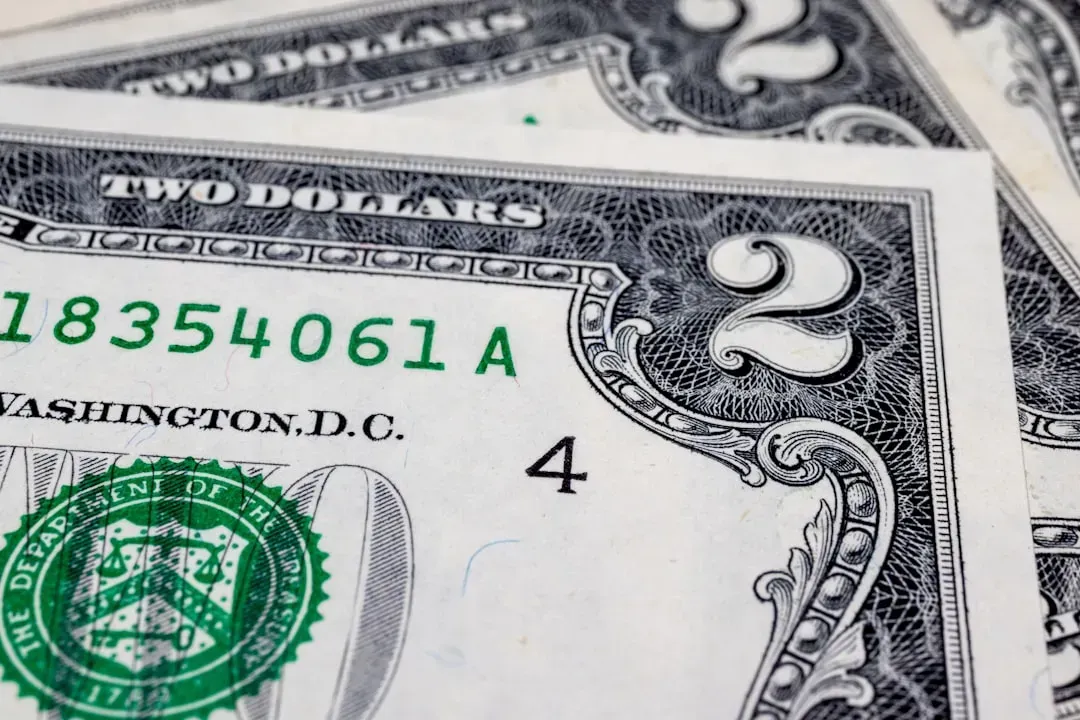
A Brief History of the $2 Bill (Image Credits: Unsplash)
The federal government first issued $2 currency notes in 1862, which initially included a portrait of Alexander Hamilton on the cover. Thomas Jefferson’s image didn’t appear on the $2 bill until 1869, according to the Bureau of Engraving and Printing. Since then, $2 currency notes have undergone six different designs.
The common misconception that the $2 note is no longer being produced also remains, though $2 notes have been printed since 1862, except for a 10-year hiatus between 1966 and 1976. The bill was reintroduced in 1976 as the United States approached its bicentennial and is still in circulation today. The front of the current version features the face of Thomas Jefferson, the primary author of the Declaration of Independence.
The Star Note: The One Detail That Can Make All the Difference
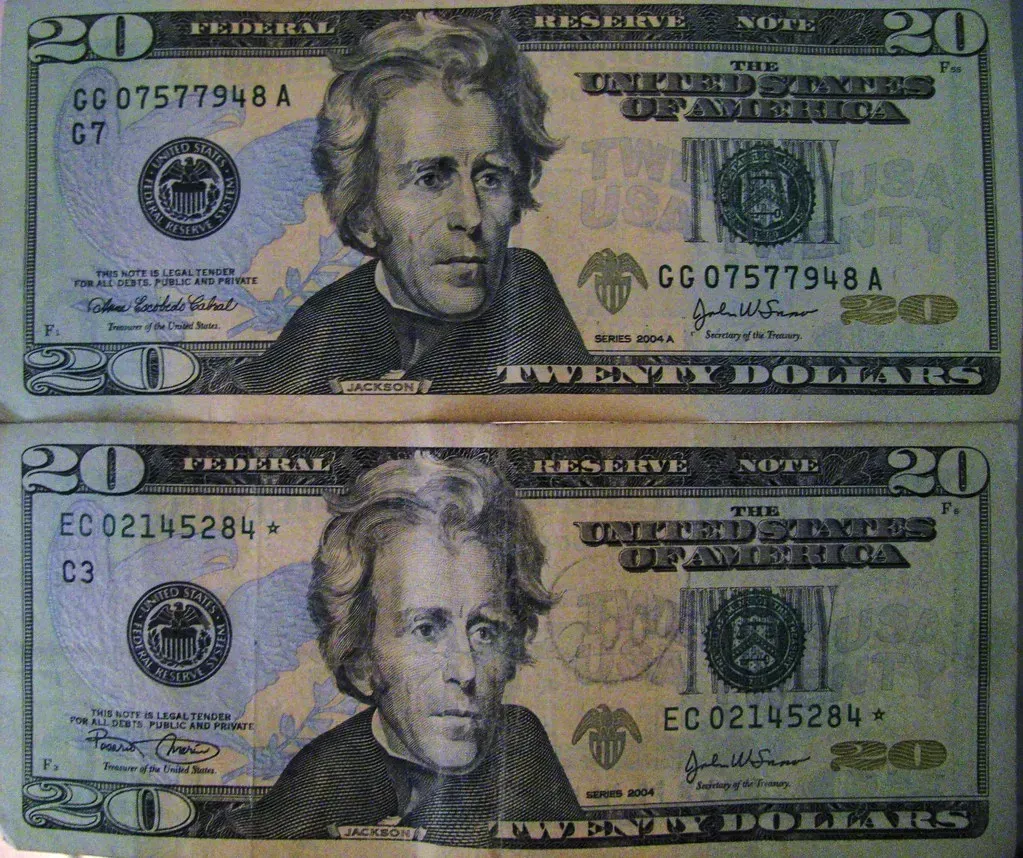
The Star Note: The One Detail That Can Make All the Difference (DBduo Photography, Flickr, <a href="https://creativecommons.org/licenses/by-sa/2.0/" target="_blank" rel="noopener">CC BY-SA 2.0</a>)
Star notes are replacement bills marked with a small star at the end of the serial number. When an imperfect sheet is detected during the manufacturing process after the serial number has been overprinted, it must be replaced with a new sheet. A “star” sheet is used to replace the imperfect sheet. Reusing an exact serial number to replace an imperfect note is costly and time consuming. A “star” note has its own special serial number followed by a star in place of a suffix letter.
Star bills are those with a star at the end of the serial number. They were produced to replace defective bank notes, so they’re much rarer – and more valuable – than non-star bills. The rarest 2-dollar bill ever sold at Heritage Auctions was a replacement note that featured a star in the serial number. This 1928 bill sold for $88,000 in 2013.
The 1928 Red Seal Note: One of the Most Valuable Series
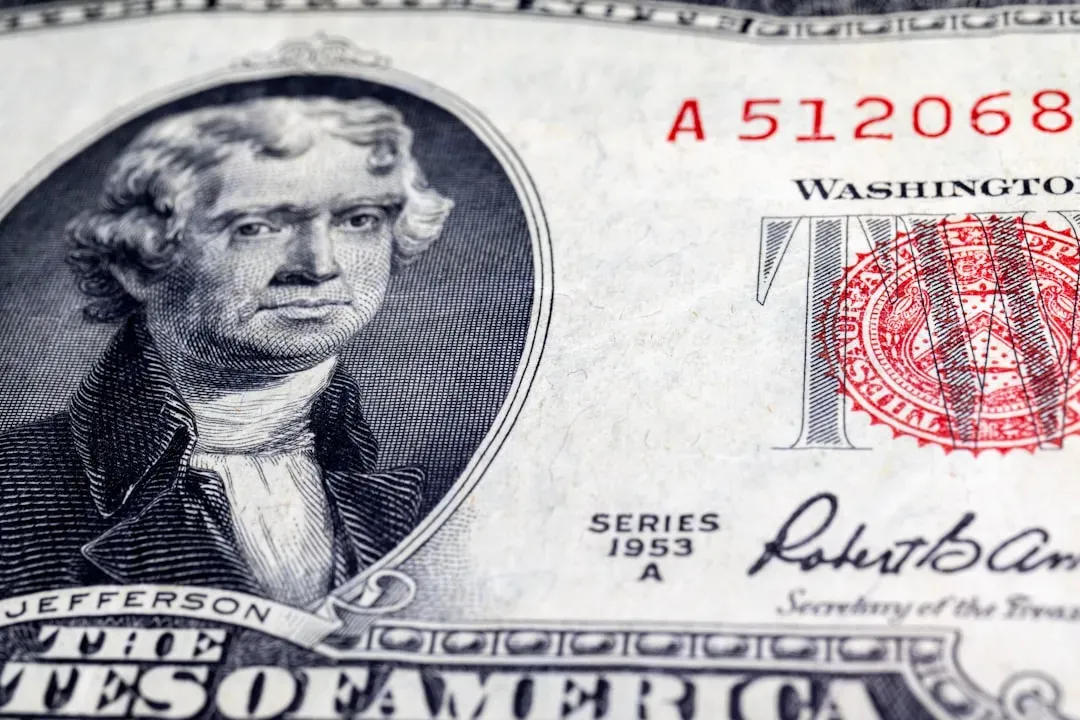
The 1928 Red Seal Note: One of the Most Valuable Series (Image Credits: Unsplash)
The 1928 $2 bill features a red seal, unlike the modern green seal seen on most U.S. currency. This red seal makes it distinct and desirable to collectors. If your 1928 $2 bill has a crisp, bright red seal without smudging, it is generally worth more.
An uncirculated 1928 red seal $2 bill could be worth over $1,000, while a circulated version may only be worth $5 to $175. According to recent reports, uncirculated $2 bills from 1890 can fetch up to $4,500, while certain 1928 red seal notes in pristine condition are valued over $1,000. The gap between a well-preserved example and a worn one is enormous, which is why condition matters so much to serious buyers.
The 1890 Treasury Note: The Holy Grail
The 1890 Treasury Note: The Holy Grail (Image Credits: Pexels)
An 1890 $2 Treasury Note featuring General James McPherson is worth upwards of $4,500, according to U.S. Currency Auctions. However, it can fetch tens of thousands of dollars at auction, especially if it’s in perfect condition.
While most $2 bills before 1976 are worth collecting as they have historical significance, two $2 uncirculated bills are seen as the “Holy Grail” of the $2 bills. These are U.S. treasury notes dating back to 1890. One note carries a brown seal, whereas the other carries a red one. These notes are genuinely scarce in high grade and represent the ceiling of what the category can achieve at auction.
Fancy Serial Numbers: The Ladder, the Radar, and the Repeater
Fancy Serial Numbers: The Ladder, the Radar, and the Repeater (Image Credits: Unsplash)
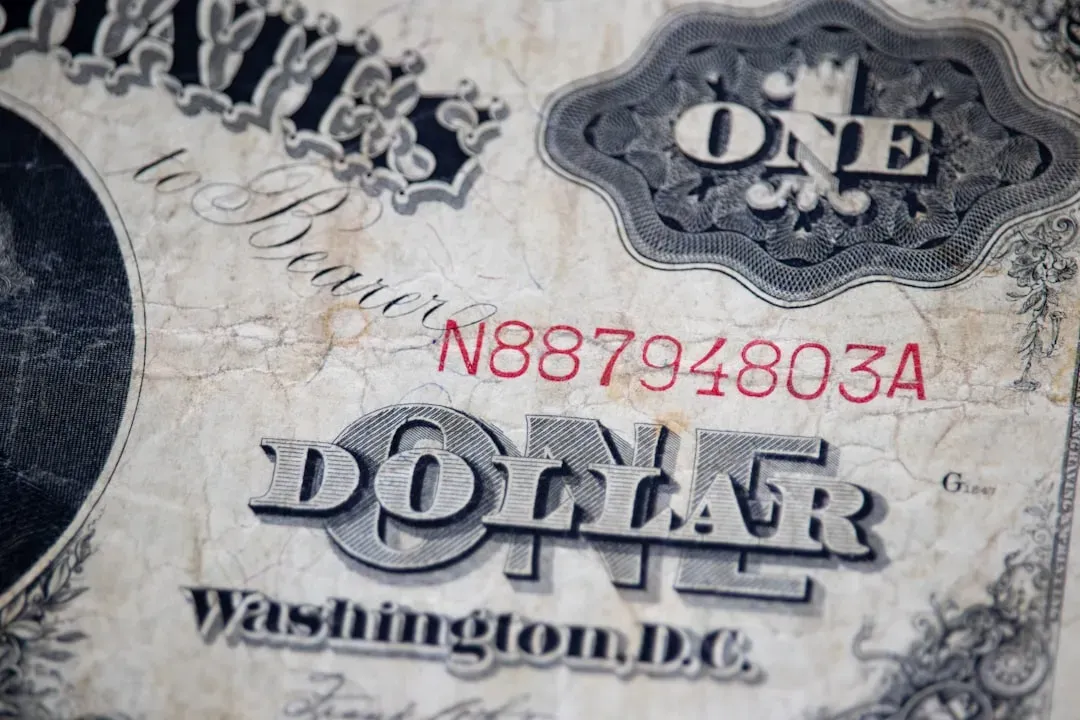
The ladder note is the rarest possible two-dollar bill as it has a unique serial number, 12345678. Only one banknote out of every 96 million notes is a ladder note with this serial number, making them one of the rarest finds, which are pricey. These notes are worth thousands of dollars and fetch a very high price at auctions.
Palindromes, also called “radar notes,” are serial numbers that read the same whether you look at them backward or forward. If the serial number repeats, this is rare and more valuable. If the serial number includes a star, it is a replacement bill and may be much rarer. Bills with serial numbers like “00000001” or patterns like “12345678” are often sought after. Even a serial number made up of all the same digit, like 77777777, draws real collector attention.
Pre-1976 Bills and Seal Colors That Signal Value
Pre-1976 Bills and Seal Colors That Signal Value (Image Credits: Unsplash)
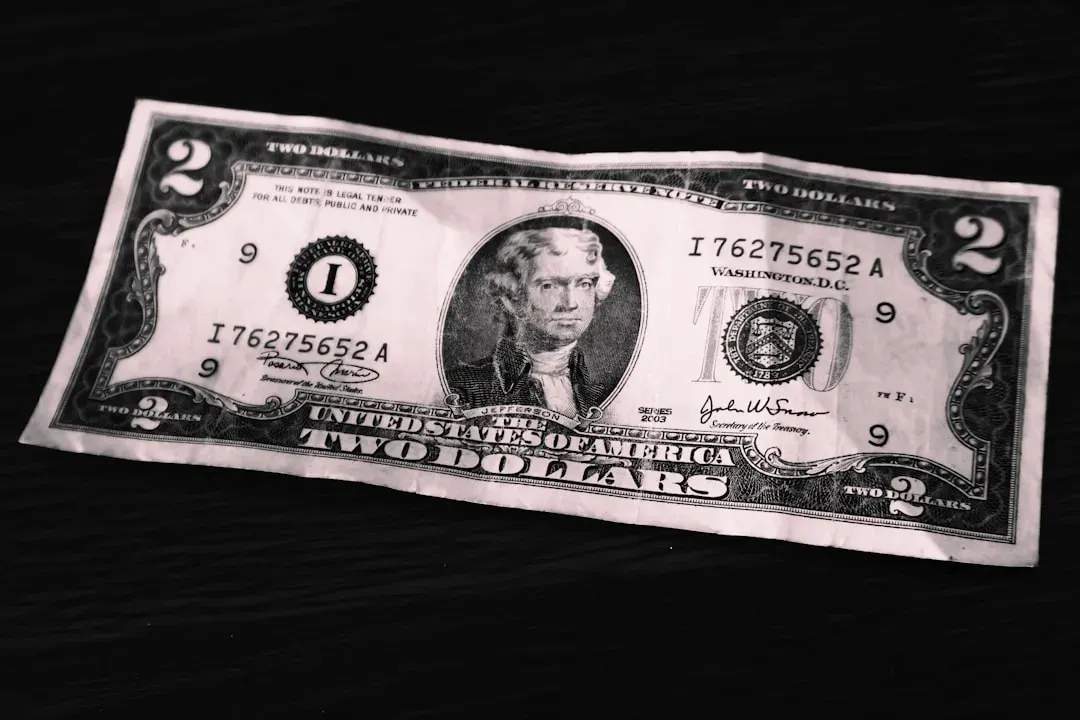
To find the value of your $2 bill, look at the year and seal color. Bills with red, brown and blue seals from 1862 through 1917 can be worth up to $1,000 or more on the U.S. Currency Auctions website, which bases the value on recent and past paper currency auctions.
According to online auction service U.S. Currency Auctions, if the bill was minted and printed before 1976, it could actually be worth as much as $4,500. The earliest $2 bills, issued in 1862 and 1869, feature a portrait of Alexander Hamilton. These notes are highly sought after by collectors thanks to their historical importance and limited availability. Depending on condition, these bills can be worth anywhere from a few hundred dollars to a few thousand.
Printing Errors: When a Mistake Becomes Money
Printing Errors: When a Mistake Becomes Money (Image Credits: Unsplash)
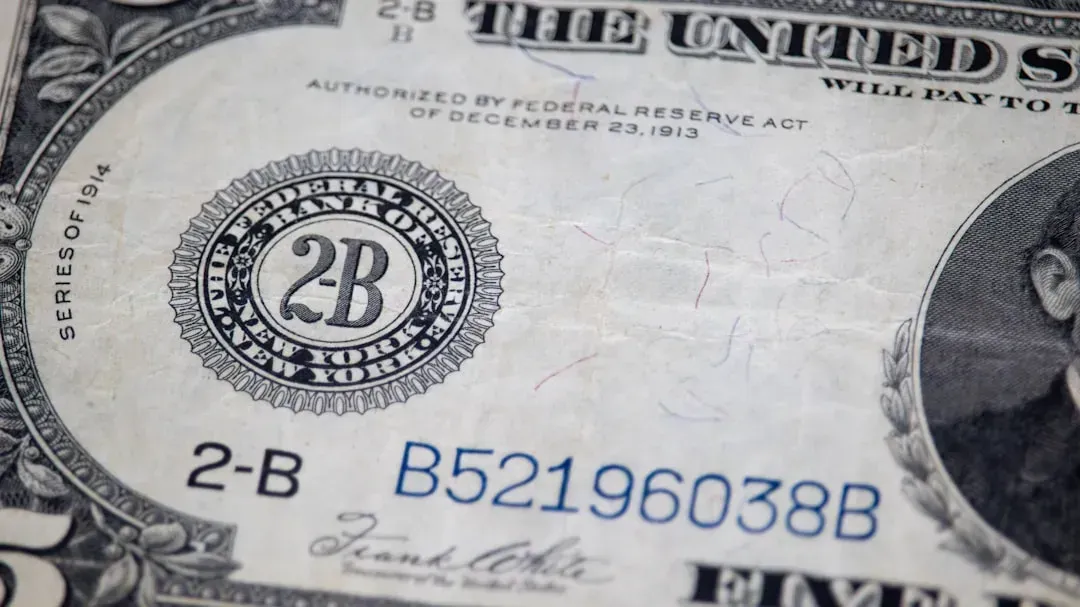
A record-breaking $2 bill stood out due to its extremely rare printing error and pristine condition. Experts revealed that this bill had a misalignment printing issue, where the seal and serial numbers were slightly off-center – a mistake that slipped past quality checks. Errors like this are incredibly rare, especially on Bicentennial notes, and collectors are always eager to pay a premium for them.
Sometimes, an issue in the serial number printing device can cause a double serial number error. You’ll see two unique serial numbers printed on the same note. These $2 bills were a result of printing errors. Bills in good condition with two serial numbers will sell from a starting price of $500 or more, whereas those in pristine condition can sell for $900 and upwards. Miscuts are another notable error worth checking for, where the edges show portions of an adjacent note from the printing sheet.
Condition Is Everything: Circulated vs. Uncirculated
Condition Is Everything: Circulated vs. Uncirculated (Image Credits: Unsplash)
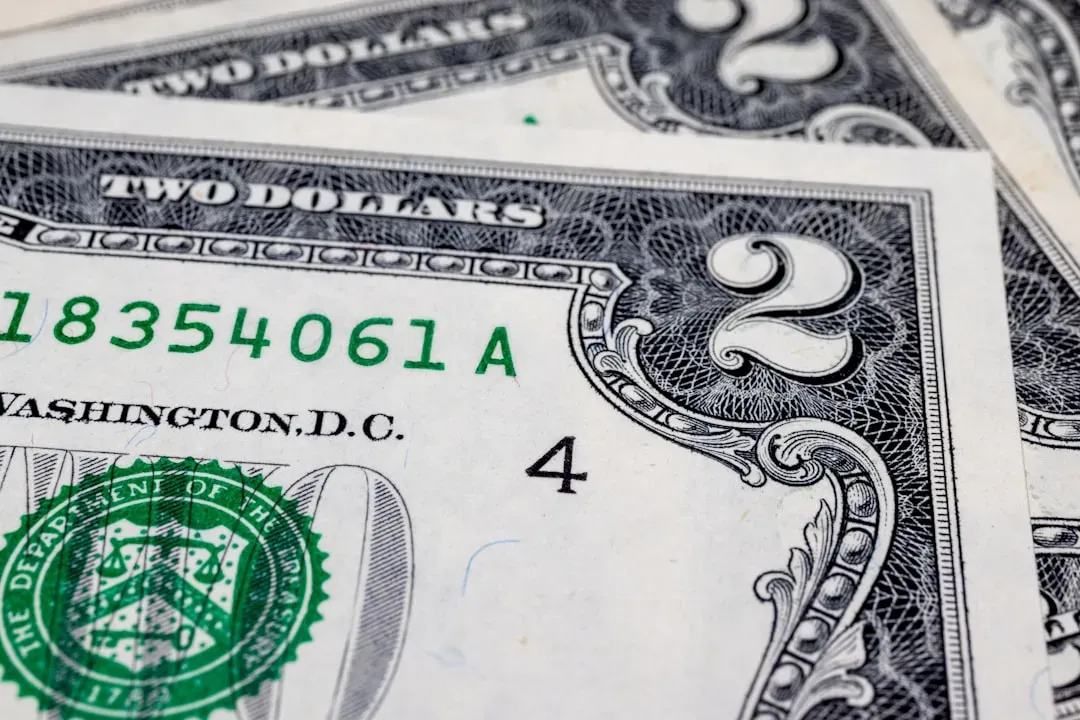
Uncirculated bills have never been used in transactions, so they remain crisp, clean and free of folds or tears. Uncirculated bills are far more valuable (and rare, especially the older they are) than circulated ones. Use professional grading standards, like those from the Professional Coin Grading Service (PCGS) or Paper Money Guaranty (PMG), to determine the condition. Uncirculated bills score the highest and bring in the most money.
Uncirculated bills have no creases, folds, or signs of handling. They often come in protective holders or are crisp like new. For anyone who suspects they’re holding something valuable, proper storage matters enormously. Keep uncirculated bills in protective sleeves, and avoid folding or handling the bill. Even a single sharp crease can meaningfully reduce the price a collector is willing to pay.
The 1976 Bicentennial Bill: Widely Saved, Rarely Valuable
The 1976 Bicentennial Bill: Widely Saved, Rarely Valuable (The.Comedian, Flickr, <a href="https://creativecommons.org/licenses/by/2.0/" target="_blank" rel="noopener">CC BY 2.0</a>)
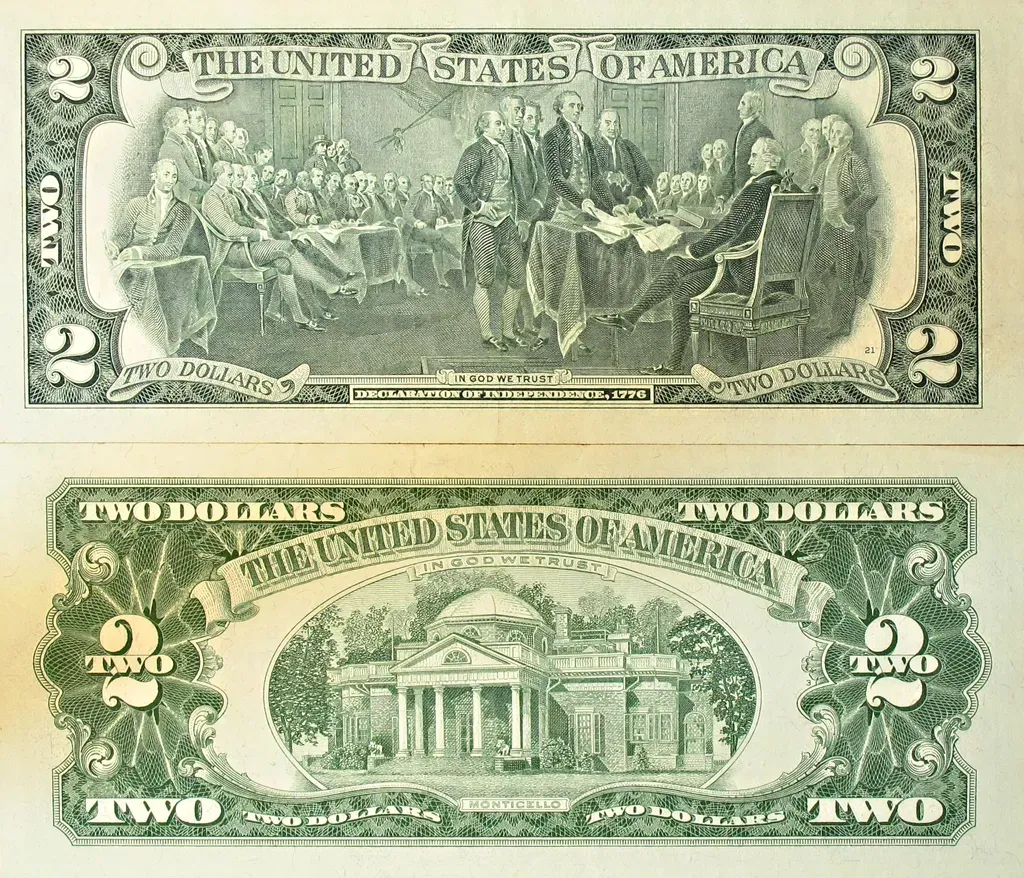
The 1976 $2 bill was released to celebrate the U.S. bicentennial, and while most of them are only worth face value, some with special serial numbers, misprints, stamps or star notes can be worth $20 to $900. Despite their age, crisp, uncirculated Series 1976 $2 notes are not uncommon and are not particularly valuable. More than a half billion Series 1976 $2 notes were printed and a very large number were saved and hoarded upon their original issue. A typical, single uncirculated 1976 $2 bill is worth only slightly above $2 face value.
At the time of the note released in August 1976, first-day collectors were allowed to take their newly received $2 bill and get it stamped from the post office written with the coin’s release date. These stamped $2 bills cost more than the $2 notes already circulating. The price of a first-day stamped $2 note also varies depending on its condition, but it doesn’t exceed a hundred dollars. Stamped versions are fun to own but rarely break the bank.
How to Check What Your $2 Bill Is Actually Worth
How to Check What Your $2 Bill Is Actually Worth (Image Credits: Unsplash)
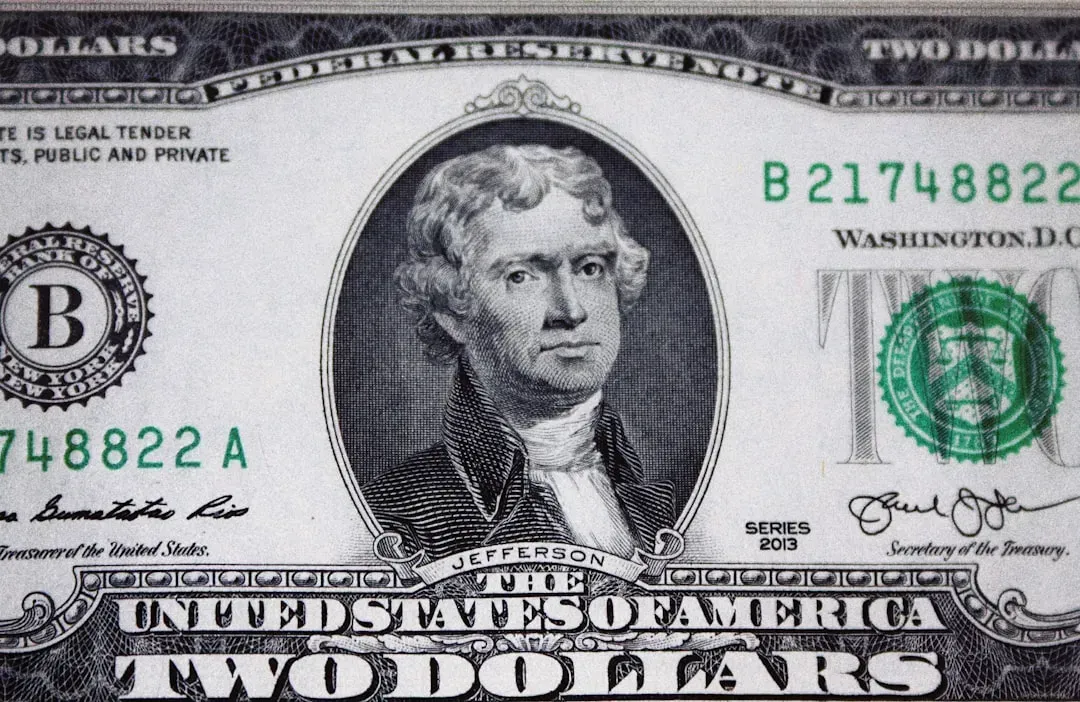
Identify the series and condition: look at the series year and seal color. Take note of the bill’s condition. Research the value by comparing similar bills sold on eBay or currency auction sites, and consult a currency pricing guide. Heritage Auctions offers a helpful guide on how to evaluate the value of paper currency.
The market for collectible $2 bills is quite active. Many $2 bills are traded via online marketplaces, including eBay, Heritage Auctions and currency dealer websites. The demand for rare $2 bills means that sellers can often find buyers quickly, especially for well-preserved or unique bills. In general, older bills and bills with errors tend to sell the fastest and at the highest prices. If you genuinely believe you have something special, experts recommend taking it to a verified coin expert for evaluation.