
Generational labels are everywhere. They show up in workplace training decks, political commentary, real estate headlines, and family dinner arguments. They feel like shorthand for something real – a tidy way to explain why your colleague works differently than you, or why your parents see the world in a certain way. The problem is that much of what passes as generational wisdom is either wildly overstated, quietly contradicted by data, or simply wrong.
What follows is a look at seven of the most confidently repeated generational “facts” – and what the research actually says. Some corrections are minor. Others are significant enough to change how you read the next headline that drops a generation’s name to explain human behavior.
Generational Differences Are a Scientific Fact

Generational Differences Are a Scientific Fact (Image Credits: Unsplash)
This is perhaps the biggest myth in the entire conversation. The idea that Baby Boomers, Gen X, Millennials, and Gen Z are fundamentally distinct groups with measurable psychological differences sounds rigorous. It is not, at least not in the way most people assume. Research by sociologist Martin Schröder, drawing on data from more than 580,000 individuals across 113 countries collected between 1981 and 2022, shows that when age and period effects are taken into account, hardly any significant differences remain that can be attributed to generations.
The mechanics behind this are worth understanding. People of different ages tend to hold similar views when they are in the same phase of life and living under similar circumstances – and when work-related attitudes like the importance of free time or responsibility were studied, the alleged generational differences also disappeared once age and period were controlled for. In other words, what looks like a generational gap is often just a life-stage gap. It's wiser to think of terms like Gen Z, Millennial, Gen X, and Baby Boomer as general reference points rather than scientific facts.
Boomers Are Technologically Helpless
Boomers Are Technologically Helpless (Image Credits: Pexels)
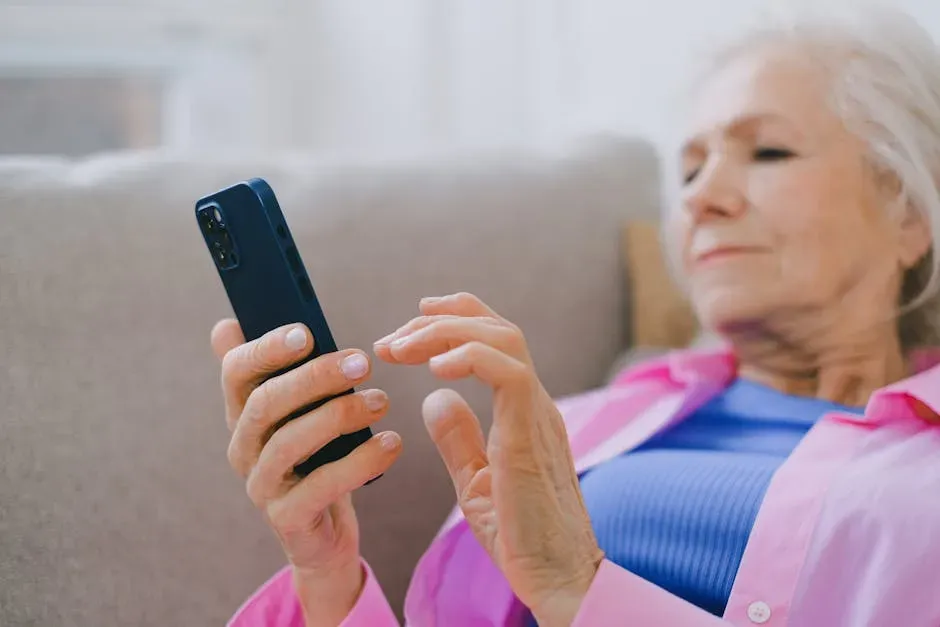
The image of a Baby Boomer unable to attach a file to an email has become cultural shorthand. It's also a caricature that the data no longer supports. In 2024, the trend is changing – according to a Pew Research study, around 80 percent of Boomers own smartphones, and nearly 70 percent use social media platforms like Facebook to stay connected with family and friends. That is not a generation that has been left behind by the digital world.
Baby Boomers continue to trail both Gen Xers and Millennials on most measures of technology adoption, but adoption rates for this group have been growing rapidly – Boomers are now far more likely to own a smartphone than they were in 2011, rising from roughly one in four to more than two in three. There's also a somewhat ironic twist here: half of those between the ages of 61 and 79 are spending more than three hours a day on their phone, and about one in five of those surveyed regularly clock more than five hours a day online. Boomers are, in some respects, the generation nobody expected to become heavy screen users.
Millennials Are Lazy Job-Hoppers Who Won't Commit

Millennials Are Lazy Job-Hoppers Who Won't Commit (Image Credits: Unsplash)
Few stereotypes have proven more durable – or more inaccurate – than the idea that Millennials simply refuse to settle into stable employment. The "job-hopper" narrative gets repeated in management seminars and HR strategy documents as if it were established fact. Bureau of Labor Statistics data shows that Millennials' median job tenure has ticked back to roughly five years – a rise that parallels broader workplace trends and underscores that Millennials are loyal to their workplaces, but only when conditions lean in their favor.
A meta-analysis published in the Journal of Business and Psychology found no difference in the work ethics of different generations. Meanwhile, the entitlement charge doesn't hold up under scrutiny either. According to Pew Research Center, Millennials are among the most educated generations in history – approximately 43 percent of Millennial women and 36 percent of Millennial men hold a bachelor's degree, which is nearly quadruple and double the rates seen in the Silent Generation and Baby Boomers at the same age. Demanding decent conditions from an employer after investing that much in education is not entitlement. It's a reasonable expectation.
Gen Z Doesn't Want to Own a Home
Gen Z Doesn't Want to Own a Home (Image Credits: Pexels)
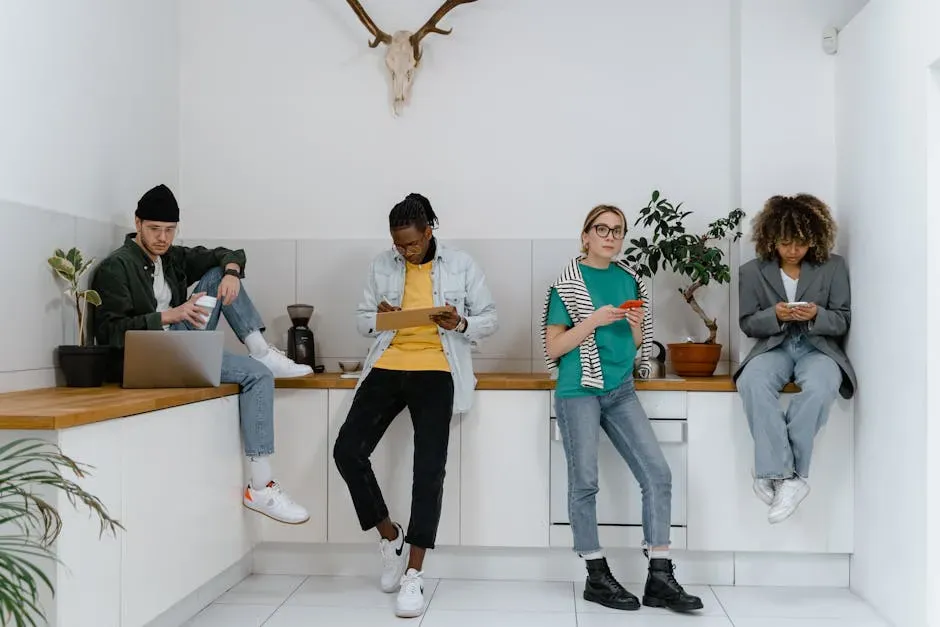
This one circulates endlessly, usually as a tidy explanation for falling homeownership rates among younger adults. The conclusion – that Gen Z simply doesn't value homeownership – reverses cause and effect in a way that is both misleading and a little cruel. There is a misconception that Generation Z has less interest in buying a home than previous generations, but when young respondents explained their answers in surveys, they cited high property costs and lack of affordability as the main reasons they don't see homeownership as a realistic goal.
Just 30 percent of 26-year-olds owned a home in 2023, which is less than the rates for Millennials, Gen Xers, and Baby Boomers at the same age. That's a structural affordability problem, not a preference. In fact, NAR data identified that Gen Z buyers have the highest rate of single, female homeownership – 33 percent – of any generational group, and 17 percent of Gen Z buyers were unmarried couples, also the highest rate of any generational group. When Gen Z does manage to buy, they do so on their own terms – with or without a spouse and certainly without waiting to be told it's the right time.
Millennials Are the Dominant Force in the Housing Market

Millennials Are the Dominant Force in the Housing Market (Image Credits: Unsplash)
For several years, the narrative was consistent: Millennials were reshaping real estate, driving demand, and dominating the buyer pool. That story has quietly shifted. According to the National Association of Realtors' 2025 Home Buyers and Sellers Generational Trends report, the combined share of younger and older Baby Boomers rose to 42 percent of all home buyers in the past year. Millennials, meanwhile, fell sharply.
Millennials made up 29 percent of homebuyers in 2024, compared to 38 percent in 2023, while Baby Boomers rose from 31 percent to 42 percent year-over-year. Part of this is structural: half of older Boomers and 40 percent of younger Boomers are purchasing homes entirely with cash, which gives them a decisive edge in competitive markets where younger buyers are still wrestling with interest rates and down payments. The housing market is, perhaps more than any other arena, where accumulated wealth speaks louder than generational trends.
Gen Z Is Apathetic and Disengaged From Civic Life

Gen Z Is Apathetic and Disengaged From Civic Life (Image Credits: Pexels)
The slacktivist label – the idea that young people mistake clicking a share button for genuine activism – gets applied to Gen Z with particular enthusiasm. The reality is more complicated and, frankly, more flattering to the generation. According to research from Abacus Cooperative, members of Generation Z made an average of 5.3 charitable donations in 2022, compared to 4.8 from Millennials and 4.7 from Gen Xers – this is despite them having dramatically less buying power than Baby Boomers did in their twenties.
On civic participation, the numbers are similarly instructive. While Gen Z makes up a small percentage of voters relative to their total numbers, their turnout is impressive compared to previous generations at their age – U.S. Census data shows that 28.4 percent of eligible voters between 18 and 24 cast ballots in the 2022 midterms, which is 5 percent higher than the midterm turnout for both Millennials and Gen Xers when they were the same age. Calling a generation apathetic while it outperforms its predecessors at the polls requires a remarkable degree of selective memory.
Each Generation Needs a Completely Different Workplace Strategy

Each Generation Needs a Completely Different Workplace Strategy (Image Credits: Unsplash)
HR consultants and management coaches have built entire careers on the premise that Boomers, Gen Xers, Millennials, and Gen Z need fundamentally different engagement tactics, communication styles, and incentive structures. It's a compelling sales pitch. It is not, however, well-supported by large-scale data. Analysis of insights from more than a million employees across the globe shows that what actually drives employee engagement does not differ meaningfully between Gen X, Millennials, and Gen Z – in fact, when measuring 14 engagement drivers and their sub-drivers, only one driver had a statistically meaningful difference between generations.
The analysis supports long-standing research and debunks a key myth: that each generation needs a completely distinct engagement strategy. In reality, the psychological needs underpinning engagement are universal, timeless, and deeply human. There are genuine individual differences in what motivates people at work, but those differences map poorly onto birth year. Even if generational effects do not exist as detailed by generational theory, the fact that people believe in and use generational identities means they can have very real and often harmful effects in workplaces. The belief, it turns out, creates more damage than the underlying difference ever could.
Generational thinking isn't useless. Understanding shared historical experiences – recessions, wars, technological shifts – can genuinely illuminate why certain cohorts approach money, work, or institutions differently. The mistake is treating those broad tendencies as individual character traits, or assuming they override the complexity of any actual person sitting across from you. The data keeps reaching the same conclusion: the variation within generations is almost always larger than the variation between them.