
Wall Street doesn’t always shout when it turns bearish. More often, the signal comes in the form of a quiet rating change, a price target cut buried in a research note, or a shift from “Outperform” to “Neutral” that most retail investors never catch. These moves matter. Analyst downgrades are often a bearish signal for a stock, and when an analyst downgrades, it typically means the rating is lower than it previously was and the analyst likely does not recommend people buy the stock.
In 2026, the pace of downgrades has been picking up across a surprisingly wide range of sectors, from mining and pharma to consumer finance and flooring. 2025 wasn’t kind to a subset of high-profile stocks, and sluggish growth, underperformance, and loss of confidence drove a wave of analyst downgrades that pressured valuations and sentiment. What follows is a closer look at eight names that are currently facing serious analyst skepticism, and the specific reasons behind each shift in view.
1. Freeport-McMoRan (FCX): A Copper Giant Hits an Operational Wall

1. Freeport-McMoRan (FCX): A Copper Giant Hits an Operational Wall (Image Credits: Pexels)
Morgan Stanley downgraded Freeport-McMoRan to Equal Weight from Overweight and cut its price target to $66 from $70, pointing to a slower production ramp at the company’s Grasberg Block Cave mine in Indonesia. The timing was notable: the analyst downgrade landed one day after FCX posted a Q1 2026 earnings beat of $0.57 adjusted EPS versus $0.47 expected, with revenue of $6.23 billion versus $5.96 billion expected, but that beat was overshadowed by sharply reduced full-year guidance.
Freeport-McMoRan’s management cut 2026 copper sales guidance to roughly 3.1 billion pounds from 3.4 billion, and gold sales to 650 thousand ounces from 0.8 million. Slower Indonesian output, rising diesel and sulfuric acid costs, and jurisdictional risk could cap upside until the Grasberg ramp proves itself through 2027. Multiple firms followed with target cuts, though the long-term structural case for copper tied to electrification remains broadly intact.
2. Eli Lilly (LLY): Priced for Perfection in an Increasingly Competitive Market
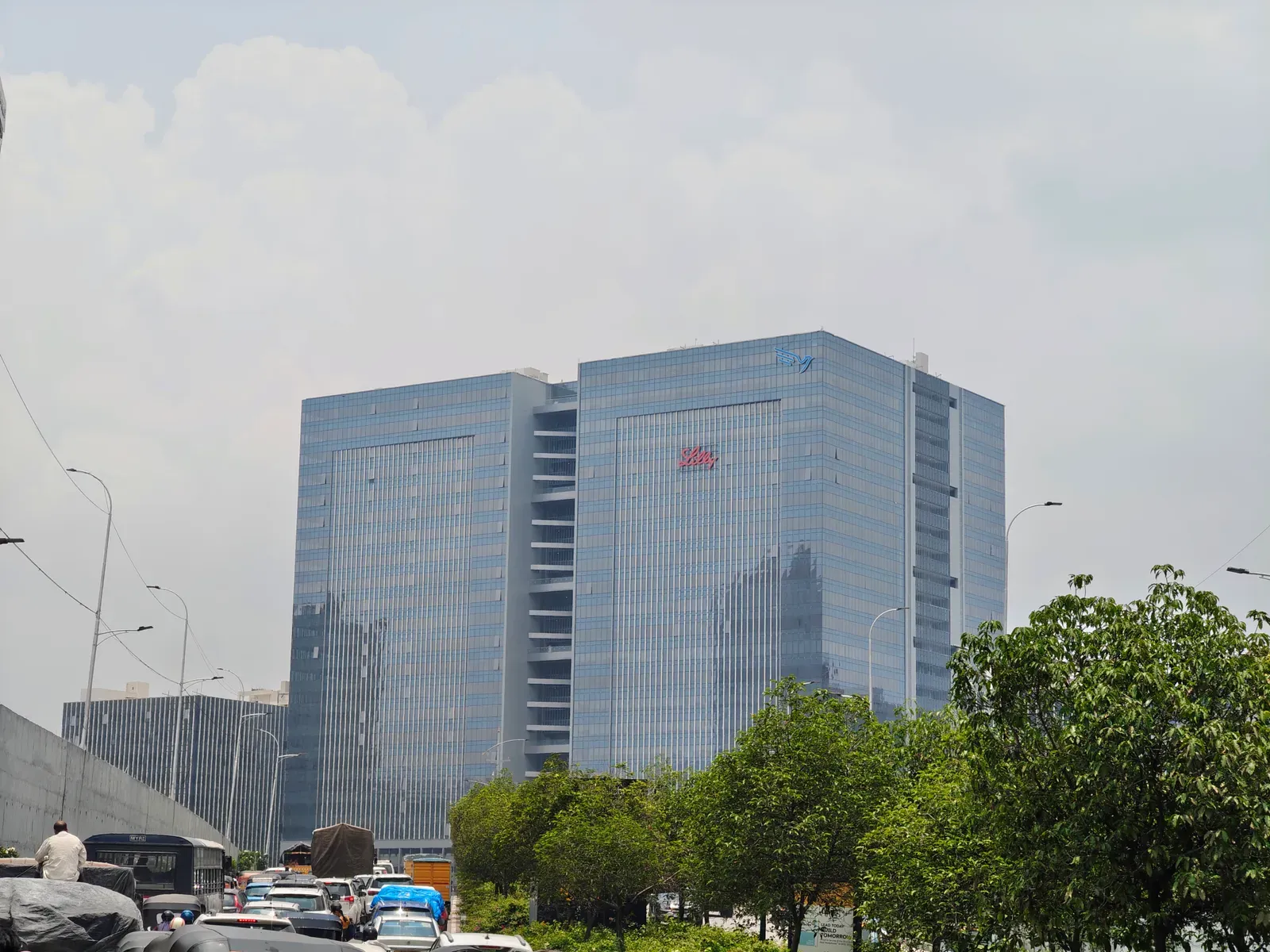
2. Eli Lilly (LLY): Priced for Perfection in an Increasingly Competitive Market (Image Credits: By Kavali Chandrakanth KCK, <a href="https://commons.wikimedia.org/w/index.php?curid=171694327" target="_blank" rel="noopener">CC BY-SA 4.0</a>)
HSBC downgraded Eli Lilly to Reduce from Hold with a price target of $850, down from $1,070, with the firm noting that Eli Lilly’s obesity price cuts in 2026 are a headwind while its guidance implies that it can continue to “defy gravity with volume growth.” Since the downgrade, the share price of the Indianapolis drugmaker dropped by more than 7%.
The central concern cited by HSBC analyst Rajesh Kumar was pricing pressures and increased competition in the obesity market, and a troubling factor is the disparity in guidance that Lilly and Novo have provided for their 2026 revenues. Reports indicated that the company’s new oral drug Foundayo showed comparatively sluggish initial sales, with Reuters citing data showing it was prescribed 3,707 times in the work week ended April 17. For a stock trading at a premium valuation, even a hint of a slower ramp can carry an outsized cost.
3. DraftKings (DKNG): The House Isn't Always Winning

3. DraftKings (DKNG): The House Isn't Always Winning (Image Credits: SM5_7310, <a href="https://commons.wikimedia.org/w/index.php?curid=63933212" target="_blank" rel="noopener">CC BY 2.0</a>)
Argus downgraded DraftKings to Hold from Buy without a price target, with the company facing high customer acquisition costs, increased state taxes, and “aggressive” competition from prediction markets. The sporting-to-wagering platform had been a Wall Street darling as sports betting legalization swept across US states, but the economics of the business are proving harder to scale than originally anticipated.
Argus reduced its rating for DraftKings, citing elevated costs for gaining customers, higher state-level taxes, and strong competition. The combination of regulatory cost creep and a crowded competitive landscape has narrowed the growth premium that once justified the stock’s elevated valuation. Profitability timelines that once seemed clear are now less certain.
4. Mohawk Industries (MHK): Flooring Demand Stays Depressed

4. Mohawk Industries (MHK): Flooring Demand Stays Depressed (Image Credits: Pexels)
Baird downgraded Mohawk Industries to Neutral from Outperform and lowered its price target to $118 from $156, with the stock trading at $109.51 with a market cap of $6.7 billion, citing significantly higher estimate uncertainty across multiple areas including volumes, pricing, and input costs. Recent flooring datapoints have weakened and rates are higher globally, suggesting possible incremental volume weakness, with higher input inflation potentially lingering against more limited price realization.
Baird lowered its 2026 earnings per share estimates for Mohawk Industries by approximately 15%, a revision that is sharper compared to the firm’s adjustments for other companies in the sector. Wolfe Research also recently downgraded Mohawk from Outperform to Peerperform, arguing that its valuation has largely normalized against flooring peers while the anticipated recovery in repair and remodel demand has shifted further out. A leadership change in the CFO seat only adds another layer of near-term uncertainty.
5. Prudential Financial (PRU): Japan Headwinds and a Barclays Underweight
5. Prudential Financial (PRU): Japan Headwinds and a Barclays Underweight (Image Credits: Unsplash)
Barclays analyst Alex Scott downgraded Prudential Financial from Equal-Weight to Underweight and cut the price target from $110 to $91, with Prudential Financial shares closing at $96.45. The downgrade came on April 22, 2026, marking a significant decrease of 17.27% in Barclays’ price target for the stock.
Prudential’s Japan unit implemented a voluntary 90-day suspension of new sales beginning February 9, 2026, tied to remediation steps after previously disclosed employee misconduct, with management previously indicating the Japan sales pause could reduce 2026 pre-tax adjusted operating earnings by roughly $300 million to $350 million, with the possibility the pause lasts longer than initially planned. The significant reduction in the price target suggests that analysts are concerned about the company’s ability to maintain its profitability and growth trajectory, and this shift in rating comes after a series of adjustments from other financial institutions, indicating a broader skepticism about the stock’s future performance.
6. GitLab (GTLB): A Cloud Darling Faces a Steep Reality Check

6. GitLab (GTLB): A Cloud Darling Faces a Steep Reality Check (Image Credits: Unsplash)
B of A Securities analyst Koji Ikeda downgraded GitLab from Buy to Neutral and slashed the price target from $58 to $27, with GitLab shares closing at $22.15. The move was a striking recalibration for a stock that had been held up as a beneficiary of enterprise software adoption. The sheer scale of the price target cut signals something more than routine caution.
GitLab operates in the DevSecOps space, helping software teams collaborate and ship code more securely. The competitive dynamics in enterprise software tools have intensified considerably as AI-assisted coding platforms proliferate, compressing the differentiation that companies like GitLab once commanded. With the stock already trading below even the new lowered price target, the market has been sending its own message ahead of the analyst community.
7. Synchrony Financial (SYF): Credit Risk Creeps Into the Consumer Lending Story

7. Synchrony Financial (SYF): Credit Risk Creeps Into the Consumer Lending Story (Image Credits: Pexels)
BTIG analyst Vincent Caintic downgraded Synchrony Financial from Buy to Neutral, with Synchrony Financial shares closing at $77.63. Synchrony is one of the largest consumer credit providers in the US, operating private-label credit cards for major retailers. The downgrade reflects a broader wariness about consumer credit quality as economic uncertainty rises in 2026.
Synchrony’s management anticipates net charge-offs in a range of 5.5% to 6.0% and expects the Retail Service Agreement to move toward levels more consistent with longer-term averages. Synchrony Financial reported its fourth-quarter 2025 earnings meeting analysts’ expectations with an EPS of $2.04, however the company fell short on revenue forecasts, posting $3.79 billion compared to the anticipated $3.84 billion. A miss on revenue in a tightening credit environment tends to raise follow-on questions that don’t resolve quickly.
8. Li Auto (LI): Margin Guidance Disappoints as China EV Competition Intensifies

8. Li Auto (LI): Margin Guidance Disappoints as China EV Competition Intensifies (Image Credits: Pixabay)
Goldman Sachs downgraded Li Auto to Neutral from Buy with a price target of $19, down from $24, following its Q4 report, with Li issuing 2026 guidance below expectations for both volume and gross margins. The Chinese electric vehicle maker had been one of the stronger-performing names in the EV segment, but the pace of competition inside China’s domestic market has made meaningful margin expansion increasingly difficult to sustain.
Goldman Sachs lowered its rating on Li Auto following a quarterly report where the company provided 2026 volume and margin guidance that fell short of expectations. The EV sector in China is now defined as much by price wars as by product innovation. Companies that cannot defend margins while simultaneously investing in next-generation platforms find themselves caught between two painful realities, and Li Auto’s latest guidance suggests that pressure is real and not yet resolved.